Fort Belan: An Eighteenth-Century Coastal Fort in Wales
Site at a Glance
- Rating
- 4.6
- Country
- United Kingdom
- Primary era
- Early Modern
- External website
- Open
- Eras represented
- Early Modern, Modern
- Civilizations
- British
- Site type
- Military
- Remains
- Fort
On this page11 sections
History
Construction and military purpose
Fort Belan is a coastal fort built in 1775 in Llanwnda, Wales, United Kingdom, by Thomas Wynn, then a Member of Parliament for Caernarfonshire. Wynn, who later became the first Baron Newborough, a British peerage title, feared that the coast was vulnerable to attack during the American War of Independence, when Britain’s North American colonies fought for independence. The fort cost approximately £30,000 and was the only purpose-built fort of the American Revolution on the eastern side of the Atlantic.
In the late 1780s, the fort’s barracks were used to deter American privateers, privately owned vessels authorized to attack enemy shipping, raiding from the Irish Sea. Despite this military activity, no shots were fired from Fort Belan in combat.
Private ownership and wartime use
In the 1820s, the Wynn family made the fort a private property and undertook major building work between 1824 and 1826. During the Second World War, the site served as a base for the Home Guard, a British civilian defense force, and two rescue launches. Military units also occupied the fort, including air-force units responsible for nearby Caernarfon Airport.
Later ownership and reuse
By the 1950s, Fort Belan belonged to Colonel Robert Vaughan Wynn. The Wynn family sold it to the Blundells in 1992, when it was intended as a base for marine-biology exploration. In 1996, the fort was listed as a Grade I building, the highest listing category in England and Wales, for buildings of exceptional special interest. It later housed a maritime museum and a pottery before becoming a self-catering holiday complex.
Remains
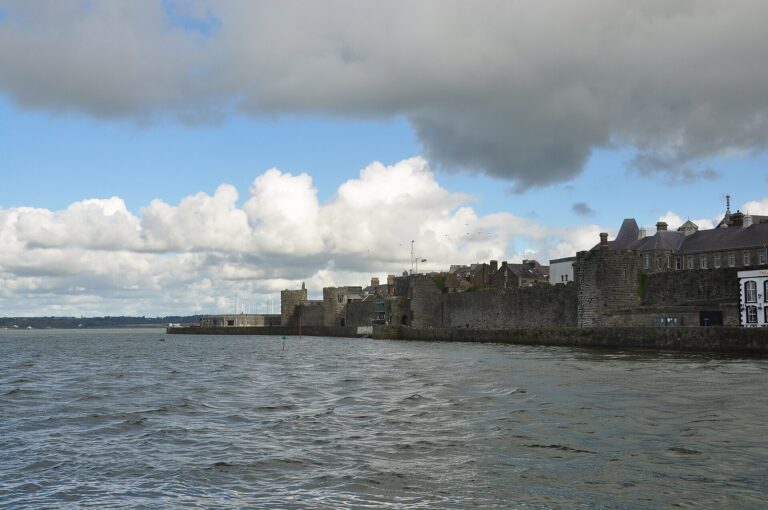
Fort Belan stands at the tip of the Dinlle Peninsula, opposite Abermenai Point at the southwestern end of the Menai Strait. The peninsula nearly closes the strait, leaving a passage about 35 metres wide, and the incoming tide cuts off the fort twice daily. Its stone perimeter encloses a sheltered central quadrangle, with fortified towers at either end.
Defenses and towers
Walls and guns
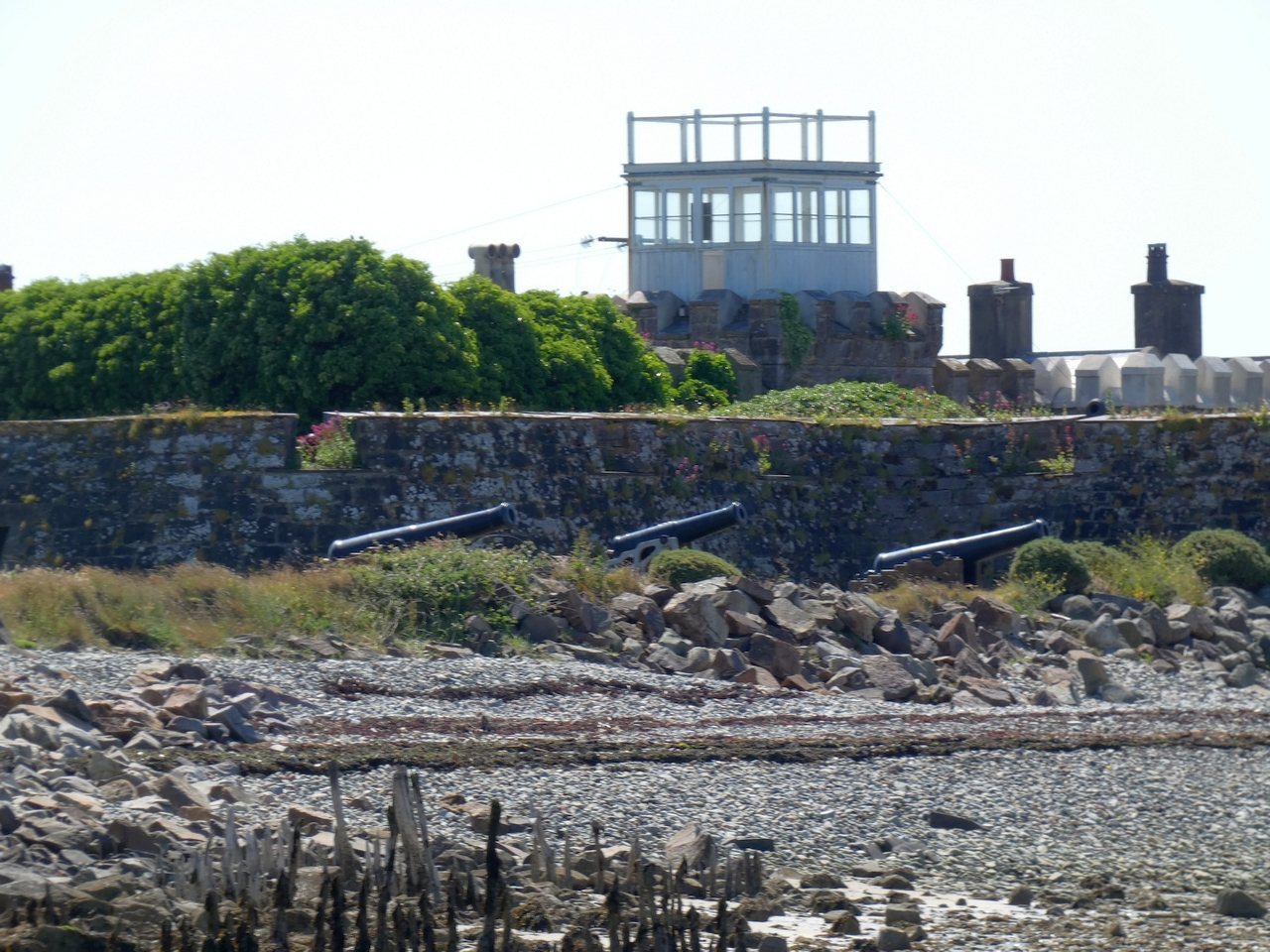
The stone walls rise about 6.1 metres. A line of approximately 24 cannons forms the fort’s gun battery along the walls, while the innermost buildings stand slightly higher than the defenses.
Fortified towers and watchtower
The towers at the ends of the fort display a two-headed eagle associated with the first Baron Newborough. Freddie Wynn built the watchtower in the 1890s, and it housed a telescope.
Central buildings and waterfront
Quadrangle and accommodation
Small two-storey houses line the flanks of the fort. They provided quarters for officers and privates, alongside barracks for the Caernarvonshire county militia, a locally organized military force. The complex also includes six cabins. A corridor within the fort is associated with a story of a phantom nursemaid.
Harbor and pier
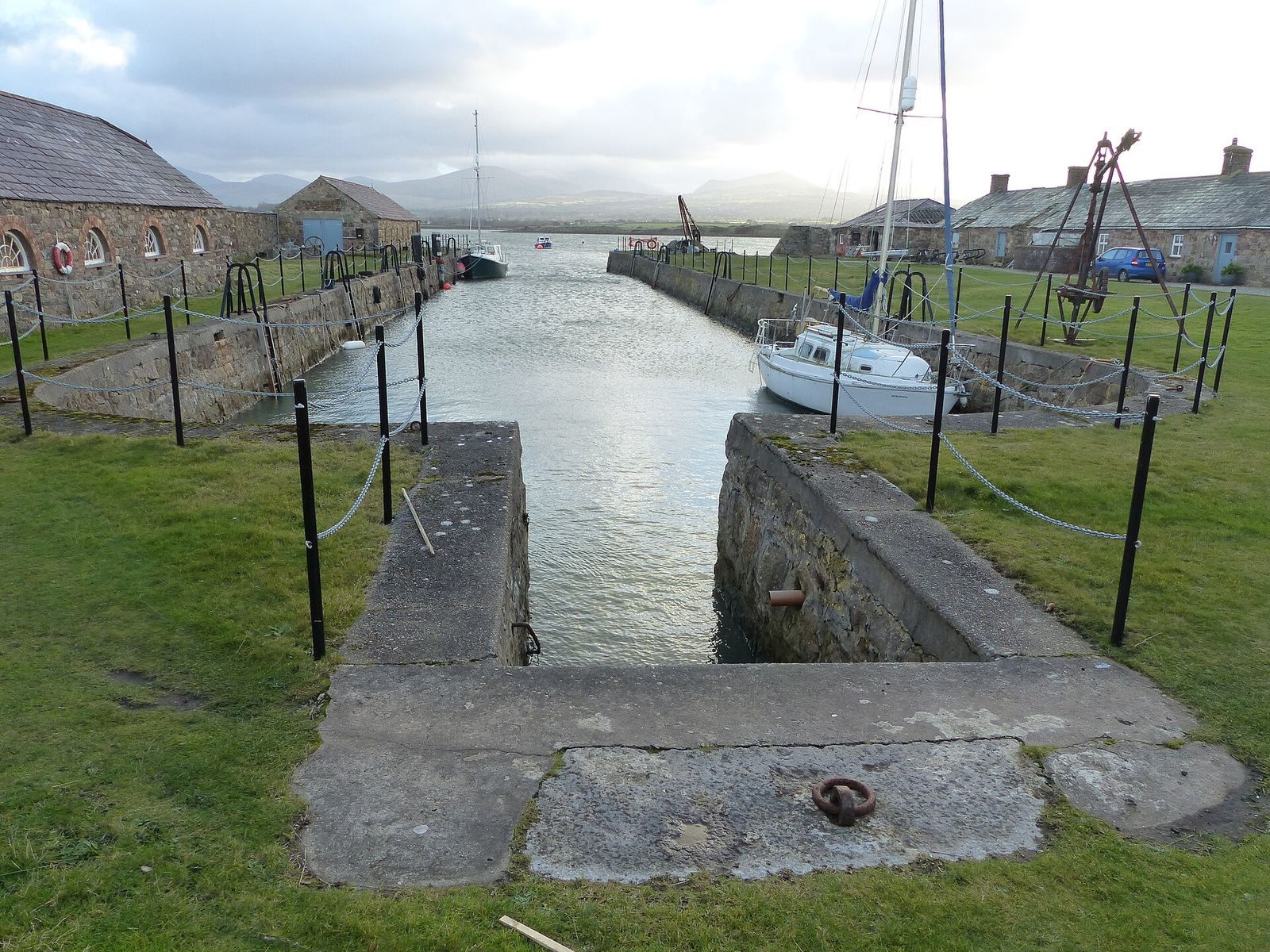
A small harbor was added for Spencer Wynn’s steam yacht. The second Baron built a pier in 1826 for regattas, and the pier survives. By 1907, the waterfront facilities included a dock, vessel-repair workshops, marine storehouses, winches, and cranes.