Palazzo Cricchi: A Mannerist Palace in L’Aquila, Italy
Site at a Glance
- Country
- Italy
- Primary era
- Early Modern
- Eras represented
- Early Modern
- Civilizations
- Kingdom of Naples, Spanish
- Site type
- Domestic
- Remains
- Elite Residence
On this page9 sections
History
Seventeenth-century origins
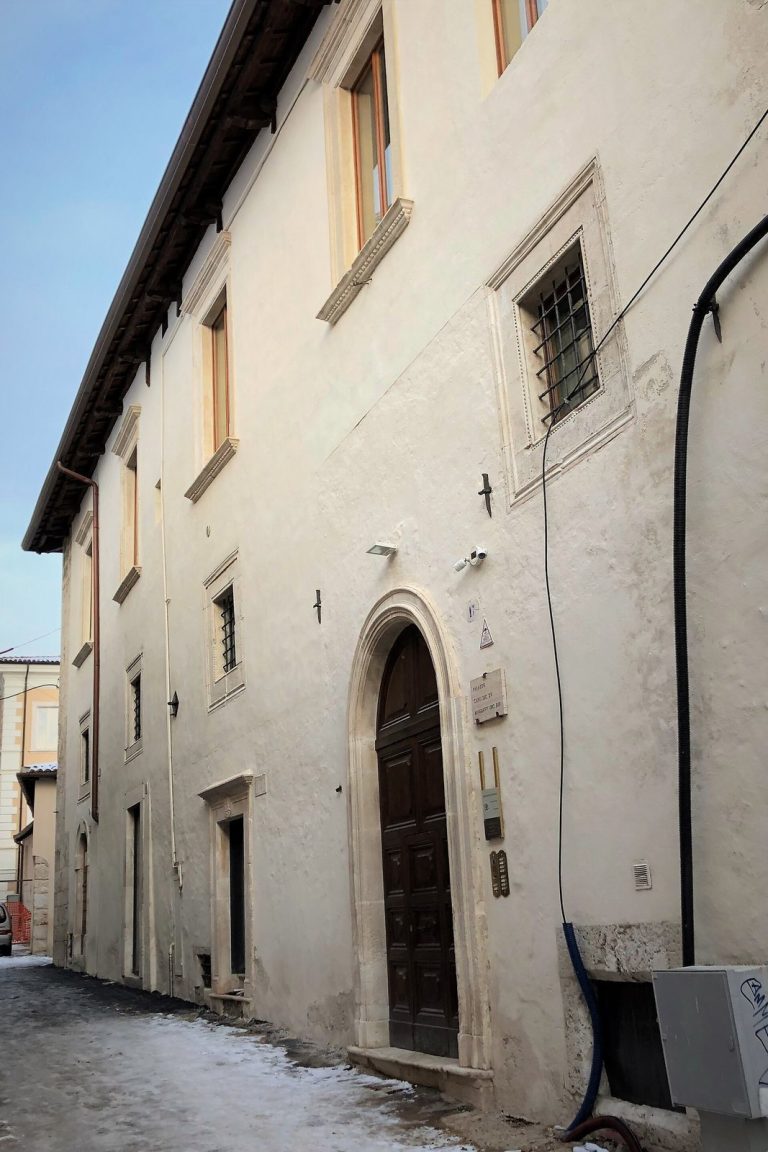
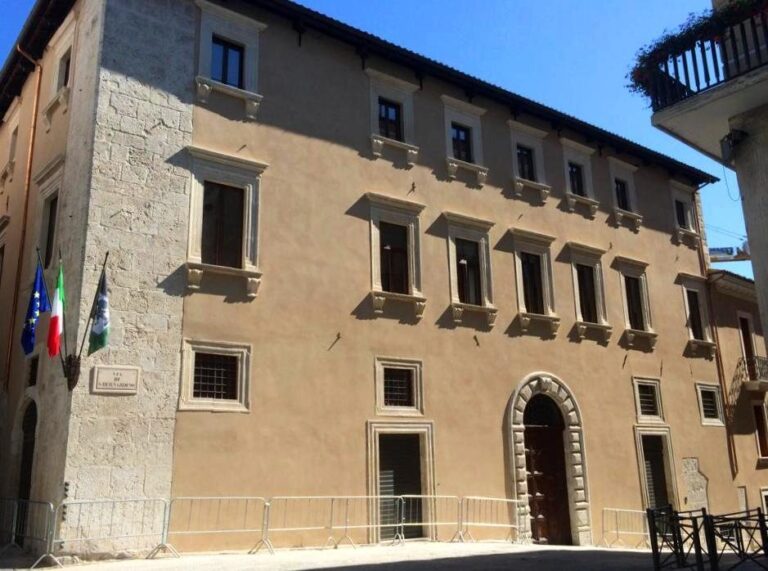
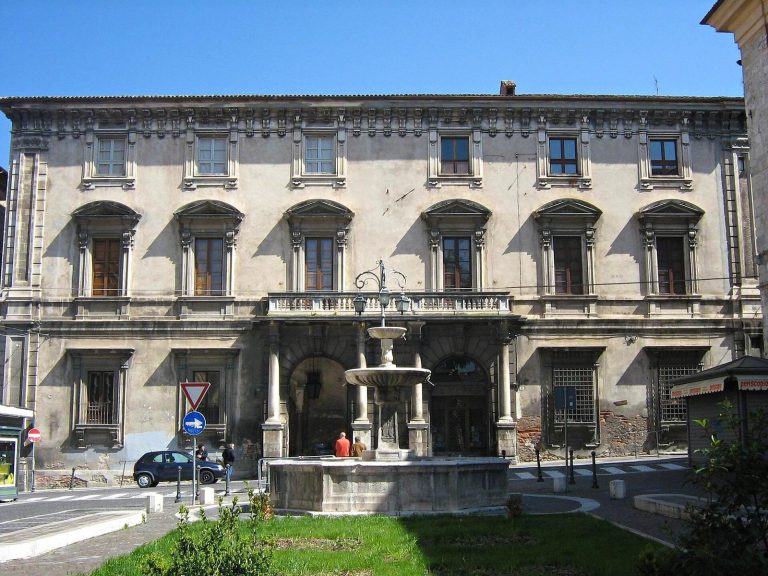
Palazzo Cricchi, also known as Palazzo Cricchi-Ciuffini-Volpe and Palazzo Rosati, is a seventeenth-century Mannerist palace in L’Aquila, Italy. Mannerism is a late-Renaissance artistic and architectural style. Built before the 1703 earthquake over earlier Renaissance fabric, the palace developed from two sections at different levels that were later joined. Its exterior was subsequently renewed in Neo-Renaissance style, a later revival of Renaissance forms, while the interior retained its seventeenth-century layout.
Earthquake damage and restoration
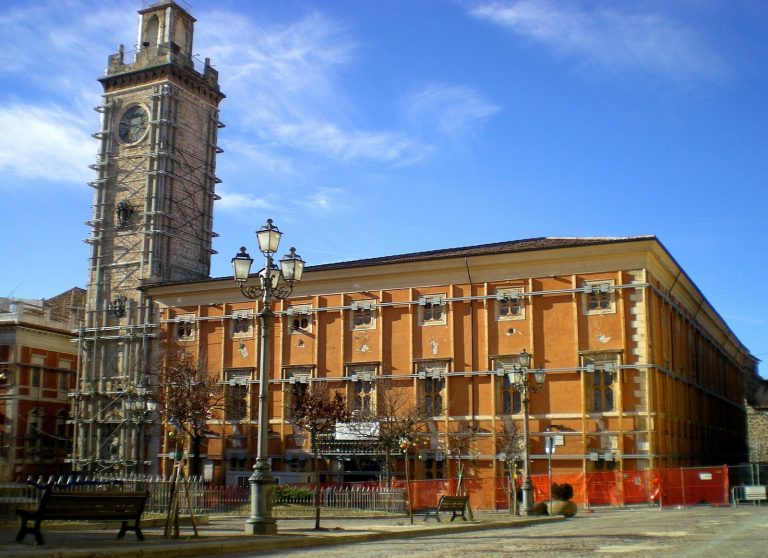
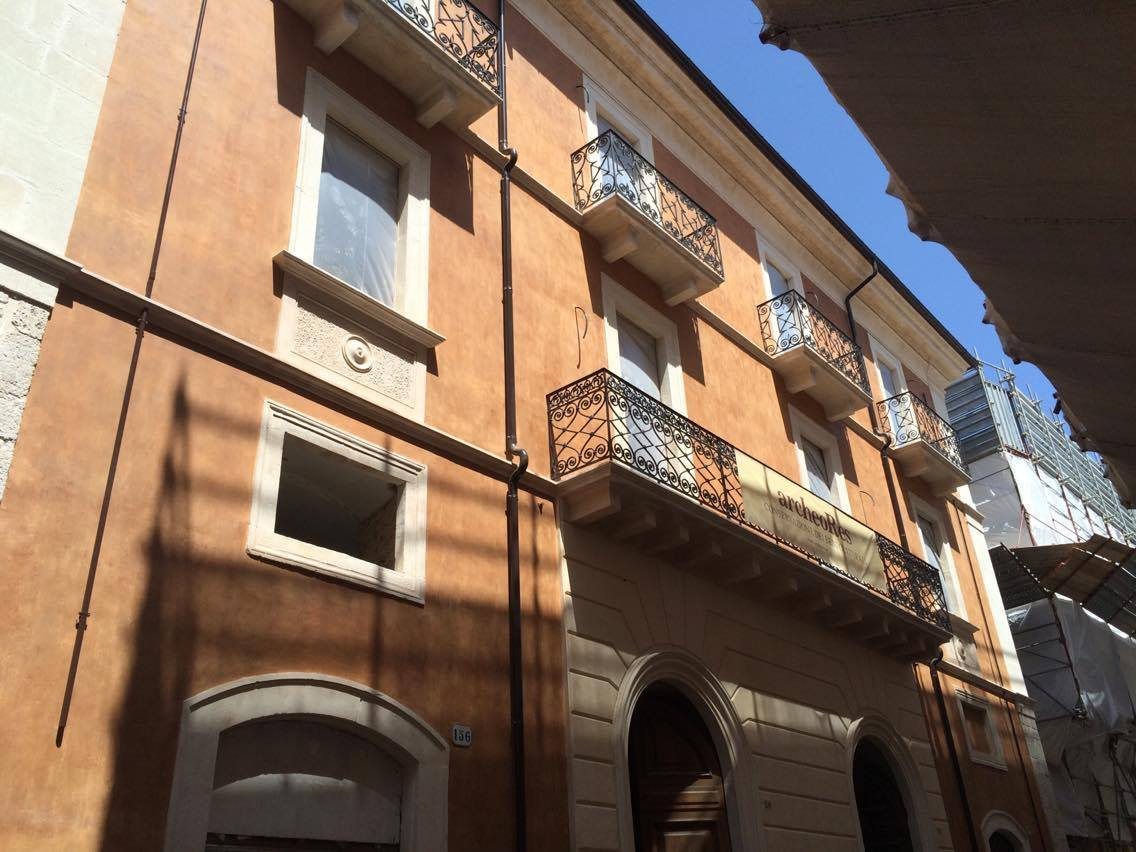
The 2009 earthquake damaged the palace. Restoration work carried out from 2013 to 2016 repaired the building.
Remains
The palace occupies a city block bounded by Corso Vittorio Emanuele to the east, Via Leosini to the north, Piazza Santa Maria Paganica to the west, and Via Altonati to the south. Its principal façade faces east, onto Corso Vittorio Emanuele, the city’s main axis.
Exterior and site layout
East-facing façade
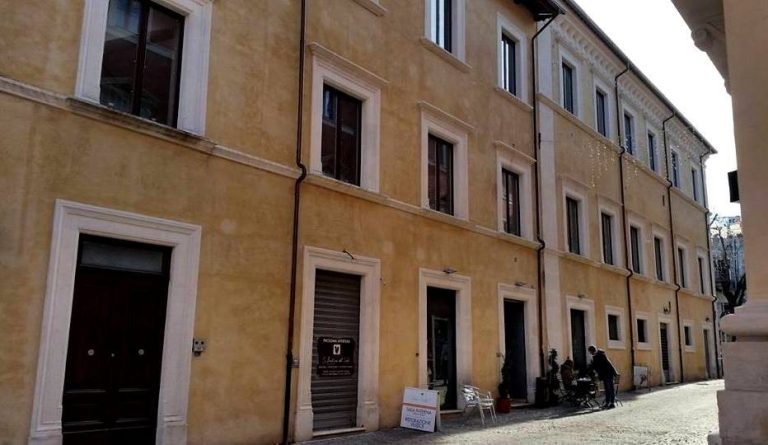
The principal façade looks onto Corso Vittorio Emanuele. The building’s exterior was renewed in Neo-Renaissance forms, while the palace is characterized as Mannerist.
Façade toward Santa Maria Paganica
The less prominent opposite façade faces toward the church of Santa Maria Paganica. Residences of the Carli, Cappa, and Franchi families historically occupied this side. The Carli family was established in the adjacent Palazzo Carli Benedetti.
North-wall shrine
At the north wall’s corner with Corso Vittorio Emanuele and Via Leosini, a shrine-like niche contains an anonymous seventeenth-century fresco. It shows Saint Christopher, a Christian saint traditionally associated with travelers, with the infant Jesus holding a globe of the earth.
Interior
The palace remains in residential use. Its interior includes frescoed vaults and decorative features dating to the eighteenth century.