Tour des Ursulines: Medieval Keep in Autun, France
Site at a Glance
- Country
- France
- Primary era
- Medieval
- Eras represented
- Classical, Medieval
- Civilizations
- Duchy of Burgundy, Roman
- Site type
- Military
- Remains
- Castle
On this page8 sections
History
The Tour des Ursulines is a medieval keep in Autun, France, built in the 12th century to defend Château Riveau, also known as Rivault. It later acquired the names Tour des Prisonniers and Tour François Ier, the latter referring to Francis I, king of France. The castle’s name derives from the Latin rivus, meaning stream; it was also used by former lords and later gave its name to the Quartier Rivault.
Citadel and prison
Among the castle’s early holders were Perreaul de Varennes and Perrin Riveau, lord of Petit Montjeu, also called Montjeu-en-Autun. In 1327, Riveau held two-thirds of the castle. From the late 14th century, the complex served as a ducal citadel and as a residence for a bailiff, a local administrative officer, or a captain. It later became a royal citadel under a governor. During the 15th century, it functioned as a fortress and also housed a prison.
Siege and demolition
During the French Wars of Religion, a period of conflict between Catholics and Protestants in France, Autun sided with the Catholic League, a Catholic political alliance supported by Philip II of Spain. The League opposed Henry IV, whom many regarded as a Calvinist Protestant. In 1591, a five-week siege by 8,000 soldiers under Marshal d’Aumont, a senior French military commander, failed to capture the city.
On 15 May 1595, after losing faith in the League, Autun’s townspeople handed the city to Marshal Biron in a surprise action. They then asked the king to dismantle the fortress to lessen the danger of further military conflict. The castle was demolished between 1595 and 1602, while its keep remained.
Ursuline convent and later ownership
The Ursulines, a Catholic women’s religious order associated with girls’ education, arrived in Autun from Saint-Chamond in 1617 and first settled on Rue Dufraigne. A decree of 9 January 1647 assigned them part of the former fortress grounds beside the tower. They retained their two establishments until their expulsion in 1791. The convent, grounds, and tower were then seized as national property, divided into parcels, and sold in 1793.
The tower has held France’s Monument historique designation, a protected status for historic buildings and sites, since September 1994. Since 1997 it has been privately owned by Japanese painter and restorer Hisao Takahashi, who established an international cultural center there.
Remains
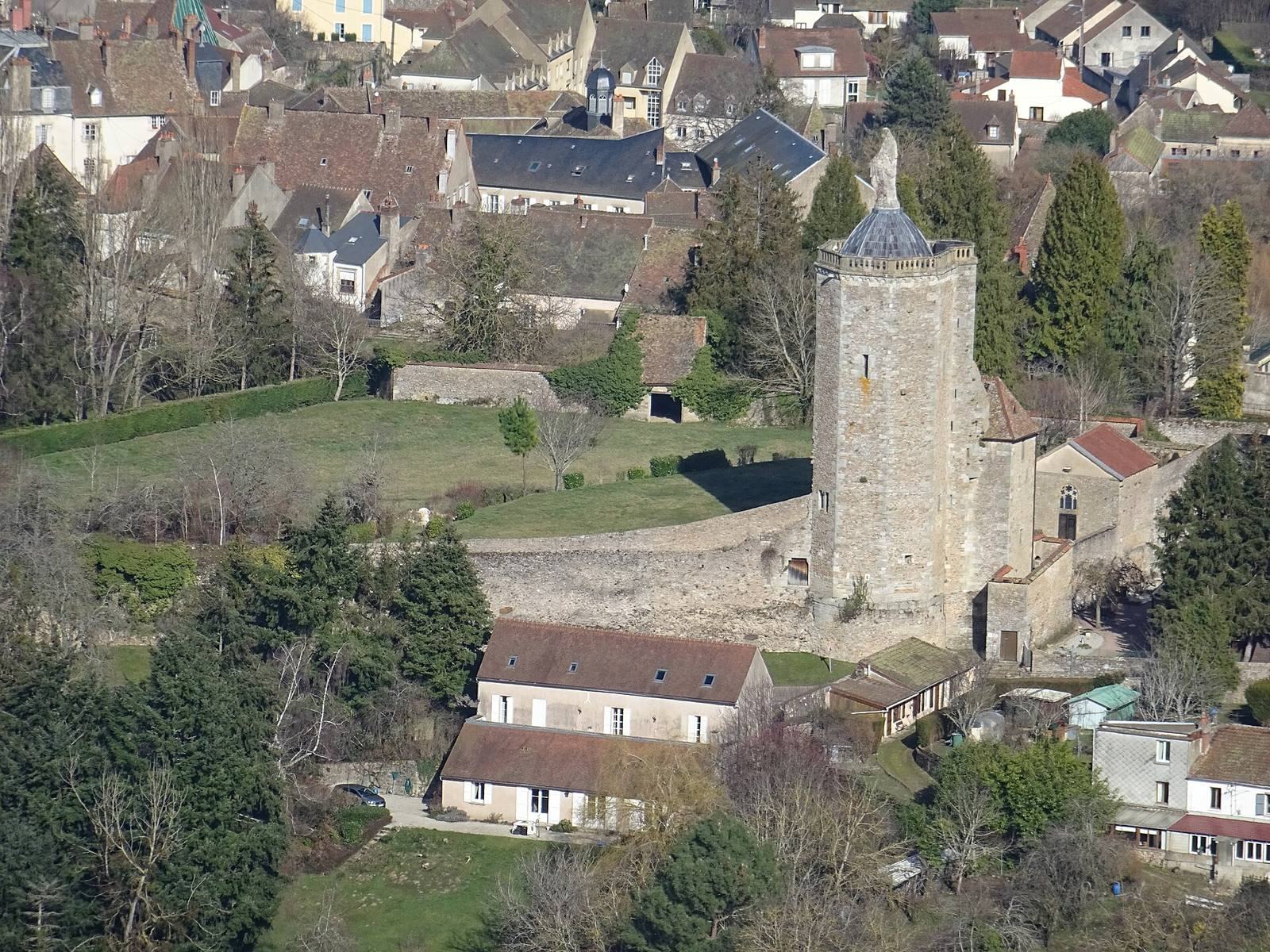
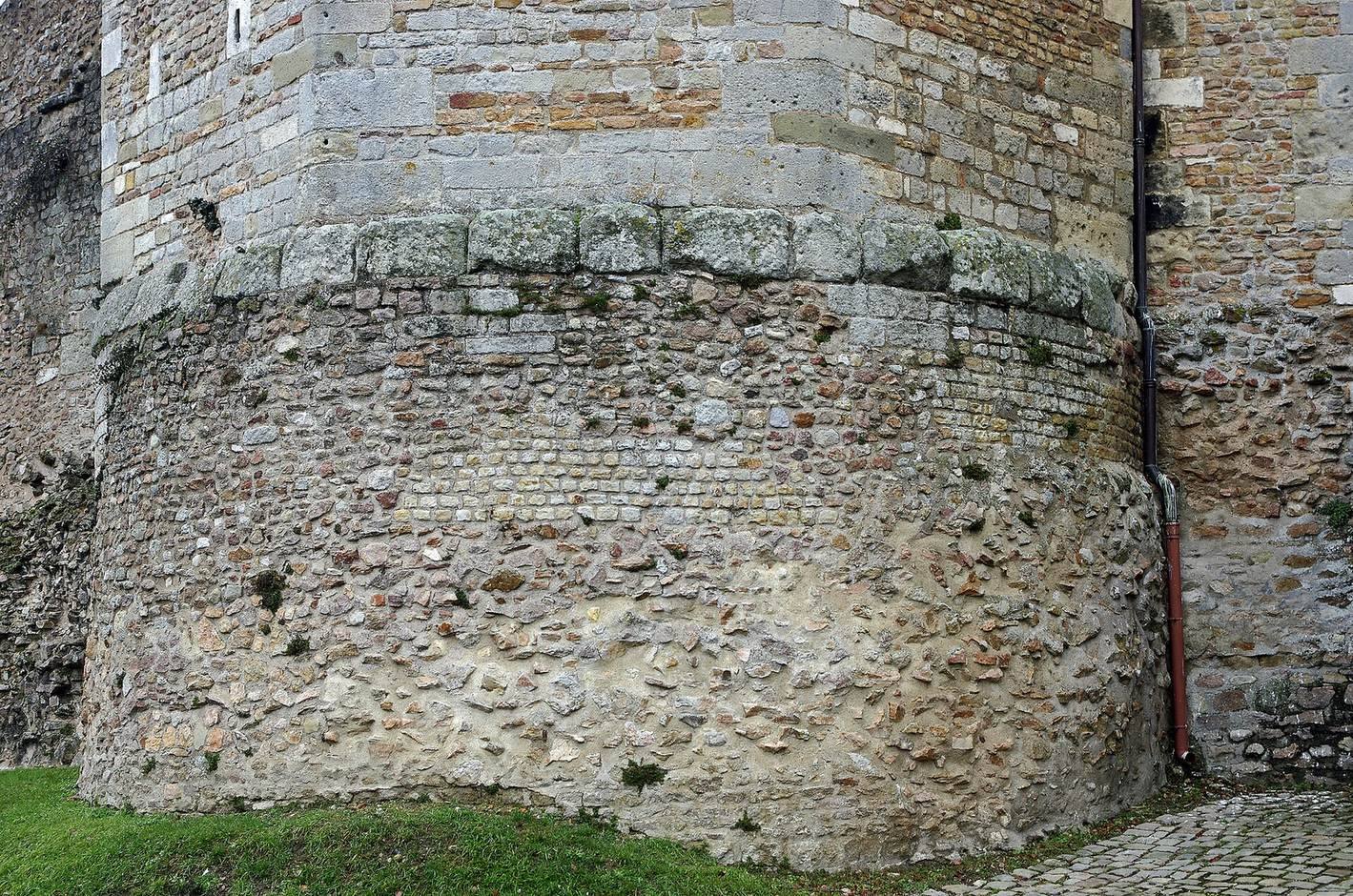
The former fortress occupied the southern part of Autun’s walled city, with the keep at its southern end. The octagonal tower is the castle’s principal surviving remnant. It stands on foundations that include part of a Gallo-Roman city wall, a wall from Roman-era Gaul, and its masonry incorporates material reused from earlier buildings.
The surviving tower
Masonry and openings
Repeated repairs over the centuries shaped the tower’s walls. Among their recorded features are firing slits and paired Romanesque windows. Each window pair sits beneath a semicircular arch and is divided by a column.
Terrace and statue
A stone parapet borders the upper terrace. There, a three-metre-high statue of the Virgin Mary stands on a tall pedestal. Claude Quarré, an architect and sculptor from Autun, created the statue, which has stood on the terrace since 1862.