Palazzo Pascali: A Fifteenth-Century Palace in L’Aquila
Site at a Glance
- Country
- Italy
- Primary era
- Medieval
- Eras represented
- Medieval, Modern
- Civilizations
- Italian, Kingdom of Naples
- Site type
- Domestic
On this page6 sections
History
Fifteenth-century origins
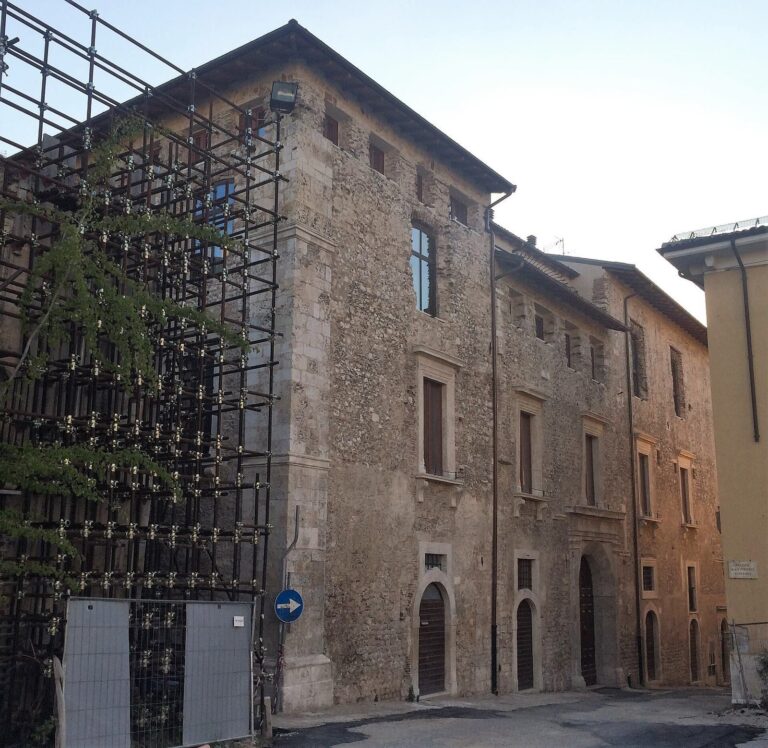
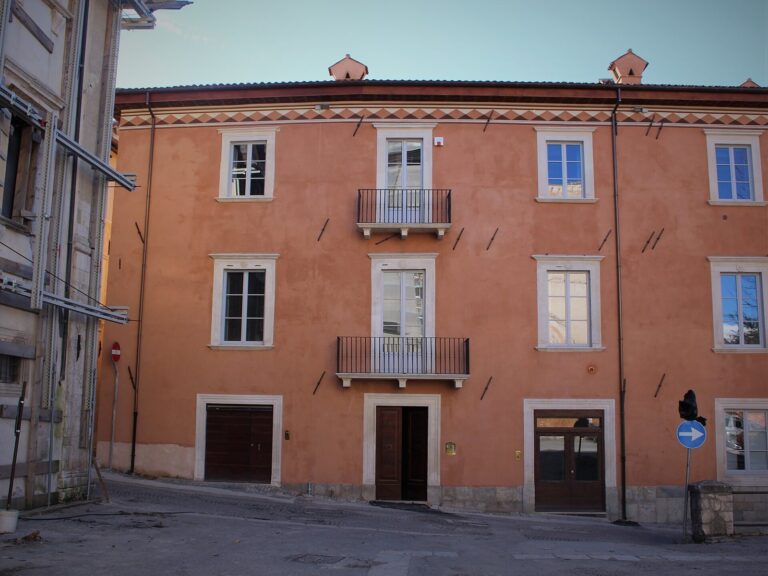
Palazzo Pascali is a fifteenth-century palace in the San Pietro quarter of L’Aquila, Italy, built for the Pascali family. It is Mannerist in style, a European artistic approach chiefly associated with the sixteenth century and its stylized, deliberately elaborate forms. The palace stood at the boundary between the Pizzoli area, to which it belonged, and Barete. Its position suggests that the family came from one of those areas. The building is also known as Palazzo Pasquali, but restoration work identified Pascali as the family’s original name.
Earthquake damage and restoration
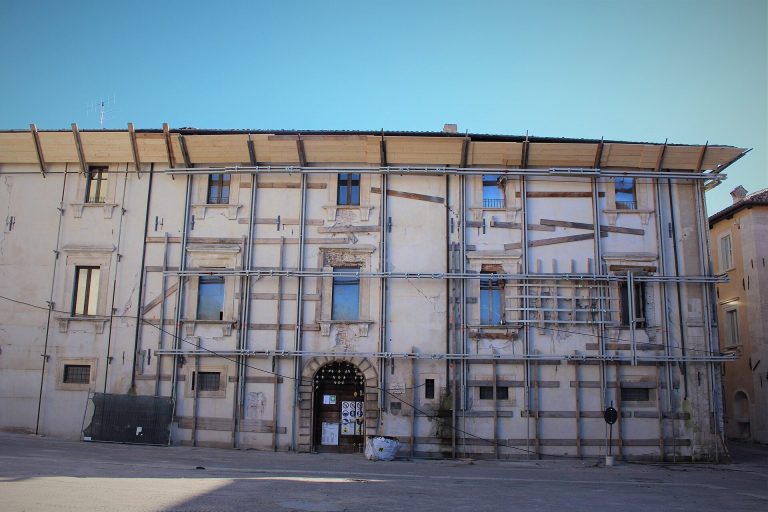
After the 1703 earthquake, the palace fell into ruin. The earthquake probably caused substantial damage, and the building was later renovated. A further earthquake damaged the property in 2009, prompting restoration work that began in 2014. Finds uncovered during the restoration led to the creation of an archaeological garden, designed and directed by architects Giuseppe Cimmino and Silvia Ricci.
Remains
The surviving complex is arranged around a courtyard and includes the original palace’s fifteenth-century main façade and a modern-style addition from the twentieth century.
Main façade
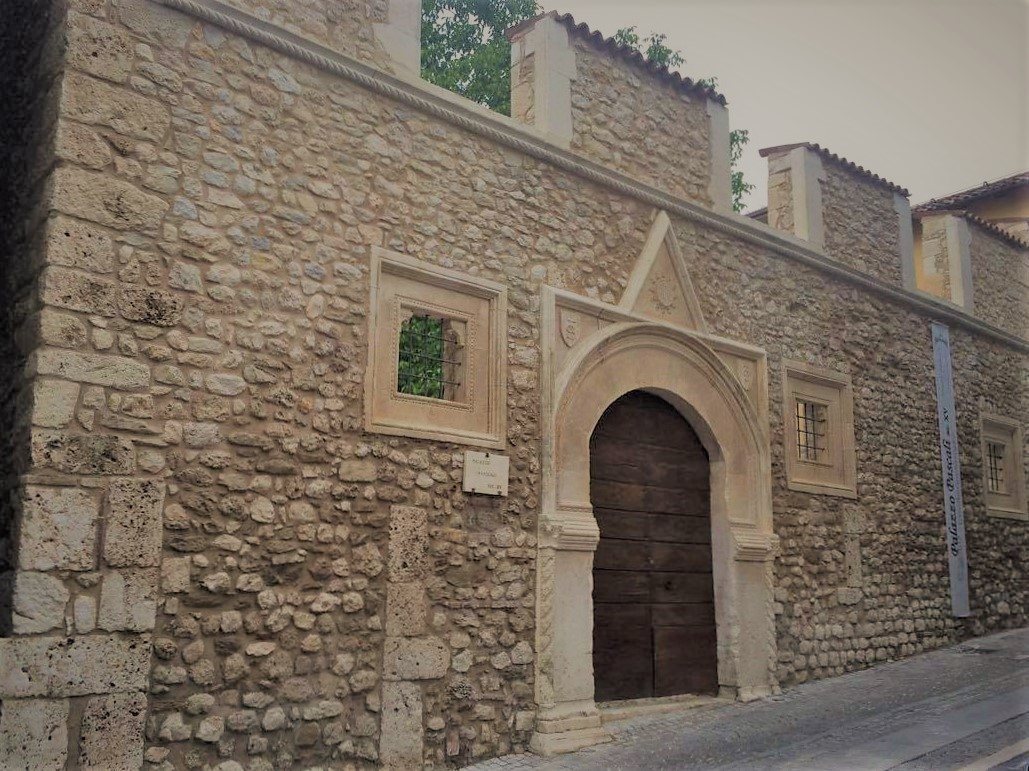
The façade is the only surviving evidence of the original palace. Its large framed portal is flanked by three large rectangular windows, and a crenellated cornice runs along the top. A stone plaque beside the entrance names the building Palazzo Pasquali. It was retained as a historical feature, although restoration work identified Pascali as the family’s original surname. The palace remains in use.
Courtyard and archaeological garden
The courtyard preserves what remains of the palace’s ancient cloister, a covered walkway traditionally arranged around an open space. It now serves as an open-air museum, where lighting and glass display cases present architectural volumes and archaeological finds. These include material dating to the thirteenth century, a well, and a Renaissance-style cistern system. Pottery and other ceramics from the nineteenth century relate to a period when a well-known local ceramicist lived in the palace.