Duncraig Castle: A Scottish Baronial Country House
Site at a Glance
- Popularity
- Very Low
- Country
- United Kingdom
- Primary era
- Modern
- External website
- Open
- Eras represented
- Modern
- Civilizations
- British
- Site type
- Domestic
- Remains
- Castle
On this page9 sections
History
Construction and railway connection
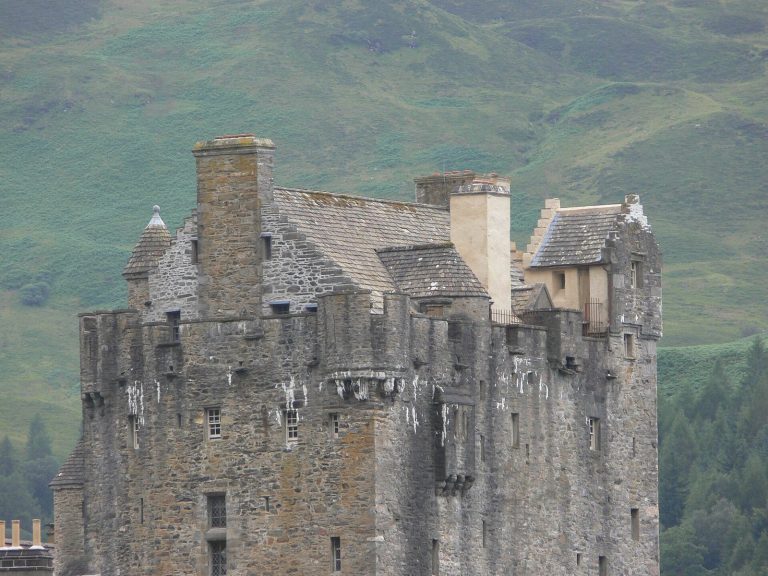
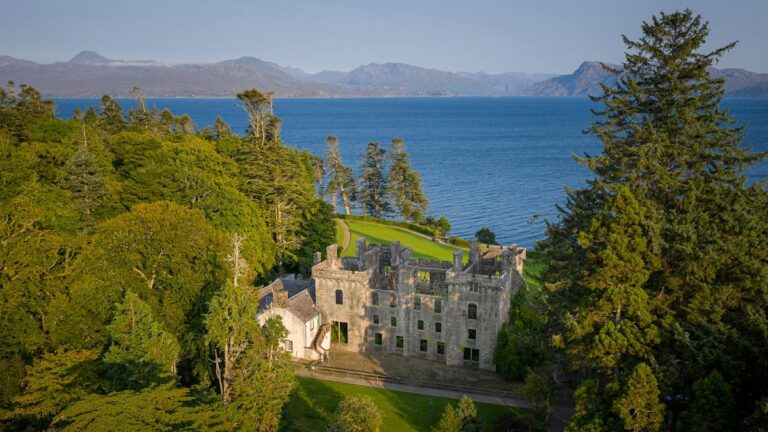
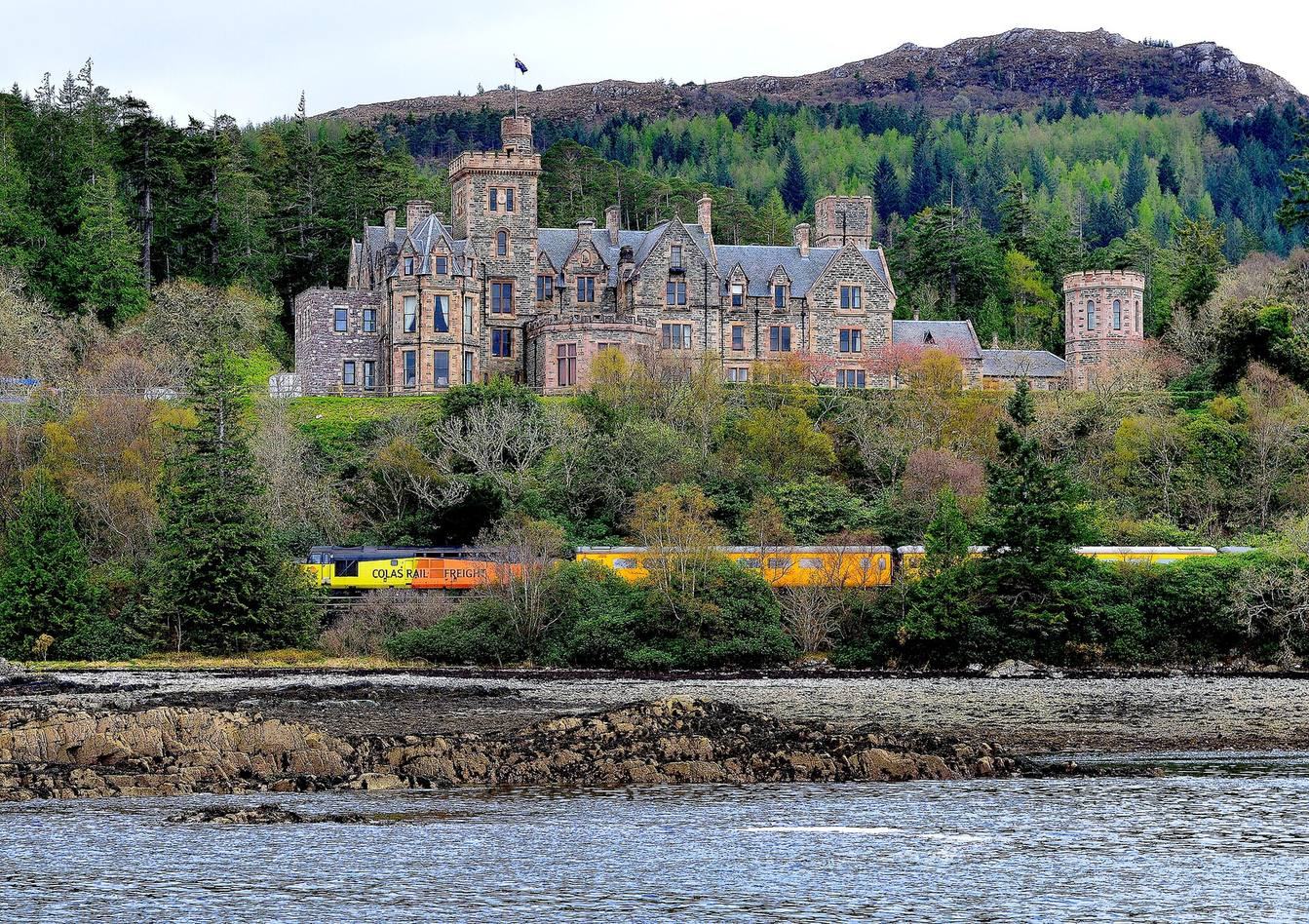
Duncraig Castle is a country house east of Plockton, on the south shore of Loch Carron in Scotland, United Kingdom. It was built in 1866 for Alexander Matheson, a Scottish Member of Parliament and businessman who made a fortune through the Chinese opium trade. Architect Alexander Ross designed it as a residence for large gatherings, near the Matheson family seat at Attadale. Its Scottish Baronial style revived features associated with Scotland’s historic castles, including towers, gables and crenellations.
After Matheson died in 1886, his family retained the house and let it to wealthy tenants for summer entertaining. The Highland Railway opened Duncraig station in 1897 as a private stop for the Matheson family, on its extension from the existing line at Stromeferry to Kyle of Lochalsh. The station later became available to the public.
Education and wartime use
In the 1920s, as the family faced financial difficulties, the castle was sold to Sir Daniel and Margaret Hamilton, owners of the neighbouring Balmacara Estate. They hoped to establish a community education centre there, with training that included weaving. Talks with the local authority began in 1938, but the plan was not put into effect before the Second World War began. During the war, the government used the castle as a naval hospital. Sir Daniel died in its early stages.
At the war’s end, Margaret Hamilton left the castle to Ross-shire Council for a technical school serving the Highlands. The education authority instead operated it as a home economics college for girls, which closed in 1989.
Later uses and protection
After the college closed, the castle stood empty and deteriorated. In the mid-1990s it briefly housed the filming crew of the television series Hamish Macbeth. Sam and Perlin Dobson bought it in 2002, and 17 members of their extended family moved in the following summer. The building required extensive repairs, and the family sold it in 2009. Suzanne Hazeldine then ran it as a bed and breakfast before closing it in 2010 for renovation and conversion to luxury accommodation.
The renovation remained in progress in 2016. The castle later operated as a bed and breakfast and wedding venue in 2021 and 2022, before its sale into private ownership late in 2022 ended its bed-and-breakfast use. Duncraig Castle is a Category C listed building, a Scottish designation for local architectural or historic importance. The railway station received Category B listing in 1997, a category for regional or greater-than-local importance.
Remains
Buildings and grounds
Castle
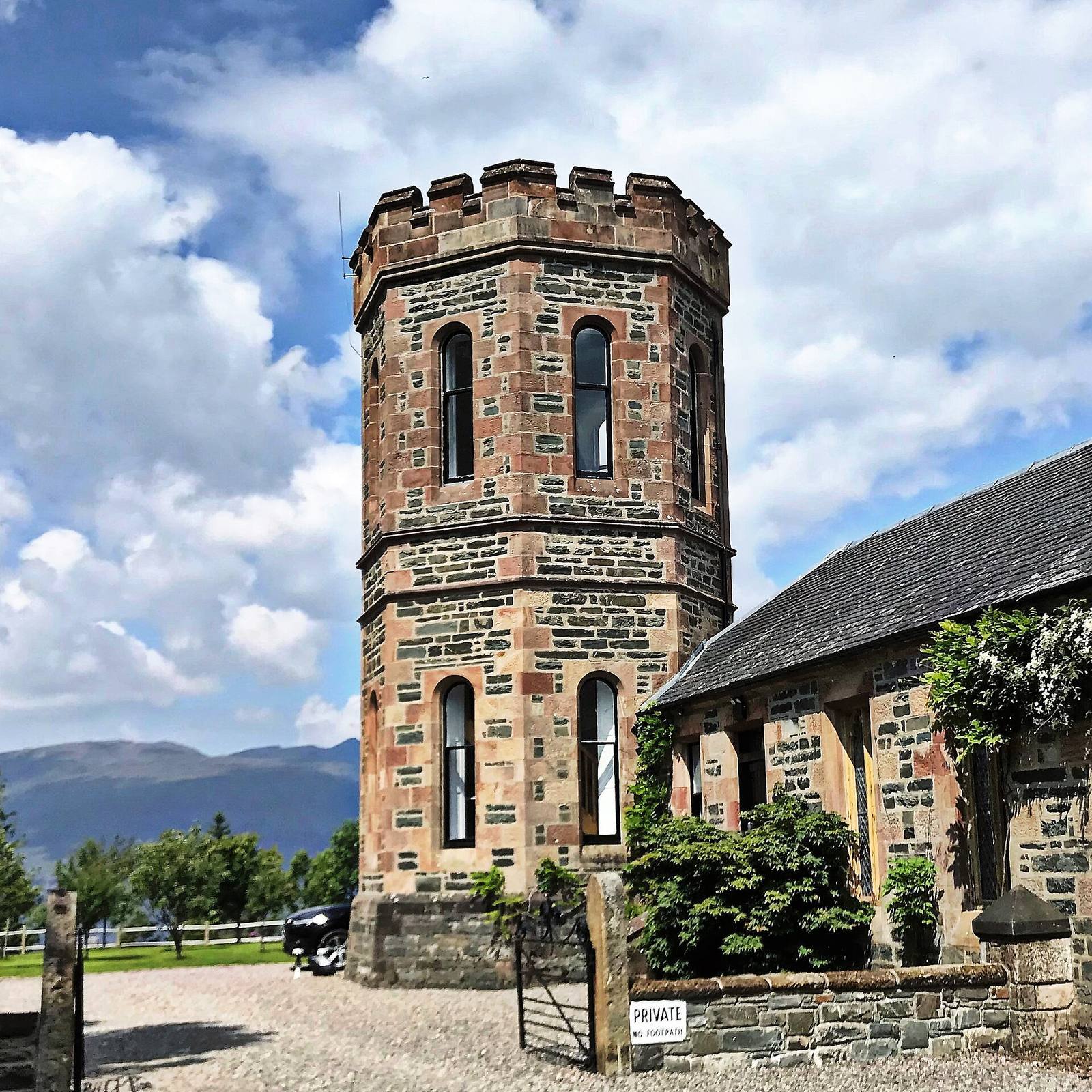
The three-storey castle has an asymmetrical nine-bay layout. A bay is a division of a facade, often marked by a window or structural elements. Gables and crenellations contribute to its Scottish Baronial appearance. The building contains 80 rooms, including a large dining room, as well as a chapel and an octagonal water tower. A large modern extension forms part of the complex.
A modernist-style wing was added in 1969. Later alterations included removing fireplaces and installing central heating throughout the building. When the Dobson family moved in, none of the bathrooms worked and several ceilings had collapsed.
Estate
The estate covers 40 acres (16 hectares), much of it forested. Its grounds include a boathouse and two private islands.
Railway station
Duncraig station has a single concrete platform and a hexagonal shelter topped by a pyramid-shaped roof.