Linde Church: A Medieval Parish Church on Gotland
Site at a Glance
- Country
- Sweden
- Primary era
- Medieval
- Eras represented
- Medieval, Early Modern, Modern
- Civilizations
- Swedish
- Site type
- Religious
- Remains
- Church
On this page14 sections
History
Place-name and construction
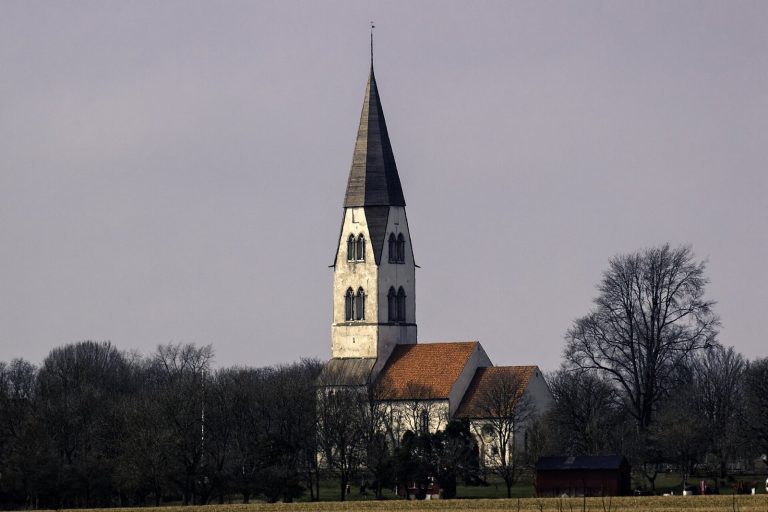
Linde Church is a medieval parish church in Linde, on the southern interior of Gotland, Sweden. It serves Linde parish, a local congregation of the Church of Sweden, a Lutheran church, within the Diocese of Visby, the church’s regional jurisdiction. The parish is served by the pastorate at Fardhem. The church is largely Romanesque, a medieval architectural style marked by round arches and substantial masonry. Its eastern choir, used for clergy and services, and projecting apse date to the late 12th century. The nave, the main space for the congregation, was built in the first half of the 13th century, and the west tower followed around the middle of that century. The church was consecrated during the 13th century.
The place-name appears as Lindum in a copy made in the 14th century. Its form refers to linden trees.
Medieval alterations and later furnishings
Alterations in the 14th century enlarged the arches between the nave and choir and between the nave and tower. The church also acquired a late Gothic altarpiece in 1521, shortly before the Reformation introduced Lutheranism in Sweden. An inscription on the altarpiece records its renovation in 1722 to 1723.
Restoration and continuing use
Restoration in 1906 brought the church’s murals back into view. Further restorations followed in 1951 to 1952 and 1973 to 1975. The organ was restored in the early 21st century.
Remains
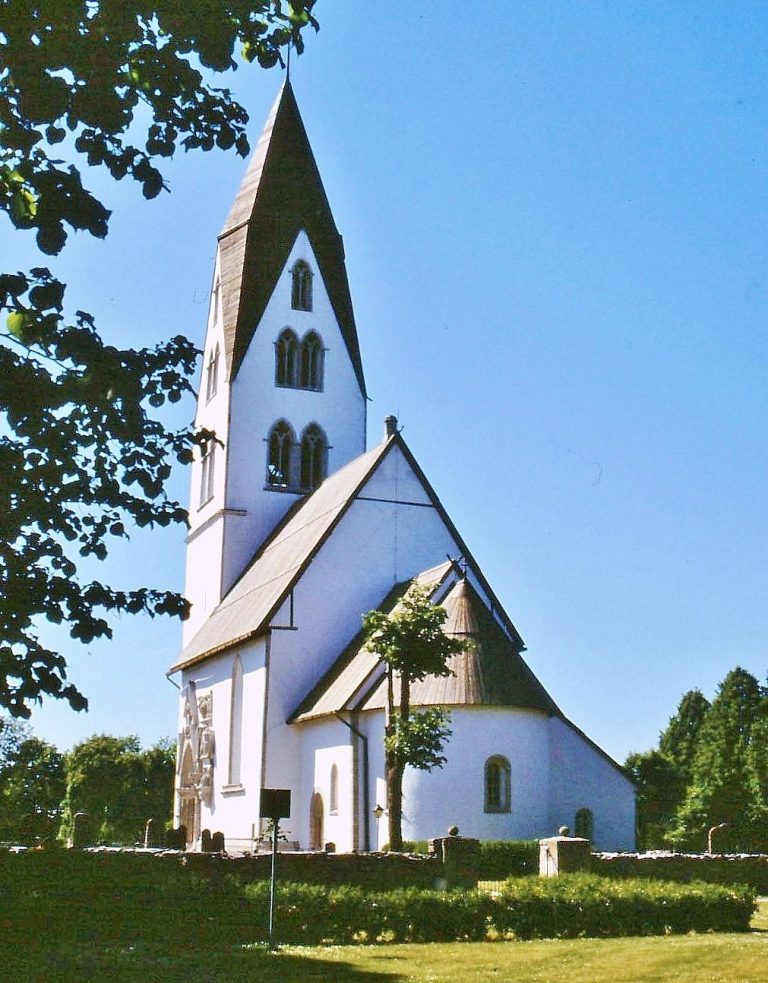
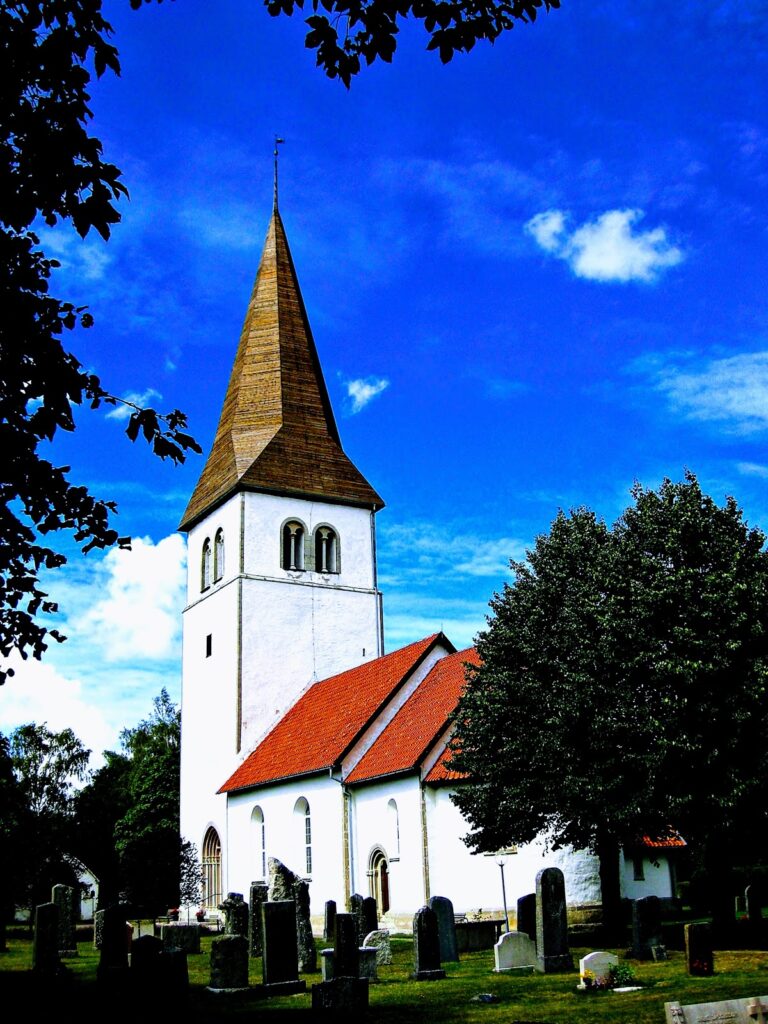
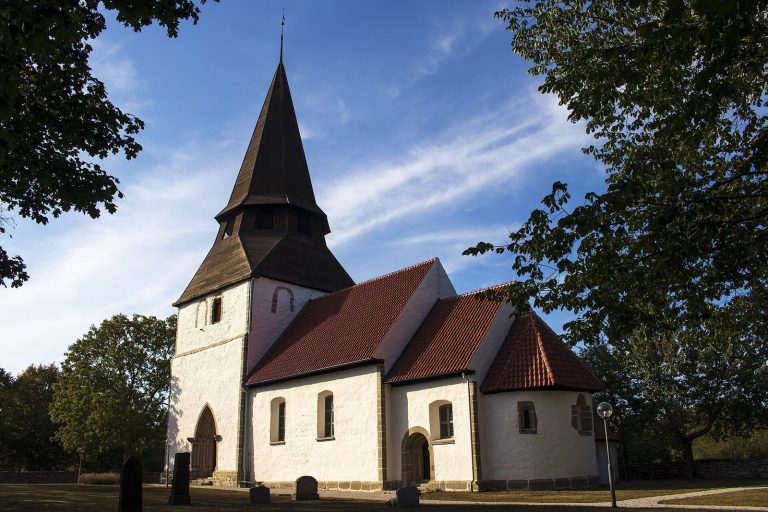
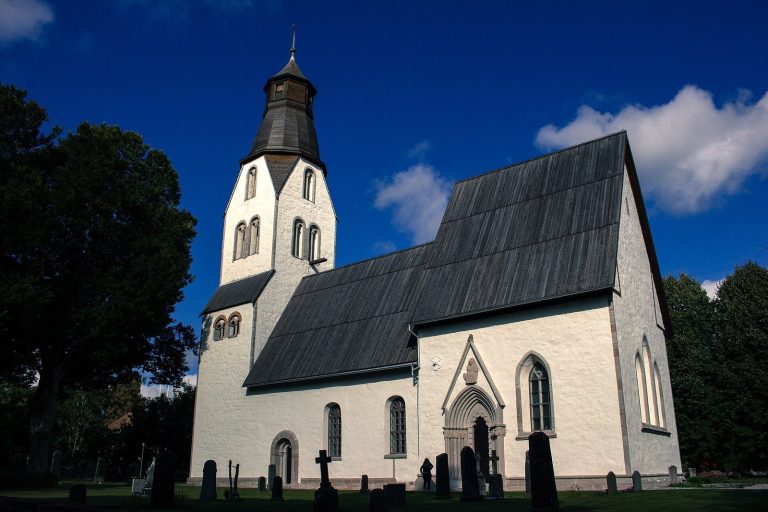
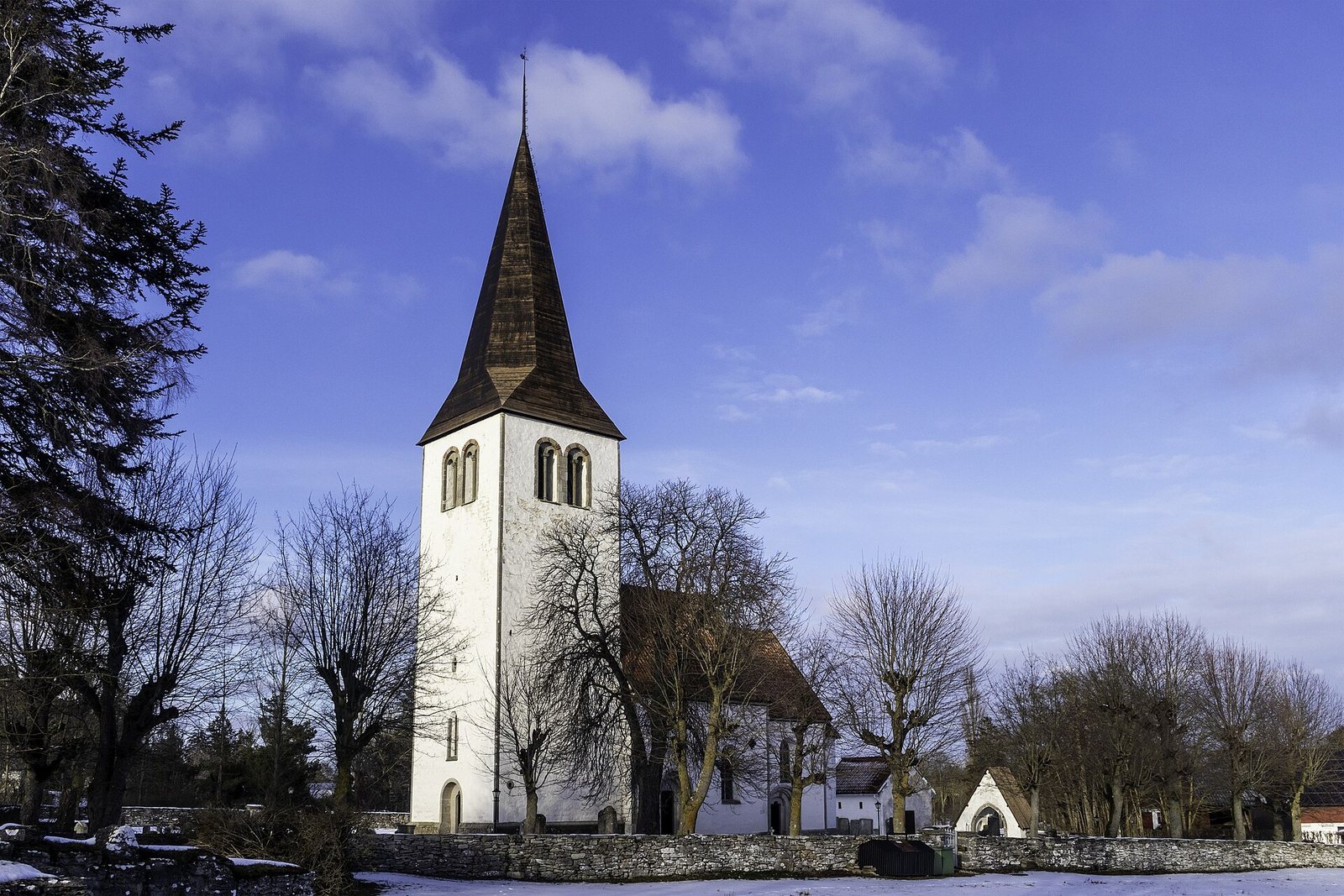
The church has an almost square nave, a narrower choir and apse at its east end, and a tower at the west end. Its limestone walls are white-plastered, with finely dressed stone visible at the edges. The pitched roofs over the nave and choir are covered with clay tiles; the apse has a domed roof, and both apse and tower have timber covering.
Exterior form
Plan and masonry
Within the nave, two aisles are covered by four cross-vaults, vaulted sections that intersect, and supported by a massive, plain central column. The choir is narrower than the nave, while the apse projects from its eastern end. At the opposite end, the tower has an octagonal spire and round-arched, columned sound openings. The wide, slightly pointed triumphal arch connects nave and choir, while a similarly enlarged arch opens toward the tower.
Windows and portals
A large Gothic window, a style associated with pointed forms and larger openings, was inserted in the east wall during the 14th century. The apse probably received its present pointed windows in the same period. The surviving round-arched windows are 19th-century replacements. The church originally had four round-arched portals. The choir portal was probably altered in the Middle Ages, while the portals of the nave and choir retain Romanesque sculpture.
Interior and furnishings
Murals
Paintings in the nave and tower chamber belong to the 14th century, the 15th century, and the second half of the 17th century. The 14th-century work includes individual apostles set within small architectural frames. Later medieval scenes depict the Passion of Christ and women troubled by devils. Some paintings are attributed to the Passion Master, the conventional name for an unidentified medieval painter or workshop. They show devils tempting women to chatter during worship and distracting women at prayer, while an angel protects the praying women.
Altarpiece and altar
The carved and gilded oak altarpiece centers on the Throne of Grace, a Christian image of God the Father holding the suffering, thorn-crowned Christ. Saint Giles, shown with a hind, and Saint Olaf, depicted as a dragon-slayer, flank the central scene. Carved apostles and saints, including Canute, Eric, and Bridget, appear on the wings, whose outer faces carry painted stories of saints. The altarpiece stands on a medieval stone altar table with niches for relics; a consecration cross is carved on its limestone slab.
Baptismal fonts
Two decorated medieval baptismal fonts, vessels used for baptism, are associated with the church, and at least their lower sections date from the Middle Ages. One has a limestone foot from the 12th century attributed to Semibyzantios, a name associated with medieval stone carving on Gotland. Its bowl may date from the 13th century and was painted in the 18th century. One of the fonts may also be the work of Hegvald, another name associated with Gotland’s medieval stone carving. The other font is now in Gotland Museum.
Cross, runestone, seating, and organ
A copy of the late-12th-century triumphal cross, displayed near the arch between nave and choir, hangs in the church; the original is in the Swedish History Museum in Stockholm. The church also contains runestone G 80, a stone bearing runic inscriptions. Its pulpit dates to the second half of the 17th century and was painted in 1700. Four enclosed blocks of pews provide 18th-century seating. Olof Niclas Lindqvist of Visby built a five-stop organ in 1858. Åkerman & Lund of Stockholm supplied a replacement instrument in 1901, retaining the earlier organ’s neo-Gothic façade. The instrument is mechanical.
Churchyard and setting
A storehouse built in 1835 stands in the southwest corner of the churchyard, beside a medieval portal in its wall. A medieval ruin about 100 metres southwest of the church is thought to have been the former parsonage. Lindeberg, one of Gotland’s higher elevations, lies north of the church and contains remains of several prehistoric hillforts, enclosed elevated sites used for defense or refuge. Asträsk Lake is nearby, and a wheel grave, a circular stone burial monument, lies 1.5 kilometres east of the church.