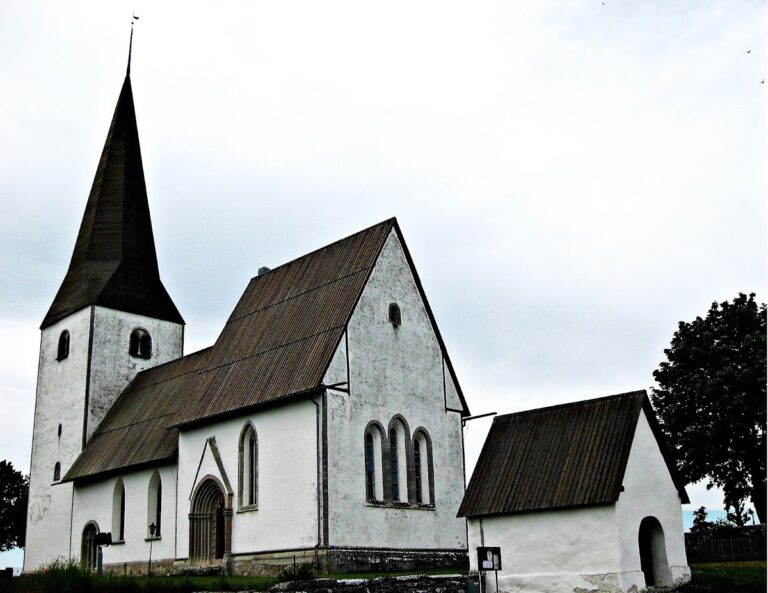
Lye Church: A Medieval Romanesque and Gothic Church on Gotland


Site at a Glance
- Rating
- 4.5
- Popularity
- Very Low
- Country
- Sweden
- Primary era
- Medieval
- External website
- Open
- Eras represented
- Medieval, Early Modern, Modern
- Civilizations
- Swedish
- Site type
- Religious
- Remains
- Church
On this page20 sections
History
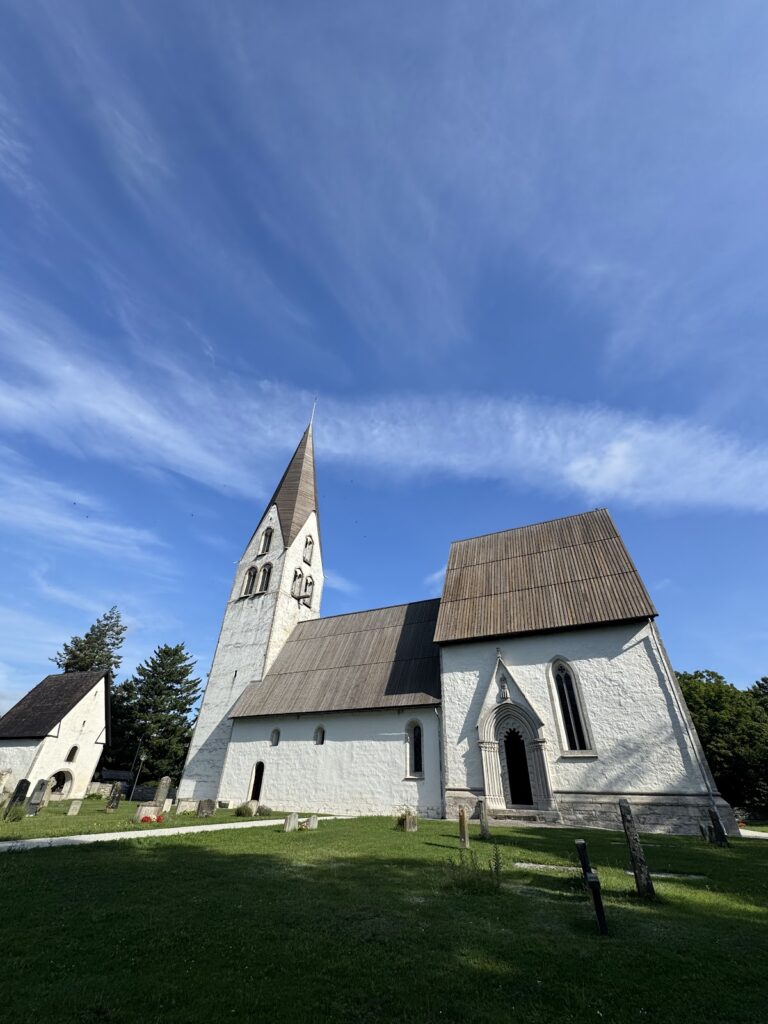
Lye Church is a medieval Lutheran church in Sweden, on the island of Gotland, whose oldest parts were built in the Romanesque period during the last quarter of the twelfth century. It belongs to Garde Parish, within the Diocese of Visby, and remains an active place of worship. The church preserves its principal medieval form, although later rebuilding, repairs, and interior alterations have shaped its present appearance.
Romanesque foundation and tower
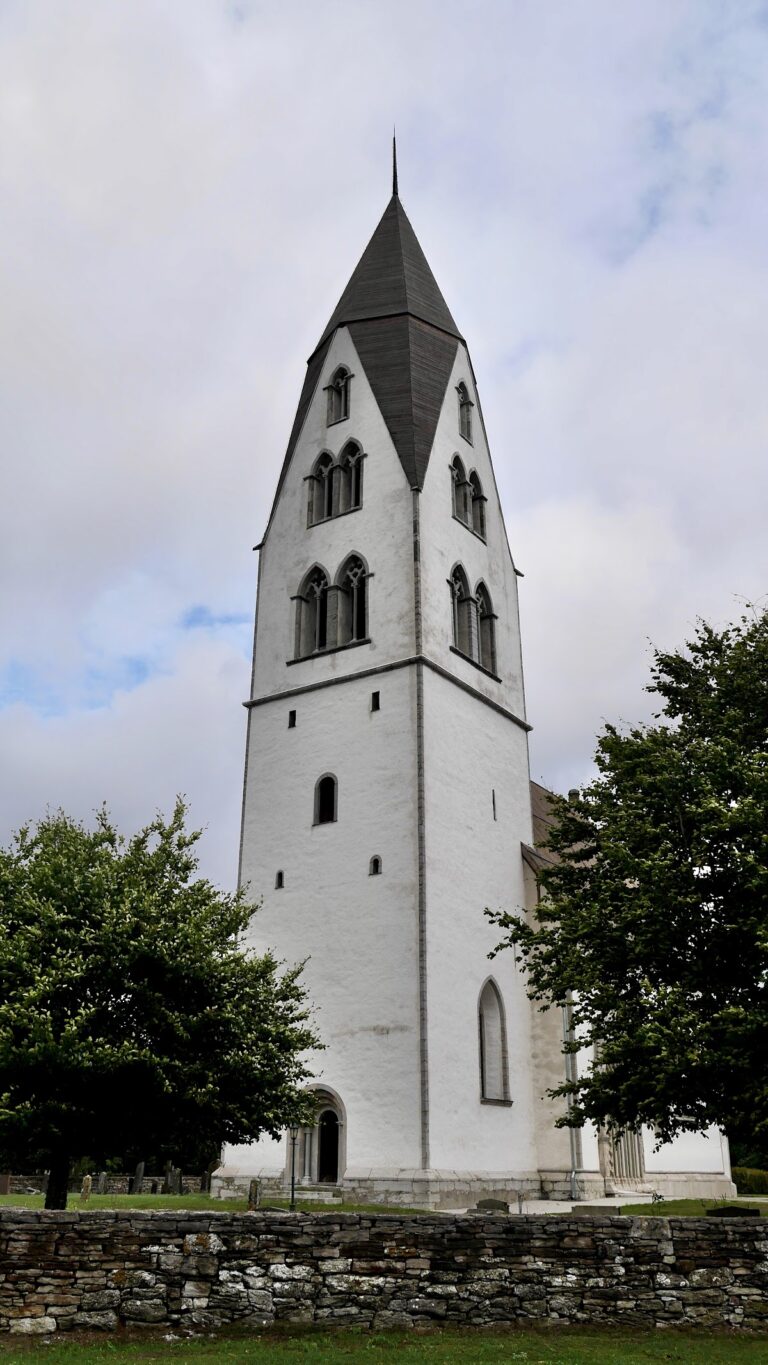
The nave was probably constructed during the last quarter of the twelfth century, together with an earlier chancel. Romanesque architecture is characterized by massive masonry, round arches, and relatively small openings. During the first half of the thirteenth century, a tower was added at the western end. Its construction required the demolition of the nave’s western wall so that the new tower could be joined directly to the church.
The tower remains the best-preserved Romanesque part of the building. Its ground floor forms a broad vaulted room opening into the nave through a wide arch. The tower’s later history also includes a bell cast in Stockholm in 1650 and a roof installed in 1939, based on an earlier design probably made in 1779 by the architect Olof Tempelman. That design was probably carried out by the builder Hans Hesselby, who also built the tower roof at Ala Church in 1780.
Fourteenth-century rebuilding
During the second quarter of the fourteenth century, the earlier chancel was replaced by a larger Gothic chancel, and a sacristy was added. Gothic architecture is associated with pointed arches, more elaborate stonework, and larger openings. The work was carried out by the Gotland workshop conventionally known as Egypticus, an unidentified medieval workshop active on the island.
A further enlargement of the nave was probably planned but never completed. Thin provisional walls between the nave and chancel preserve evidence of this interrupted project. The unfinished work produced the church’s unusual proportions, with the later chancel much larger than the nave. The former chancel portal was dismantled and reassembled as the present northern entrance to the nave.
Later alterations and conservation
The decorated wooden ceiling dates from the eighteenth century, while the three nave windows were probably installed during the 1850s in place of much smaller openings. An extensive interior renovation in 1891 renewed the nave and chancel floors and replaced the pews, altar rail, and organ facade. Central heating was added in 1932.
A major renovation in 1954 and 1955 was directed by the architects Erik Fant and Olle Karth. The nave walls were raised by approximately one metre, exposing more of the arch between the nave and chancel and allowing a modern fire-resistant ceiling to be installed above the historic wooden ceiling. The interior walls were cleaned, medieval paintings were uncovered and restored, eighteenth-century paintings were removed, and some furnishings were repaired. The exterior was renovated in 1968, when the present roofs were installed.
Lye Church is registered as an ecclesiastical monument in the database of the Swedish National Heritage Board. In 2019, it was among the first 56 cultural heritage monuments on Gotland and in Sweden to receive the blue-and-white shield associated with the Hague Convention for the Protection of Cultural Property in the Event of Armed Conflict.
Memorials and medieval furnishings
The church retains a 1496 altarpiece donated by Jon, a farmer of the parish, and a late-fifteenth-century triumphal cross that may have been made by the same artist. A triumphal cross is a large cross placed at the entrance to the chancel, the part of a church surrounding the main altar. Several medieval gravestones are set into the floor. One commemorates a local man named Jakob, whose inscription states that he was killed by a cannonball in 1449 while participating in the siege of Visborg Castle near Visby. The castle was then held by Eric of Pomerania, the fifteenth-century ruler of Sweden, Denmark, and Norway within the Kalmar Union.
Remains
Setting, plan, and construction
Lye Church stands about 300 metres south of the main road between Hemse and Ljugarn in south-eastern Gotland, at the centre of its old cemetery. The cemetery is enclosed on its southern, eastern, and western sides by a low stone wall between 80 and 130 centimetres high. Built between 1765 and 1793, the wall replaced an earlier wooden fence. Its northern side is partly demolished and opens onto a cemetery extension established in 1944. Four entrances serve the cemetery. A row of European ash trees follows the former northern boundary, while small-leaved lime trees border the newer section. A small storage building, constructed before 1846, stands in the north-western part of the old cemetery.
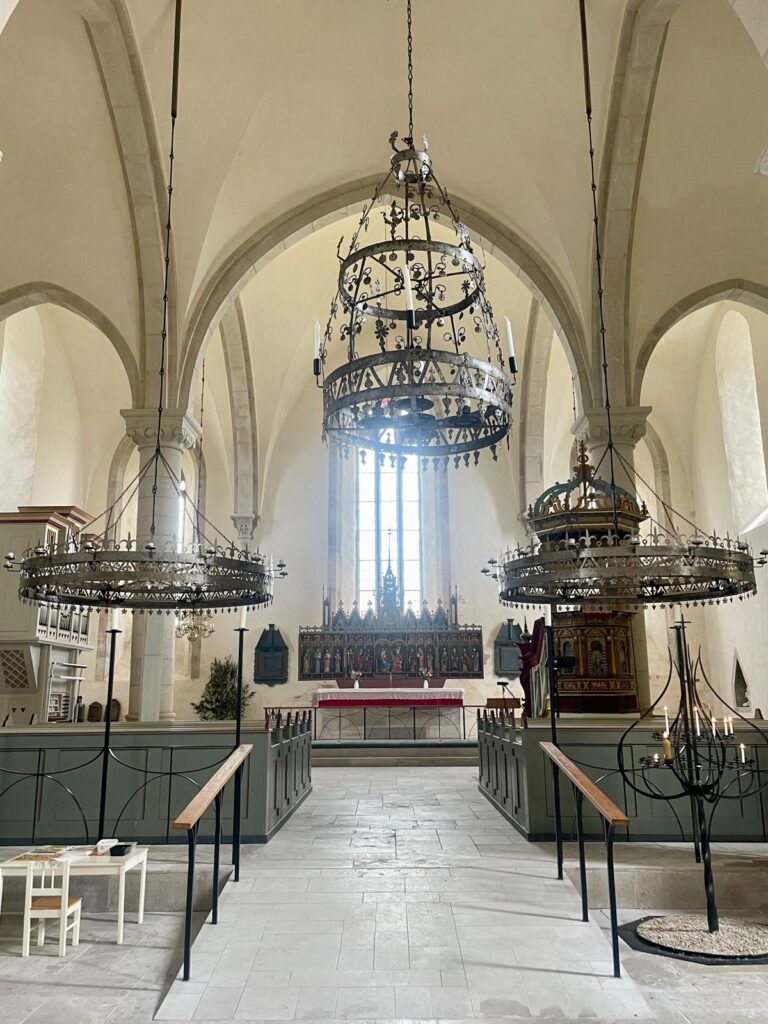
The church is built mainly from grey, tufaceous limestone and is whitewashed externally. Dressed limestone forms the portals, wall bases, parts of the window surrounds, and the corners of the chancel and tower. Brick and differently coloured limestone appear in some details. The nave and tower are predominantly Romanesque, while the chancel is Gothic. The plan consists of the tower’s ground floor, a rectangular nave, a chancel, and a sacristy. The chancel is large and high, lacks an apse, and has a vaulted ceiling. A pointed limestone arch connects it with the nave, while the sacristy has a groin-vaulted ceiling. The contrast between the smaller nave and larger chancel gives the building a silhouette often compared with a pack saddle.
Tower and entrance portals
Romanesque tower entrance
The western portal at the base of the tower has an outer round arch made from alternating red and grey limestone, with an inner arch of roughly hewn grey limestone. A carved stone container is built into the southern door jamb. It may originally have been a sarcophagus or reliquary, a container for sacred remains, before being reused as building material and cut to fit the wall. Its exposed surfaces carry low-relief sculpture. The short side facing the doorway shows the enthroned Madonna. The long outer side depicts two legendary creatures fighting, two dragons or possibly a two-headed dragon, an armoured warrior with weapons, and a horse. The scene has been interpreted as a possible representation of Sigurd’s killing of Fafnir. The reliefs date from the twelfth century and are attributed to Sigraf, a Romanesque sculptor or workshop active around 1175 to 1210.
Northern nave portal
The northern nave portal is the narrowest of the church’s four entrances. Its round arch is formed from alternating blocks of limestone and sandstone. The portal does not appear to occupy its original position and may have been moved during the Middle Ages from the former chancel.
Southern nave portal
The southern nave portal also uses alternating red and grey limestone. Its inner section consists of two pillars with convex cubic capitals supporting a round arch. Together with the western tower entrance and the northern nave portal, it belongs to the church’s Romanesque group of entrances.
Gothic chancel portal
The largest entrance is the Gothic portal to the chancel. Its pointed arch is crowned by a grey-and-red limestone wimperg, an ornamental Gothic gable above a portal. The tympanum contains carved flowers, while the capitals of the engaged columns show scenes from the childhood of Christ: the Annunciation, Visitation, Nativity, announcement to the shepherds, Adoration of the Magi, and Massacre of the Innocents.
The wimperg shows Christ enthroned, raising his right hand in blessing and resting his left hand on a book. The sculptures retain traces of their original black, red, and green colouring and are unusually well preserved. Their style is related to the sculpture at Norrlanda Church, and they are regarded as among the finest works associated with Egypticus.
Paintings, inscriptions, and stained glass
Medieval wall paintings
Three principal groups of medieval wall paintings survive inside the church. The earliest, dating to approximately 1350, covers the chancel vault and northern wall with large figures. Further paintings were added to the northern wall in the fifteenth century. A second group, made around 1450, covers the walls of the nave and chancel with scenes from the Passion of Christ, episodes from saints’ legends, and individual saints framed by painted architectural forms. These works are attributed to the Passion Master or his workshop, the conventional name for an unidentified artist or workshop associated with scenes of Christ’s Passion.
The third group dates from the second quarter of the sixteenth century and consists of two scenes on the southern nave wall. All the medieval paintings were covered with whitewash in the eighteenth century and were uncovered and restored during the renovation of the 1950s.
Stained-glass windows
The eastern and southern chancel windows contain the largest surviving ensemble of medieval stained glass in the Nordic countries and one of the best-preserved ensembles of its kind. The glass dates from the construction of the chancel and includes 15 figurative panes, four panes with architectural motifs, and 15 foliage designs.
The central eastern window presents the life of Christ. Its northern half shows episodes from Christ’s childhood through the Presentation at the Temple, while its southern half follows the Passion through the Ascension. The flanking windows and the southern chancel window contain individual saints and decorative designs. The figures reflect a High Gothic style, with slender bodies, loose garments, and rhythmically curled hair and beards. Blue backgrounds and red separating bands dominate the compositions, whose palette is softer and cooler than that of earlier Gotland stained glass.
The windows have been attributed to a workshop active in Visby. The Swedish art historian Johnny Roosval considered English Gothic to be the principal stylistic influence, while Aron Andersson argued for a mainly northern German influence.
Carvings and runic inscriptions
Several medieval gravestones form part of the church floor. The walls also carry numerous carvings made directly in the stone, including a Troy Town labyrinth, a motif formed from winding or concentric paths, and fifteenth-century ships. Approximately 40 runic inscriptions are present, together with another inscription discovered in 2018 whose meaning remains uncertain and may include profanity.
Altarpiece and other furnishings
Altarpiece and triumphal cross
The 1496 altarpiece is made of painted and gilded oak. Its central section is flanked by pinnacles and two wings. The centre shows God the Father holding the dead Christ, surrounded by angels, with twelve small figures of the apostles. The damaged outer faces of the wings depict Saints Olaf, Lawrence, John the Baptist, and Stephen. The predella, the lower section of an altarpiece, shows the Veil of Veronica.
Suspended beneath the chancel arch, the late-fifteenth-century triumphal cross depicts Christ crucified. Christ has black hair and a black beard, together with a green crown of thorns. The cross is approximately 3.5 metres high and may have been made by the artist responsible for the altarpiece.
Font and pulpit
The undecorated limestone baptismal font dates from the middle of the thirteenth century. The pulpit bears the date 1705 and the monogram of King Charles XII of Sweden, who reigned from 1697 to 1718. It was painted in 1726 with representations of the Four Evangelists and the apostles James and Peter.
Objects preserved elsewhere
Four medieval objects formerly associated with Lye Church are preserved in the Swedish History Museum in Stockholm. They include two damaged former altarpieces, one depicting revelations of Saint Bridget of Sweden, as well as a thirteenth-century processional cross made with Limoges enamel and a gilded figure of Christ made from Limoges enamel and copper. Limoges enamel is a technique in which coloured glassy enamel is applied to a metal surface.