Ruthin Castle: A Medieval Fortress in Wales
Site at a Glance
- Country
- United Kingdom
- Primary era
- Medieval
- Eras represented
- Medieval
- Civilizations
- English, Welsh
- Site type
- Military
- Remains
- Castle
On this page5 sections
History
Early site and medieval castle
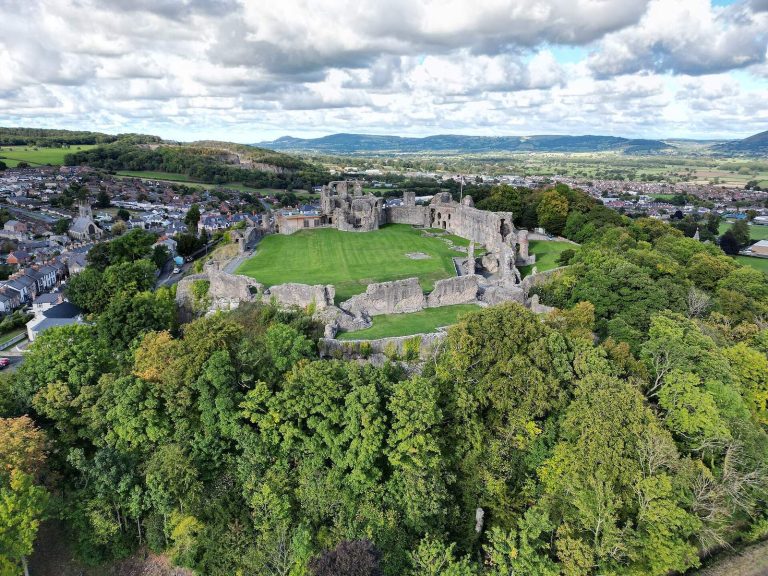
Ruthin Castle is a medieval fortress in north Wales, United Kingdom, built by the Welsh prince Dafydd ap Gruffydd in the late 13th century. The site had been used for a fort in the Iron Age. In 1277, Edward I, king of England, granted Dafydd the land in return for his support during the English invasion of north Wales. It is unclear whether a fort already stood there or whether Dafydd established a new castle. Its original Welsh name, Castell Coch yn yr Gwernfor, means “Red Castle in the Great Marsh.”
In the medieval period, the castle became the seat of a branch of the de Grey family. The family head held the title Baron Grey de Ruthyn and served as the Marcher lord of Dyffryn Clwyd, with authority in the border region between England and Wales. Reginald Grey, the third baron, was based at the castle and is credited with helping provoke Owain Glyndŵr’s revolt against English rule.
Imprisonment and the English Civil War
From 1579 to 1580, the castle was used to imprison and torture Richard Gwyn, a Welsh poet and schoolmaster who refused to conform to the Church of England, often for Catholic reasons. He was executed at Wrexham on 15 October 1584 by hanging, drawing, and quartering. In 1970, Pope Paul VI, head of the Roman Catholic Church, canonized him as one of the Forty Martyrs of England and Wales.
At the beginning of the English Civil War, a conflict between supporters of the king and Parliament, Ruthin Castle was in poor repair and was hastily strengthened. It resisted parliamentary forces during an 11-week siege in 1646, but surrendered after the besiegers threatened to dig beneath its walls. Oliver Cromwell’s forces later dismantled and demolished the castle to prevent its further military use.
Hospital, hotel, and protection
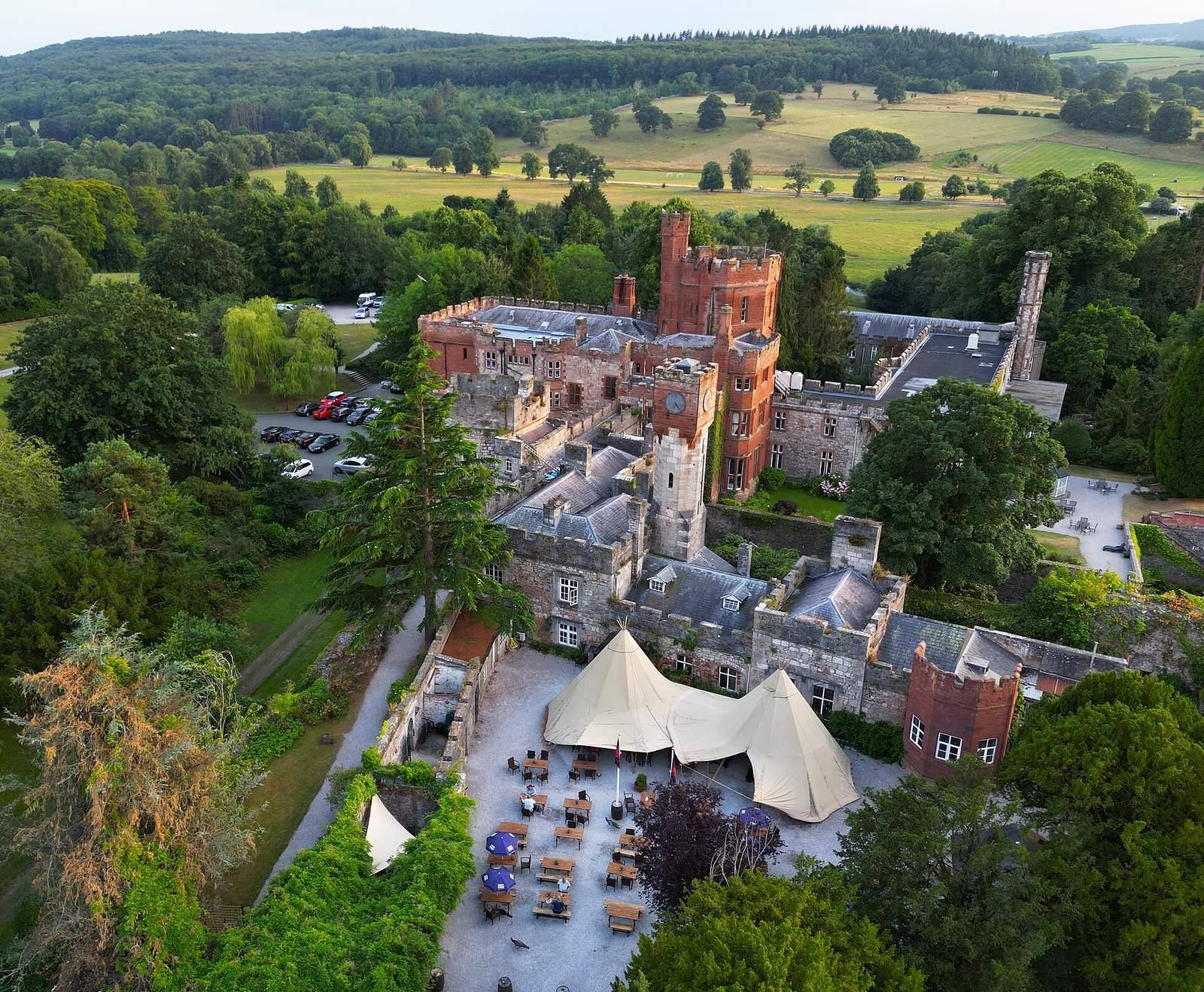
In 1923, the castle became Britain’s first private hospital devoted to diagnosing and treating obscure internal diseases. The hospital closed around 1950, and from the 1960s the castle remains were incorporated into a hotel. Ruthin Castle is protected as a Grade I listed building, a category for structures of exceptional architectural or historic interest, and as a Scheduled Monument, a legally protected archaeological or historic site.
Remains
The castle was built on a red sandstone ridge overlooking the Vale of Clwyd, using rubble stone. Sections of its old walls survive as part of the hotel, while the castle is otherwise in ruins.