Vika Church: A Medieval Parish Church in Falun, Sweden
Site at a Glance
- Country
- Sweden
- Primary era
- Medieval
- Eras represented
- Medieval, Early Modern, Modern
- Civilizations
- Swedish
- Site type
- Religious
- Remains
- Church
On this page6 sections
History
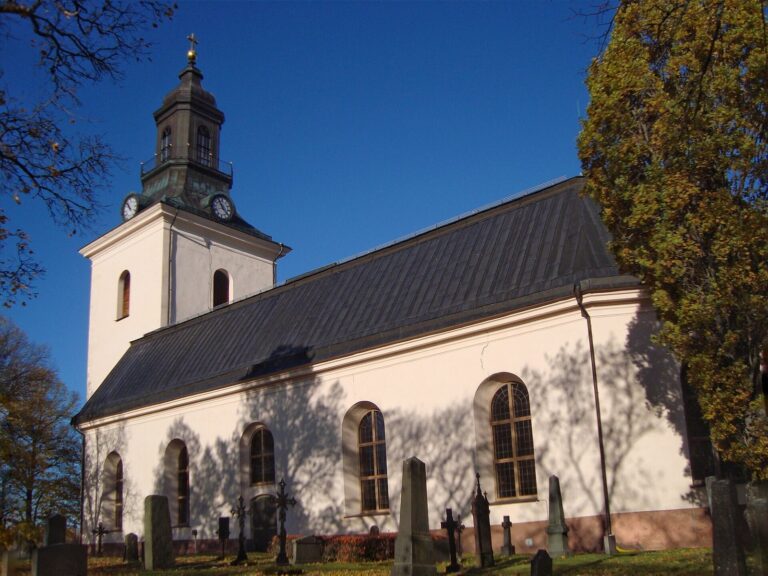
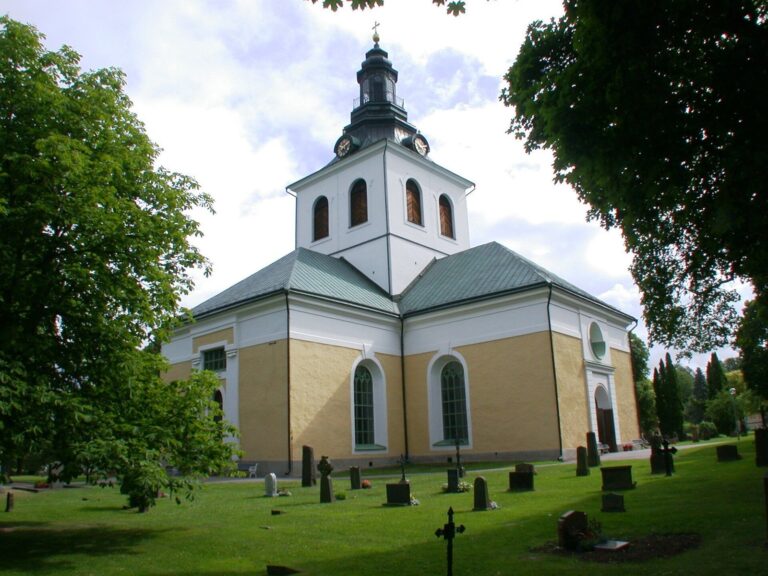
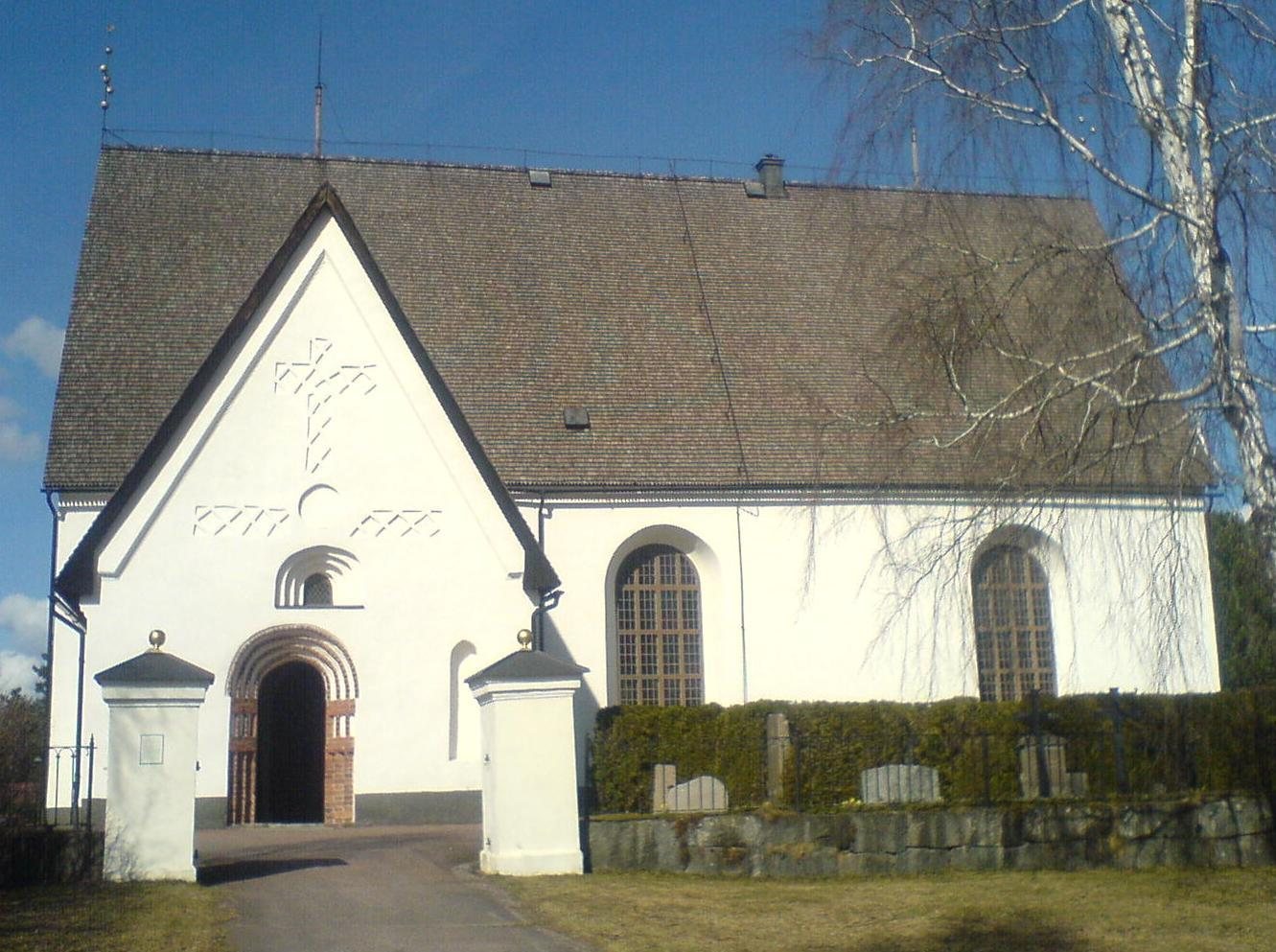
Vika Church is the parish church of Vika-Hosjö Parish in Falun, Sweden, and belongs to the Church of Sweden, a Lutheran church. The parish is part of the Diocese of Västerås, a regional church area overseen by a bishop. The present stone church was consecrated in 1469, though some of its fabric, including the sacristy, comes from an earlier church.
Early churches and medieval consecration
A pagan cult site may have occupied the area before Christianity reached the region, probably in the twelfth century. A wooden church stood here before a smaller stone church took its place. The wooden building probably burned down.
The consecration of the present church in 1469 followed these earlier phases of worship. The church continues to serve the local parish community.
Later changes
The church’s organs were replaced and altered over several centuries. Paul Müller built a five-stop organ in 1614, with stops that select sets of pipes. Johan Petter Roos repaired it in 1725, and Daniel Stråhle carried out further repairs in 1733. In 1769, Mattias Swahlberg the Younger and Nils Söderström built a six-stop instrument, later expanded with a 4-foot Trumpet stop.
E. A. Setterquist & Son of Örebro built a new organ in 1900. It had ten stops, two manuals (hand keyboards), and a pedal (foot keyboard), and used a pneumatic system that transmitted the player’s actions through air pressure. Mrs. Ellen Nisser of Rottneby donated it in memory of her husband, industrialist Ernst Nisser, and their son Georg. Music director Johan Ulrik Cederberg approved the instrument, and Pastor Broberg inaugurated it on 2 December 1900. The present organ was installed in 1966.
During a renovation led by Swedish architect and heritage official Sigurd Curman in 1917–1918, workers uncovered wall paintings and remnants of older paintings, along with a blocked singers’ gallery that held medieval wooden sculptures. The image of an ox associated with the evangelist Luke inspired Swedish poet Erik Axel Karlfeldt’s poem “The Ox in Sjöga.” During the same renovation, a pulpit from Vadstena Hospital Church was installed at Vika. It resembles the pulpit used at Vika from the 1630s until 1774.
Remains
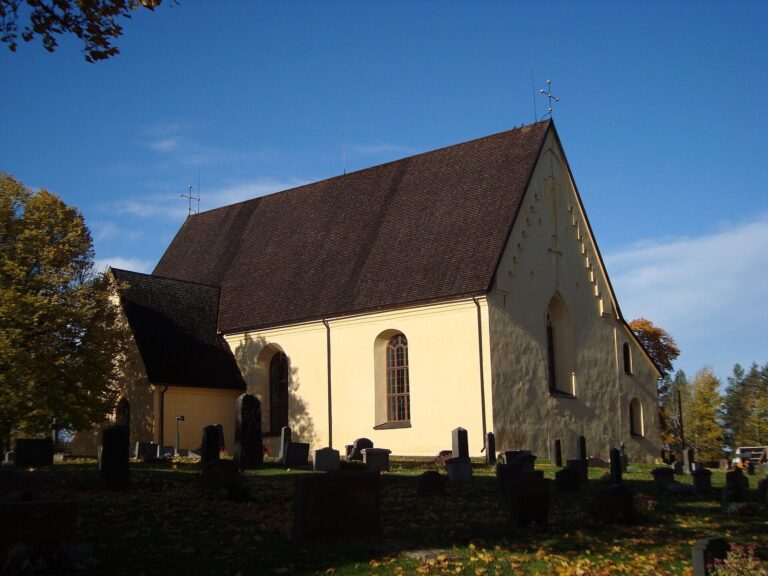
The church has a large, tall nave beneath a steep gable roof covered with shingles. A sacristy adjoins its northeast side, while an entrance porch is attached to the southwest. Fieldstone forms the lower parts of the walls, with brick above. The roof structure is original to the church’s construction. Its nave timbers are evenly worked in a manner characteristic of late-medieval carpentry, suggesting that only a few carpenters shaped them. The porch roof shows a somewhat later timber-working style.
Wall paintings and sculpture
Vika Church is known for its well-preserved sixteenth-century wall paintings. Older painted remains include consecration crosses, marks associated with the ritual dedication of a church. An east-wall painting shows the ox linked to the evangelist Luke. Medieval wooden sculptures from the blocked singers’ gallery are now distributed throughout the church. A sculpture of Saint George and the Dragon, representing the saint in the legend of his battle with a dragon, is in the entrance porch.
Furnishings and organ
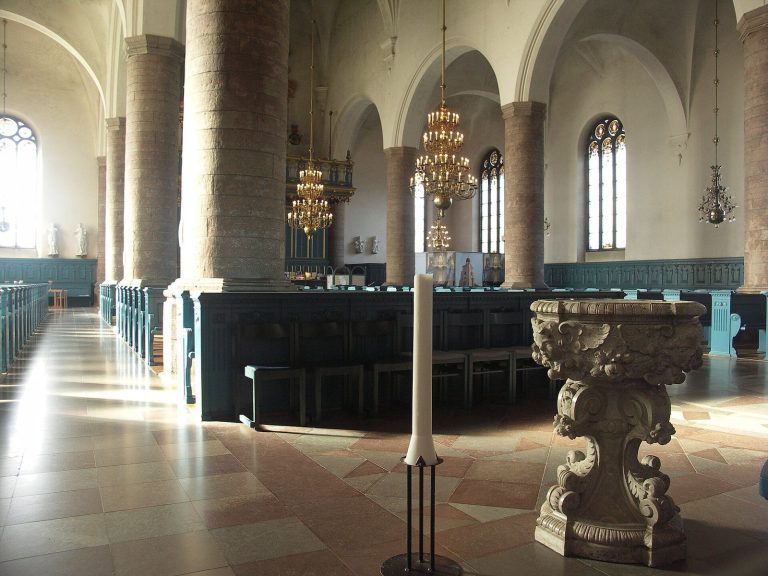
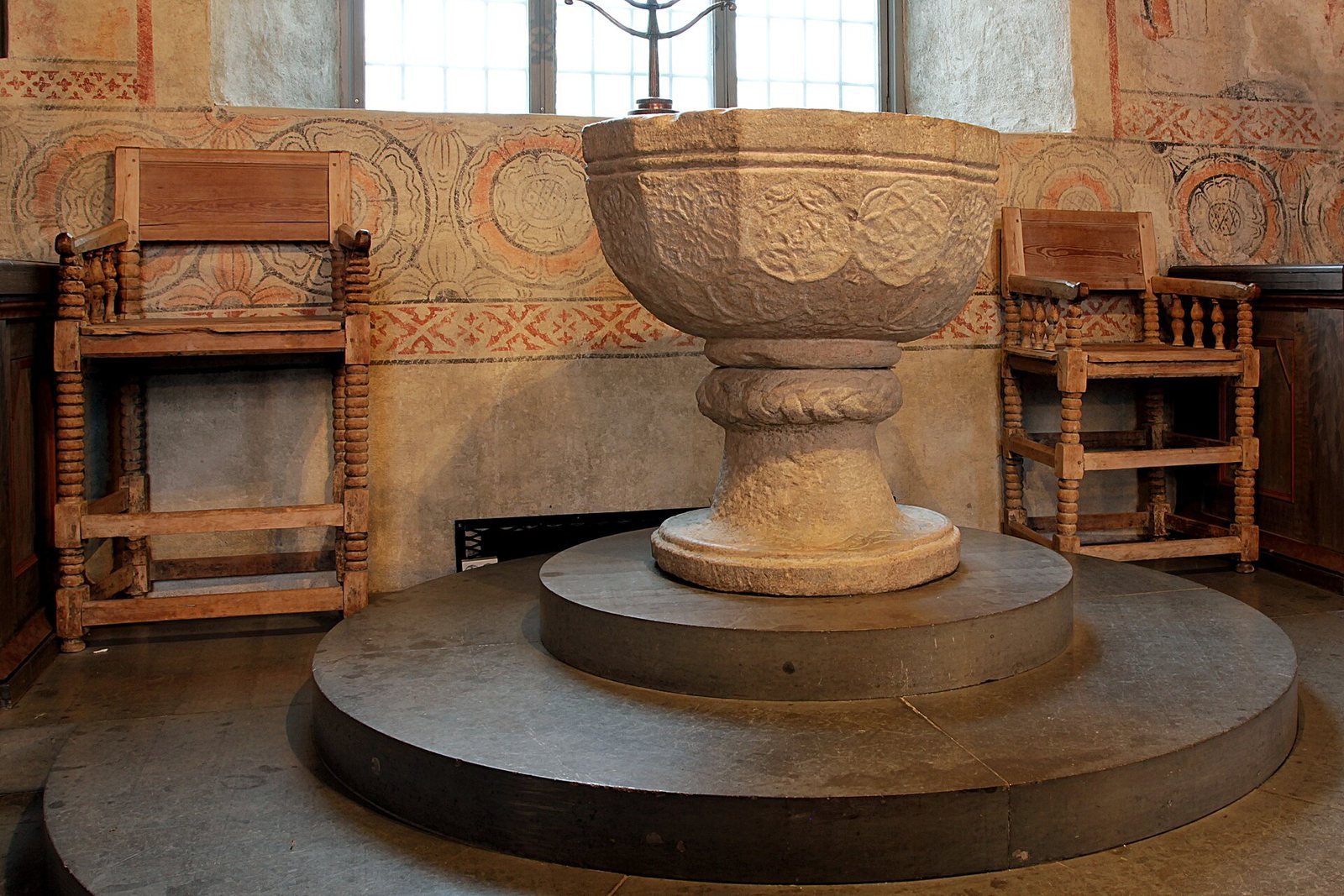
The limestone baptismal font dates to the early sixteenth century. The altar retable, a decorative altar structure, was made by the Swedish painter Jordan Målare in the second half of the fifteenth century. The pulpit in the church dates to the 1650s. The present organ, made by A. Magnusson orgelbyggeri AB of Gothenburg, has 22 stops and mechanical action, a system that links the player’s movements to the pipes mechanically.