Cave of Altxerri: A Paleolithic Cave Art Site in Spain
Site at a Glance
- Country
- Spain
- Primary era
- Stone Age
- Eras represented
- Stone Age
- Civilizations
- Unclassified
- Site type
- Civic
- Remains
- Rock Art
On this page15 sections
History
The Cave of Altxerri is in Aia, Gipuzkoa, Spain. Its paintings and engravings in the original grotto are attributed to the final Upper Magdalenian, a late phase of the Upper Paleolithic. A 2013 study dated paintings in the separate upper gallery, Altxerri B, to about 39,000 years ago and described them as Europe’s oldest cave paintings.
Discovery and archaeological study
The cave stayed concealed until 1956, when dynamite used at a temporary limestone quarry opened a small hole in its wall. The quarry supplied stone for a road linking Orio with the Olaskoegia district of Aia. Local young people were among the first to enter. Blasting stopped after enough stone had been obtained, leaving the cave almost intact.
In 1962, members of the Aranzadi Science Society, a scientific organization based in San Sebastián, were preparing to descend a shaft when Felipe Aranzadi, Javier Migliaccio, and Juan Cruz Vicuña noticed black lines that formed a bison. They went on to find other groups of figures. José Miguel de Barandiarán, who led the society’s Department of Prehistory, confirmed the images as prehistoric and identified further figures. The cave takes its name from a nearby farmhouse.
People who entered between 1956 and 1962 had left graffiti, which had to be distinguished from the prehistoric art. As a precaution, a door was put across the entrance before the discovery became public. Barandiarán’s first study of the figures appeared in 1964. During this work, his team found the natural entrance and carried out a test excavation beside it. Jesús Altuna and J. M. Apellániz published a second study in 1976. Altuna’s book Ekain and Altxerri: Two Paleolithic Sanctuaries in the Basque Country later brought a wider readership to the cave. In 1982, two painted bison were found at the bottom of a deep shaft.
Altxerri was designated a Spanish cultural heritage monument on 17 July 1984. The wider UNESCO property, Cave of Altamira and Paleolithic Cave Art of Northern Spain, was inscribed in 1985 and extended to include Altxerri in 2008.
Remains
Cave setting and layout
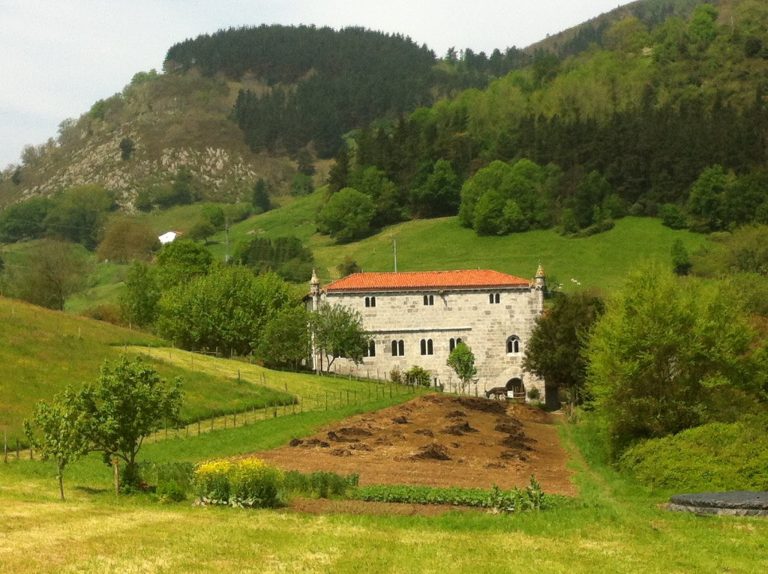
Formed in limestone, the cave has a long, broad gallery. Its mouth opens in an almost vertical rock face on the eastern slope of Beobategaña, near the Altxerri stream and about 15 metres above the valley floor. The natural entrance lies close to the artificially opened one, but sediment and stalagmites block it, and it remains sealed.
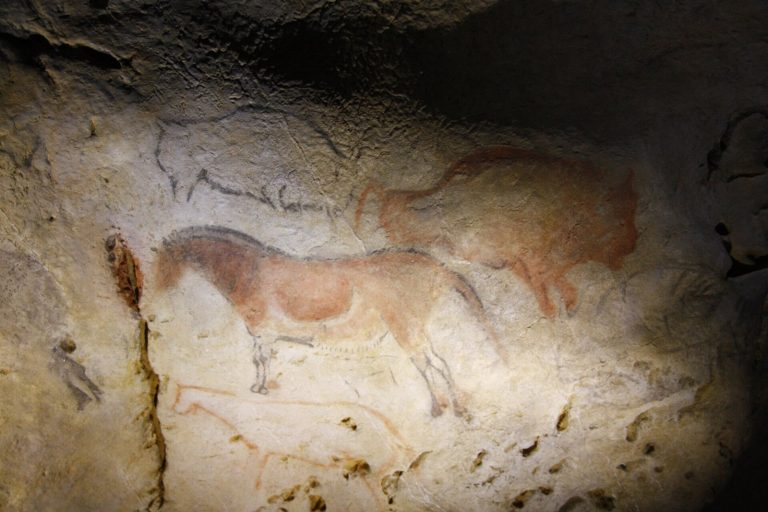
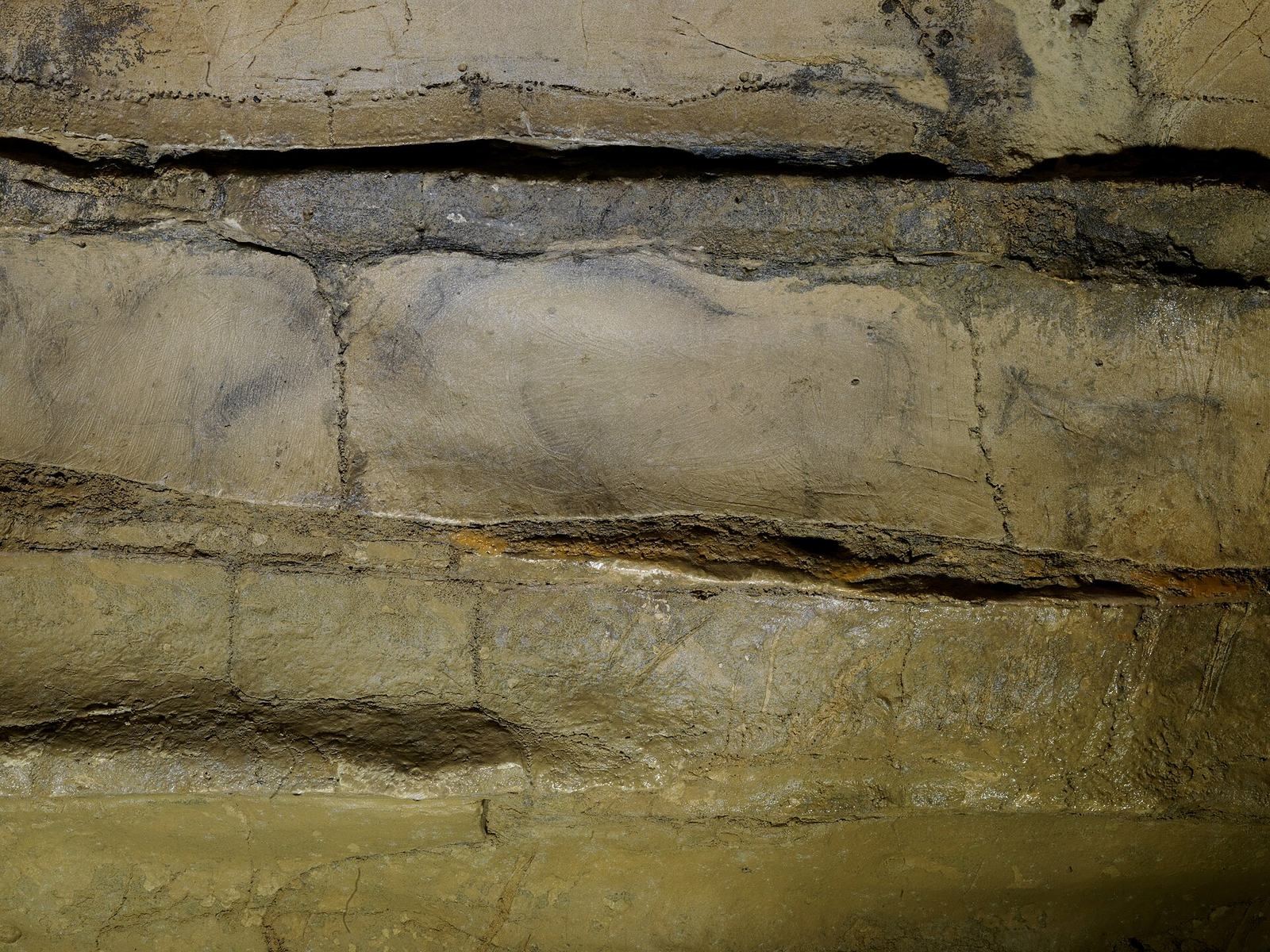
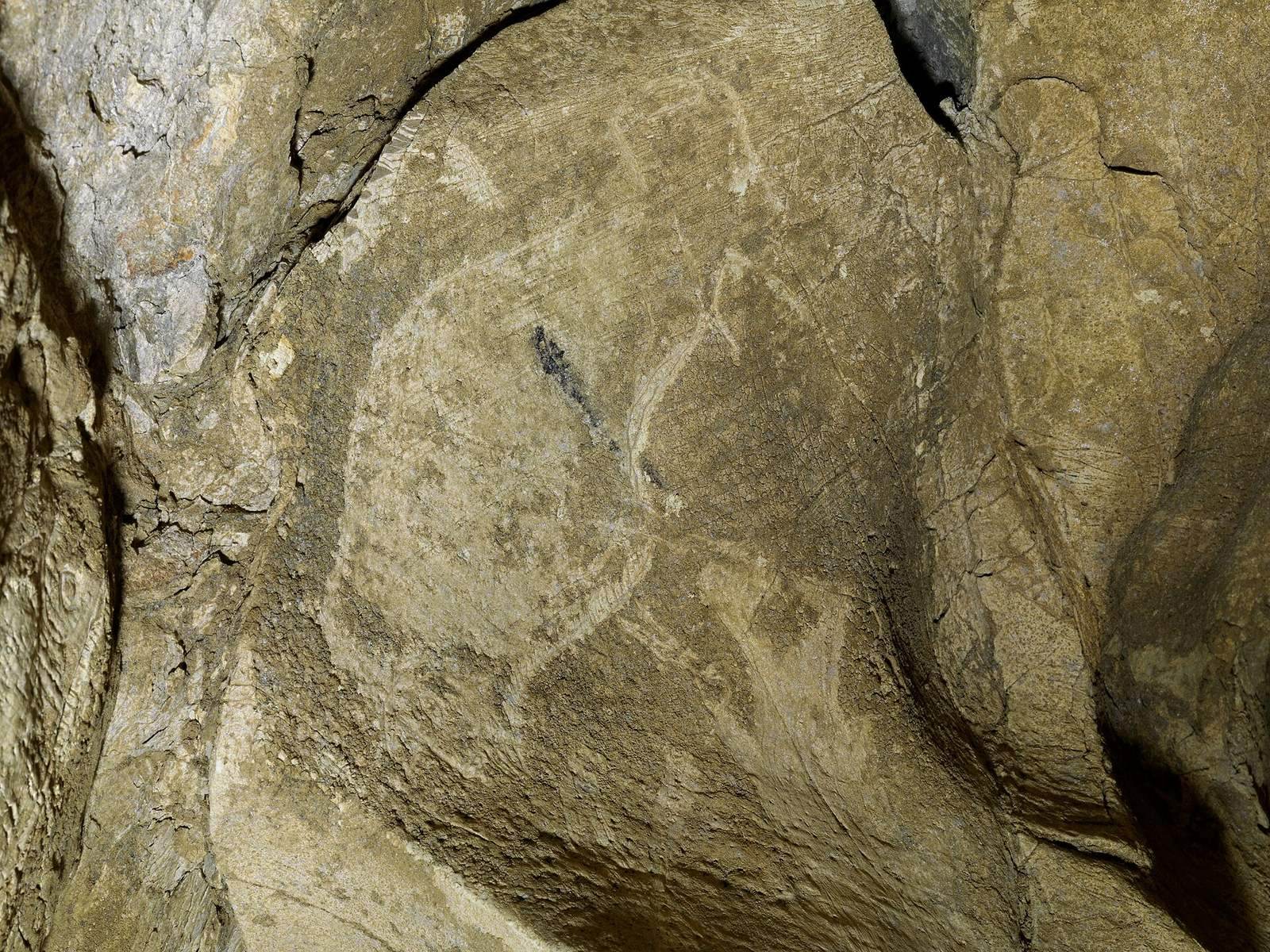
The cave is now about 20 metres above sea level and 2.5 kilometres from the coast. During the Magdalenian, when sea levels were lower, it is estimated to have stood about 80 metres above sea level and 6 kilometres from the coast. Its art is arranged in seven groups in different parts of the cave, alongside isolated images. The Franco-Cantabrian style, associated with Paleolithic art of northern Spain and southwestern France, is known for naturalistic figures. About 120 engravings are present across the cave, including 92 animal depictions. Bison are the most numerous, with 53 engravings. Other subjects include reindeer, deer, goats, horses, aurochs (extinct wild cattle), saigas (antelopes), a wolverine, a fox, a hare, and a bird. Engravings are generally well preserved, while high humidity has badly damaged paintings in several areas.
Decorated galleries and image groups
Group I
Nearest the entrance, Group I occupies a side niche off the main gallery. About 50 figures cover its two walls and continue into the deepest part of the niche, where only one person can enter at a time. The group is divided into subgroups Ia and Ib, one on each wall. Engravings predominate, with bison, fish, goats, saigas, reindeer, and birds among the subjects.
Group II
Group II lies on the left wall of the main gallery. Paintings outnumber engravings here, but the humid conditions have nearly erased the paint, leaving the images poorly preserved.
Group III
On the wall opposite Group II and at a higher level, Group III consists of three figures. One is a painted bison measuring 40 centimetres.
Group IV
Farther along the gallery, Group IV contains 14 figures made with very fine engraving. Their delicate lines make the images difficult to see and photograph.
Group V
Group V includes seven bison, a horse, a goat, a chamois (a mountain-dwelling goat-antelope), and a figure that may represent an aurochs. The group also contains signs and areas filled with closely spaced strokes.
Group VI
Four bison, four reindeer, a snake-shaped animal, and signs make up Group VI.
Group VII
Group VII consists of a deer’s head and a bison.
Painted bison in the shaft
At the end of the gallery, two painted bison lie at the bottom of a 10-metre-deep shaft. Their paint is almost lost.
Altxerri B
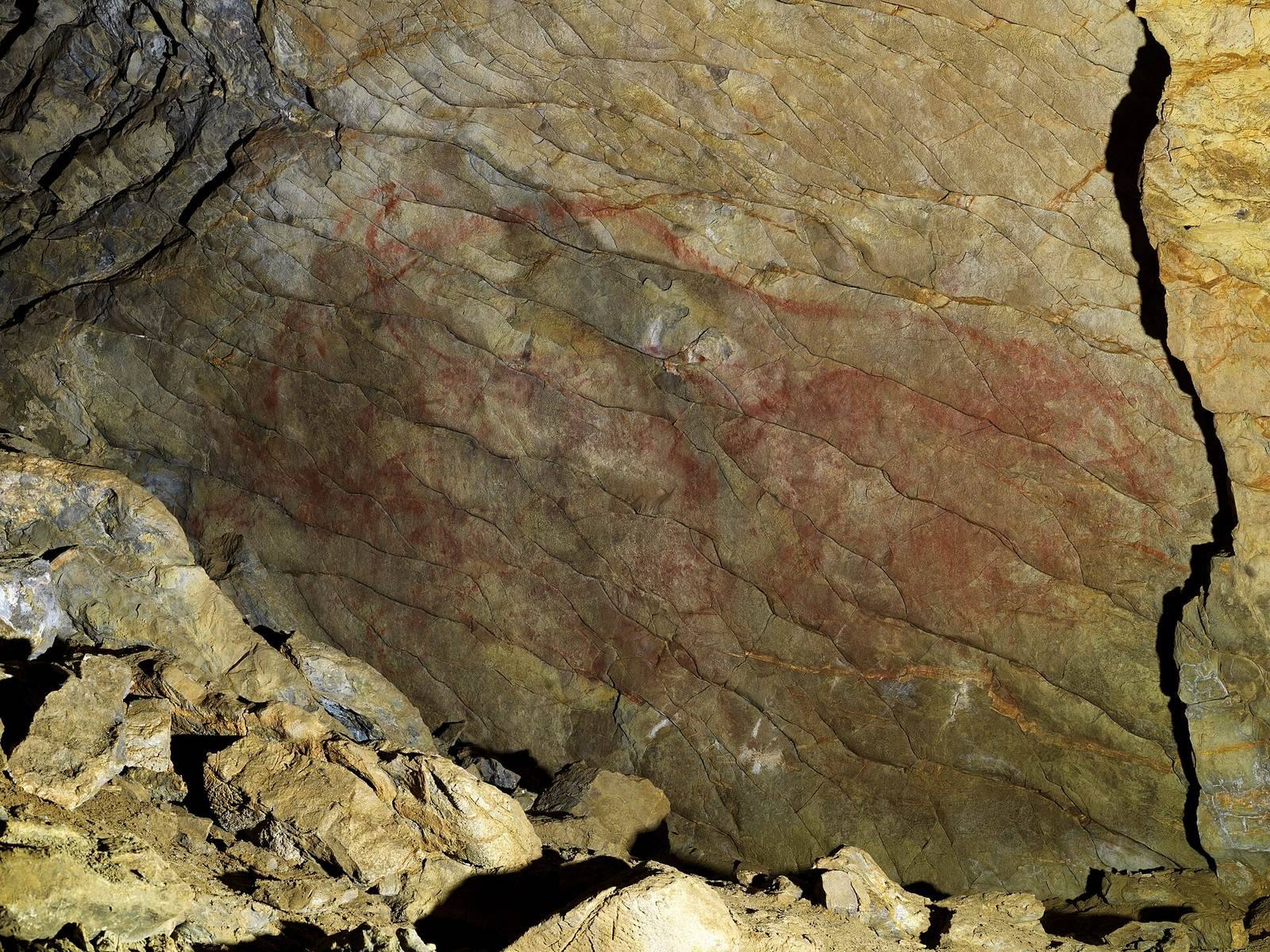
Above the main gallery, Altxerri B is difficult to reach and contains red paintings whose subject is uncertain. The largest painting extends for 3 metres and may include the back of a bison.
Archaeological finds
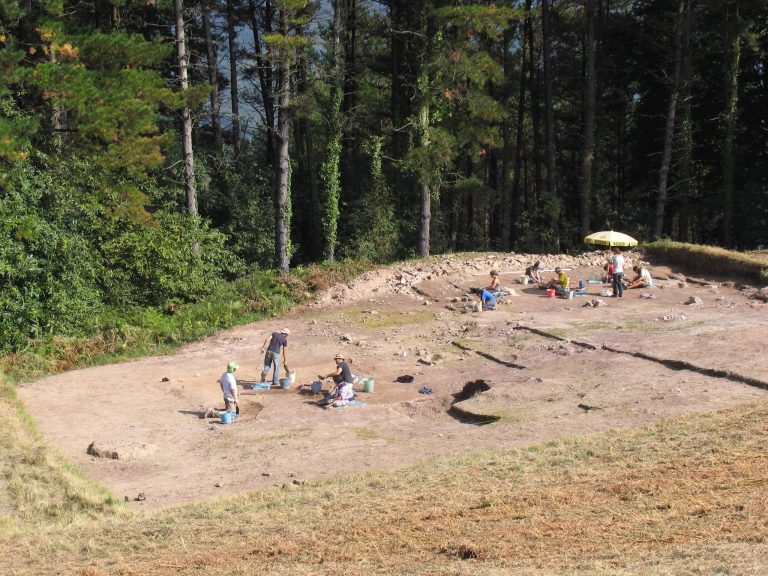
An archaeological deposit lies beside the natural entrance. Test excavations near figure groups I and II recovered a scraper and a flint point.