Grotta di Ciccio Felice: A Prehistoric Cave and Ancient Sanctuary
Site at a Glance
- Country
- Italy
- Primary era
- Iron Age
- Eras represented
- Iron Age, Classical, Medieval
- Civilizations
- Unclassified
- Site type
- Religious
- Remains
- Sanctuary
On this page9 sections
History
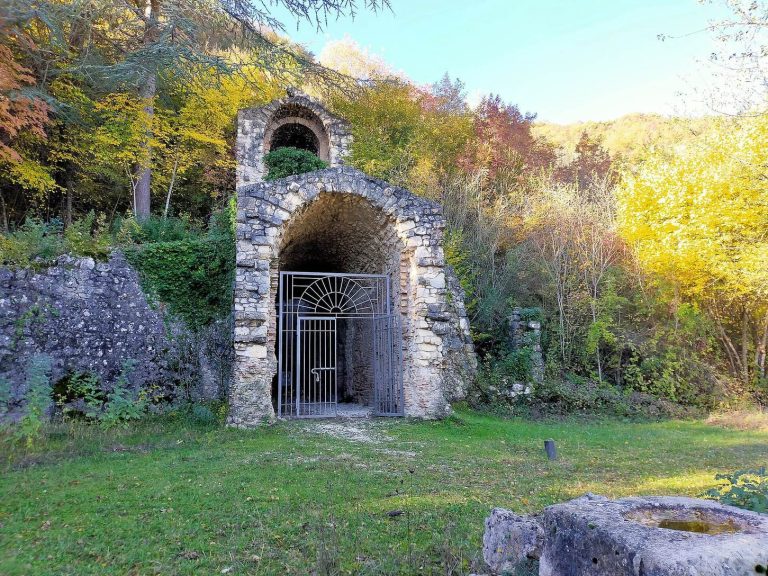
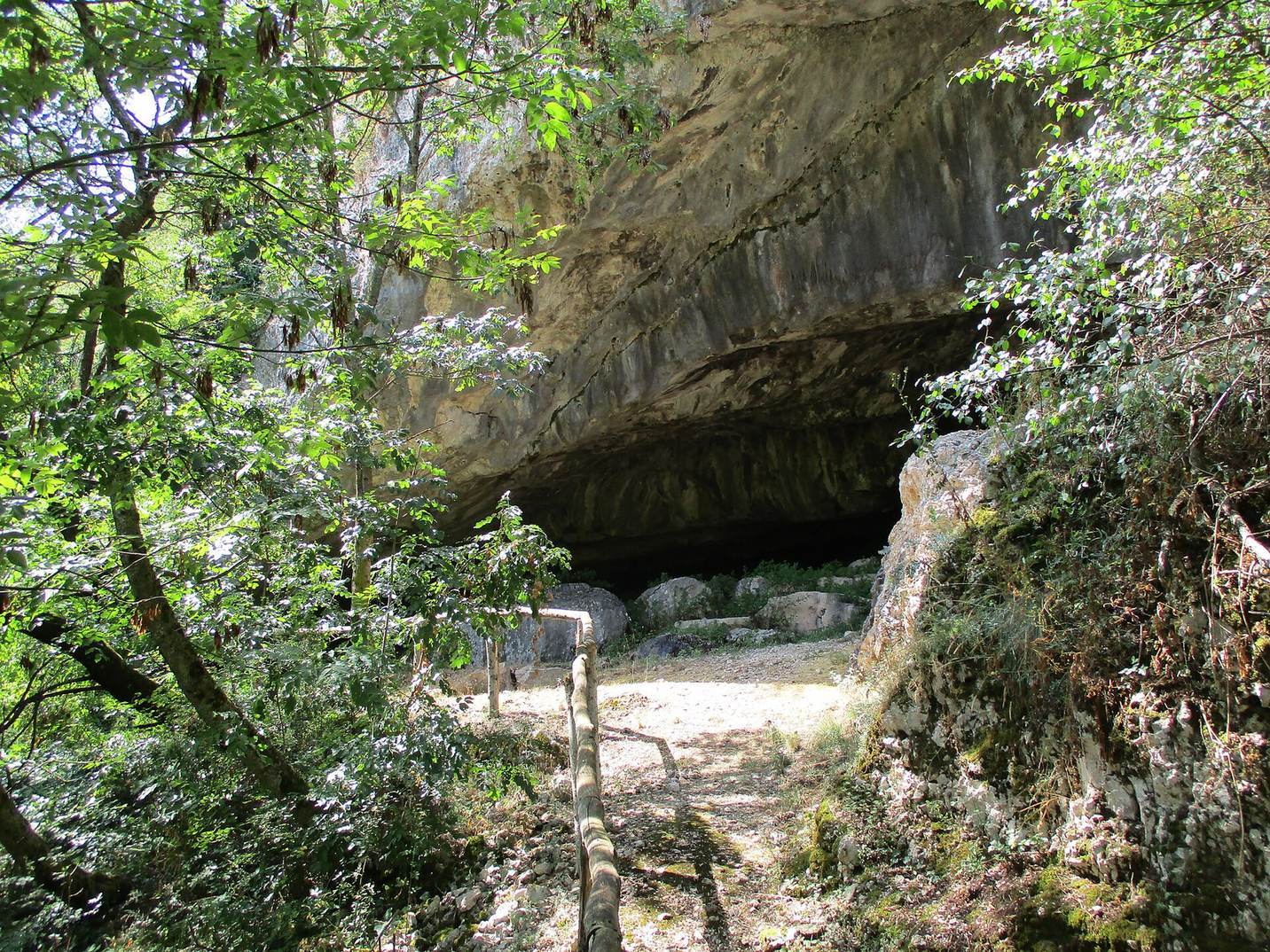
Grotta di Ciccio Felice is a natural cave on Mount Salviano’s eastern flank in Avezzano, Abruzzo, Italy. Human activity there reaches back into prehistory, and the cave later served as a sanctuary before taking on medieval and wartime uses.
Prehistoric and ancient use
Finds place activity at the cave in the Upper Paleolithic and in later prehistoric periods. Between the seventh and first centuries BC, it functioned as a sanctuary. The rites of the Marsi, an ancient Italic people of central Italy, honored local deities, especially Angitia, a local Italic deity worshipped among the Marsi. These practices may also have involved ancestor worship, as at other caves in the Fucino area.
Materials from later than the first century AD are associated with Romanization, the adoption of Roman cultural and political practices among Italic peoples in the Fucino area.
Medieval church and the cave’s name
In the later Middle Ages, a small church was established in the cave and dedicated to Saint Felix. Its patron may have been Pope Felix I, a third-century bishop of Rome, though this identification is uncertain.
The origin of the cave’s name has several proposed explanations. One connects it with Giovanni Di Ciccio, a local administrator whose action in 1372 confirmed Avezzano’s claim to the disputed locality of Penna. In this version, residents named the place Ciccio a San Felice in gratitude, referring to the church. Other explanations associate the name with Francesco Felice Nanni, who owned the cave and nearby land, or with a lay friar from Tagliacozzo who reportedly found gold coins there during the Renaissance.
Archaeological study and wartime refuge
The cave came to scientific attention around 1940. Pietro Barocelli and Antonio Mario Radmilli took part in an initial inspection in 1947. Luigi Pigorini and Barocelli publicized early findings the following year, and an account of the reconnaissance appeared in 1949. Later twentieth-century excavation and research helped reconstruct human activity and settlement across the Fucino area over roughly 20,000 years.
During 1943 and 1944, some Avezzano residents sheltered in the cave during Anglo-American air raids. The attacks damaged about 70 percent of the town’s architectural heritage, much of which had been rebuilt after the Marsica earthquake of 13 January 1915.
Remains
The site centres on a natural cavity with a rock shelter in front of it. The cave reaches about 10 metres inward, measures roughly 23 metres across, and varies from 2 to 4 metres in height. Grotta Afra lies several dozen metres away, while the Claudian tunnels are approximately 600 metres distant.
Cave and archaeological features
Prehistoric and ancient finds
Recovered objects include hunting tools and stone fragments from the Upper Paleolithic, including the Epigravettian, an Upper Paleolithic archaeological culture, as well as material from the Eneolithic, or Copper Age. Pottery dates from the fourth to the first centuries BC. Votive offerings, objects dedicated in religious practice, fragments of such offerings, and varied figurines have also been found. Other materials belong to periods after the first century AD.
Walls and rock-cut tables
Structural traces date to the Iron Age. In the shelter, walls built from many-sided stone blocks stand alongside several table-like surfaces cut into the rock. One of these may have served for incubation, a sacred practice in which a person slept at a religious site in hope of healing or a divine message.
Commemorative stone
A commemorative stone stands beside the path that leads to the cave.