Lucus Angitiae: An Italic and Roman Town and Sanctuary
Site at a Glance
- Country
- Italy
- Primary era
- Classical
- Eras represented
- Iron Age, Classical
- Civilizations
- Roman
- Site type
- City
On this page13 sections
History
Early settlement and sanctuary
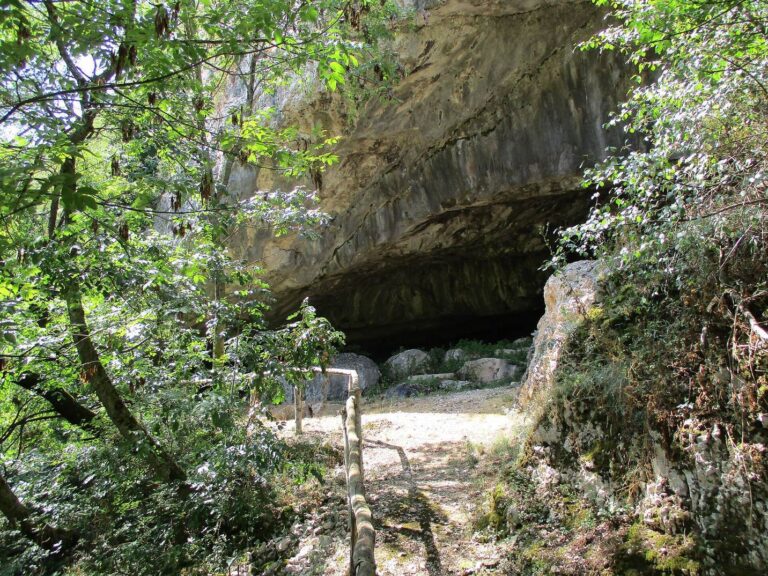
Lucus Angitiae was an Italic and Roman town and sanctuary in what is now Luco dei Marsi, Italy, on the southwestern side of the Lake Fucino basin. The sanctuary, which dates to the third century BC, was dedicated to Angitia, a deity worshipped by the Marsi, an ancient Italic people of central Italy who lived around the lake. Activity at the site reaches back to the Bronze Age, and it was fortified during the Iron Age.
Lucus has traditionally been associated with the Latin words lux, meaning “light,” and lucus, a clearing in woodland. The sacred area was also known as Anxa, the Latin form of the Marsian name Anctia, which was distinct in origin from the name Angitia. Anctia gave its name to the Marsian Anxantini tribe. The tribe’s principal settlement is unknown, although Pliny the Elder placed the Anxantini before Antinum.
Roman town and literary tradition
During the Samnite Wars, a series of conflicts between Rome and the Samnites in ancient Italy, the fortified acropolis on Mount Penna was incorporated into the lower city and sanctuary. Under the Roman Empire, the town held the status of a municipium, a town incorporated into the Roman state with municipal standing. Pliny called its inhabitants Lucenses, and the town continued as a municipium into the early Middle Ages.
Virgil, the Roman poet, mentions the sanctuary in the Aeneid. The poem recounts the death of Umbro, a Marsian priest and healer, at the hands of Aeneas, the Trojan hero, during the war between Italians and Trojans. A related tradition credited the local people with knowledge of mountain herbs and skill in preparing remedies against snake venom.
Excavation and protection
Excavations began in the early 1970s through collaboration between the regional archaeological superintendency and the Archeoclub della Marsica, and work continued from 1998. Research with the University of L’Aquila in 2003 extended investigations at the site, and safety work was carried out at the sanctuary. Lucus Angitiae became a national monument in 1902. In 1998, the establishment of San Leonardo Natural Park brought environmental and landscape protection to the area.
Remains
Fortifications and urban layout
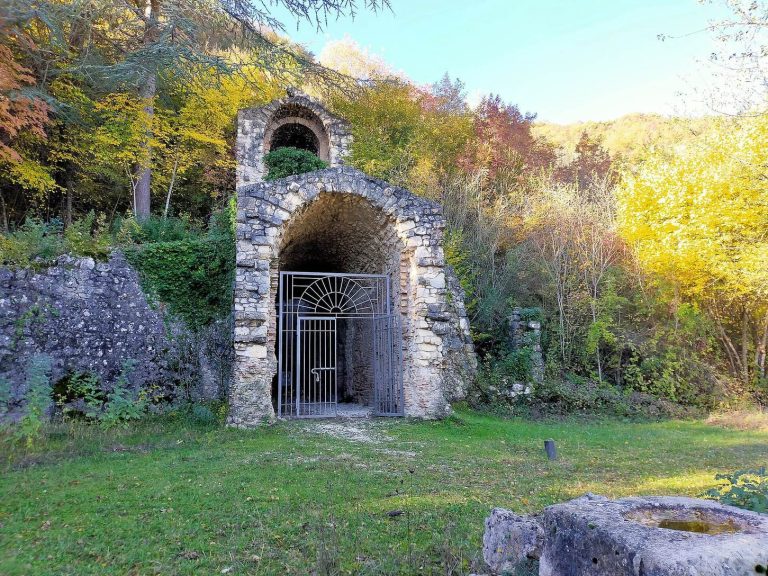
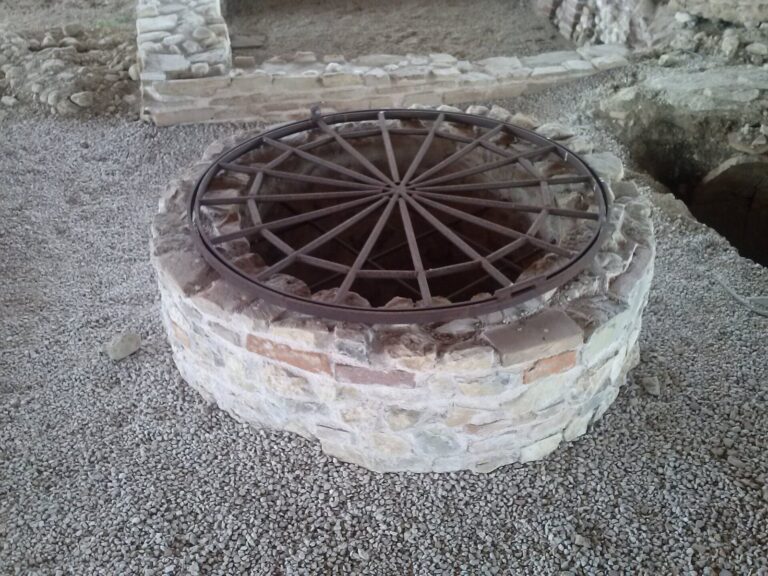
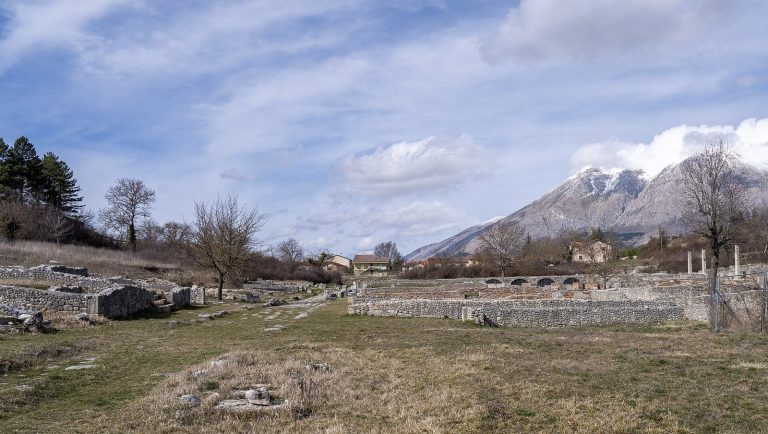
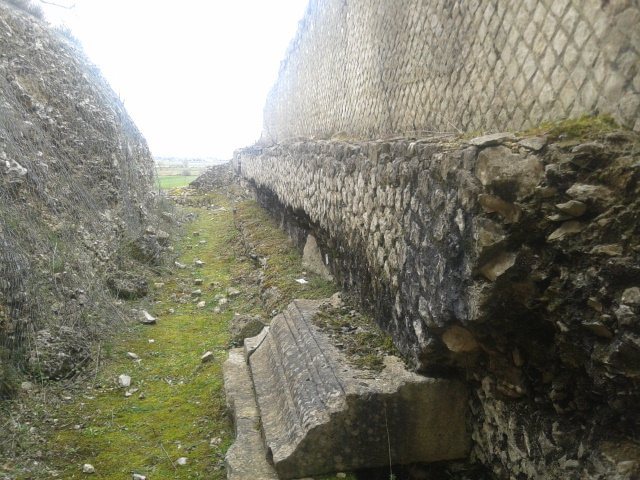
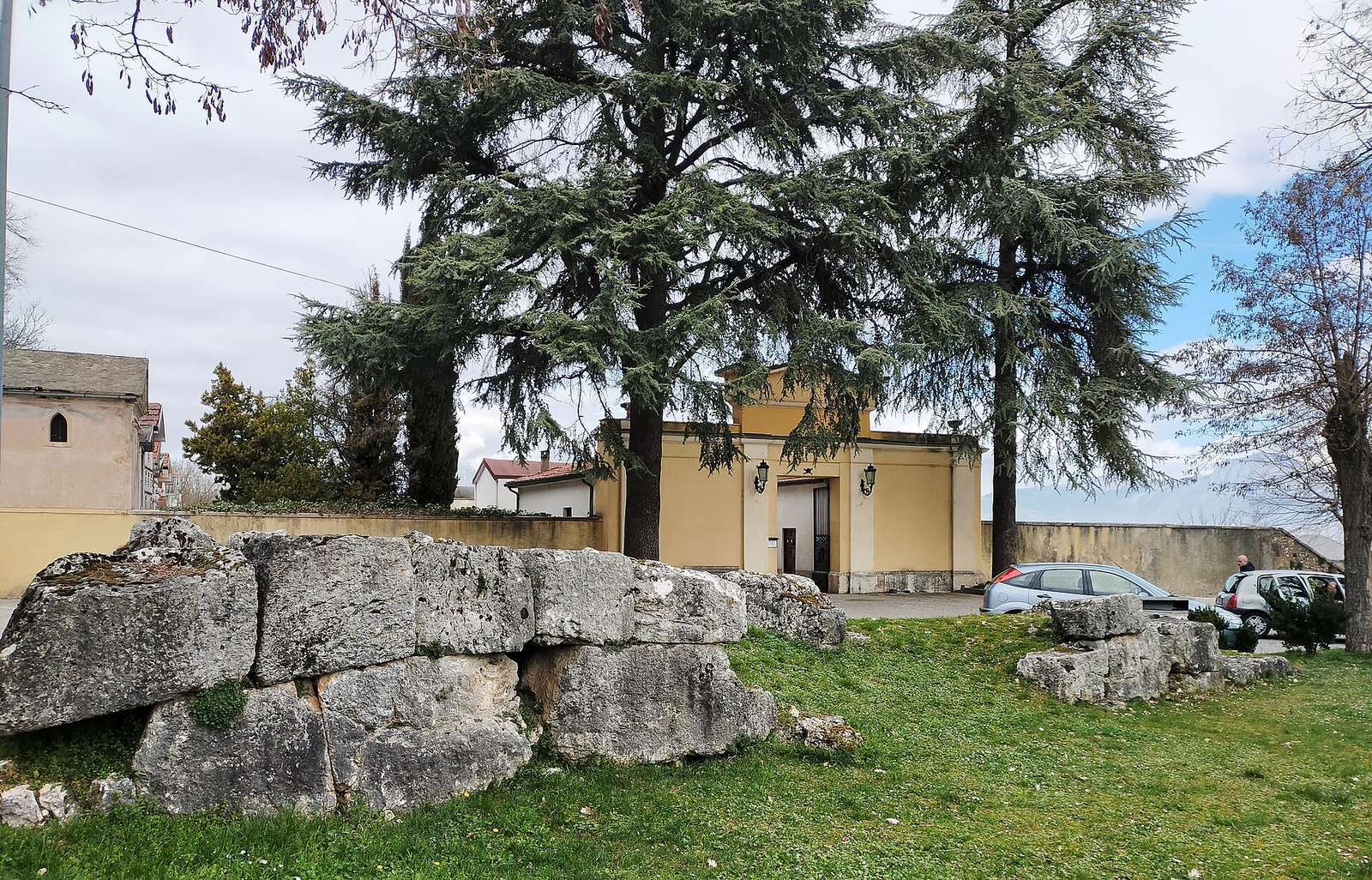
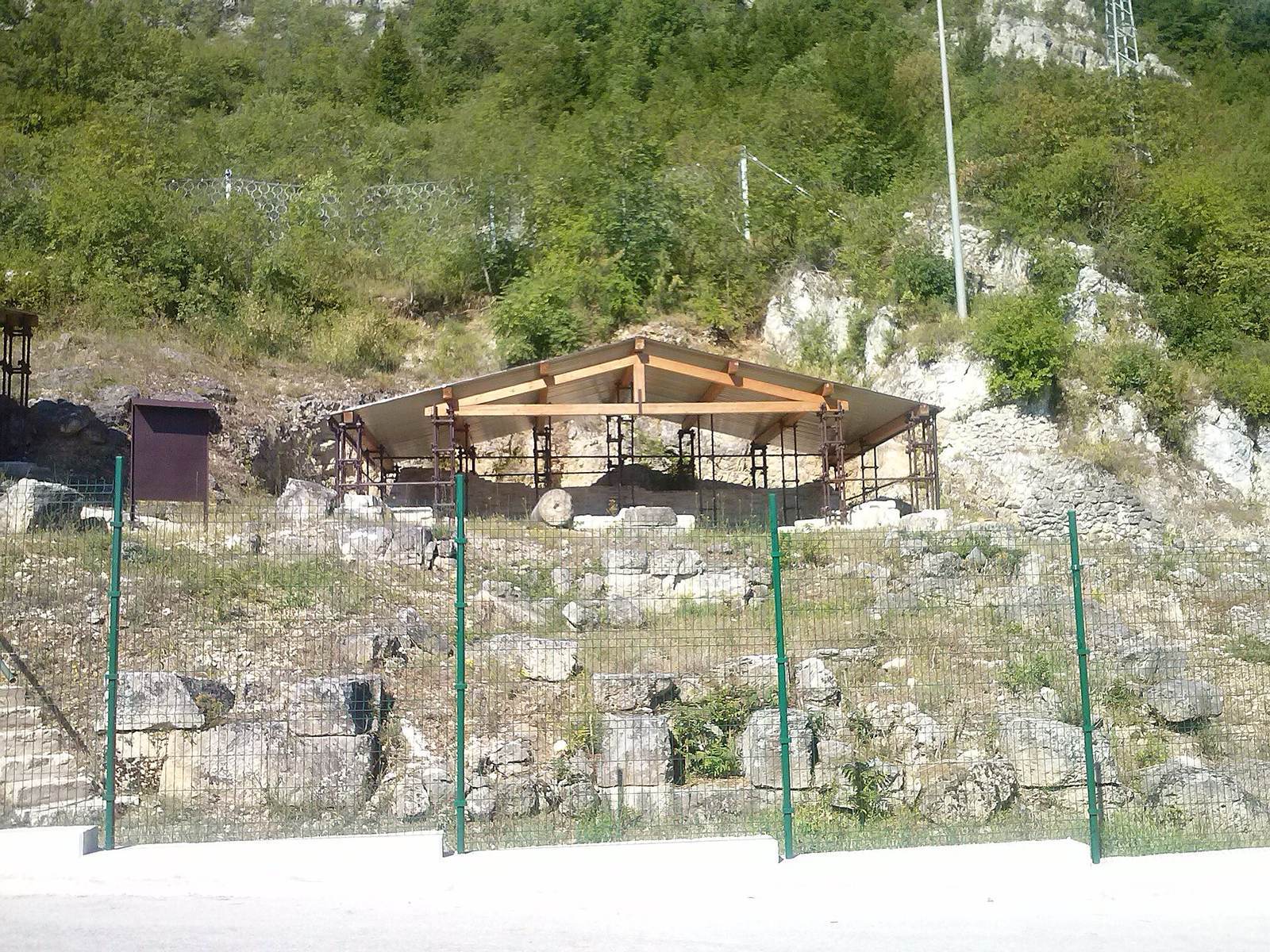
The sanctuary-city lay below the acropolis on Mount Penna, which overlooked it. The Iron Age fortified area covered more than 14 hectares and was enclosed by polygonal masonry, with two entrances. A later wall enclosed the city-sanctuary across about 30 hectares and had five gates. Surviving features include the sanctuary’s terracing wall, traces of the Iron Age enclosure, and ruins of three temple entrances. Traces of a forum and an artisan quarter also remain.
Temple buildings
Italic temple
One excavated temple is Italic in origin and had two enclosed main chambers. Its remains form part of the sanctuary’s temple area.
Roman temple
A second excavated temple dates to the Augustan period, the reign of Augustus, Rome’s first emperor. It was divided into three rooms.
Other remains and finds
Finds from the site include Doric columns, which use a classical Greek design, as well as furnaces and burials. Other recovered material includes statues, bas-relief sculptures, coins, small bronze objects, votive offerings, architectural fragments, heads, and ceramics. Some objects are displayed in the Marsica Museum of Sacred Art; others are held at the Paludi Museum in Celano.
Sacristy statues
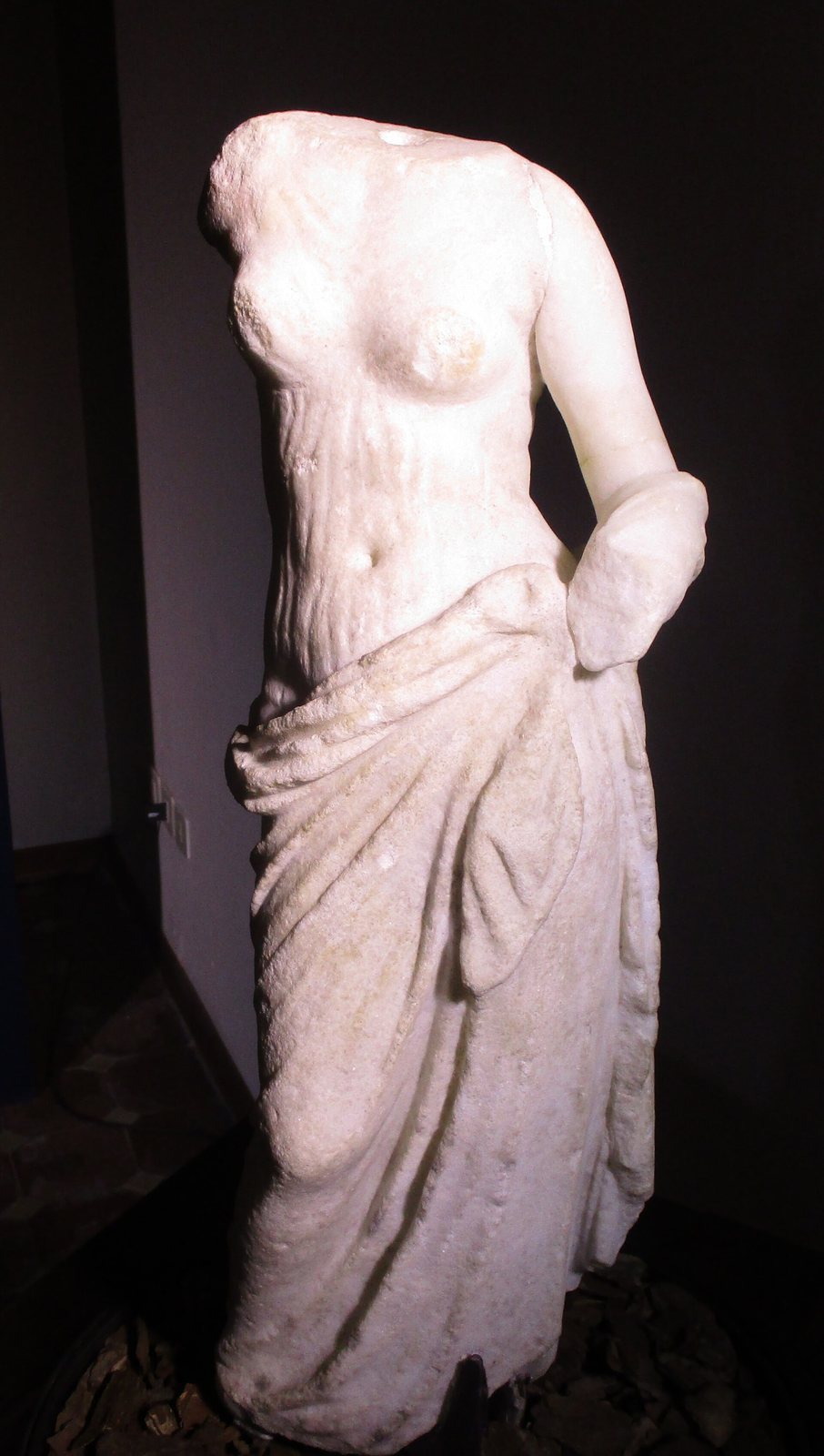
Three statues came from the area known as the Sacristy. One is a terracotta figure from the third century BC that may represent Angitia. The other two are marble works dating to the second century BC, including a figure of Venus, the Roman goddess. Both marble statues are attributed to Rhodian workshops, artistic workshops associated with the island of Rhodes.
Caso Cantovios inscription
The Caso Cantovios inscription was found during the second half of the nineteenth century, in drainage works at Lake Fucino undertaken by Prince Alessandro Raffaele Torlonia. Written in Marsian, an Osco-Umbrian dialect, it dates to the early third century BC, during the Third Samnite War, one of the conflicts between Rome and the Samnites.
Church and monastery
Near the present-day settlement of Luco dei Marsi stands the Church of Santa Maria delle Grazie, with the ruins of its adjoining monastery.