Volokolamsk Kremlin: A Medieval Russian Fortress
Site at a Glance
- Country
- Russia
- Primary era
- Medieval
- Eras represented
- Medieval, Early Modern, Modern
- Civilizations
- Novgorod Republic, Russian
- Site type
- Military
- Remains
- Citadel
On this page15 sections
History
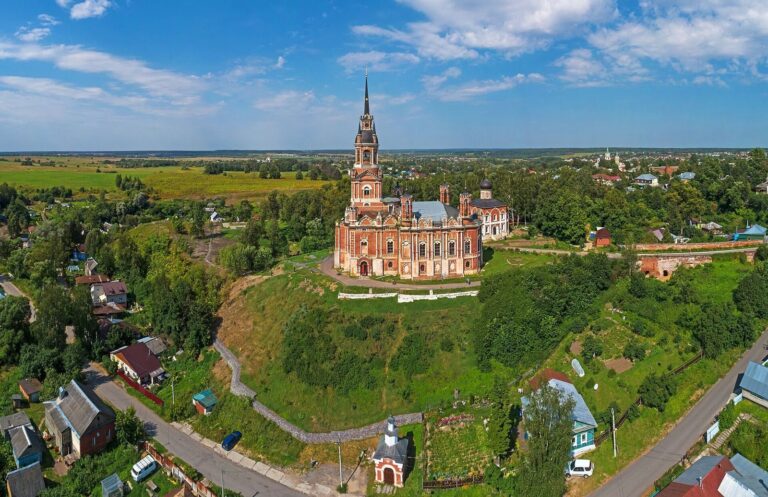
The Volokolamsk Kremlin is a medieval timber-and-earth fortress on a hill beside the Gorodnya River in Russia. It formed the defensive center of a settlement founded by Novgorodians in the first half of the twelfth century, and helped control a portage between the Volga and Moskva rivers.
Settlement and frontier warfare
The settlement, known as Volok on the Lama, was first established near the Lama River and the village of Starovolotskoye, then moved to the site of the Kremlin. A chronicle first mentions Volok in 1135. As a Novgorodian border fortress, it guarded routes toward Suzdal, Chernigov, and Smolensk, and suffered repeated attacks. In 1178, Vsevolod the Big Nest, a prominent prince of Vladimir, burned the fortified settlement. Batu Khan’s forces devastated it in 1238, after which it was rebuilt; Duden’s forces ravaged it in 1293. In 1370, Lithuanian rulers Algirdas and Kęstutis besieged the town for three days. The outer settlement burned, but the Kremlin held.
Princely center
From 1462 to 1513, Volok was the center of the Volotsk principality, a smaller realm within the Grand Duchy of Moscow, a medieval Russian state. The Kremlin became a princely residence, and the white-stone Resurrection Cathedral was built during this period. In the sixteenth century, changing trade routes reduced the town’s former importance.
Seventeenth-century fortress
During the Time of Troubles, a period of political crisis and foreign intervention in Russia, rebels and pretenders repeatedly gained control of Volok. After Lithuanian forces were expelled in 1611, garrison commander Nikifor Shapilov established a strong wooden fort on the site. The Kremlin resisted a Polish-Lithuanian siege in 1612. In 1618, the Lisowczycy, an irregular Polish-Lithuanian force led by the Polish nobleman Kapychensky, approached the town but were defeated in a fierce battle beneath its walls.
In 1627, the garrison consisted of 40 streltsy, Russian state infantry armed with firearms, and 36 Cossacks, members of communities with military traditions. The deteriorated defenses were rebuilt the following year. The Volokolamsk fortress burned completely in 1685 and was not rebuilt.
Modern history
The Resurrection Cathedral closed in 1930, underwent restoration in 1960, and resumed religious services in the early 1990s. A 1974 decree of the Russian Soviet Federative Socialist Republic, then a constituent republic of the Soviet Union, gave the site federal cultural heritage status.
Remains
The rounded fortified site occupies a bend in the Gorodnya River and rises 10 to 17 metres above the surrounding ground. Earth ramparts define the former fortress, while cathedrals and later buildings form the present architectural ensemble. Archaeological surveys identified deposits from the fifth and fourth centuries BC, as well as from the twelfth through seventeenth centuries.
Fortifications
Ramparts and early defenses
The original fortified area covered about one hectare, with a ditch and rampart topped by a timber fence. Upright posts set at intervals were joined by horizontal logs. In the second half of the twelfth century, builders replaced this fence with a wall made of logs. During the first half of the fourteenth century, the inner fortified area expanded to about seven hectares, enclosed by an irregular oval rampart three to six metres high. Stone and brick paving was laid along the rampart in the sixteenth century to help soldiers move across it in wet weather. The earth ramparts remain in good condition.
Recorded timber walls and towers
A description from 1628 gives the timber wall’s length as 850 metres and records two towers with passages and nine without them. Named structures included St Nicholas Gate, Trinity, Elijah, Nativity, St Michael, Intercession, Ivan, Frolov, and Torture towers, along with the Bull Tower beside Elijah Gate. An archaeological expedition from Moscow State University investigated the eastern rampart in 1988–1990 and uncovered traces of the defensive timber fence.
Cathedrals and later buildings
Resurrection Cathedral
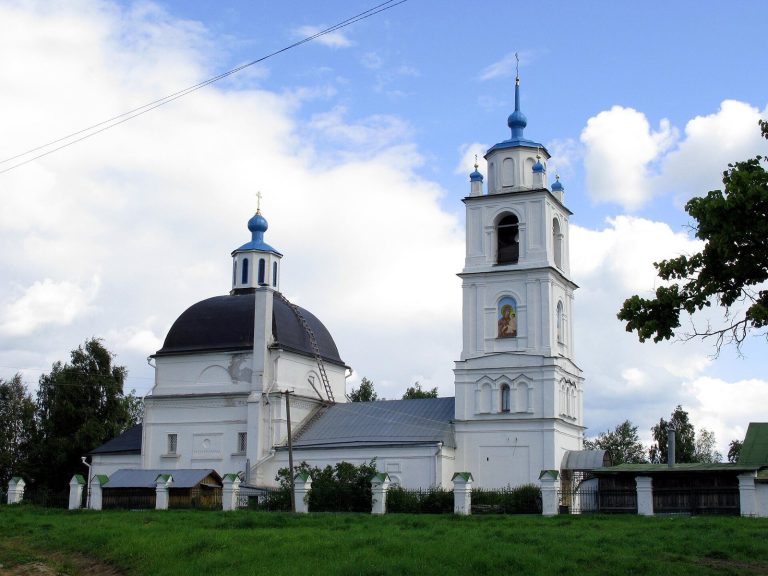
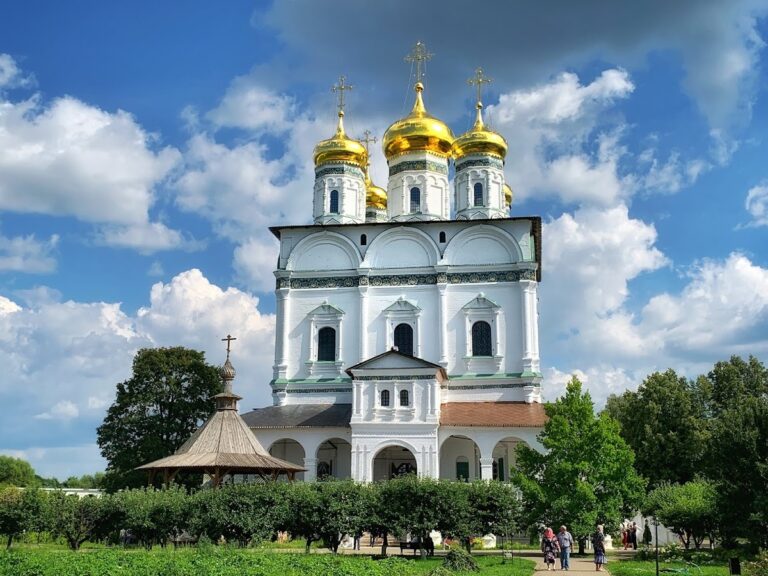
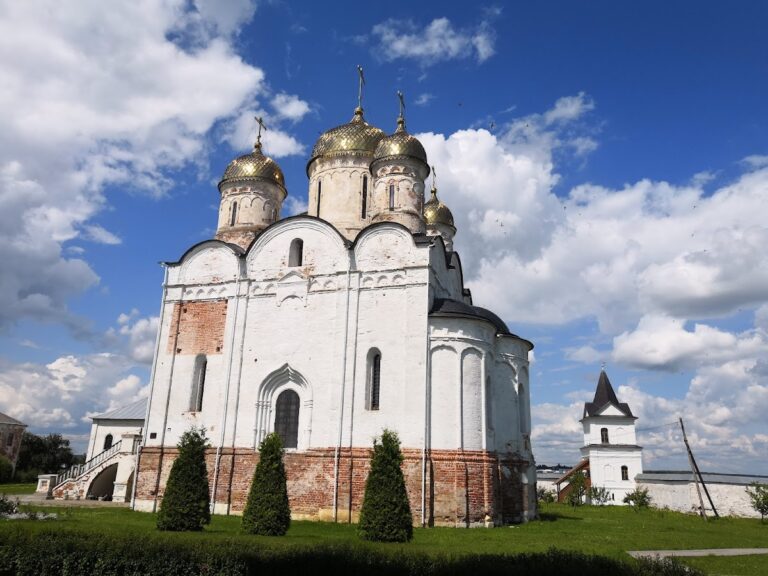
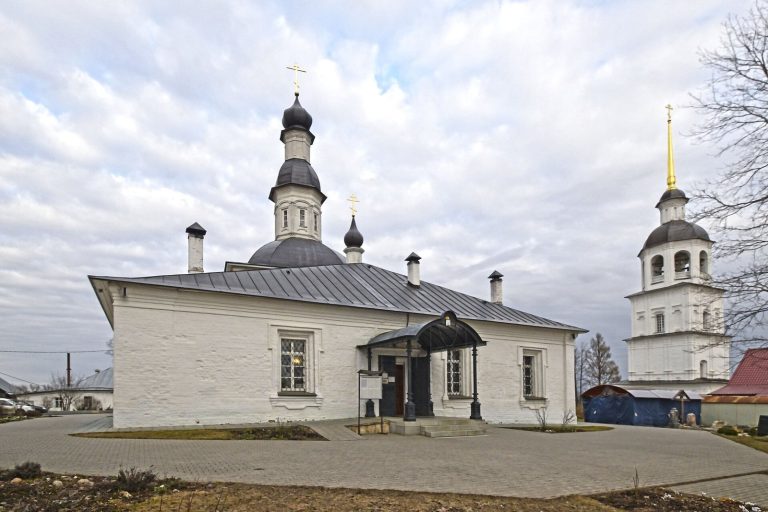
Built in the late fifteenth century, the white-stone Resurrection Cathedral has a single dome carried by four interior supports. Its upper part was rebuilt several times from the seventeenth century onward. A major alteration in 1899 changed the south façade and added a side chapel.
St Nicholas Cathedral
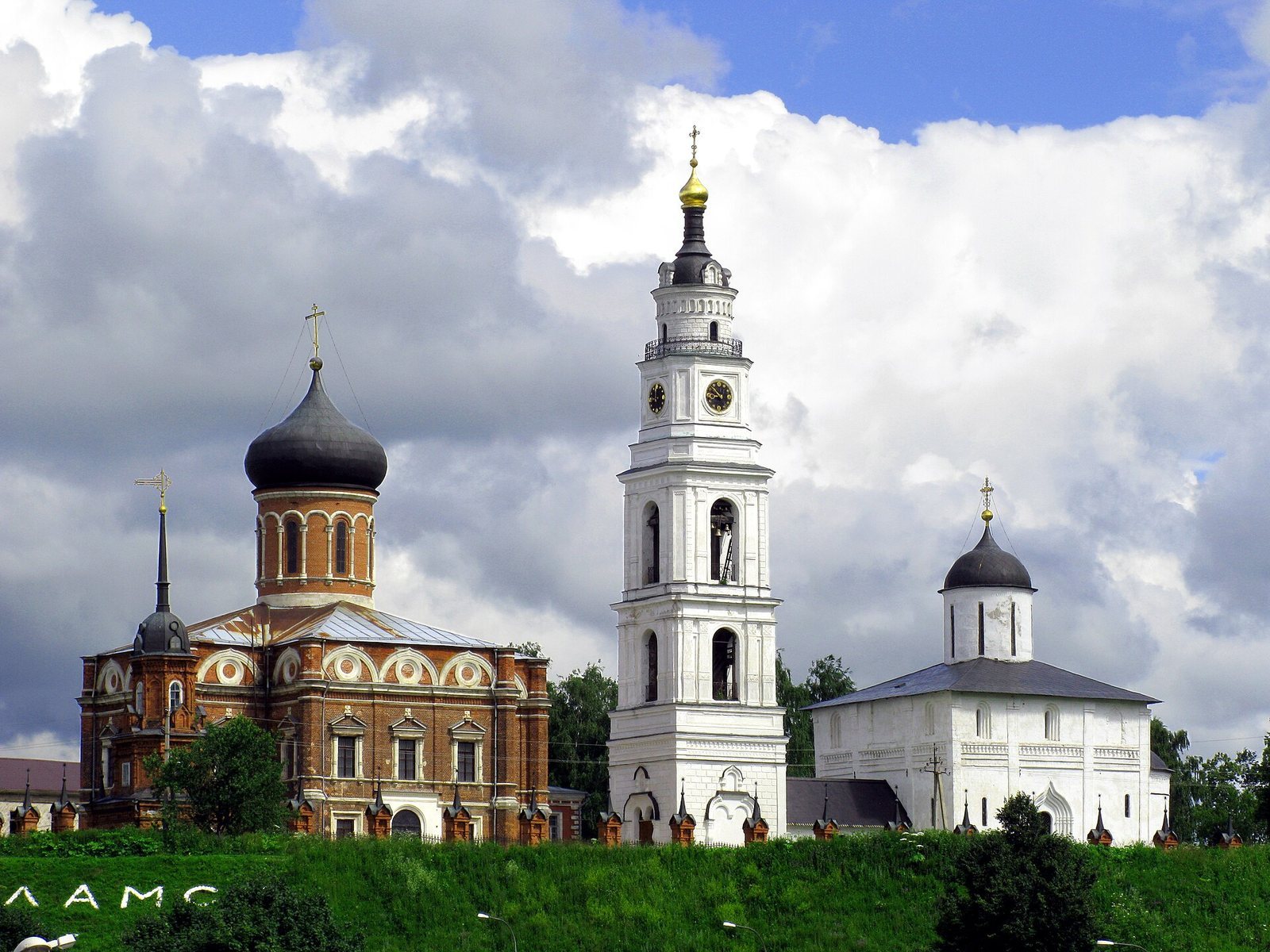
St Nicholas Cathedral was built between 1853 and 1862 in memory of those killed in the Crimean War, a mid-nineteenth-century conflict between Russia and an alliance that included the Ottoman Empire, Britain, and France. The building now houses collections of the Volokolamsk Historical and Architectural Museum.
Bell tower
The five-tier bell tower dates to the eighteenth century. It was substantially rebuilt twice, most recently in the nineteenth century.
Government offices
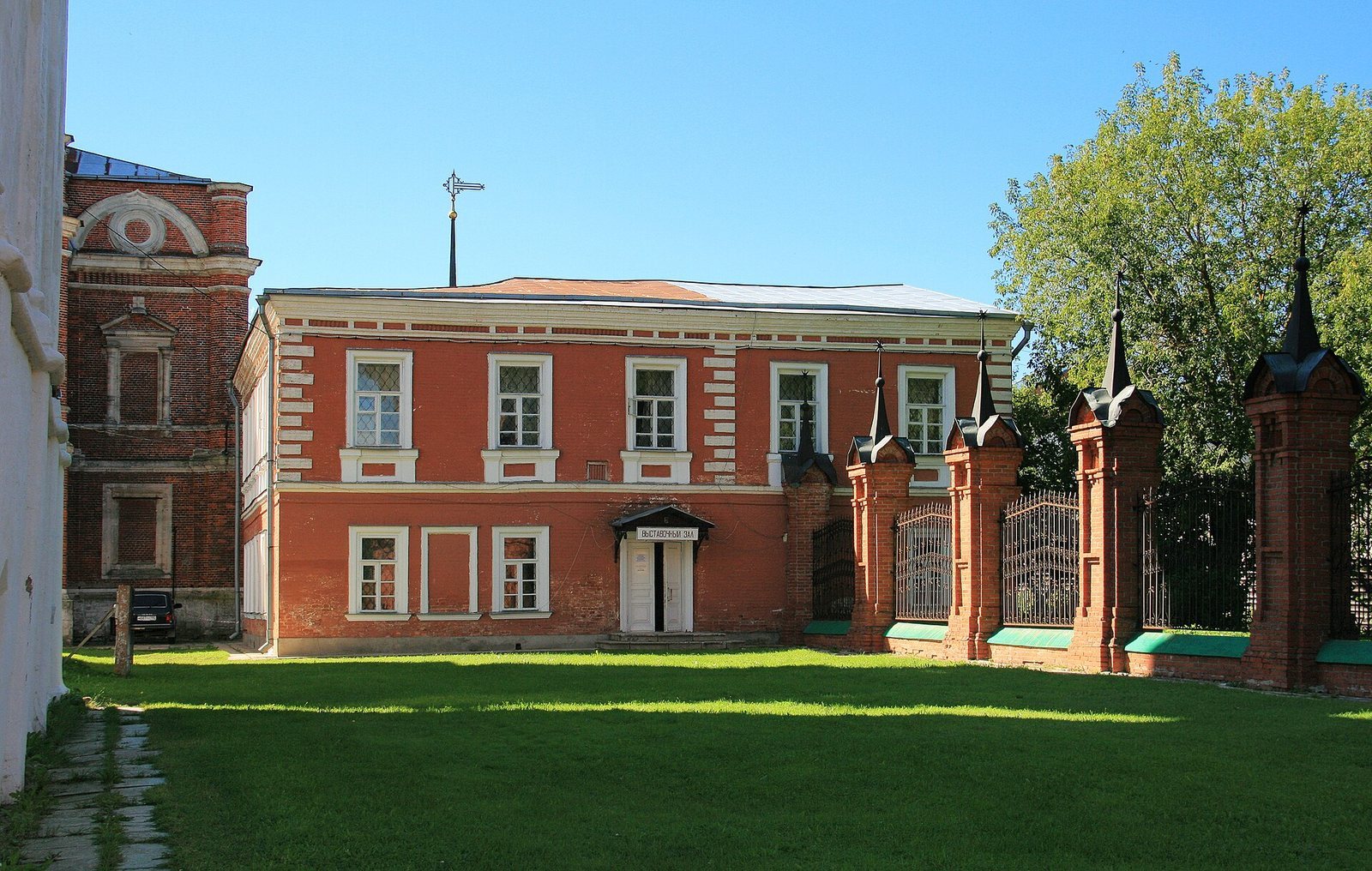
A complex of government office buildings was erected within the fortified site in the early nineteenth century.
Carved enclosure
A carved fence around the cathedral complex was completed in the 1880s. Its decorative corner towers remain part of the enclosure, which underwent slight alterations in the early twentieth century.