Almby Church: A Medieval Parish Church in Örebro, Sweden
Site at a Glance
- Country
- Sweden
- Primary era
- Medieval
- Eras represented
- Medieval, Early Modern, Modern
- Civilizations
- Swedish
- Site type
- Religious
- Remains
- Church
On this page13 sections
History
Almby Church is a stone parish church in Örebro, Sweden, consecrated in the 12th century. It serves Almby Parish within the Church of Sweden, a Lutheran church, and the Diocese of Strängnäs, a regional unit of church administration. Tree-ring analysis of oak from the oldest roof truss dates the timber’s felling to 1103–1120 and indicates that the church’s oldest core was built before 1120.
Medieval origins and expansion
Almby’s parish is thought to predate its first recorded mention, in 1314, when it was described as an independent pastorate, or church administrative district. A surviving base from a 12th-century baptismal font indicates that the church had authority to perform baptisms by then.
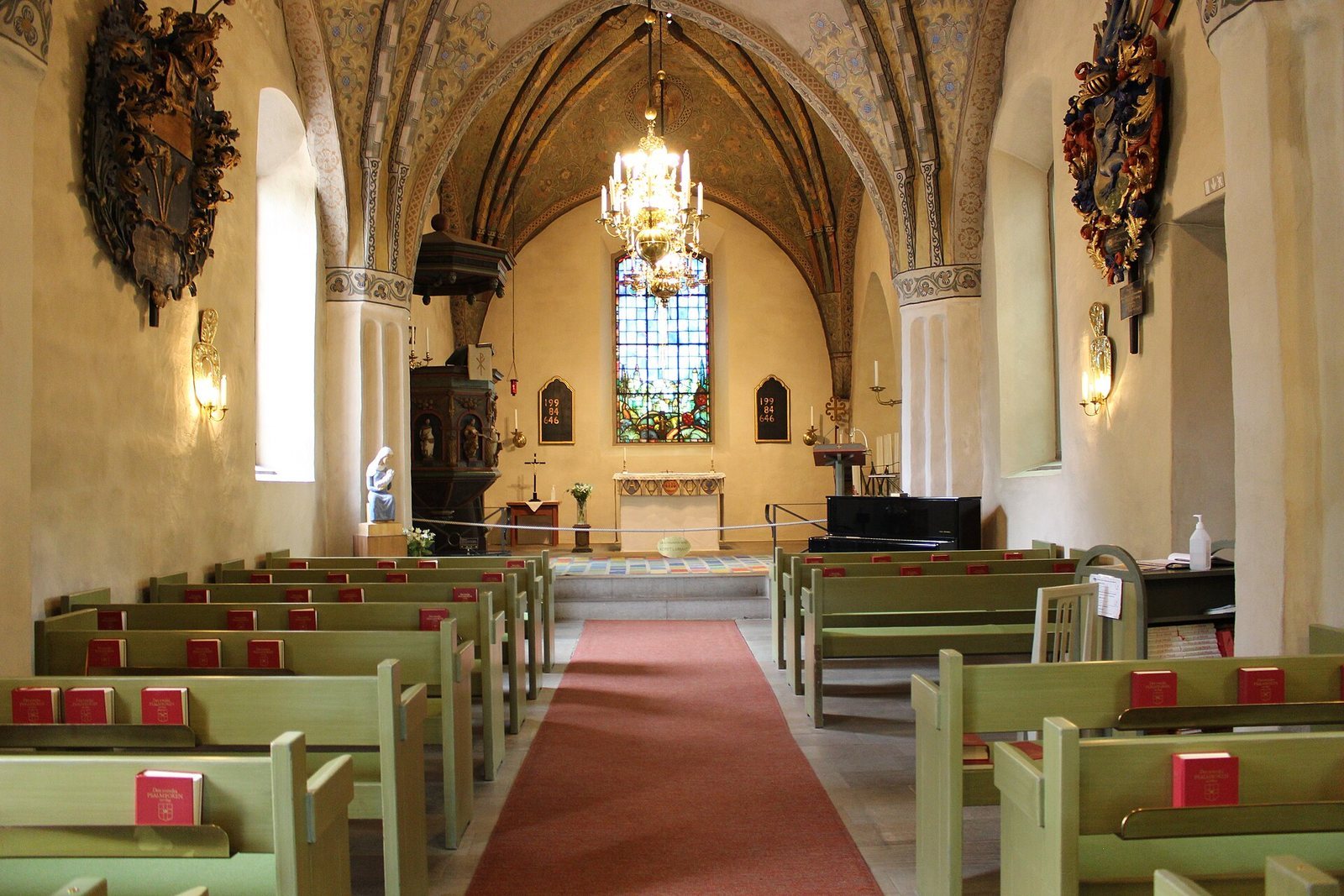
In the 13th century, the church was enlarged with a longer chancel and nave. Probably in the late 15th century, the chancel’s earlier vault was removed and new vaults were installed.
Chapels and early modern alterations
A sacristy was added in the 16th century. In 1656, Baron Gustav Eriksson Leijonhufvud of Hjälmarsberg commissioned a burial chapel beside the south side of the chancel. A second chapel followed in the 1730s, funded by Jacob Åkerhielm of Hjälmarsberg, a mining-administration official.
The church was altered and restored repeatedly during the 17th, 18th, and 19th centuries. Its most extensive restoration in this period took place in 1697–98, when builders added the entrance porch and renewed the bell tower.
Modern restoration
A major renovation in the late 1960s brought the most extensive changes since the 17th century. Later assessments concluded that the work had not adequately respected the church’s historical and architectural value. A careful restoration in 1998 sought to moderate those alterations.
Remains
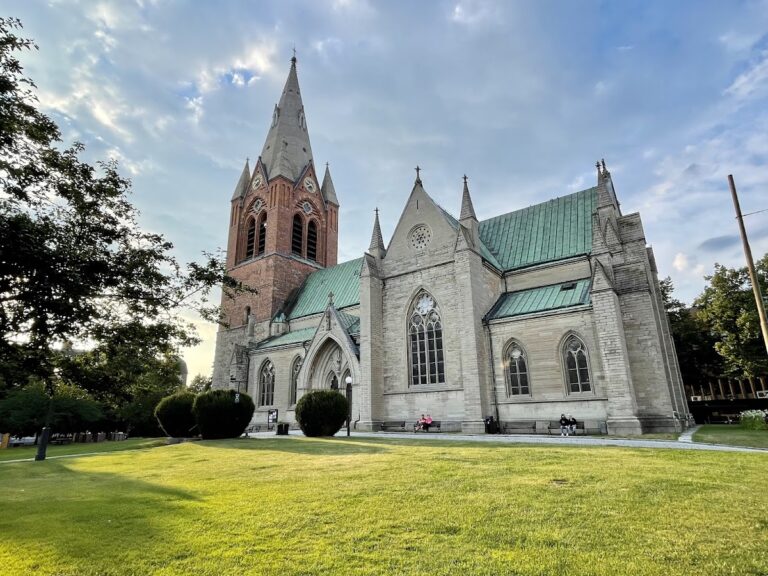
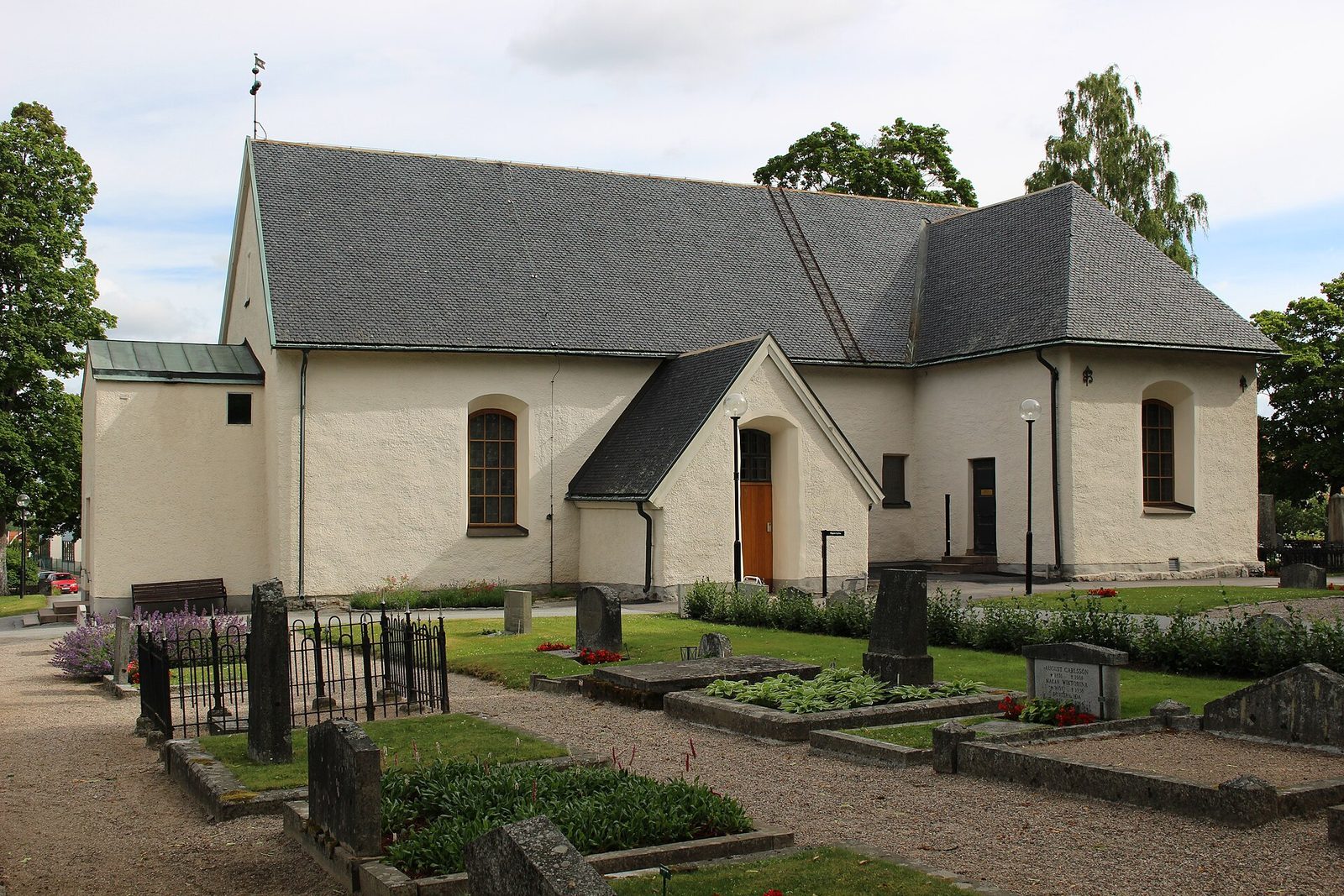
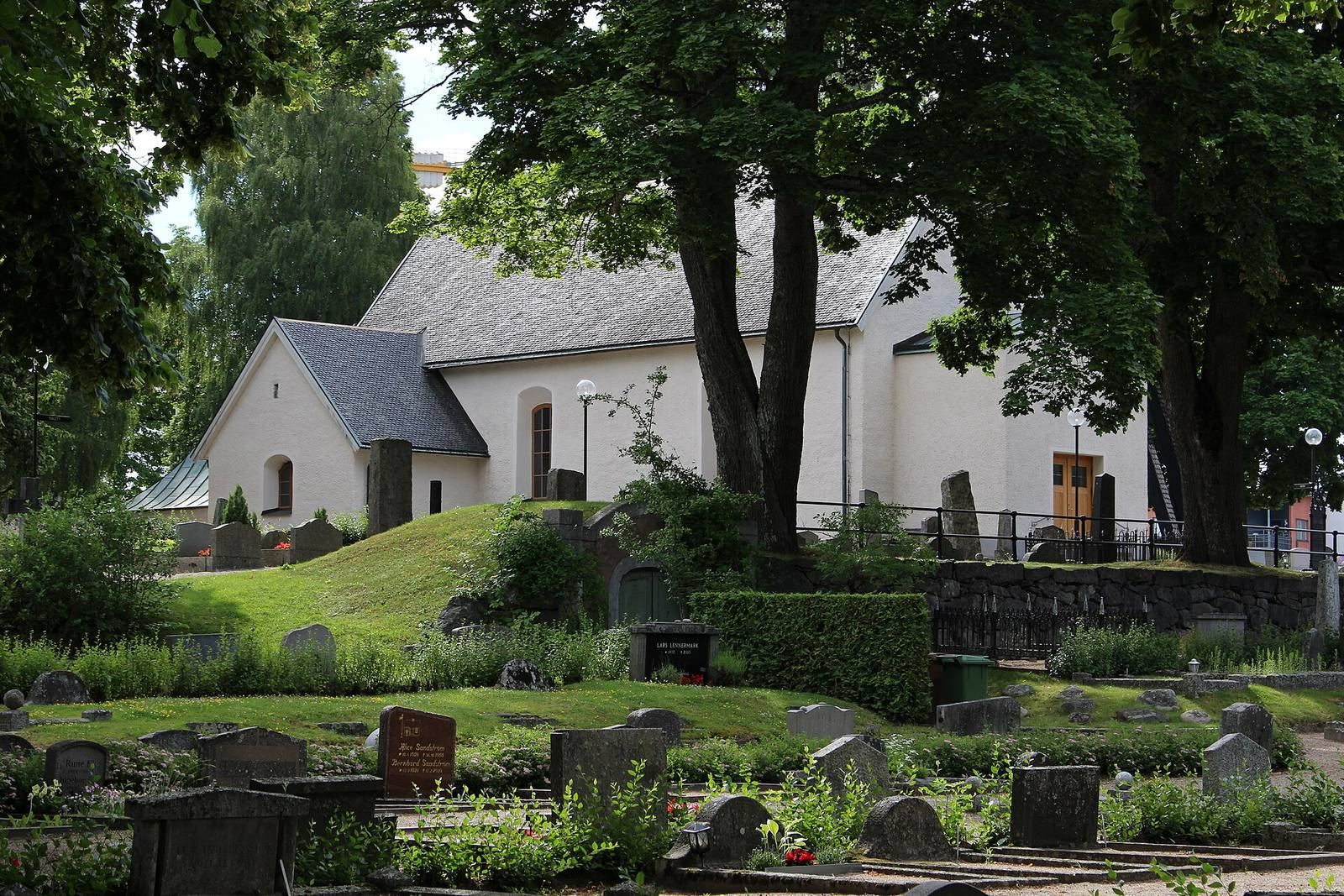
The stone church is arranged around a nave and chancel, with a sacristy, entrance porch, and bell tower. Its present brick vaults give the nave a consistent height. Almby cemetery is the church’s associated churchyard.
Church structure and chapels
Building and medieval fabric
The nave and chancel form the central parts of the church, alongside the sacristy, porch, and tower. The surviving base of a baptismal font is a remnant of the church’s early arrangements for baptisms. A medieval sacrament niche, a wall recess associated with keeping the Eucharistic sacrament, now holds a wooden-doored cupboard modelled on medieval examples. The cupboard was installed in 1998.
Burial chapels
The chapel beside the south side of the chancel was designed as a memorial hall. An opening connects it with the chancel, and three large windows bring light into the room. The later burial chapel also remains part of the church.
Furnishings and objects
Pulpit and church door
The pulpit dates to 1681, and its sculptures were carved by Georg Baselaque, who worked for Lord High Chancellor Magnus Gabriel De la Gardie, a Swedish statesman. A preserved church door with 13th-century ironwork is now kept in the Little Church. An anchor cross in the ironwork serves as the parish emblem.
Bell and chandeliers
The small bell in the tower was cast in the 13th century by an unidentified founder. It is among the oldest bells in Närke, a historical province in central Sweden. Two brass chandeliers in the church date from the 17th century.
Glass and organs
The chancel’s stained-glass window, The Star over Bethlehem, was made in 1928 by Neumann & Vogel of Stockholm. The firm also produced painted medallions for the church’s other leaded-glass windows. The first organ, built in 1863 by Erik Adolf Setterquist in Hallsberg, had seven stops, controls for sets of pipes. E. A. Setterquist & Son of Örebro built a replacement in 1918 behind the earlier façade; it had ten stops, two hand keyboards, and a foot-operated keyboard. Olof Hammarberg Orgelbyggeri AB of Gothenburg expanded it to 16 stops in 1940. Walter Thür Orgelbyggen of Torshälla built the present organ in 1988, with 17 stops, two hand keyboards, and a pedal keyboard. Jerk Alton designed its façade and gallery.
Memorial works and sculpture
A funeral banner commemorating Jacob Åkerhielm, who died in 1733, hangs on a church wall. The church also contains a wooden sculpture of the Virgin Mary made by Maj Starck in 1986.