Weiyuan Fortress: A Ming Coastal Defense in China
Site at a Glance
- Country
- China
- Primary era
- Early Modern
- Eras represented
- Early Modern, Modern
- Civilizations
- Ming, Qing
- Site type
- Military
- Remains
- Fort
On this page11 sections
History
Weiyuan Fortress is a coastal stronghold built by the Ming dynasty (1368–1644) on Zhaobaoshan in China, overlooking the Yong River estuary. Constructed in 1560 to defend the coast from Wokou, maritime raiders active along China’s shores, it guarded the estuary and helped protect Zhenhai county seat.
Ming foundation and Qing expansion
Military commander Lu Tang and Tan Lun, a regional deputy commissioner for maritime affairs, directed the fortress’s construction. In 1562, four iron cannons were installed and more than 40 barracks were built within its walls. The Qing dynasty (1644–1912) enlarged and reinforced the defenses in 1665, then carried out repairs in 1832. In an inscription concerning the expansion of an outer defensive enclosure at Zhaobaoshan, provincial military commander Ouyang Lijian described Weiyuan as the most important of the 72 coastal forts built under the Ming.
The First Opium War
During the First Opium War (1839–1842), a conflict between Qing China and Britain, British forces attacked Zhaobaoshan in October 1841. After landing at Lishan in Jiangnan and occupying Jinjishan opposite Zhaobaoshan, British ships began shelling Weiyuan at 11 a.m. British forces also attacked the mountain from two directions. An explosion at the gunpowder store on its southern side, together with provincial commander Yu Buyun’s flight, preceded the loss of Zhaobaoshan. British forces took Zhenhai county seat that day. Imperial commissioner Yuqian and assistant county magistrate Li Xiangyang died by suicide.
On 11 March 1842, a Qing counterattack led by a garrison commander from Jinchuan in Sichuan attempted to retake Weiyuan with Tibetan troops. The plan had been leaked, and the effort failed. After severe damage during the war, the fortress received major repairs in 1845, including new barracks and additional cannons.
Late Qing defenses
During the Sino-French War of the 1880s, a conflict between Qing China and France, Weiyuan’s artillery played a part in the Battle of Zhenhai.
War with Japan
After war between China and Japan began in 1937, the Nationalist government built reinforced-concrete pillboxes around the fortress. Weiyuan became a focal point of fighting between Chinese defenders and Japanese forces. Japanese troops occupied it on 17 July 1940 and again on 18 April 1941. Each occupation led to the fall of Zhenhai county seat, and the fortress suffered severe damage.
Repairs and protection
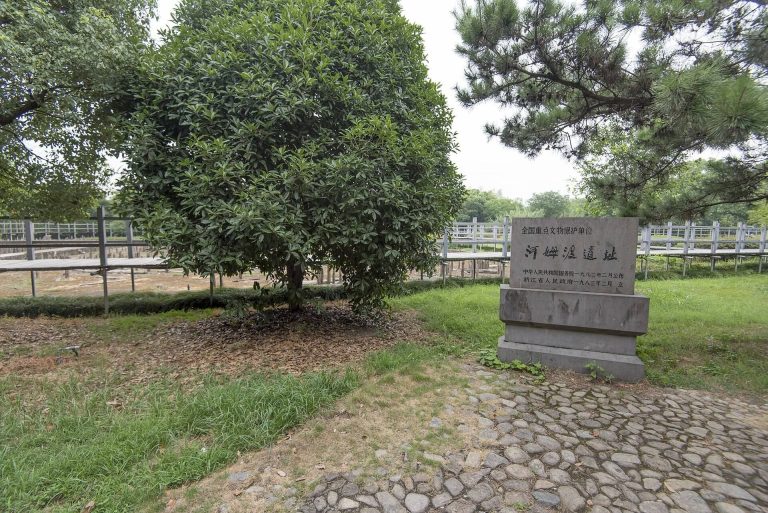
The Zhenhai county government repaired the fortress’s east, south, and west walls between 1983 and 1985, and repaired the south wall again in 2006. In 1989, Weiyuan was included in a Zhejiang Provincial Cultural Relics Protection Unit designation with other coastal defenses, including the Jinjishan lookout. In 1996, it became part of the nationally designated Zhenhai Coastal Defense Remains. The protected area extends 30 meters beyond the wall foundations.
Remains
Fortress layout
Walls and gates
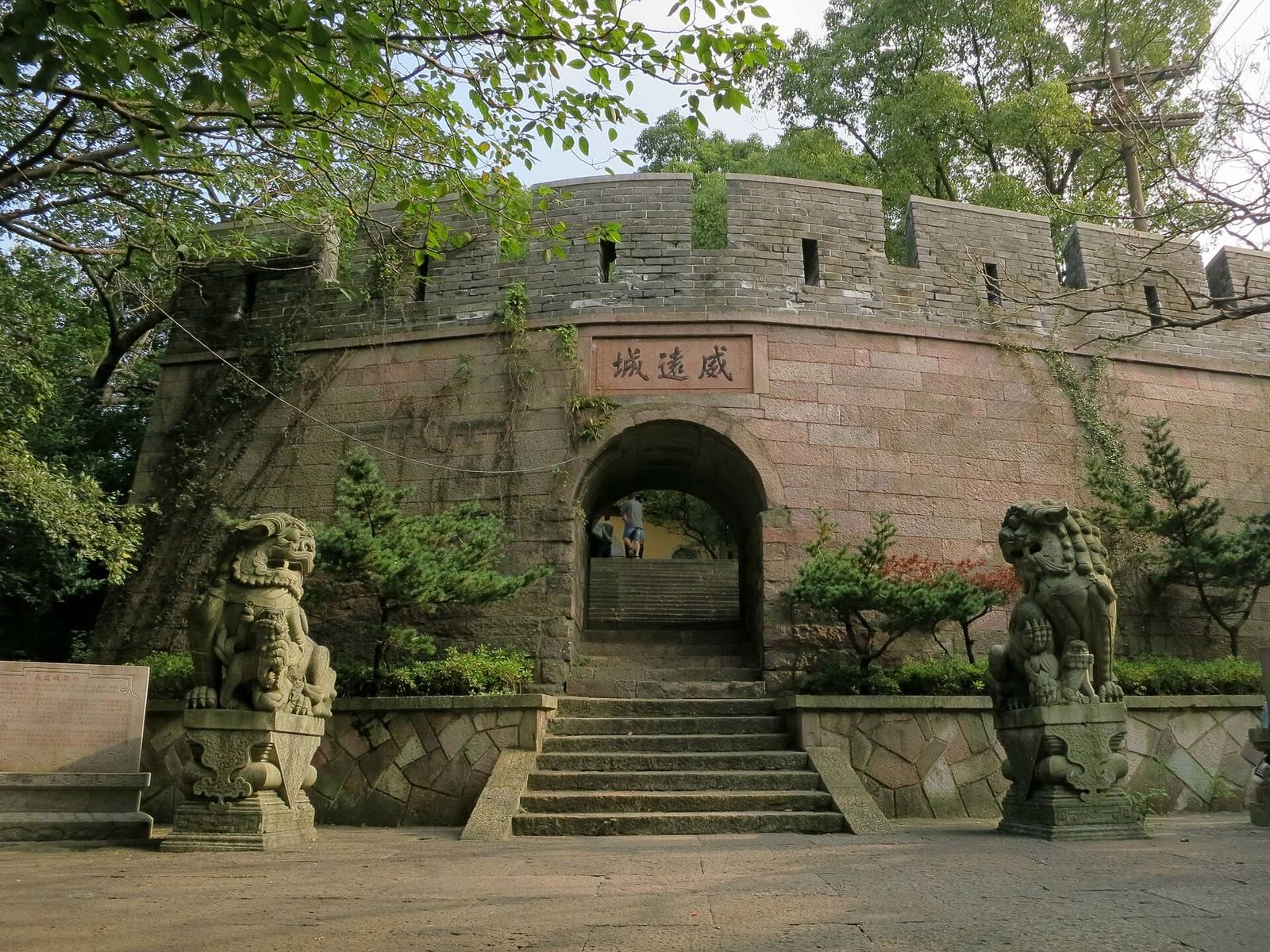
The surviving fortress stands on Zhaobaoshan’s summit above the Yong River estuary. It has a rectangular plan, an area of 5,186 square meters, and a perimeter of 502 meters. Its stone-block walls are 7.4 meters high, with gates on the northeast and southwest sides. Stone slabs pave the interior.
Interior features and inscriptions
The gate lintel bears an incised inscription naming Weiyuan Fortress, written by county magistrate Guo Chunzang in 1832. A Ming-period couplet carved beside the inner gate speaks of calm seas and enduring security, and of the land’s treasures gathered at one mountain. Several other stone inscriptions from the Ming and Qing periods remain within the fortress. Its interior also contains a Buddhist hall called the Precious Hall of Perfect Penetration.
Outer defenses and artillery
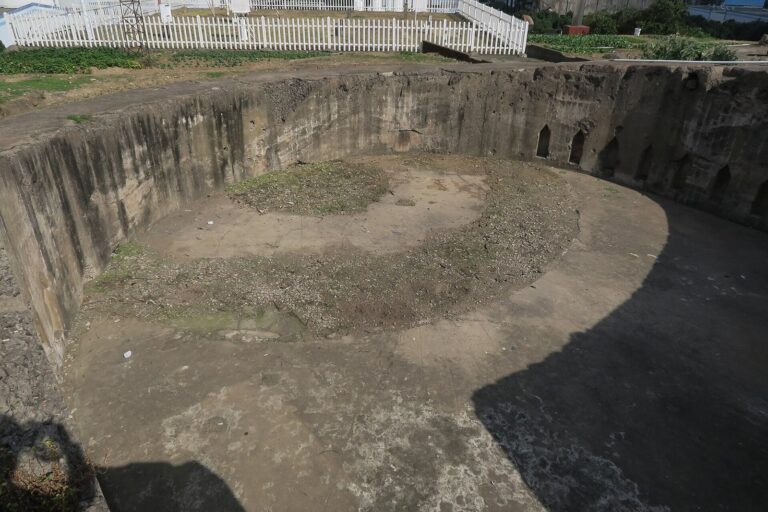
An outer defensive enclosure, called a moon citadel, was added around the fortress in 1883. Eight imported British and German rifled cannons were installed inside. Rifled barrels contain spiral grooves that make a projectile spin.