Norra Sandsjö Church: A Medieval Parish Church in Sweden
Site at a Glance
- Country
- Sweden
- Primary era
- Medieval
- Eras represented
- Medieval, Early Modern, Modern
- Civilizations
- Swedish
- Site type
- Religious
- Remains
- Church
On this page10 sections
History
Medieval origins
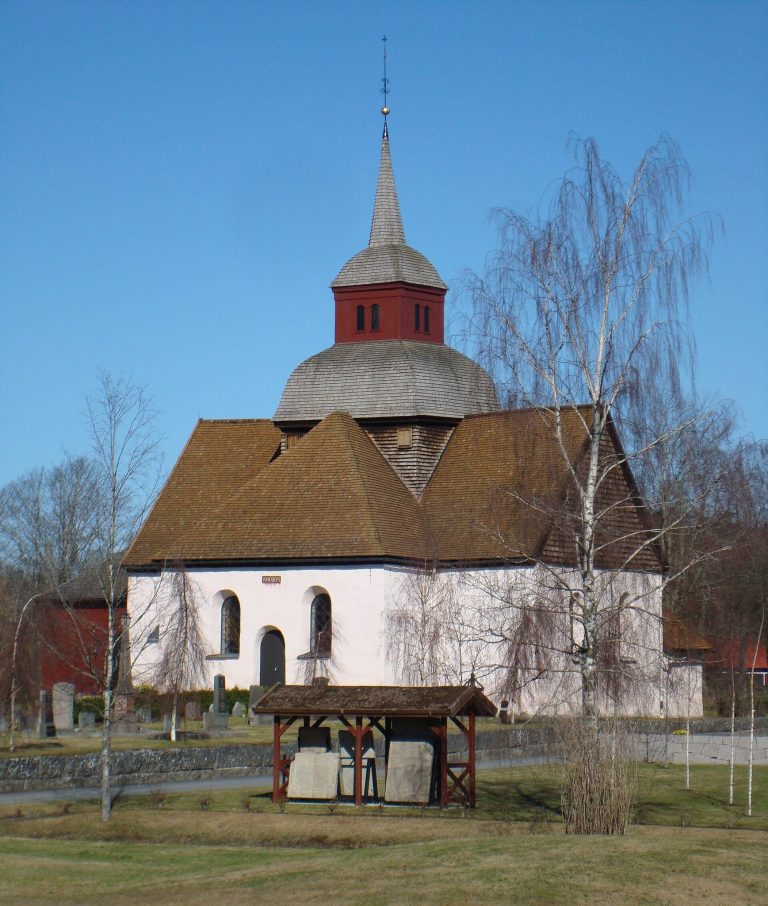
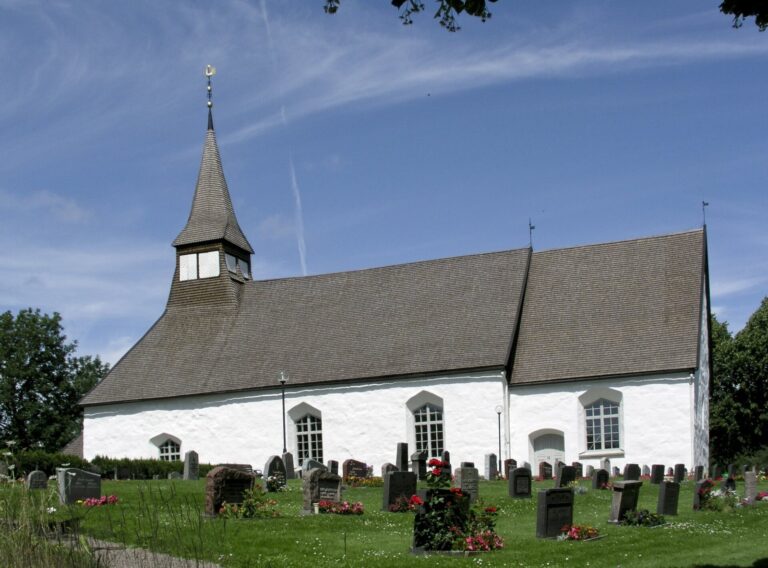
Norra Sandsjö Church, a stone church beside Lake Sandsjön in Bodafors, Sweden, was consecrated in the twelfth century and dates to its latter part. It belongs to Norra Sandsjö Parish in the Diocese of Växjö, a regional ecclesiastical jurisdiction of the Church of Sweden. The building was lengthened eastward later in the Middle Ages, then extended westward around 1600.
Seventeenth-century changes
The church tower collapsed in 1635, damaging part of the vaulted ceiling. A separate bell tower was added. Johan Printzensköld, a Swedish-born officer in Danish service who became governor of Bornholm, was killed during the island’s 1658 uprising and buried at Norra Sandsjö.
A major rebuilding in 1696 extended the church northward and doubled its width. This marked a further transformation of the medieval building.
Remains
Church fabric and painted interior
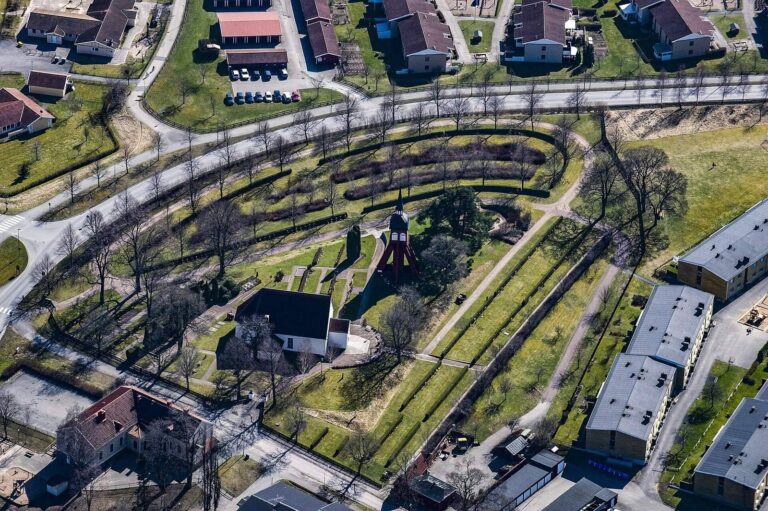
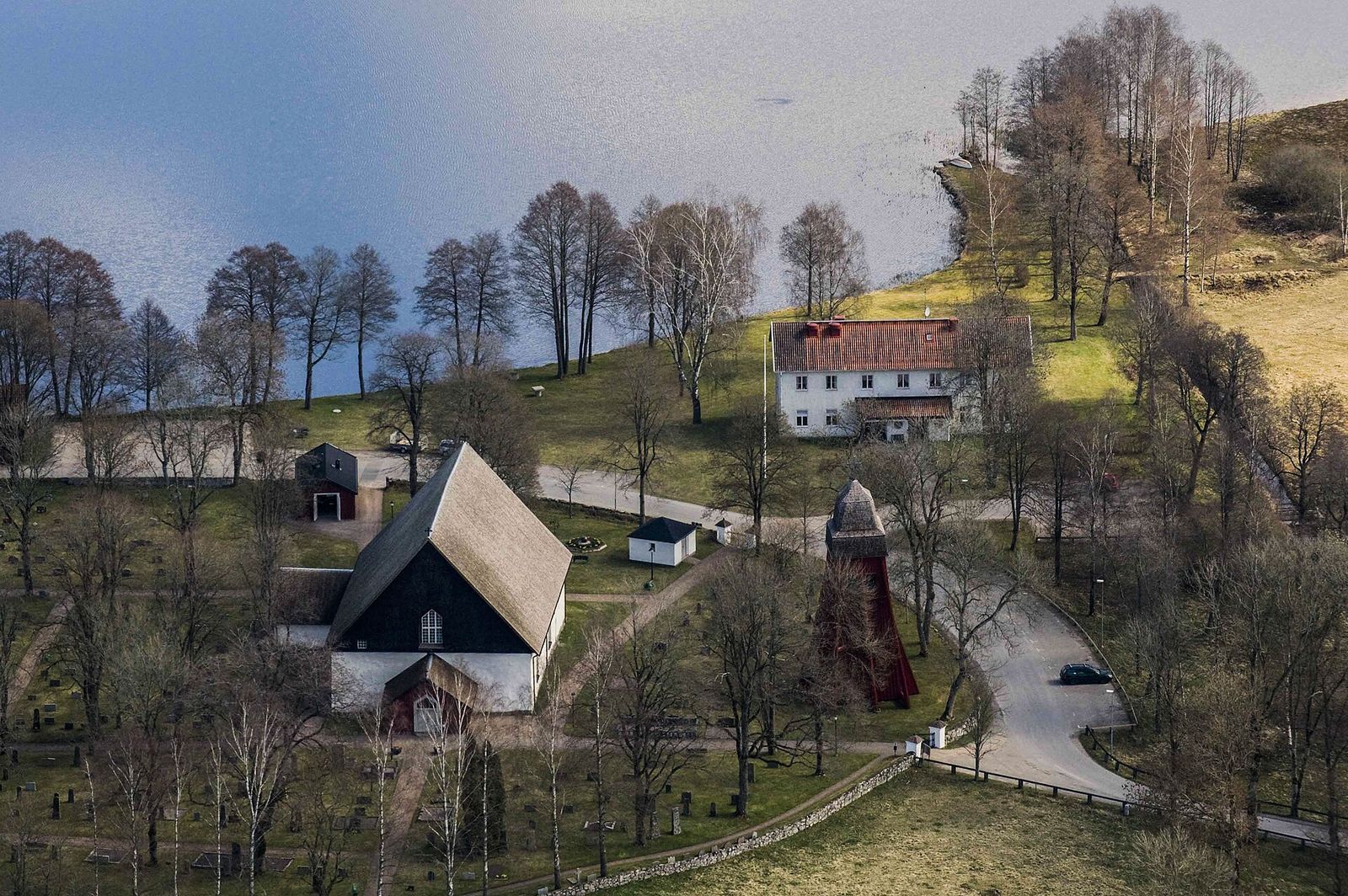
The stone church stands beside Lake Sandsjön. Its exterior is covered in white plaster, with red gable ends, and its red bell tower stands separately from the building. The interior is Baroque, an ornate artistic style associated especially with the seventeenth and eighteenth centuries. Johan Columbus painted the ceiling in 1709; the walls also have painted acanthus-leaf ornament and fragments of sixteenth-century wall paintings.
Baptismal font and epitaph
A sandstone baptismal font has a bowl decorated with nine panels framed by small arches. It probably dates to the late twelfth century and is tentatively attributed to an unidentified medieval sculptor known as Bestiarius, or the “Master of Beasts.” An epitaph inside the church commemorates the family of Johan Printzensköld.
Organs
Eighteenth-century instruments
In 1734, local organist, bell-ringer, and amateur builder Lars Solberg rebuilt an older organ, probably made in the seventeenth century. The instrument had 11 stops by 1774, when it was moved to Lannaskede Old Church. In 1775, Lars Strömblad built its replacement, an organ with 20 stops. Stops select sets of pipes, and trumpet-playing seraphs carved by Swedish painter and church artist Pehr Hörberg decorated the instrument.
Nineteenth- and twentieth-century instruments
Johannes Magnusson of Lemnhult made a replacement organ installed in 1855 or 1856, with 15 stops. He built another for the church in 1910, with 14 stops across two hand-played keyboards and an independent foot pedal. Its partly air-powered mechanism included Roosevelt wind chests, chambers that supply air to the pipes. Grönlunds Organ Workshop supplied a compact four-stop choir organ in 1968, with mechanical linkages and an attached pedal. Smedmans Organ Workshop built the current 25-stop organ in 1982. Its keys and stops operate through mechanical linkages, and the instrument stands behind the 1775 organ facade.
Sandsjö Stone
On a ridge stands the 2.5-metre-high memorial stone known as the Sandsjö Stone. It gives the names of six generations.