Christina Church: Jönköping’s Historic City Church
Site at a Glance
- Country
- Sweden
- Primary era
- Early Modern
- Eras represented
- Early Modern, Modern
- Civilizations
- Swedish
- Site type
- Religious
- Remains
- Church
On this page14 sections
History
Relocation and construction
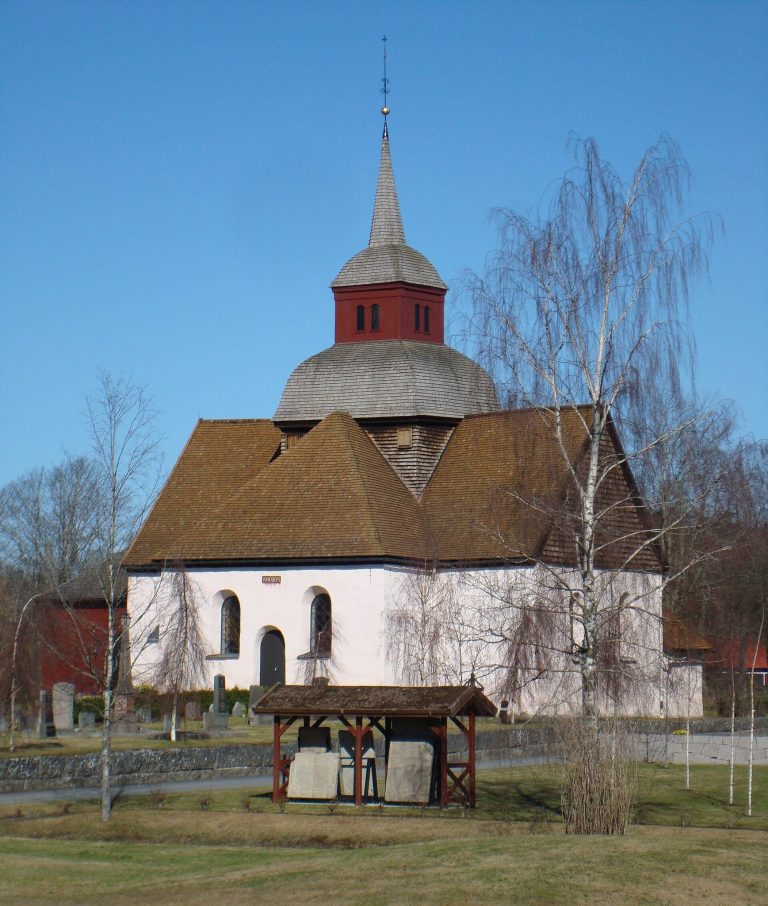
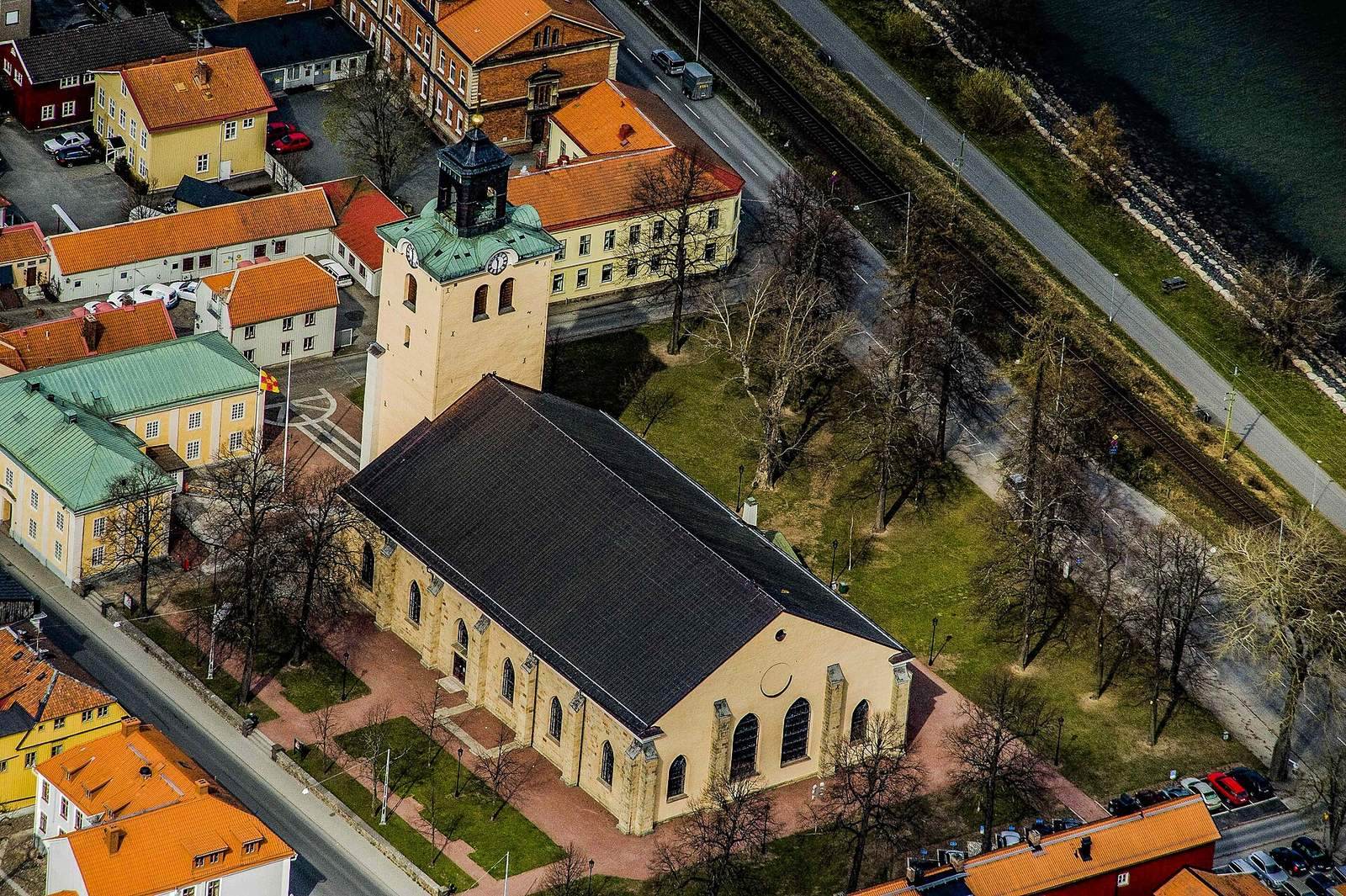
Christina Church is a church in Jönköping, Sweden, whose construction began in 1649 after the town shifted east of the present-day harbor canal. Its predecessor, the Church of Saint Mary and Saint Nicholas, and the rest of the town west of the canal were burned by townspeople in 1612 as they prepared for a Danish attack.
Work on the new church began during the reign of Queen Christina, Sweden’s ruler from 1632 to 1654. The church was consecrated on 20 April 1673 and named for her. Its plans were probably prepared by Hans Fleming, a 17th-century master builder associated with castle construction. After its consecration, it served as Jönköping’s city church and was also known as the Eastern Church.
Christina Church belongs to the Church of Sweden, Sweden’s Lutheran church, and the Diocese of Växjö, a regional church jurisdiction. Its parish is identified as Jönköping Christina-Ljungarum Parish and also as Jönköping Parish.
Fire and rebuilding
A city fire on 6 February 1790 destroyed the church. It was later restored, taking on much of its present form.
Changing organs
An early organ was sold to Eksjö Church in 1673. In 1683, Hans Henrich Cahman built a new instrument with 25 stops, controls that each select a set of pipes. The 1790 fire destroyed it. Johan Ewerhardt the Elder built a 34-stop organ in 1799. In 1853, some parts of that instrument, including its upper pipe section, were transferred to Jönköping’s Castle Chapel, while Gustaf Andersson built a new organ with 33 stops for Christina Church.
Åkerman & Lund built the gallery organ in 1912. Setterquist & Son changed its arrangement in 1951, and Tostared Church Organ Factory restored it to its original arrangement in 2005. Nordfors & Co made a small organ for Österäng Church in 1960–61. It came to Christina Church in 1966, when Österäng received a new instrument, but had left Christina Church and been donated to a congregation in the Baltic region by 2019.
Kristian Wegscheider built the choir organ in 2012. Swedish concert organist and music professor Hans Fagius inaugurated it that September.
Remains
The church’s exterior includes sandstone facing, a tower, and a separate belfry. Inside, paintings, an altarpiece, and two organs form part of its surviving furnishings.
Exterior and bells
Stonework and tower
Trånghalla sandstone from Knektakällan in Trånghalla clads the church’s long side and gable. The tower was completed in 1686. A separate belfry was erected after the 1790 fire.
Bells
The large bell cast in 1751 by Andreas Wetterholtz of Malmö weighed more than 2,816 kilograms. Its inscription called worshippers to devotion and named King Frederick, Crown Prince Adolph Frederick, Louisa Ulrica, and princes Gustav, Charles, and Frederick Adolph. The fire of 1790 melted the bell. On 8 June that year, Jonas Magnus Fries of Jönköping cast a replacement from its recovered metal. Its inscription names contributors and includes verses recalling the fire and the bell’s renewed religious purpose.
Fries also recast the small bell in 1790 from the remains of its predecessor; merchant Peter Gylling paid for it. Its longer inscription includes Bible quotations and a verse urging listeners to turn from sin and answer God’s call. It also records Catharina Sandahl’s contribution of 200 daler in silver coinage toward the belfry.
Interior decoration
Wall paintings
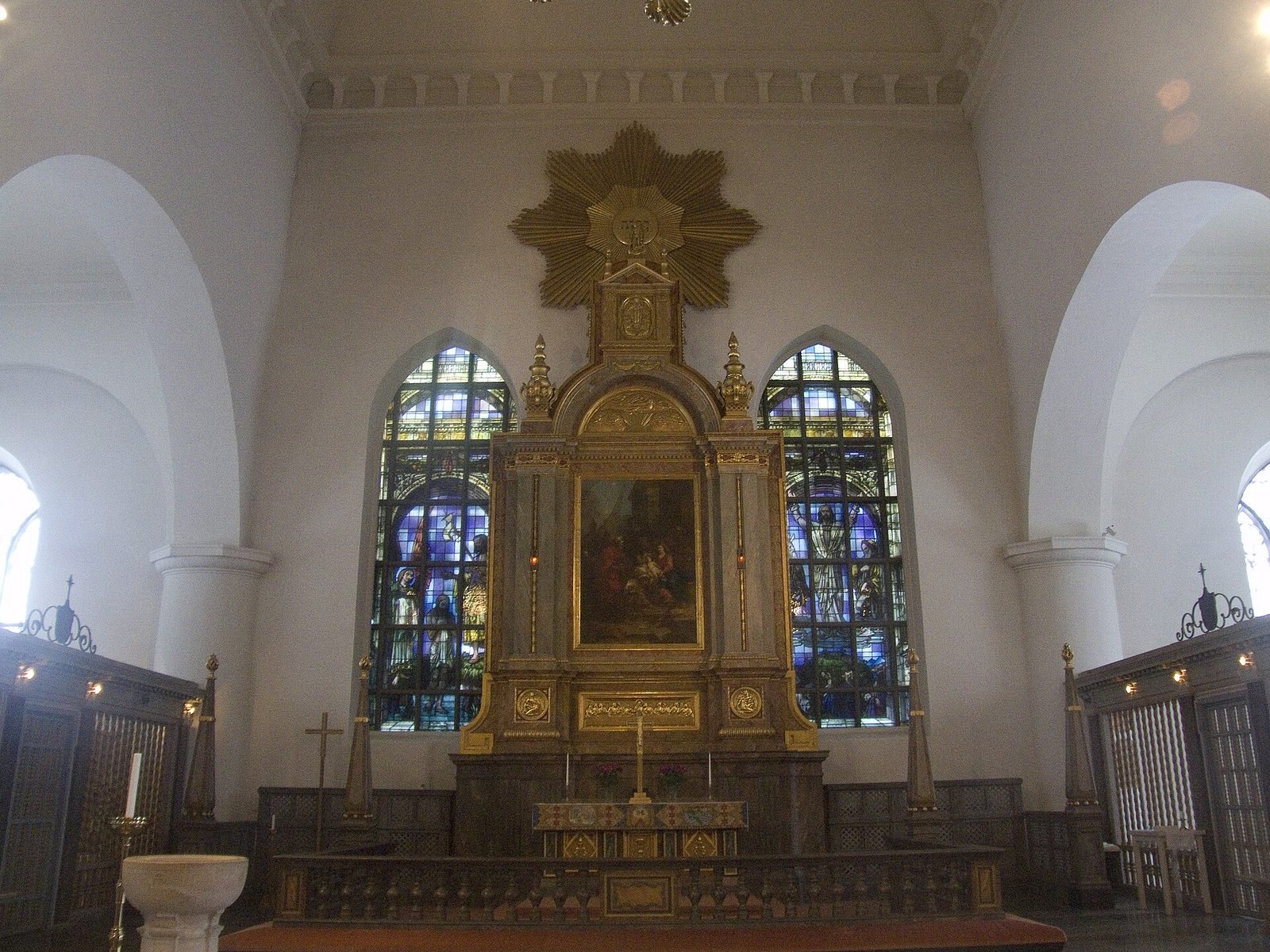
An oil painting of the Crucifixion by church painter Edvard Orm, dated 1722, hangs on the north wall. On the south wall, Georg Pauli’s 1881 painting shows angels making music at Christ’s tomb.
Altarpiece and choir decoration
The altarpiece, painted in 1738 by French artist Pierre-Jacques Cazes, depicts the Adoration of the Magi. Near the choir, a gilded sun bears YHWH, the conventional Latin-script form of the four-letter Hebrew name of God. Bernhard Andersson, who later took the surname Andell, made the sun’s woodwork.
Organs
Gallery organ
The gallery organ has 40 stops, three hand-operated keyboards, a foot-operated pedal, and 2,144 pipes. Its façade comes from Gustaf Andersson’s 1853 organ, and the façade pipes are now silent. Restoration reinstated the Eufon 8-foot stop using pipes from an 1889 Åkerman & Lund organ, reconstructed Trumpet 16-foot and Contrabassoon 32-foot stops, and renewed other registers. Keys and stop controls operate mechanically, with pneumatic assistance for the key action and Barker machines, which use air pressure to assist the first two keyboards. Roosevelt windchests, air-distributing chambers for the pipes, are also part of the instrument. It is regarded as one of Sweden’s best-preserved organs of the 19th-century Romantic tradition.
Choir organ
Located in the south choir, the choir organ has 27 stops, two hand-operated keyboards, and a pedal, as well as an attachment that sounds six small bells. It follows the German Baroque organ tradition and is tuned to chamber pitch, a standard tuning pitch for musical instruments.