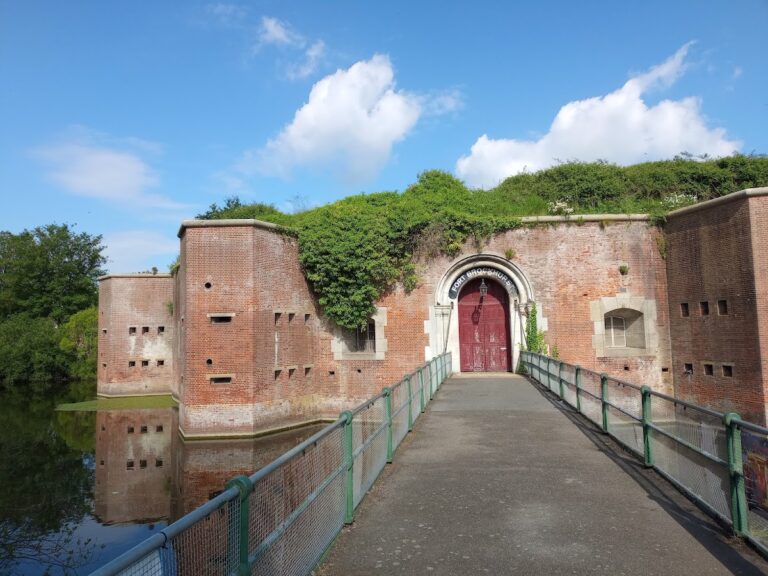
Fort Widley: A Victorian Fort Built to Defend Portsmouth
Site at a Glance
- Rating
- 4.6
- Country
- United Kingdom
- Primary era
- Modern
- External website
- Open
- Eras represented
- Modern
- Civilizations
- British
- Site type
- Military
- Remains
- Fort
On this page9 sections
History
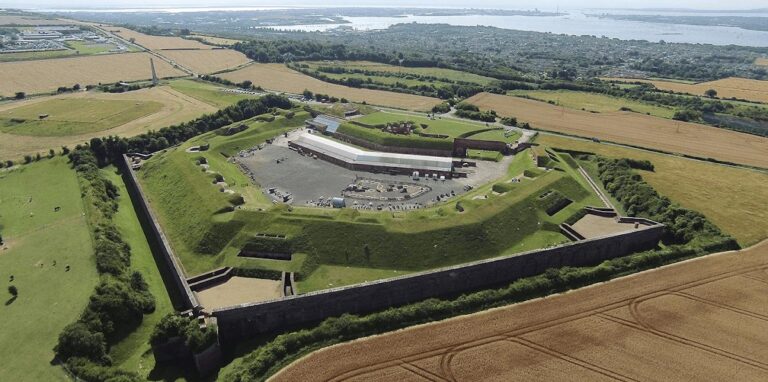
Fort Widley is a Victorian defensive fort on Portsdown Hill in Portsmouth, United Kingdom, built between 1860 and 1870 to protect the city from attack from the rear. The Royal Commission on the Defence of the United Kingdom, a British government inquiry into national defenses, recommended forts on the hill. William Crossman, a Royal Engineers officer, designed Widley; William Tredwell built it. The Royal Engineers was the British Army corps responsible for military engineering. Crossman served on the War Office staff of the Inspector General of Fortifications, the senior official overseeing fortifications.
Victorian use and armament
During the Victorian period, Widley and the other Portsdown forts housed infantry. The 30th Regiment of Foot was quartered at the fort in 1875, and the South Lancashire Regiment was stationed there by 1886.
Changes in weapons raised questions about the forts’ effectiveness before construction was complete. Their guns were installed only years later, prompting revisions to the planned armament. The specified 68-pounder smooth-bore guns were never fitted. Rifled, breech-loading 7-inch Armstrong guns may have been Widley’s first armament. By 1885, the fort appears to have had some guns while the other Portsdown forts were still awaiting theirs.
By the 1890s, Widley carried five 6.6-inch rifled, muzzle-loading howitzers, ten 7-inch rifled, breech-loading Armstrong guns, two 8-inch rifled, muzzle-loading howitzers, and nine 40-pounder rifled, breech-loading Armstrong guns on movable carriages. The guns were removed in 1902.
Twentieth-century military service
During the First World War, the fort served as a transit depot. In the Second World War, it was altered to provide more accommodation and used by several units. These included the Royal Corps of Signals, an Army communications corps, and the Auxiliary Territorial Service, a women’s service associated with the British Army. The Auxiliary Territorial Service supported the naval command at Fort Southwick.
A bomb disposal squadron was based at Widley from 1952. The following year, an emergency civil control centre for Portsmouth was established in the fort’s magazine.
Council ownership and later use
Portsmouth Corporation, the city’s municipal authority, leased the fort in 1961. Portsmouth City Council bought it in 1972 and remains its owner. From 1990, the Peter Ashley charity used Widley as an activity centre, including for equestrian activities. The site is now home to an equestrian centre run by Peter Ashley Activity Centres.
Fort Widley is listed at Grade II*, a category for buildings of particular importance and more than special interest. A gun in front of the fort is listed at Grade II, for buildings of special interest.
Remains
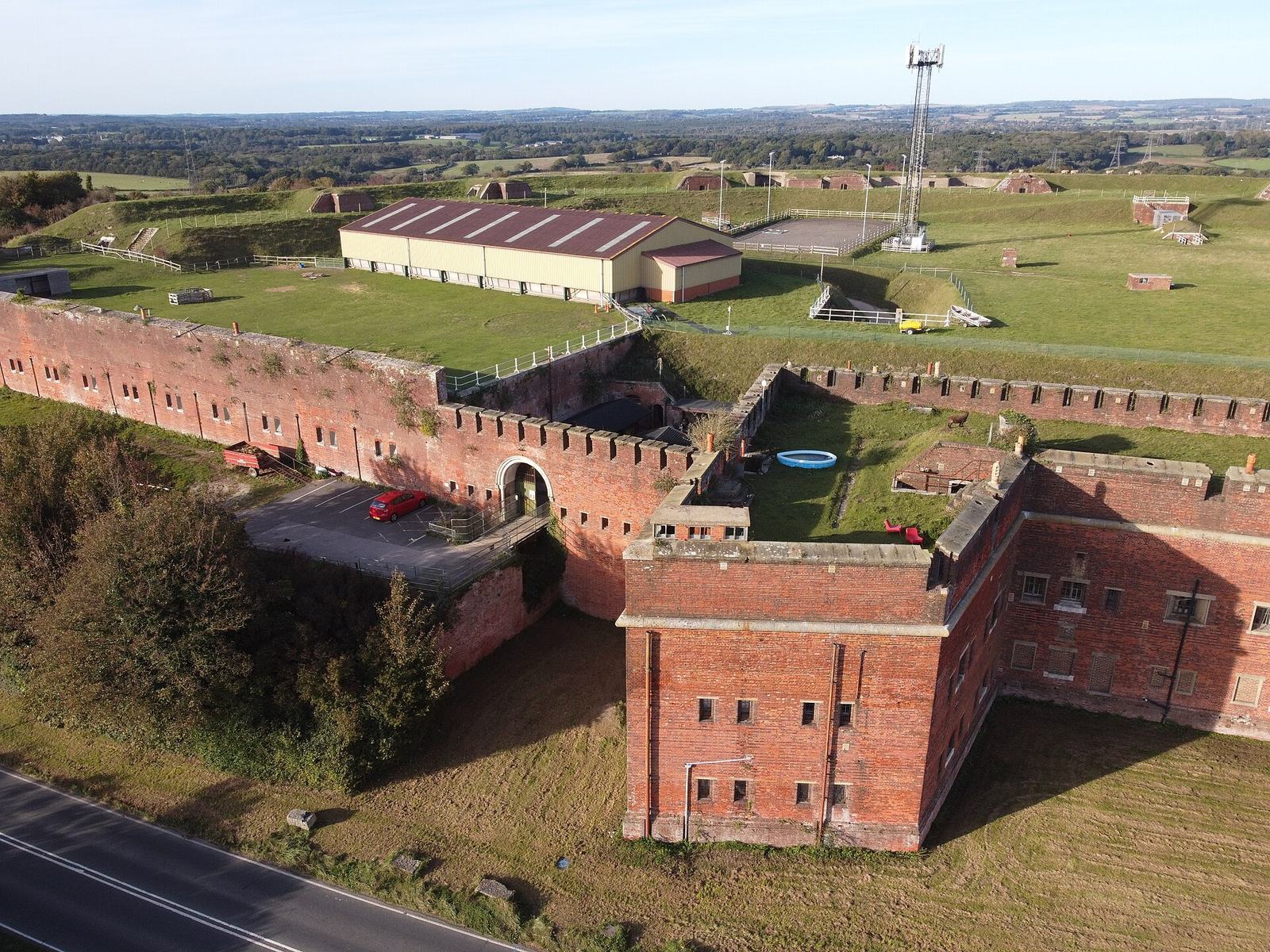
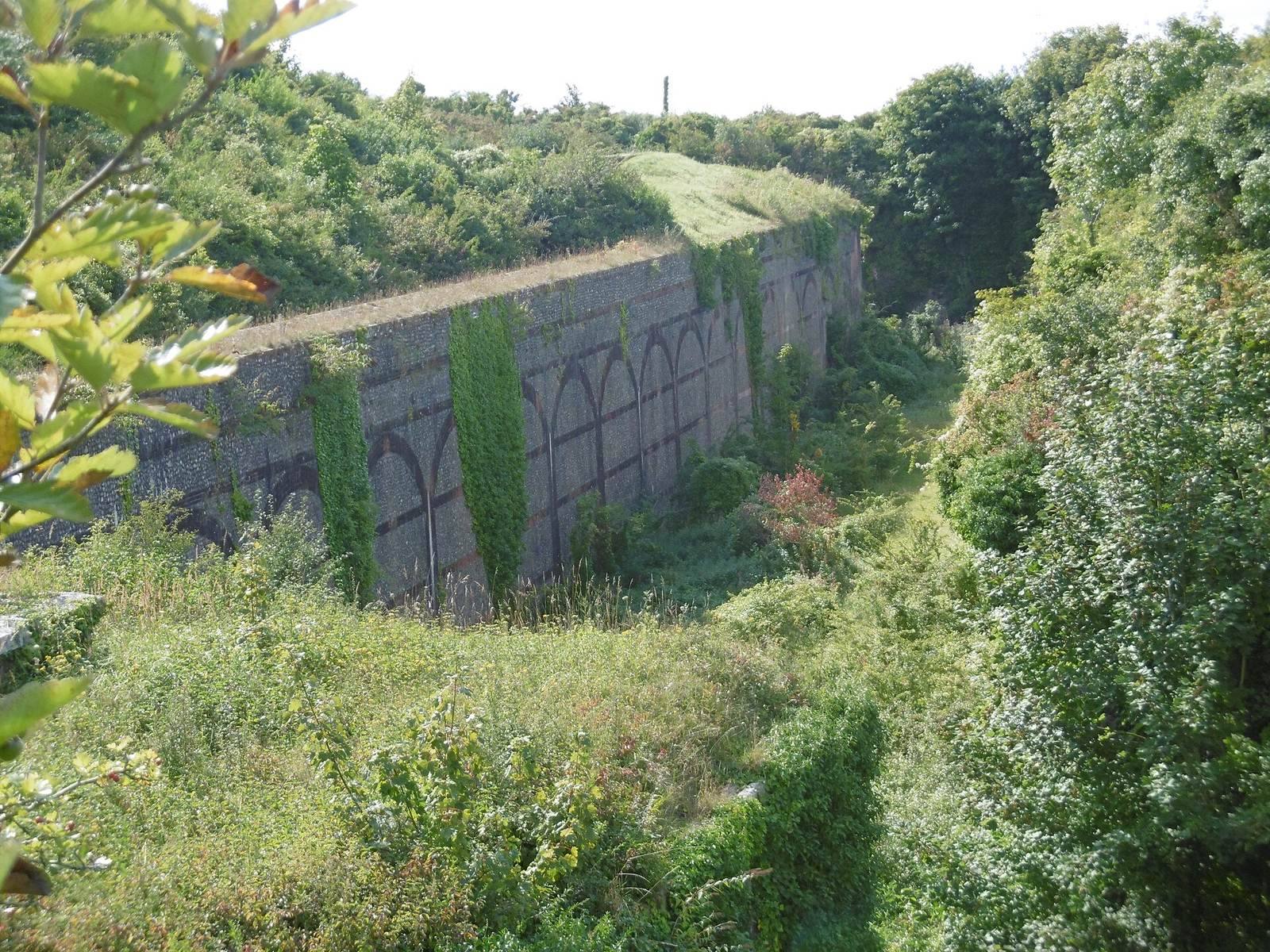
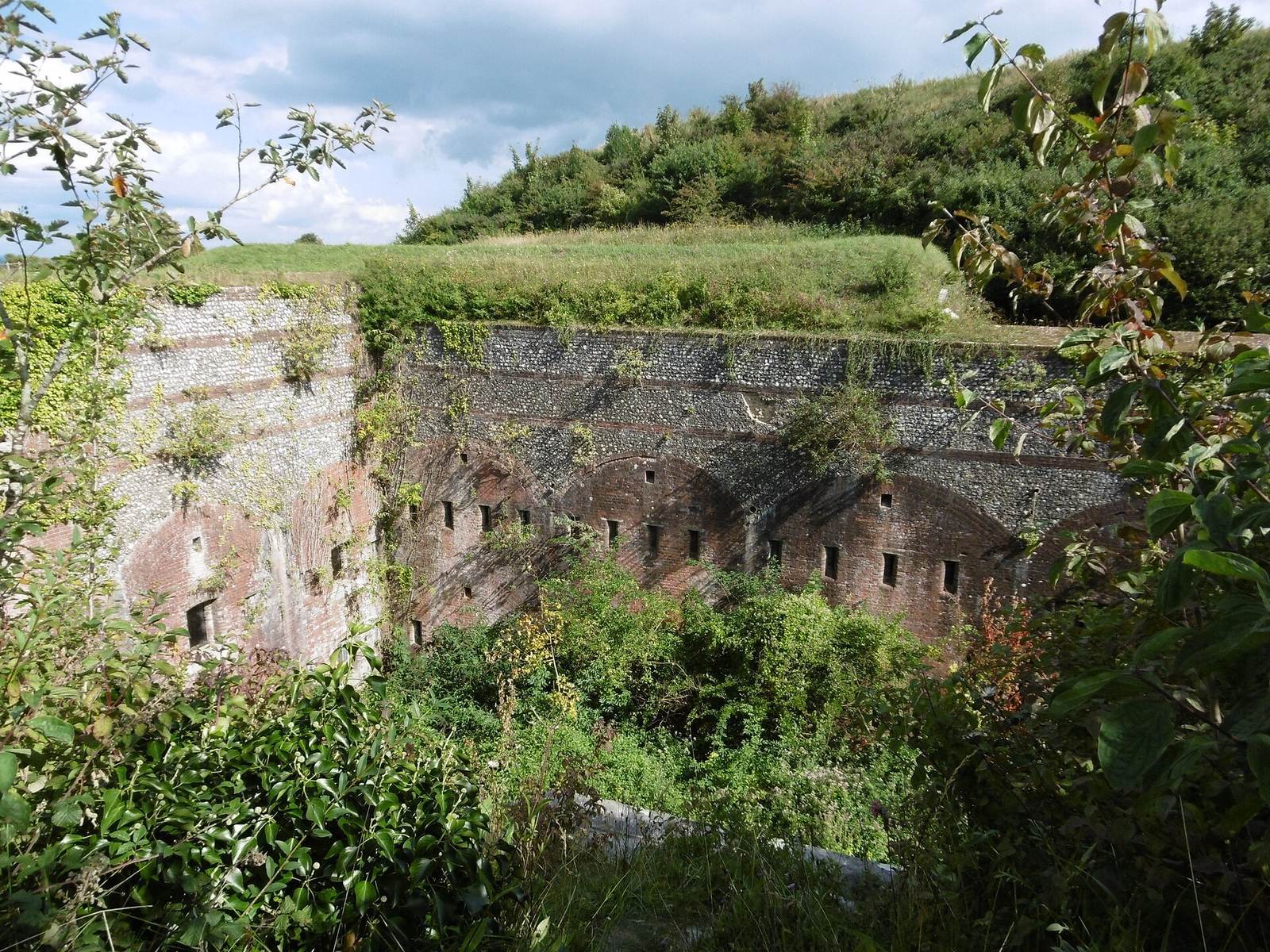
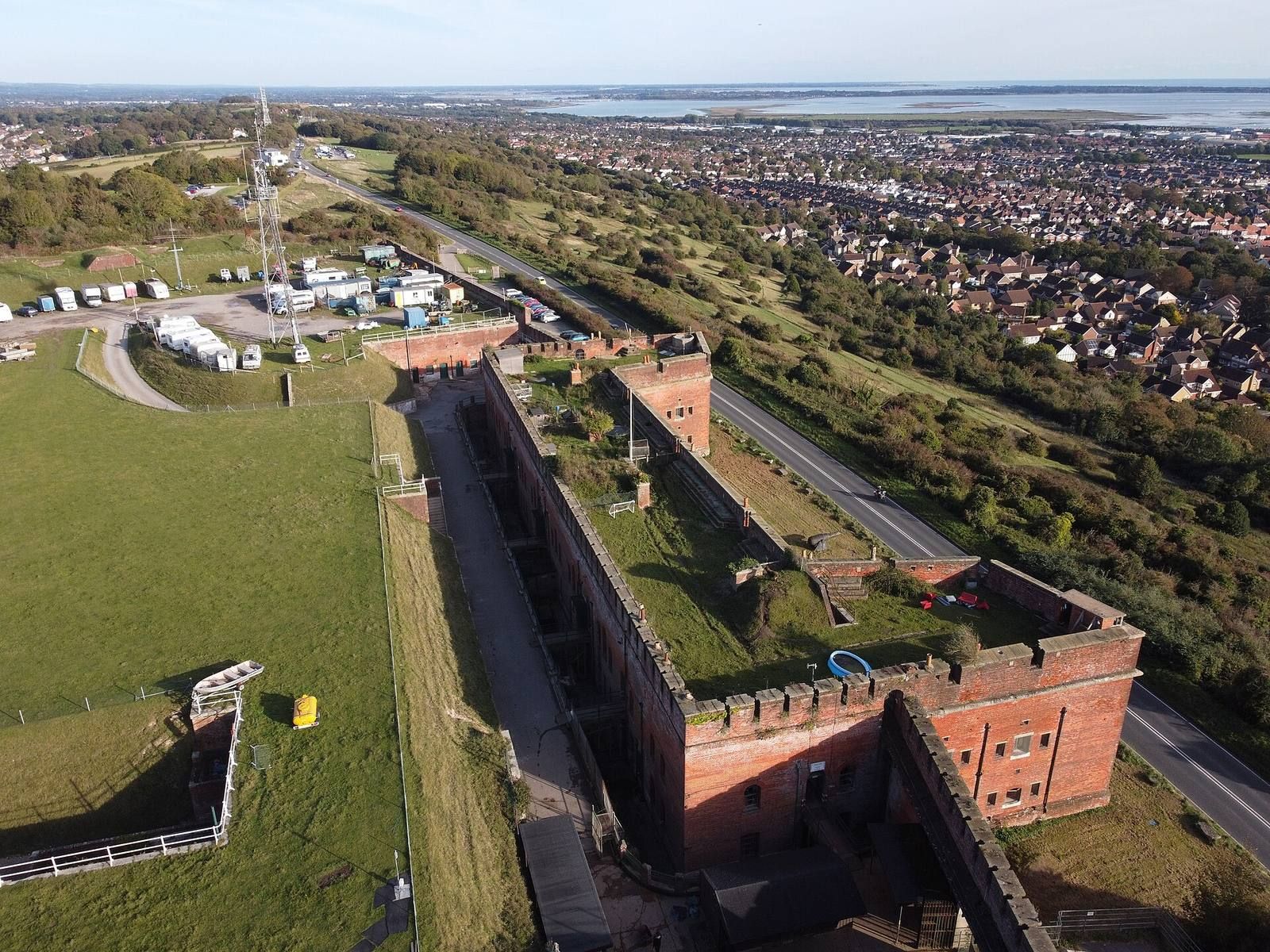
The fort has a multi-sided plan and was built up from chalk. Red brick and local flint were used for its buildings and to face the large dry ditch. Its layout brought together artillery positions, works for defending the ditch, barracks and an ammunition magazine.
Defensive works and buildings
Artillery and ditch defenses
The main guns were positioned on a semicircular rampart, a raised defensive bank. Two protected batteries held 13-inch mortars, artillery designed to fire at a steep angle. A full caponier, a protected projection into the ditch for flanking fire, and two smaller demi-caponiers, which covered parts of the ditch, provided positions for close-range weapons.
Barracks and magazine
Barracks accommodated officers and other ranks, meaning military personnel who were not commissioned officers. The fort also had a magazine for storing ammunition.
Gun in front of the fort
A gun is situated in front of Fort Widley.