Trongsa Dzong: Bhutan’s Fortified Religious and Administrative Complex
Site at a Glance
- Country
- Bhutan
- Primary era
- Early Modern
- Eras represented
- Early Modern, Modern
- Civilizations
- Unclassified
- Site type
- Military
- Remains
- Fort
On this page12 sections
History
Trongsa Dzong is a fortified religious and administrative complex in Bhutan, established as a fortress in 1647 under Shabdrung Ngawang Namgyal, a Buddhist religious and political leader associated with Bhutan’s unification. It is Bhutan’s largest dzong fortress. For centuries, it was the seat of governors who controlled much of eastern and central Bhutan and the route linking the country’s east and west.
Origins and foundation
In 1541, Ngagi Wangchuk, a religious teacher of the Drukpa branch of Tibetan Buddhism, came from Ralung, a monastery in Tibet, and settled at Yuling. Traditions link his choice of the site to an auspicious light. Other tellings connect it with the hoofprints of Palden Lhamo, a protective Buddhist deity, or with a cave and spring associated with a vision of Mahakali and dakinis, female figures in tantric Buddhism.
Two years later, Ngagi Wangchuk built a small temple or meditation room there. His students established retreats nearby, forming a settlement that people called Trongsa, meaning “new village.” The name came to refer to the settlement and district. In 1647, Shabdrung Ngawang Namgyal replaced the earlier temple with the first fortress and appointed Minjur Tempa as Trongsa’s penlop, or regional governor. Minjur Tempa enlarged the complex in 1652.
Expansion and regional authority
The complex grew through successive additions. Trongsa’s penlop Druk Dendrup built the Chenrezig temple in 1715. In 1765, Penlop Zhidar established a monastic community of about 50 monks, and a larger complex for the monks, including the Maitreya temple, followed in 1771. Penlop Jigme Namgyal added the Demchog temple in 1853.
The Trongsa penlops of the Wangchuck dynasty, Bhutan’s royal house, held authority over much of the country’s east and center and controlled east–west trade. The only road linking eastern and western Bhutan passed through the dzong’s courtyard. By the nineteenth century, Trongsa effectively served as the country’s capital, although it never officially held that status.
The Wangchuck monarchy and continuing use
Ugyen Wangchuck was Trongsa’s penlop before becoming Bhutan’s first king in 1907, and he retained the governorship after his coronation. From that year, the Wangchuck rulers of Trongsa became Bhutan’s monarchs.
An earthquake heavily damaged the complex in 1897. Ugyen Wangchuck and his successor, Jigme Wangchuck, oversaw major repairs in 1927, and extensive restoration followed in 1999. The dzong was reconsecrated in October 2004, at the time of the Crown Prince’s enthronement. A temple honoring the legendary warrior-king Gesar was established in the Ta Dzong watchtower in 1977, and a museum was added to the complex in 2008. Trongsa Dzong is on Bhutan’s Tentative List for possible UNESCO World Heritage inscription.
The complex remains the headquarters of Trongsa District’s administration and a major monastic center, with around 200 monks. During summer, members of the monastic community often move to Kurje Monastery in the Bumthang Valley. The dzong also provides ceremonial requisites for the customary enthronement of the Choetse penlop. Each December or January, its northern courtyard hosts the five-day Trongsa tsechu, a religious festival commemorating Guru Rinpoche’s arrival in Bhutan in the eighth century and Buddhism’s triumph over evil. The celebrations include masked dances, the display of a large religious painting on cloth, and a fire blessing in which participants run through an arch of burning straw.
Remains
Fortress layout and temples
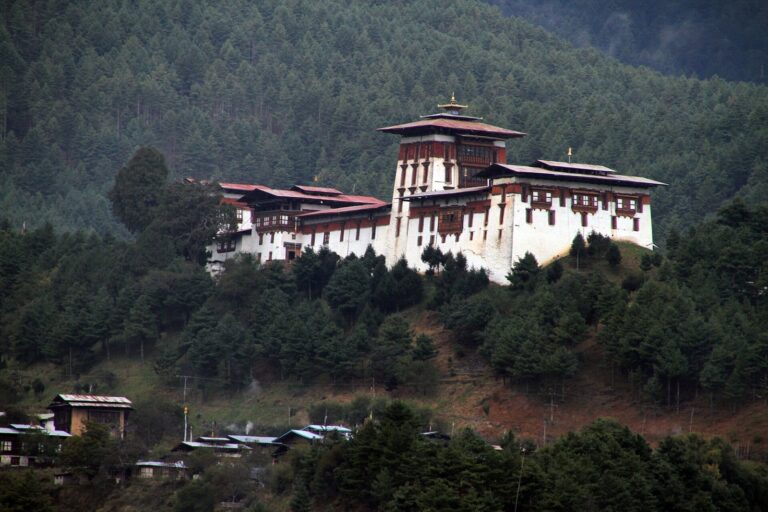
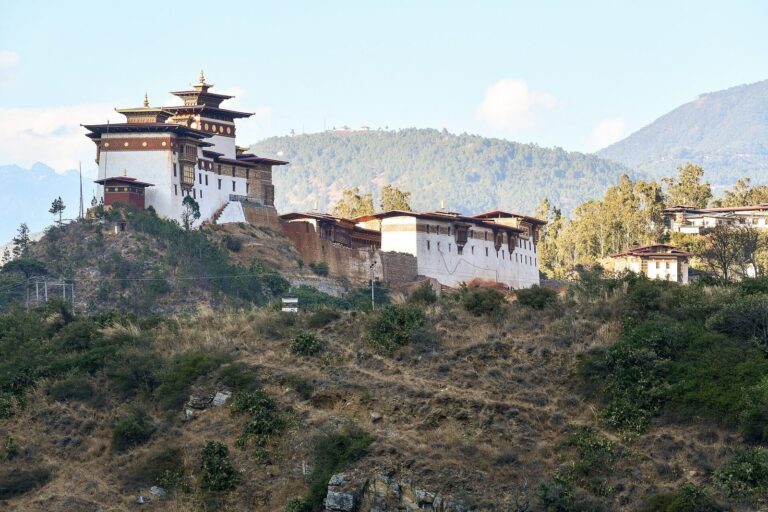
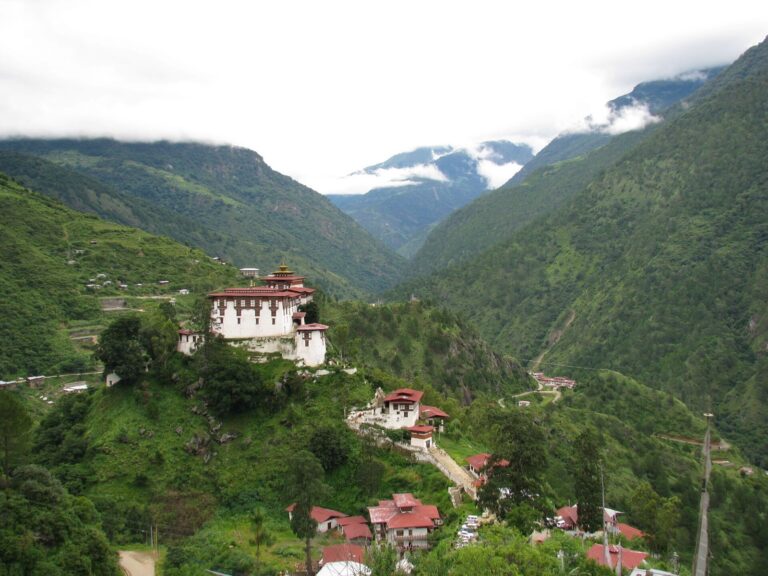
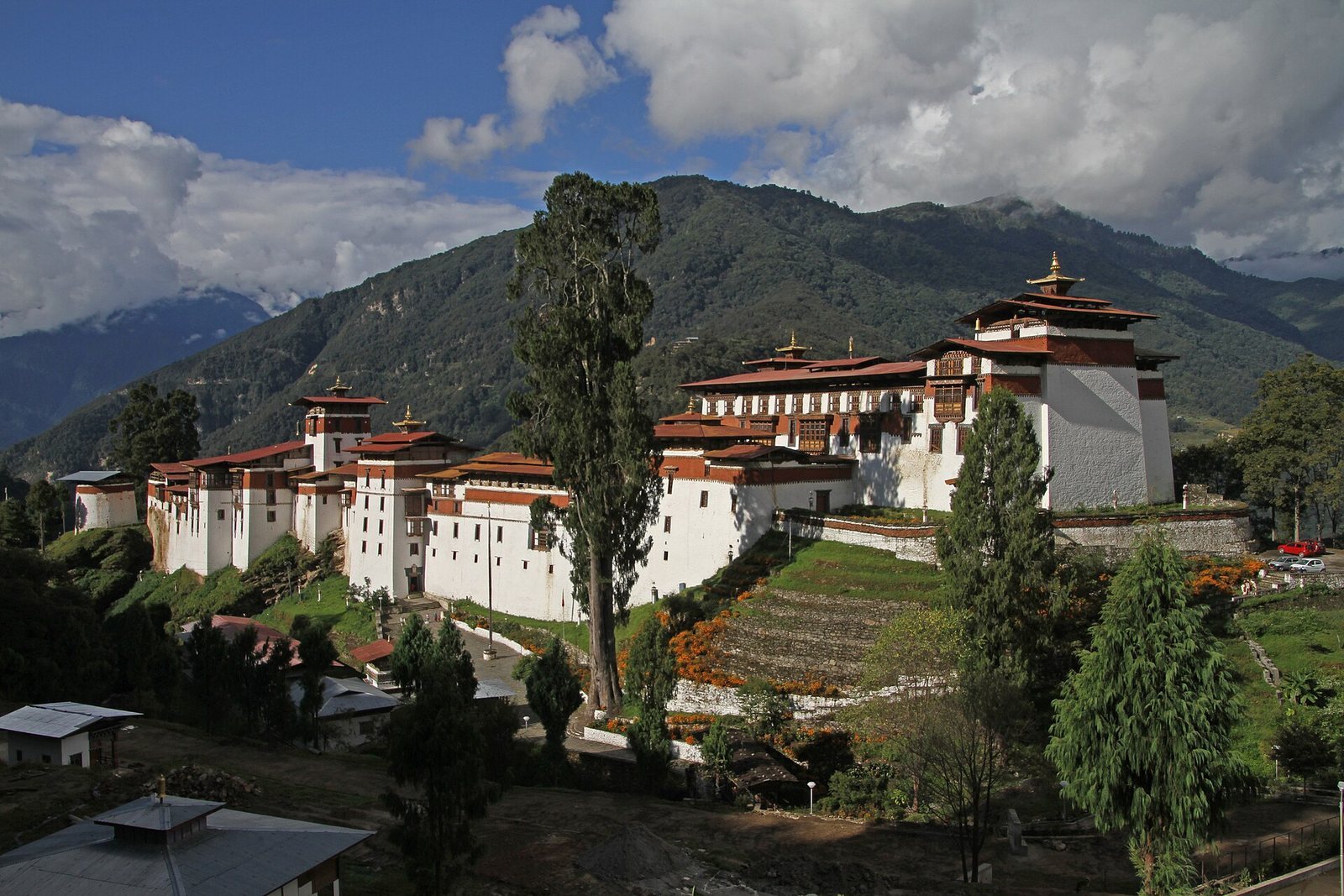
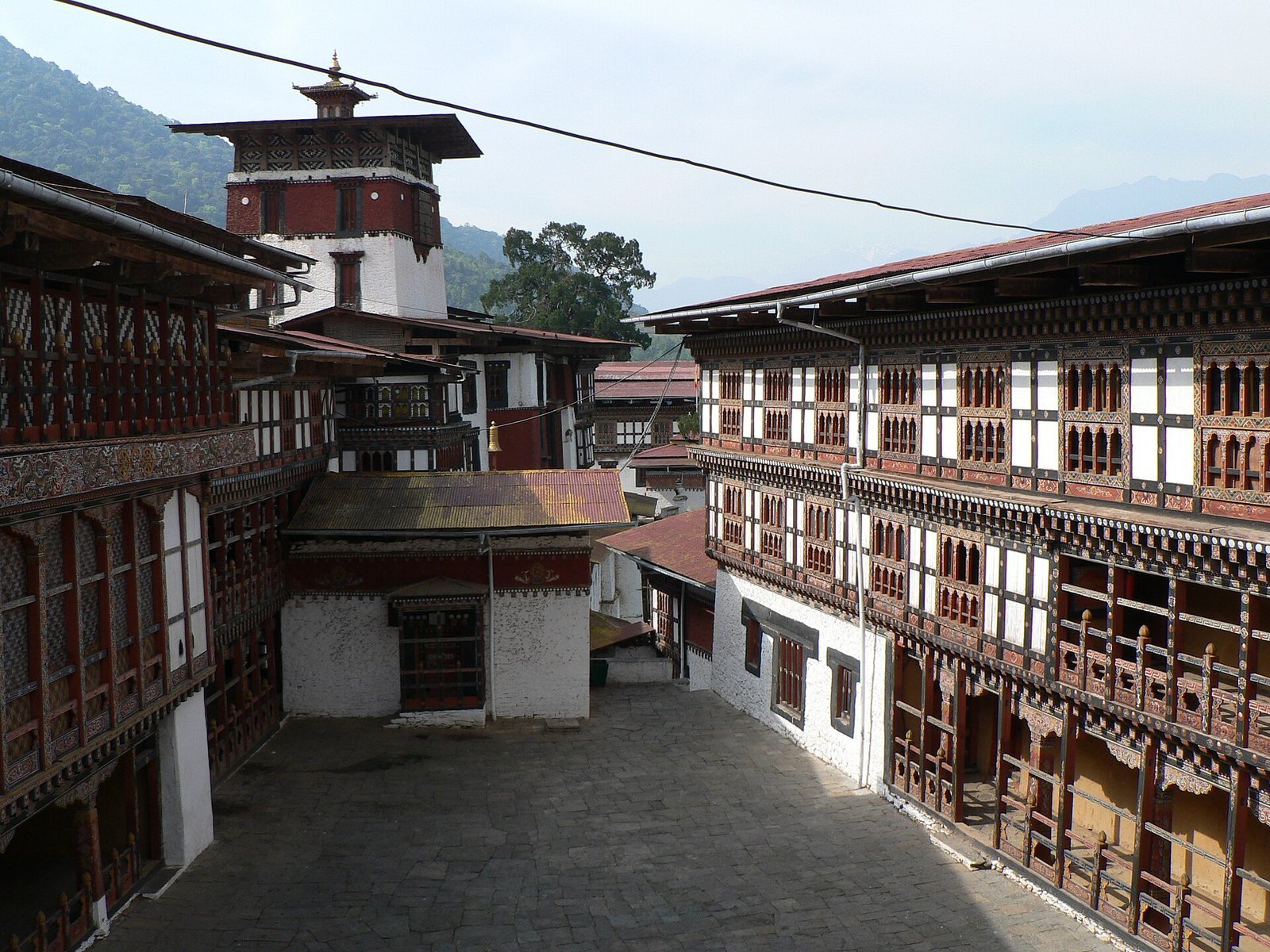
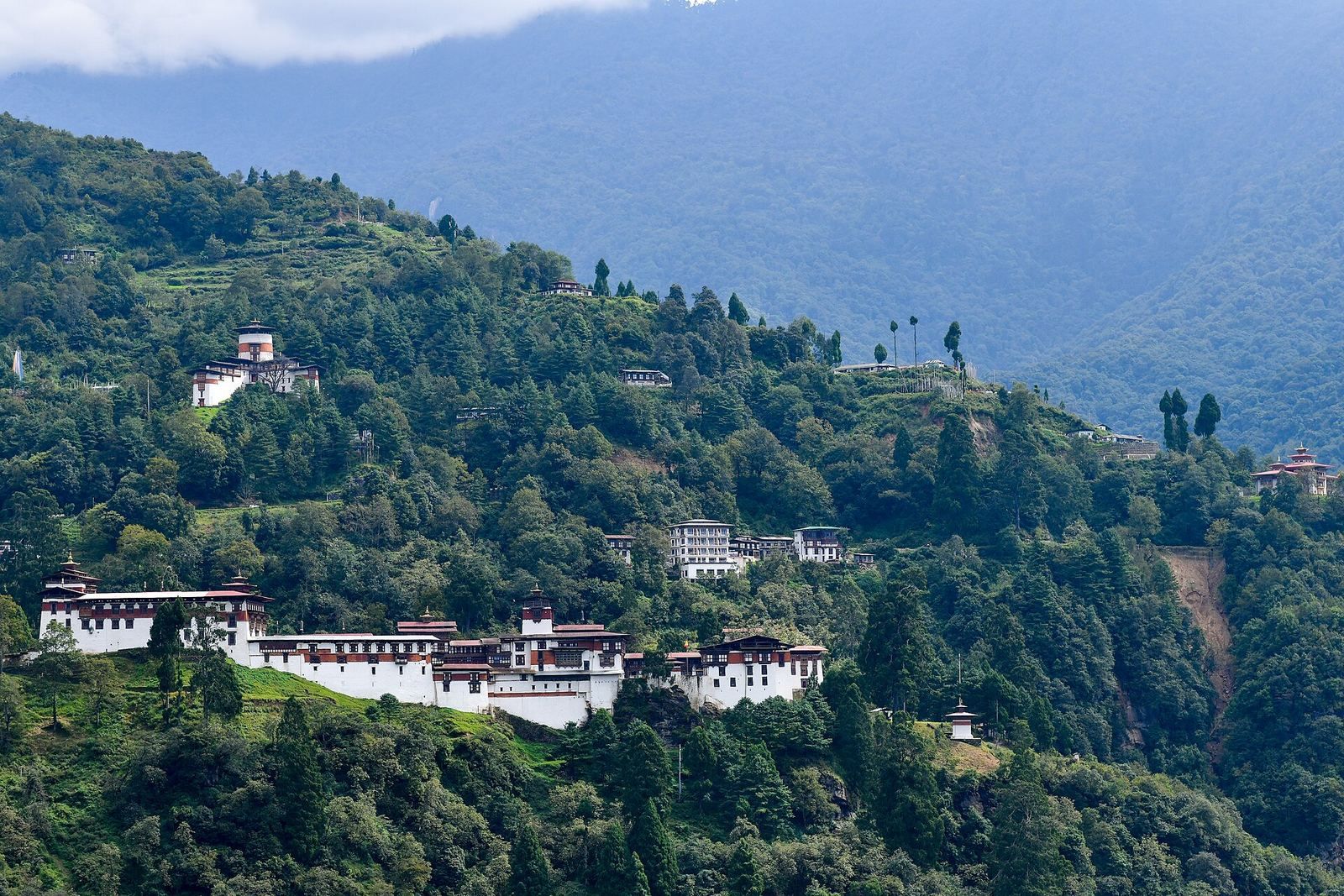
Trongsa Dzong occupies a rocky spur above the ravines of the Mangde Chhu valley, at an elevation of about 2,200 metres. The ground falls steeply to the south, with the Black Mountains to the southwest. The extensive fortress is arranged on several levels, with a maze of courtyards, passages, and corridors linking about 25 temples.
Temple of Chortens
At the end of the dzong, the Temple of Chortens stands on the site of Ngagi Wangchuk’s original temple. It contains his funerary chorten, a Buddhist reliquary monument, along with 16 paintings of arhats, people regarded as having attained liberation, and the Buddha Akshobhya, one of the principal Buddhas of Mahayana Buddhism. One foundation tradition identifies the original temple as the sanctuary that became the principal protective-deity temple, known as Gunkhang.
Temple dedications
The temples include shrines to Yamāntaka, Hevajra, Cakrasaṃvara, and Kālacakra, a tantric Buddhist system and its associated deity. The Chenrezig temple is dedicated to the bodhisattva of compassion, while the Demchog temple honors its namesake deity. The Maitreya temple, also called Jampa, contains a clay image of the Future Buddha donated by Ugyen Wangchuck in the early twentieth century.
Northern assembly hall and interior features
The northern assembly hall retains its original design and a mural showing a court scene with the guardians of the four directions. Other interior features include a phurba, a ritual dagger used in Tibetan Buddhist practice, represented by a statue in the main hall; a mural reproducing Nepal’s Swayambhunath temple; and a pictorial map of Lhasa. The temple interiors’ decorative work is attributed to Ugyen Wangchuck’s reign.
Ta Dzong and working spaces
Ta Dzong watchtower
Ta Dzong stands above the gorge on the complex’s eastern side. The narrow watchtower has two wings projecting from its main structure in a V shape. It was built as a heavily fortified, six-storey tower, with defensive galleries inside its thick walls; three separate towers were also added at higher elevation nearby. Ta Dzong contains a chapel dedicated to Jigme Namgyal and now houses the National Museum. Its dungeon is associated with the imprisonment of two British soldiers during the Duar War, a nineteenth-century conflict between Bhutan and British India.
Printing house
The dzong’s printing house is equipped to produce religious texts using traditional woodblock printing.