Lhuentse Dzong: A Buddhist Fortress-Monastery in Bhutan
Site at a Glance
- Country
- Bhutan
- Primary era
- Early Modern
- Eras represented
- Early Modern
- Civilizations
- Bhutanese
- Site type
- Religious
- Remains
- Fortified Monastery
On this page7 sections
History
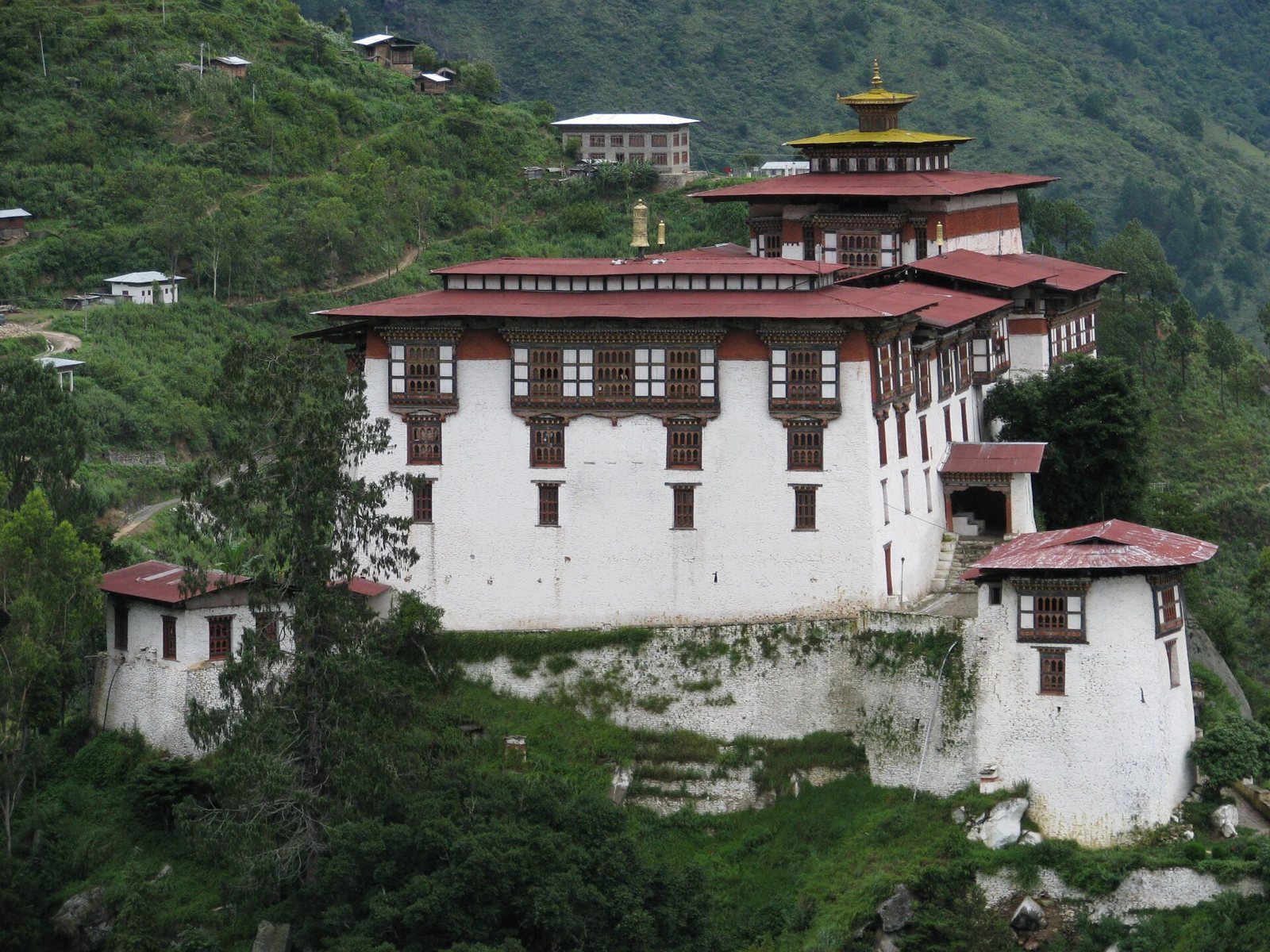
Lhuentse Dzong is a Buddhist fortress-monastery in Bhutan, with its formal fortifications dating to 1654. It belongs to the Nyingma school, one of the major schools of Tibetan Buddhism, and continues to serve as a monastery.
Foundation and fortification
Tradition connects the site with Khedrup Kuenga Wangpo, also known as Kunga Wanpo, the son of the Buddhist teacher and treasure revealer Pema Lingpa. Khedrup is said to have found a ridge shaped like an elephant’s trunk opposite Baeyul Khenpajong and meditated there. The place became known as Kurtoed Lhuentse Phodrang. Kunga Wanpo established a monastery at the site in 1543.
Minjur Tenpa, the governor of Trongsa, fortified the monastery after a military victory and named it Lhuentse Rinchentse. The dzong was also known as Kurtoed or Kurto.
Royal and regional history
Lhuentse Dzong is regarded as the ancestral home of the Wangchuck royal family, Bhutan’s royal dynasty. Jigme Namgyal, a nineteenth-century Bhutanese political and military leader, was born there in 1825. Although the dzong lies in eastern Bhutan, it has cultural ties to central Bhutan. A historic trade route over Rodang Pass linked the area with Mongar.
Restoration and continuing religious use
Restoration work took place in 1962 and again from 1972 to 1974. On 21 September 2009, an earthquake measuring 6.1 on the Richter scale caused serious damage to the dzong. About 100 monks reside there.
Remains
Setting and approach
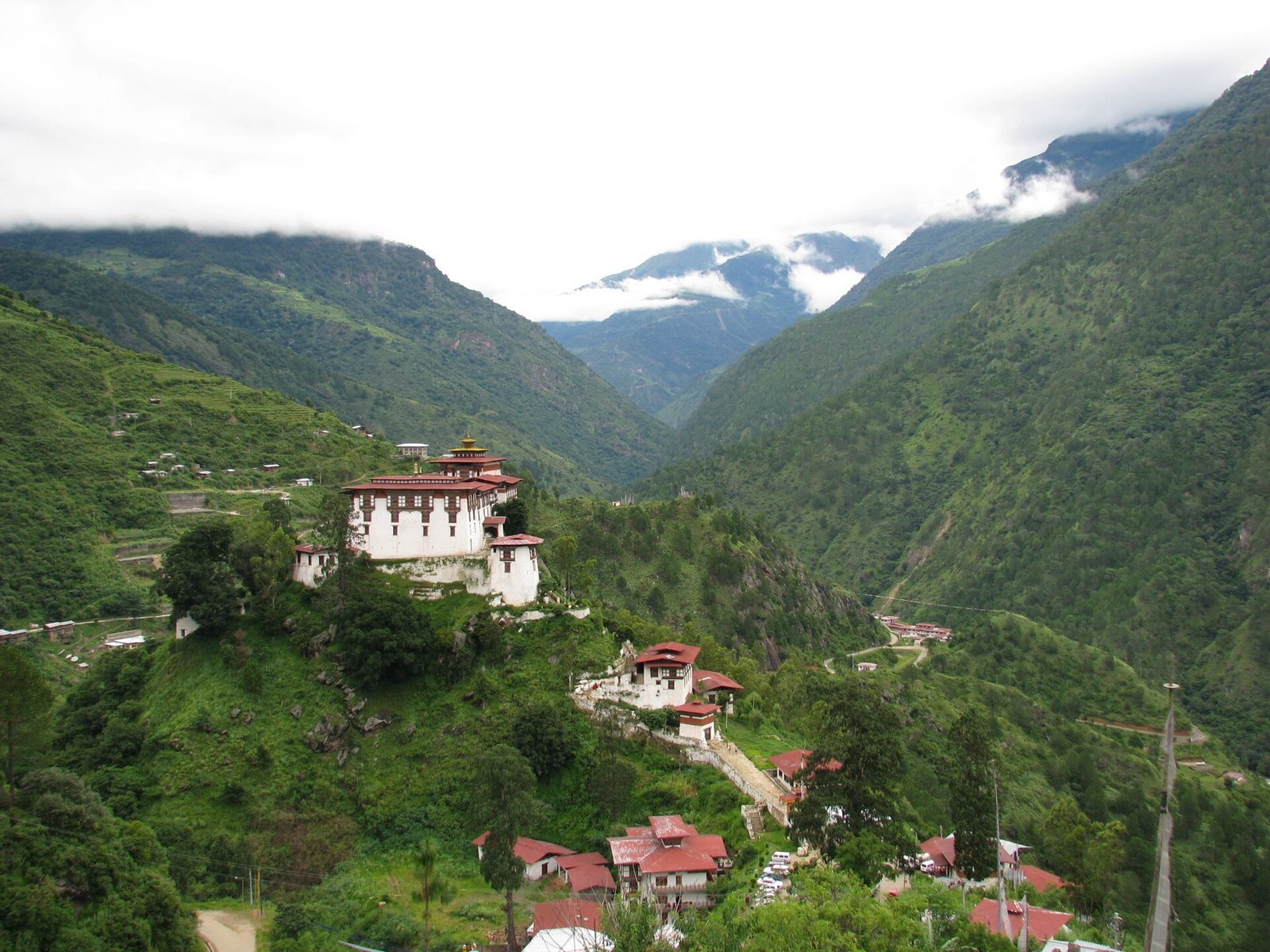
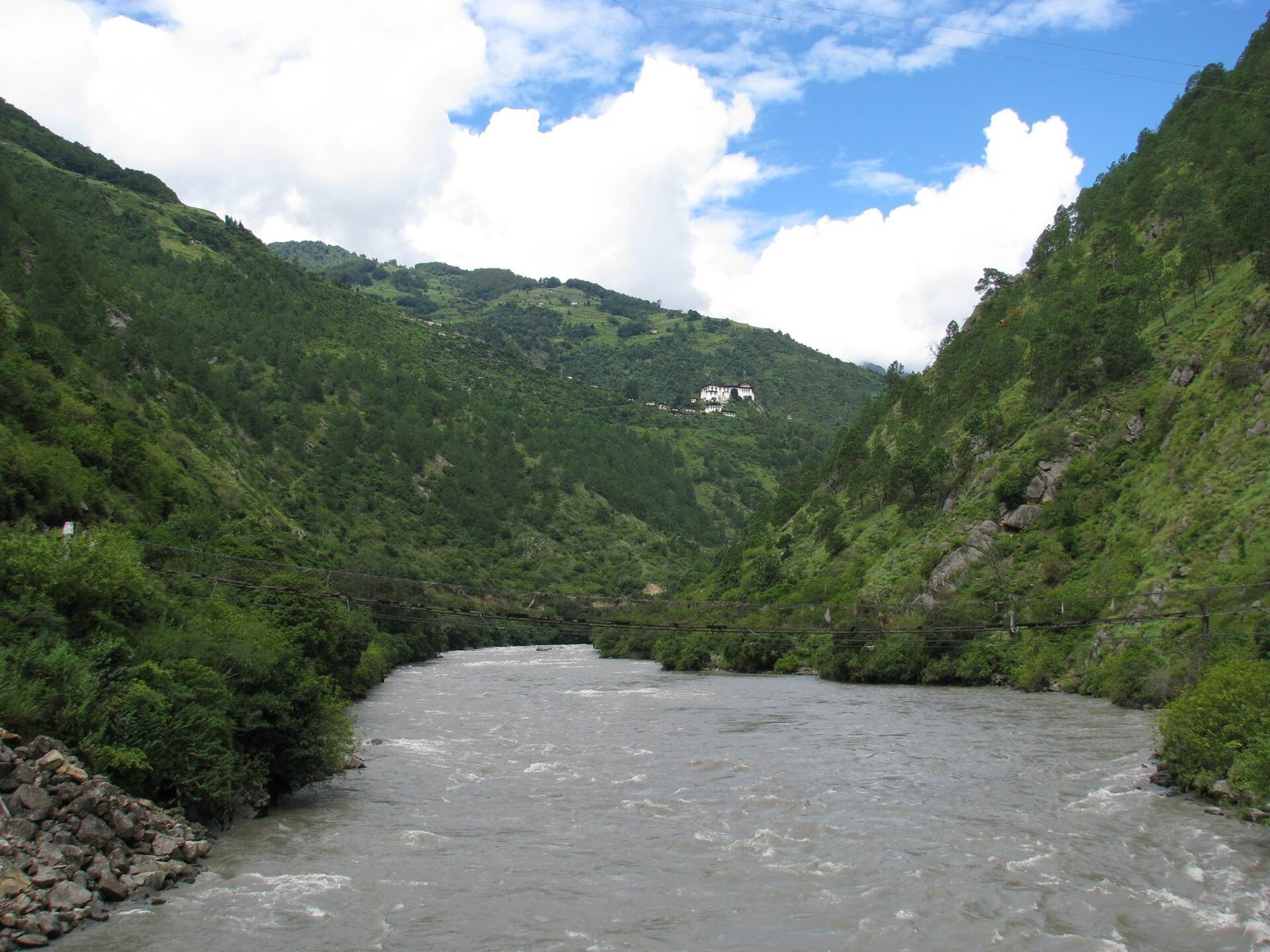
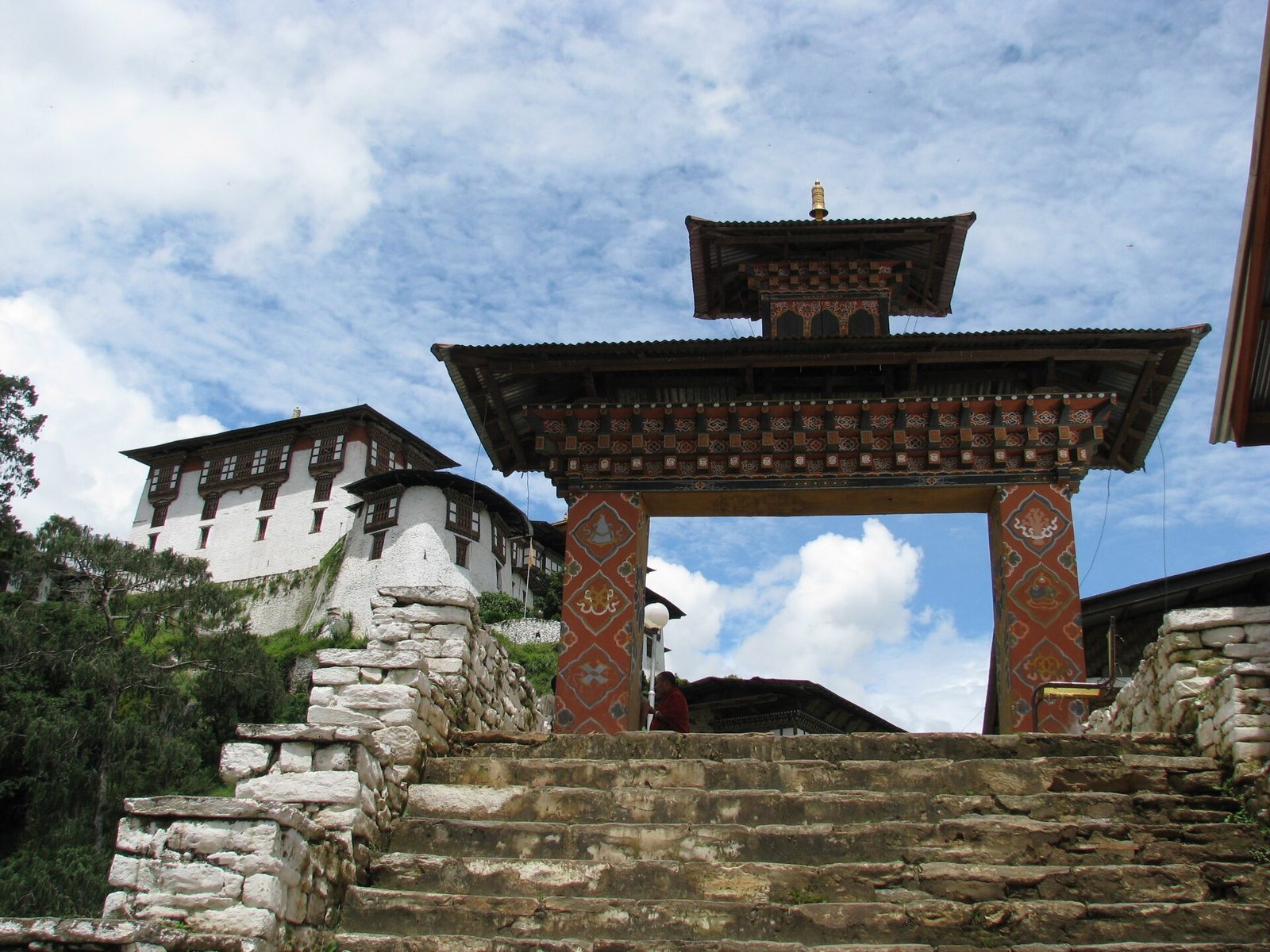
The dzong stands on a spur at the end of a narrow valley, on the eastern side of the Kuri Chhu. High peaks and steep hills surround the valley. A flagstone-paved path approaches the complex across steep cliffs.
Temples and assembly hall
The complex contains five temples, three of them within the central tower and dedicated to Padmasambhava, a Buddhist master revered in the Himalayan region. Its devotional spaces also include those associated with Mahākāla, a protective Buddhist deity; Amitāyus, the Buddha of Infinite Life; and Avalokiteśvara, a bodhisattva associated with compassion. The Avalokiteśvara temple is on the ground floor. The Gonkhang, a shrine for protective deities, is dedicated to Mahākāla. On the upper floor, the Kunre serves as the monks’ assembly hall.