Alexandreion: A Hasmonean Fortress and Herodian Stronghold
Site at a Glance
- Country
- Palestine
- Primary era
- Classical
- Eras represented
- Classical
- Civilizations
- Roman
- Site type
- Military
- Remains
- Fort
On this page12 sections
History
Hasmonean foundation and use
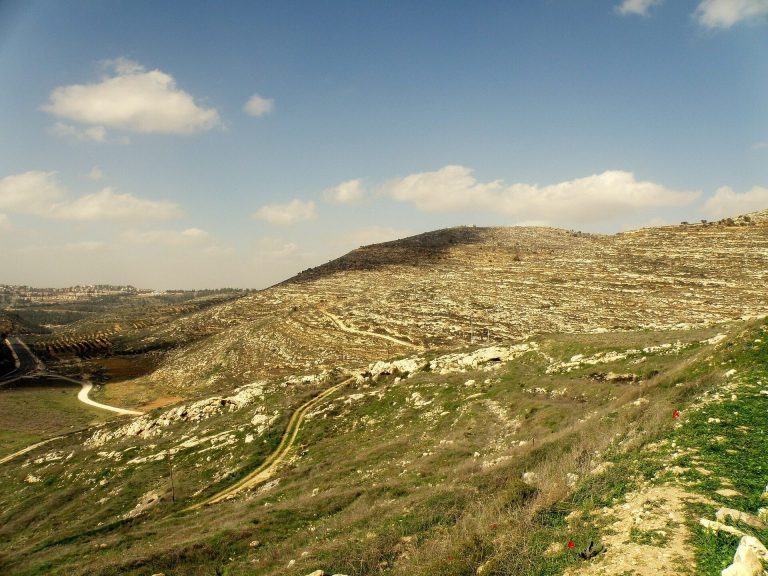
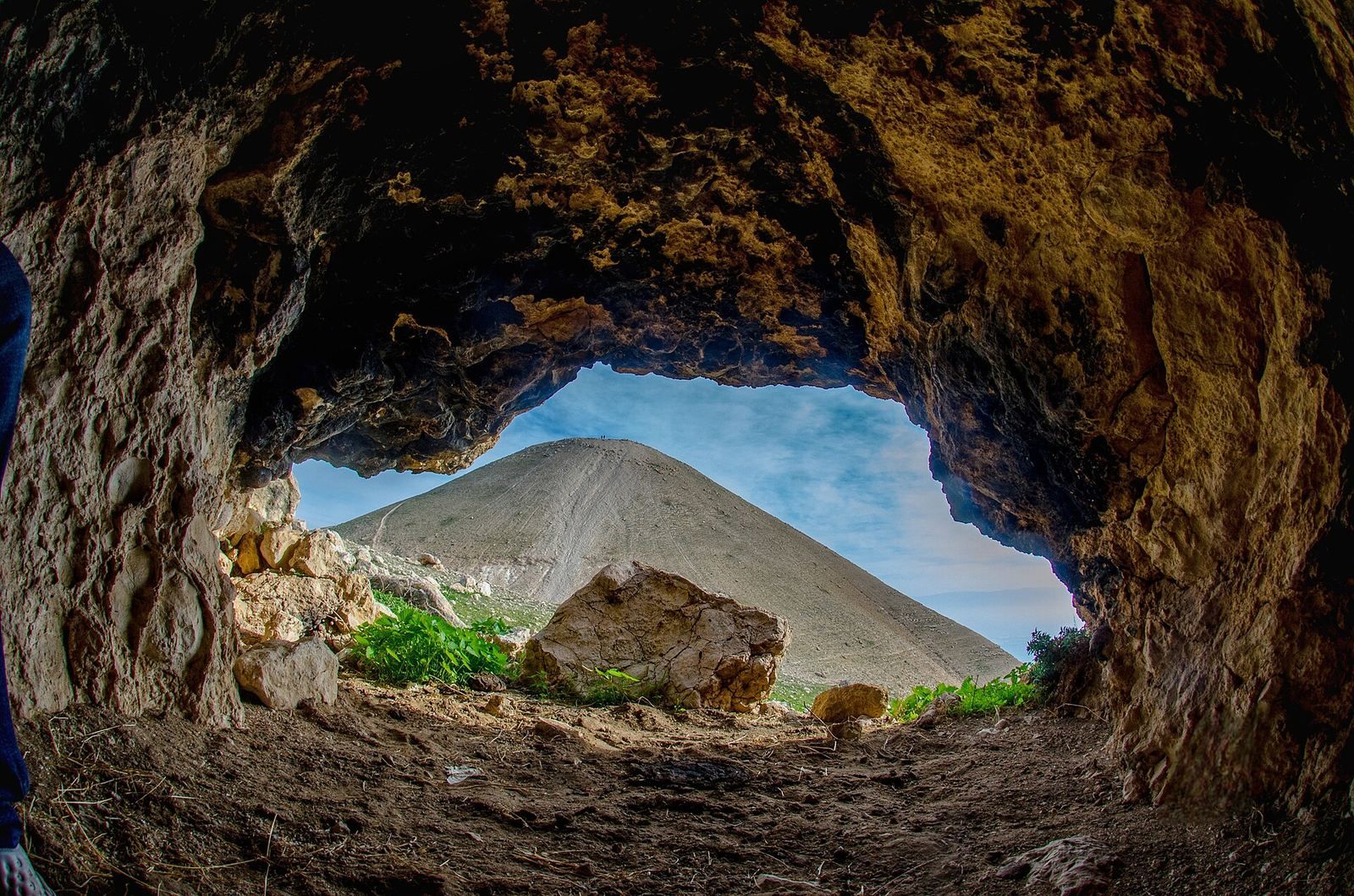
Alexandreion is the name generally given to a fortress on Sartaba in Palestine, above the Jordan Valley. The Hasmoneans, a Jewish dynasty that ruled Judea before Roman rule, probably built it around 90 BCE under King Alexander Jannaeus, after whom it may have been named. The fortress served as a military garrison and a place to hold political prisoners.
Some researchers identify Alexandreion instead with a ruin south of Ma’ale Levona. The mountain is also called Qarn Sartabe, Arabic for Horn of Sartabe. An earlier Canaanite settlement has been proposed on the hill, but the suggested connection between Sartaba and biblical Zarethan is unsubstantiated.
After Jannaeus’s death, his wife Salome Alexandra became queen. When she transferred other desert fortresses to the Sadducees, a Jewish group associated with the priestly elite, she retained Alexandreion, Hyrcania, and Machaerus because they held her treasures. During the Second Temple period, when the Jerusalem Temple still stood, Sartaba was the second hilltop station in a chain of signal fires. The fires carried news from Jerusalem to Babylonia that the new month had been formally established in the Jewish calendar.
Roman intervention and destruction
In 57 BCE, Roman commander Aulus Gabinius besieged Alexandreion during his campaign against Alexander II, a Hasmonean prince. Mark Antony was the first to climb its wall. Gabinius then demolished Alexandreion and other fortresses to prevent renewed conflict. Aristobulus II later fled Rome intending to rebuild the fortress, but Gabinius stopped him from taking it. Aristobulus escaped to Machaerus, fortified it, resisted for two days, and surrendered. The historian Strabo also reports that Pompey ordered the walls of fortresses, including Alexandreion, to be demolished.
Herodian restoration and royal use
Herod the Great, Rome’s client king in Judea, restored Alexandreion during his conflict with Antigonus, the last Hasmonean king. He entrusted the work to his brother Pheroras. The project began about a year after Herod took power and was his first major building undertaking in Judea, preceding his work in Jerusalem.
Herod used the fortress to hold political figures. In 30 BCE, he kept his wife Mariamne and her mother Alexandra there. He hosted the Roman general Marcus Agrippa at Alexandreion in 15 BCE. Herod’s sons Alexander and Aristobulus were later suspected of plotting against him. A letter presented to Herod alleged that the fortress commander had been asked to admit the brothers and give them weapons after their father’s murder. Herod ordered their execution at Sebaste in 7 BCE. Their bodies were then taken to Alexandreion for burial in the tomb of Alexander II, Mariamne’s father.
Revolt and modern investigation
Roman forces destroyed Alexandreion around 70 CE during the Great Jewish Revolt, a major uprising against Roman rule that began in 66 CE. The destruction may have occurred under Vespasian or Titus. Activity by refugees and Roman troops may be reflected in evidence from the fortress’s final phase.
The Palestine Exploration Fund mapped the mountain in 1874. Jordan’s Department of Antiquities excavated there in the early 1960s, followed by American and Israeli teams during that decade. In the 1980s, Yoram Tsafrir and Yitzhak Magen excavated Hasmonean remains. Archaeologist Dvir Raviv led excavations in 2025, and further work took place in 2026. In the 1980s, the mountain and surrounding area were designated an Israeli nature reserve, covering about 30,860 dunams, with each dunam equal to 1,000 square metres.
Remains
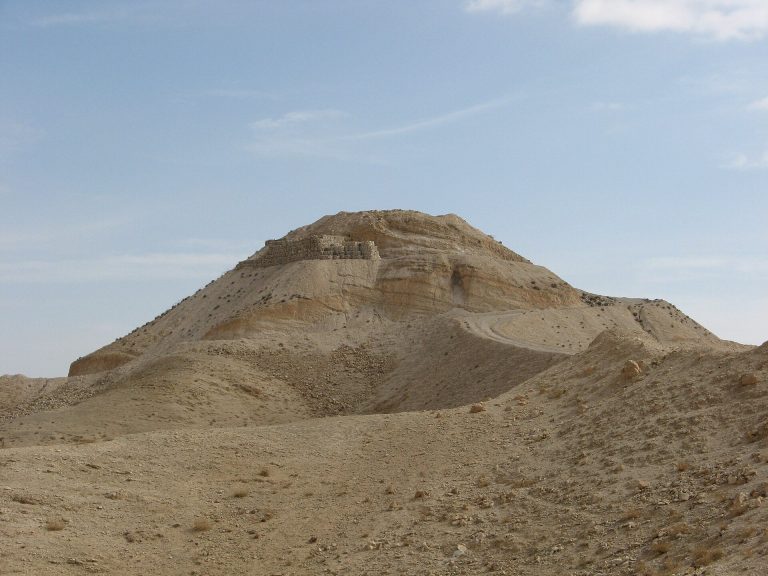
The fortress occupies the summit of a steep, cone-shaped mountain. Its buildings and water installations extended across the summit and slopes. The summit stands about 377 metres above sea level and roughly 650 metres above the Jordan Valley, overlooking much of the valley and a strategic junction of routes.
Fortress and palatial buildings
Summit fortress
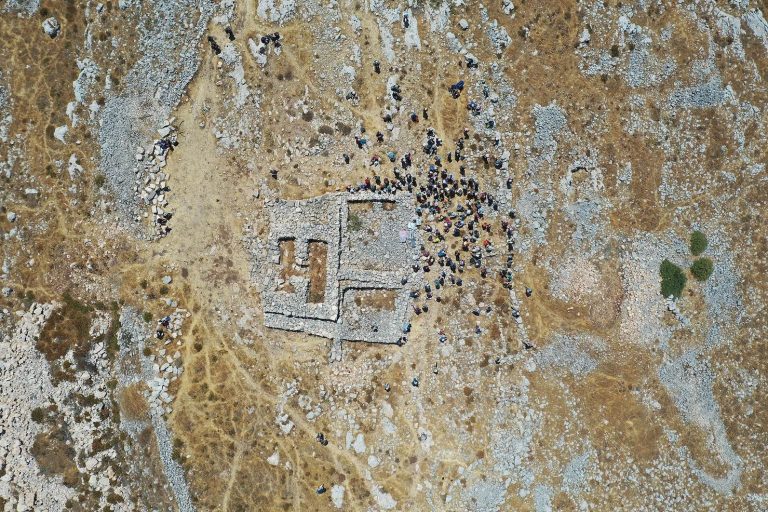
Foundations and sections of wall survive on the western summit. The fortress was among the largest in the Jordan Valley and was built from carefully dressed stone quarried nearby. Its tower is thought to have had six levels, with its uppermost area measuring about 30 to 40 metres. An ancient earthquake is believed to have brought down the tower and damaged much of the fortress.
Eastern-slope buildings
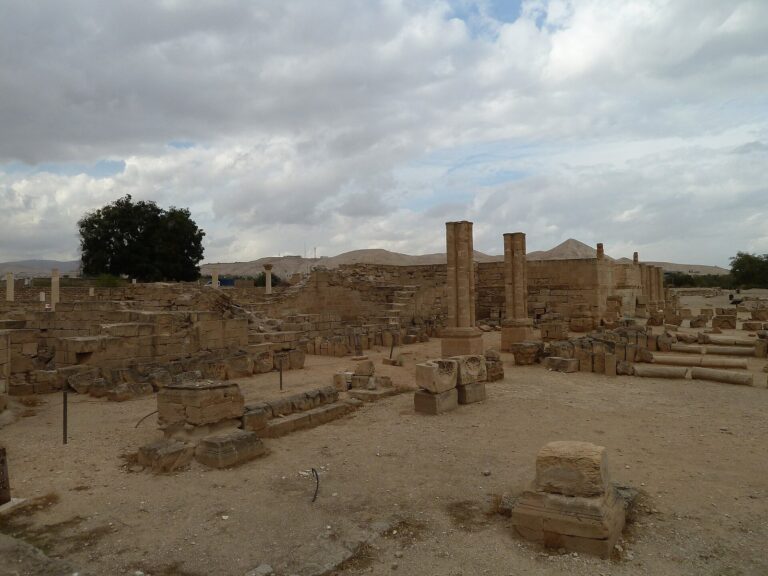
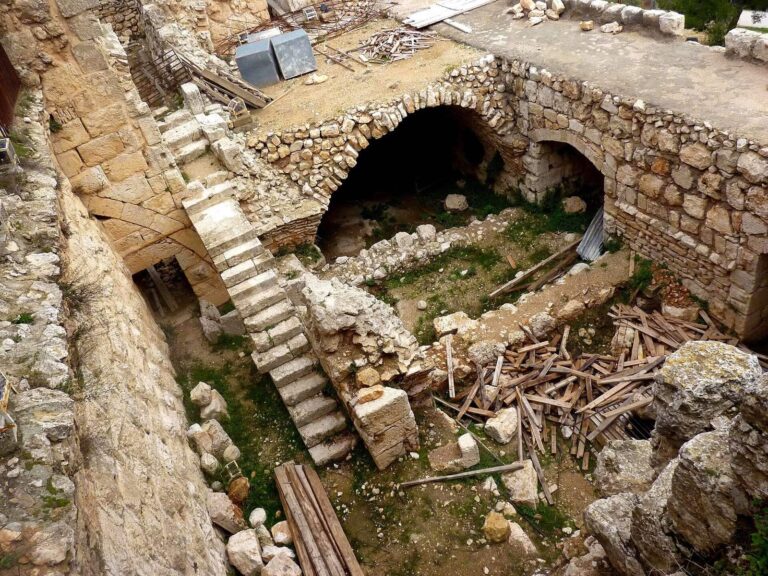
Five building phases are identified on the eastern slope. The first two belong to the Hasmonean period and include a white-plastered building, a Jewish ritual bath used for purification, and a large columned structure in the Doric style, a classical Greek form. In the next two phases, during Herod’s time, the Hasmonean palace was dismantled and replaced by a complex arranged around a courtyard lined with columns. A columned building had mosaic flooring, colorful paintings on wet plaster, and molded plaster decoration. The complex also included a water-storage cistern and a stepped pool. Walls, a bread oven, and a layer of burning from the first century CE belong to the final excavated phase.
Herodian terrace palace
Ruins on a terrace excavated in 1981 include a Herodian palace with a mosaic floor and a columned hall. Finds associated with the remains point to a richly appointed interior. A pottery fragment from the site bears the name Pinchas. At the summit, Herodian buildings have patterned plaster decoration, flooring made from fitted pieces of marble, and heating beneath the floor. Ehud Netzer proposed that the Hasmonean fortress also had lavish wings.
Water system
Fourteen rectangular cisterns, or water-storage tanks, are distributed across three levels and the northern, eastern, and southern slopes. Channels collected runoff from the surrounding hills rather than drawing water directly from a wadi. An aqueduct, a constructed channel for carrying water, ran around the ridge; a wider channel network extended about five kilometres and conveyed runoff to large storage installations at the mountain’s foot. The system also included a dam and a siphon, a conduit that carries water through a low point and up again. The siphon is the largest and most complete known from the Hasmonean period.
Other excavated features and finds
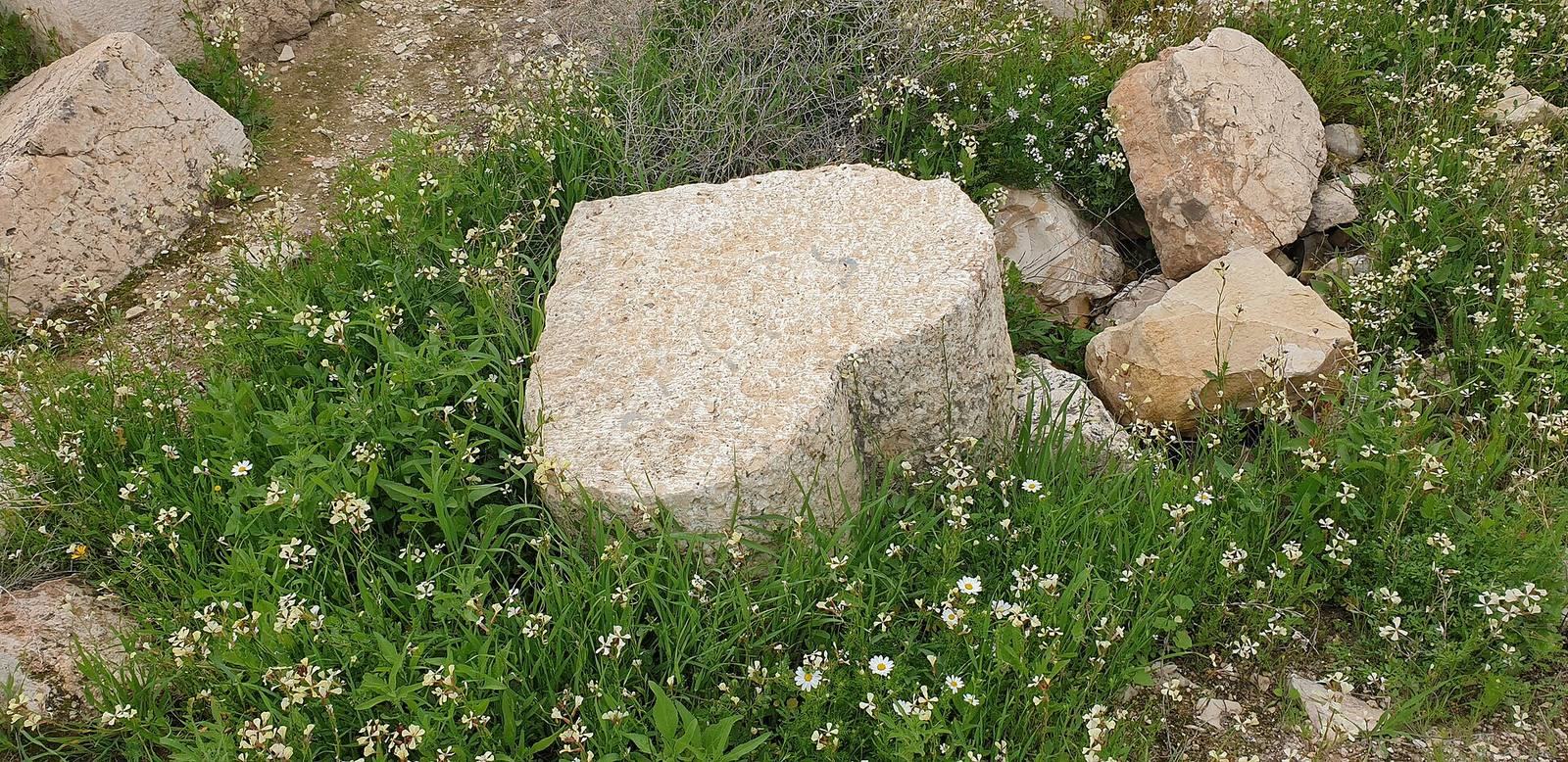
Other remains include tunnels, wells, buried chambers, water pools, and thousands of fallen stones. A heart-shaped stone belongs to the Hasmonean period. A decorated stone fitting above a waste pit may have served as a toilet seat. An inked inscription in Aramaic, an ancient Near Eastern language, appears on a pottery fragment about 2,000 years old. It includes a personal name and a place designation, though part of its reading remains uncertain. Researchers deciphered the text in January 2025 using advanced imaging techniques.