Château Saint-Pierre: A Fourth Growth Estate in Saint-Julien, France
Site at a Glance
- Country
- France
- Primary era
- Modern
- Eras represented
- Modern
- Civilizations
- French
- Site type
- Economic
- Remains
- Production Complex
On this page9 sections
History
Château Saint-Pierre is a wine estate in France’s Saint-Julien appellation, with its château at the edge of Beychevelle. Its wine-growing history reaches back to the seventeenth century, while the château itself was built in the nineteenth. Saint-Julien is a legally defined wine-growing area whose name identifies wines made under regional rules. The estate was ranked a Fourth Growth, a grade in the 1855 Bordeaux wine classification.
Origins and division
By 1693, a wine-growing property called Serançan belonged to the Marquis de Cheverry. The Baron de Saint-Pierre acquired the estate in 1767 and gave it his name. When he died in 1796, it passed to his two daughters, who had married into the Bontemps-Dubarry and Dubouilh families.
The property remained jointly held until 1832. After some parcels were transferred, the remaining land was divided between Bontemps-Dubarry and Sevaistre holdings. These became the vineyards Château Saint-Pierre-Bontemps and Château Saint-Pierre-Sevaistre.
Reunion in the twentieth century
The Antwerp wine-trading company Van den Bussche brought the holdings together by acquiring the Sevaistre vines in 1922 and the Bontemps-Dubarry holding in 1923. During this period, some of the estate’s best vineyard parcels were sold to Henri Martin and incorporated into Château Gloria. Madame Kappelhoff, a widow, retained the château and some vines after the reunion. Those vines supplied 20 barrels of Château de Bontemps-Dubarry.
Henri Martin and the present estate
Henri Martin acquired the château in 1981, then bought the Saint-Pierre-Sevaistre vineyard from Paul Castelein, Van den Bussche’s successor, in 1982. He also sold land to the neighboring estates Ducru-Beaucaillou and Gruaud-Larose, restored the château, and improved the winemaking facilities. Martin was 78 when he acquired the estate, after failing to secure a revision of the 1855 classification for Château Gloria, the separate estate he had founded and owned. He served as mayor of Saint-Julien-Beychevelle from 1947 to 1989. His daughter, Françoise Triaud, now owns Château Saint-Pierre, and her husband, Jean-Louis Triaud, manages it.
Remains
The estate’s physical layout brings together a château, cultivated vineyard, and facilities for making and maturing wine.
Buildings and vineyard
The château
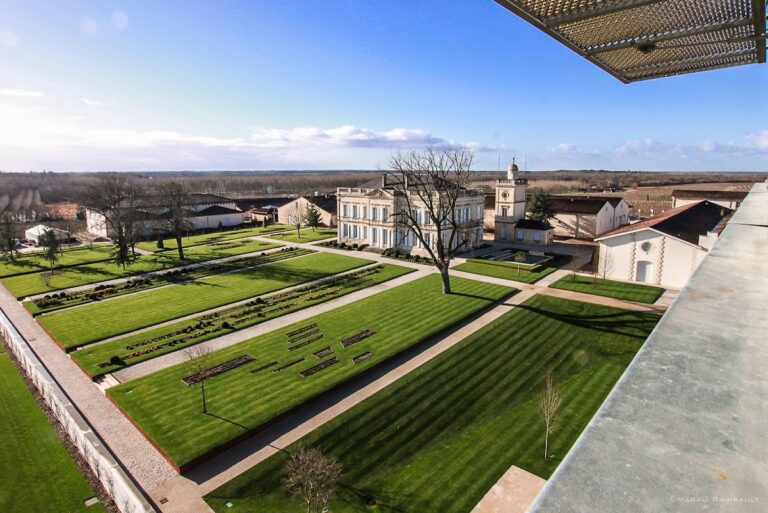
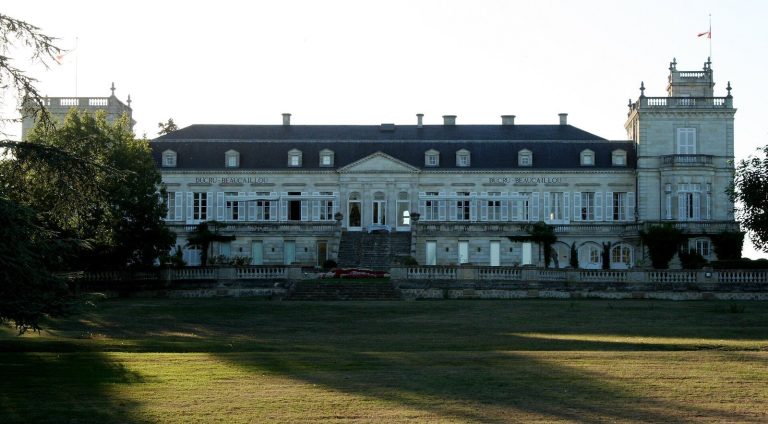
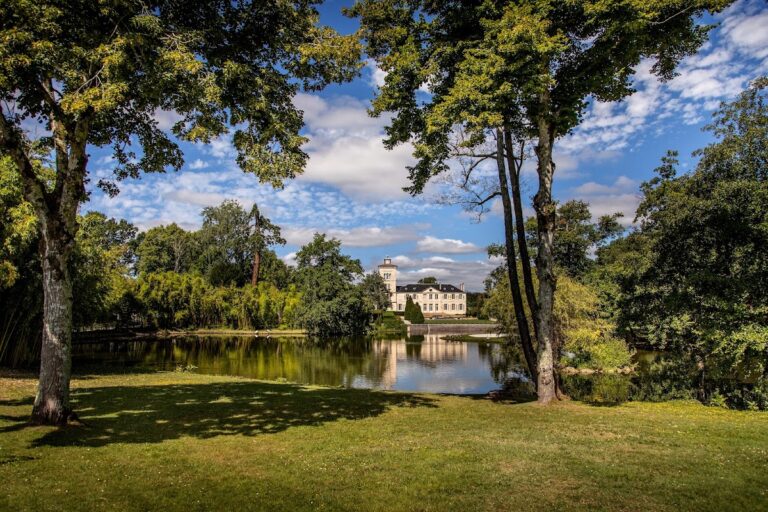
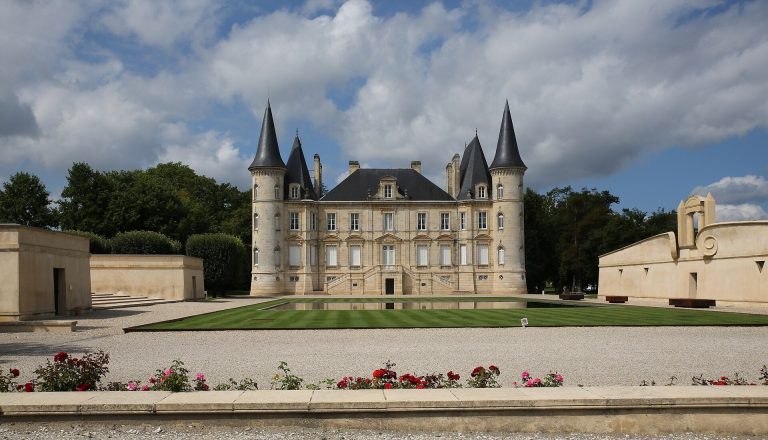
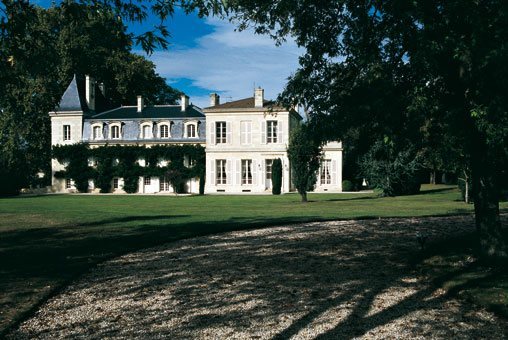
The château has two storeys and stands in a small park at the edge of Beychevelle.
The vineyard
The 17-hectare vineyard lies at the entrance to Beychevelle among estates including Gruaud-Larose, Léoville, Beaucaillou, Lagrange, Langoa, and Branaire-du-Luc. It is the smallest vineyard among the classified growths of the Saint-Julien appellation. Its soil consists of Garonne gravels associated with the Günz glacial stage, an Alpine geological period, over a clay-and-sand base. The vines average about 50 years of age: 75% are Cabernet Sauvignon, 15% Merlot, and 10% Cabernet Franc. They are pruned by the double Guyot method, which retains two fruiting canes, and planted at a density of 10,000 per hectare. The average yield is 45 hectolitres per hectare.
Winemaking facilities
Grapes are picked by hand and sorted with an optical sorting machine. Vinification takes place in temperature-controlled stainless-steel vats at cellar facilities shared with Château Gloria. The wine then matures in barrels for about 14 to 16 months, with half the barrels replaced each year. The estate also makes a second wine, Esprit de Saint-Pierre, from wine not selected for its main wine.