Michetti Convent: A Franciscan House and Artists’ Gathering Place in Italy
Site at a Glance
- Country
- Italy
- Primary era
- Medieval
- Eras represented
- Medieval, Early Modern, Modern
- Civilizations
- Italian, Kingdom of Naples, Spanish
- Site type
- Religious
- Remains
- Monastery
On this page16 sections
History
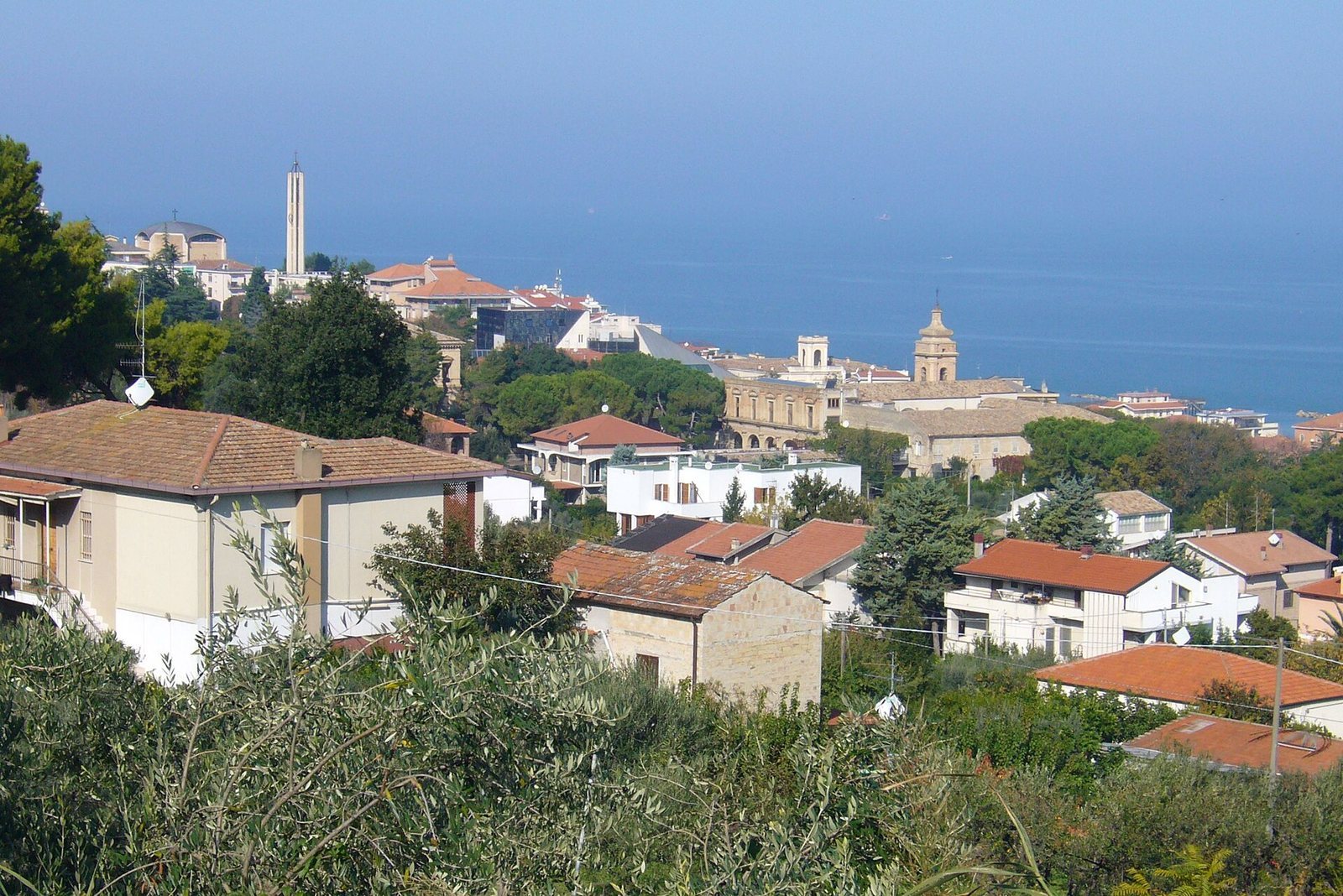
Michetti Convent is a former Franciscan house in Francavilla al Mare, Italy, founded around 1430 by the Order of Friars Minor, a Catholic religious order within the Franciscan tradition. Its overall plan is Renaissance, and from the mid-1880s it also became a workplace and cultural meeting place associated with painter Francesco Paolo Michetti.
Franciscan foundation and municipal ownership
The friars first dedicated the convent to St James. In 1548, after enlargement works, they renamed and rededicated it as Santa Maria del Gesù. Eighteenth-century reforms and embellishments followed. The convent remained Franciscan property until 1863–64, when it was secularized, passing from religious ownership to the municipality of Francavilla al Mare. The church is now dedicated to St Anthony of Padua.
Michetti and the cultural circle
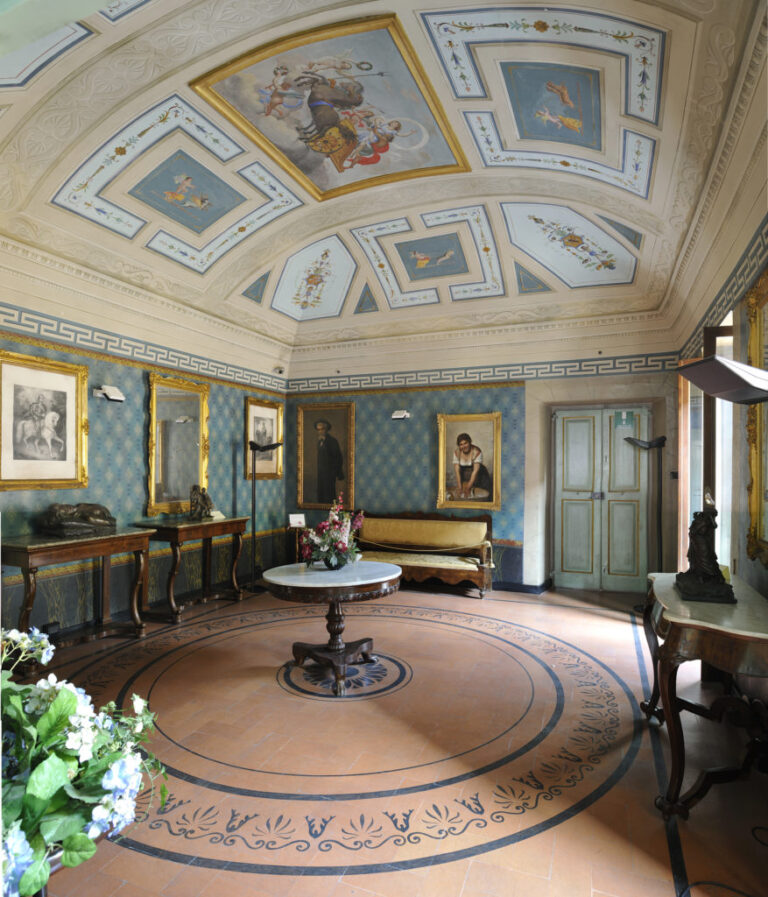
In the mid-1880s, Michetti acquired the convent from the municipality and made it a place to work and to bring artists and intellectuals together. Known as the Michetti Cenacle, or the D’Annunzio Cenacle, it became a gathering for cultural and artistic exchange. Meetings and exhibitions took place there, including in a hall on the second floor. The circle helped draw attention to Francavilla in Italy and abroad. A school was proposed but never opened.
Among the circle’s guests were poet and playwright Gabriele D’Annunzio, composer Francesco Paolo Tosti, sculptor Costantino Barbella, journalist Edoardo Scarfoglio, writer Matilde Serao, artist Basilio Cascella, photographer Wilhelm von Gloeden, painter Arnaldo Ferraguti, and historian Antonio De Nino. Sculptor Nicola D’Antino joined in the early twentieth century. Serao considered the group one of Italy’s youngest and most intellectually vigorous cultural centers. Michetti and others supported Barbella and Cascella; D’Annunzio and Serao later wrote for a journal Cascella founded in 1899. De Nino’s knowledge of Abruzzo informed D’Annunzio’s historical plays and novels.
Collaborations with D’Annunzio and Tosti
Michetti and D’Annunzio became friends in the early 1880s. Their creative partnership began in 1881–82, when Michetti illustrated D’Annunzio’s Canto novo, and continued through 1903–04, when Michetti designed scenery and costumes for productions of La figlia di Iorio. Michetti’s 1894 painting on the same subject is said to have inspired the play. D’Annunzio regularly visited the convent for about fifteen years and wrote Il piacere (1889), along with much of L’innocente (1891) and Il trionfo della morte (1894), there. He moved to Naples in 1891 and Rome in 1893 but continued to return to Francavilla, where he last stayed in 1897.
Economic misunderstandings during the later collaboration strained the friendship. After a long period of distance, the two men renewed contact in 1915. In 1935, six years after Michetti’s death, D’Annunzio remembered him as “half of my soul.” Tosti, who had met Michetti in the late 1870s, also frequented the convent and became close to both men. After making London his principal home, he returned to Francavilla for shorter seasonal visits. His musical partnership with D’Annunzio produced songs including A vucchella (1892), and their friendship lasted until Tosti’s death in 1916.
Later ownership and preservation
After Michetti died in 1929, his wife Annunziata and their children Giorgio, Alessandro, and Aurelia inherited the convent. It remains privately owned by his descendants; the present owner, Baron Ricci, is Aurelia’s son. In 1939, King Victor Emmanuel III declared it a national monument. Although Francavilla suffered severe destruction in 1943–44 during the Second World War, the convent escaped damage. The church continues to be used for worship, principally by people living in the building.
Remains
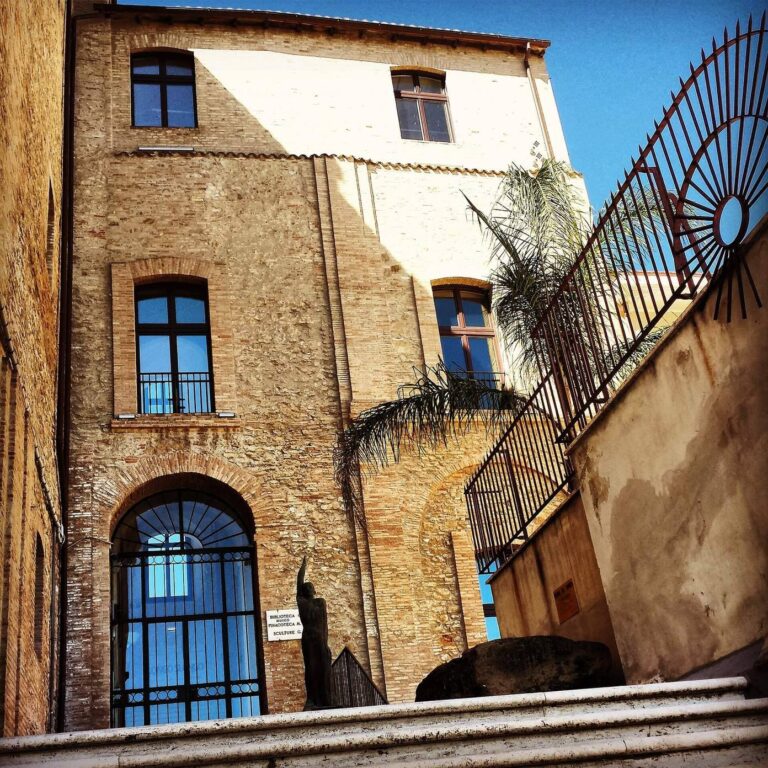
The complex brings together medieval, Renaissance, and Baroque elements, with later neoclassical interventions. Its buildings include the church and former convent spaces arranged around a small internal courtyard.
Exterior and internal arrangement
Façade and entrance
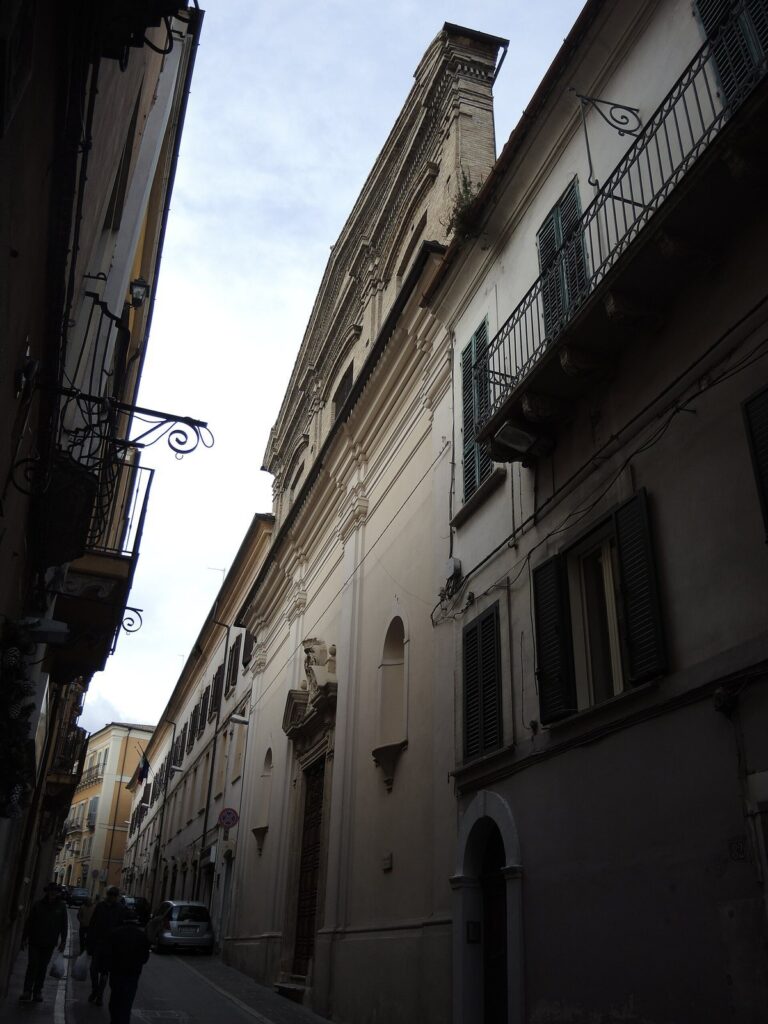
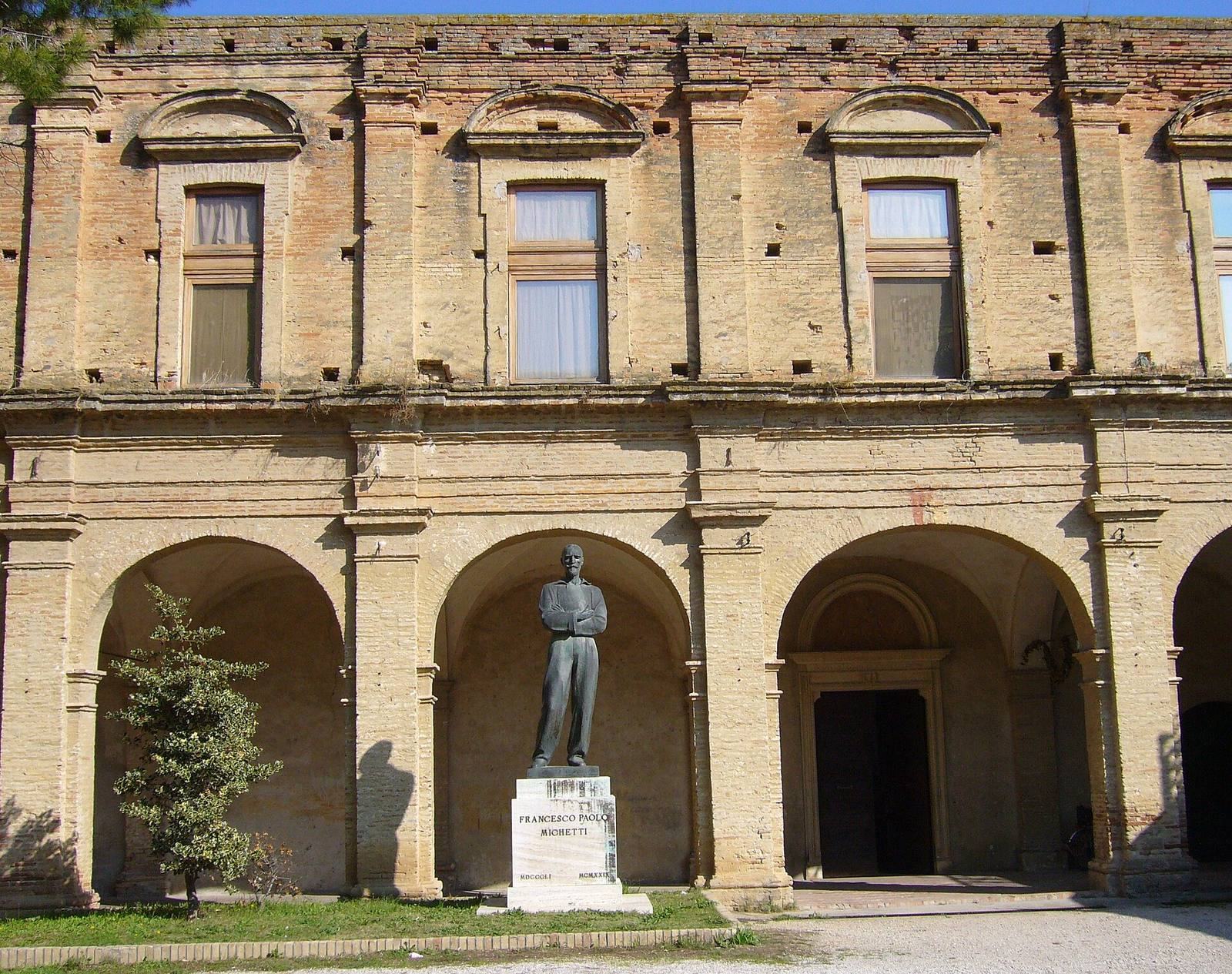
The simple, gabled façade has an upper ambulatory, a gallery for circulation, and a portico at its base. Its appearance recalls Romanesque abbeys in Abruzzo. The arrangement of façade and sacristy follows a pattern found in regional Baroque churches, particularly in the eighteenth century, where it helped reduce construction costs. A comparable example is the Oratory of St Michael at San Clemente a Casauria Abbey. Michetti altered the main entrance in an Italian style associated with the reign of King Umberto I, giving it the character of a palace rather than a religious building.
Courtyard and convent wings
The entrance opens onto a small courtyard containing a well. The church stands to the left of the entrance; the right-hand part of the complex was the Capuchin friars’ refectory and is now residential space used by the owners.
Kiln
A kiln for firing maiolica, a type of tin-glazed earthenware, was installed in an adjoining space. It operated intermittently as part of a craft enterprise linked to Michetti’s plans for the convent.
Church
Nave and side chapels
The church has a single nave with cross vaults, ceilings formed by intersecting barrel vaults, and an interior of late-seventeenth-century character. Frescoes decorate the vaults, including images of the Madonna set within gilded or stucco frames. Side altars contain paintings or niches for statues, while the chapel areas on the left have modern paintings. At a tabernacle altar in the nave is a fifteenth-century fresco depicting the Ecstasy of St Francis.
Presbytery and high altar
A triumphal arch leads to the cross-vaulted presbytery, the part of the church around the altar. It contains an altar and a pipe organ. The high altar occupies a large niche decorated like a classical temple, with stucco ornament and small cherub figures. It holds a Madonna and Child statue in a popular style; canvases by Donato Teodoro of Chieti stand to either side.
Bell tower and statue
Bell tower
The square brick bell tower has sloping walls and an onion-shaped roof dating to the late eighteenth century.
Michetti statue
A bronze statue of Michetti by his pupil and friend Nicola D’Antino stands on a marble pedestal in the entrance portico, at the forecourt. It was erected in 1938. The convent is in good condition.