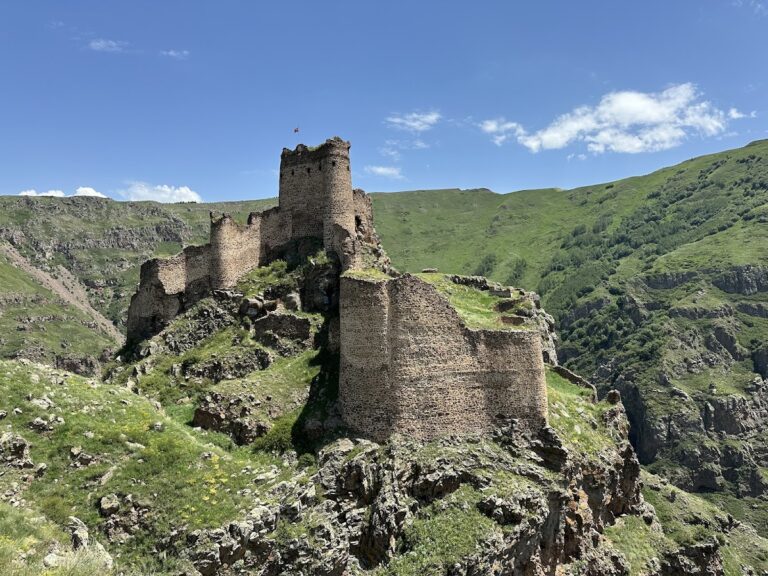
Golden Fortress (Okros Tsikhe): A Medieval Stronghold in Georgia
Site at a Glance
- Country
- Georgia
- Primary era
- Medieval
- Eras represented
- Medieval
- Civilizations
- Unclassified
- Site type
- Military
- Remains
- Castle
On this page10 sections
History
The Golden Fortress, or Okros Tsikhe, is a medieval stronghold near Bolajuri and north of Shoqa in Georgia. Its exact construction date is unknown, but it was probably built in the late 13th or early 14th century. It became one of the principal fortifications held by the Jaqeli dynasty, rulers of the Principality of Samtskhe.
A stronghold of Samtskhe
Alongside other fortresses, Okros Tsikhe formed part of a defensive system around the lands governed by the atabegs, high-ranking officials associated with the principality’s ruling authority. Its position allowed defenders to watch roads and command a broad area.
Ottoman expansion and conquest
As Ottoman power grew during the 15th and 16th centuries, the fortress played an important role in defending the Meskhetians, the people of the historical region of Meskheti in southwestern Georgia. Its strong position helped it endure prolonged sieges. The 16th-century Meskhetian Chronicle refers to the fortress repeatedly while recounting the principality’s final years.
In 1578, Ottoman commander Lala Mustafa Pasha led a campaign in the Caucasus. Dedisimedi, a Georgian princess and wife of Kaikhosro Atabeg, took refuge at Okros Tsikhe. She tried unsuccessfully to save Samtskhe from the Ottoman invasion and later negotiated with the Ottoman commander over peace.
Ottoman rule and later history
After the Ottoman conquest of the province, the fortress was known as Altunkal’a and became the center of a district with the same name. It remained an operating fortification until the end of the 18th century. In the 1650s, Ottoman traveler and writer Evliya Çelebi described it as a stone fortress, suggesting it may not yet have fallen into ruin.
Okros Tsikhe was designated an Immovable Cultural Monument of National Significance in 2006 and added to Georgia’s register in 2007.
Remains
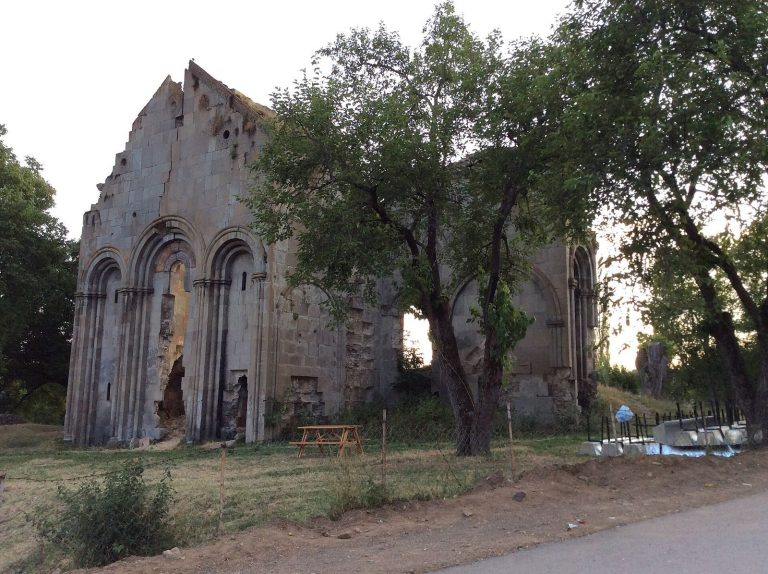
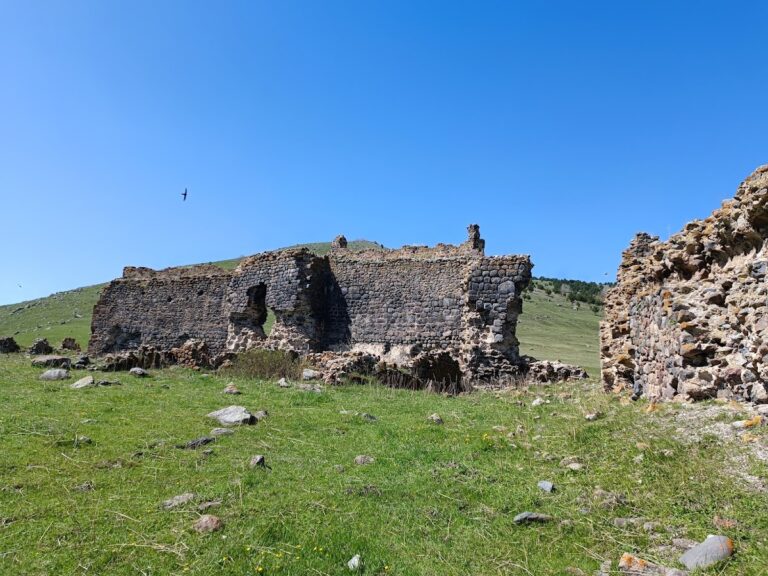
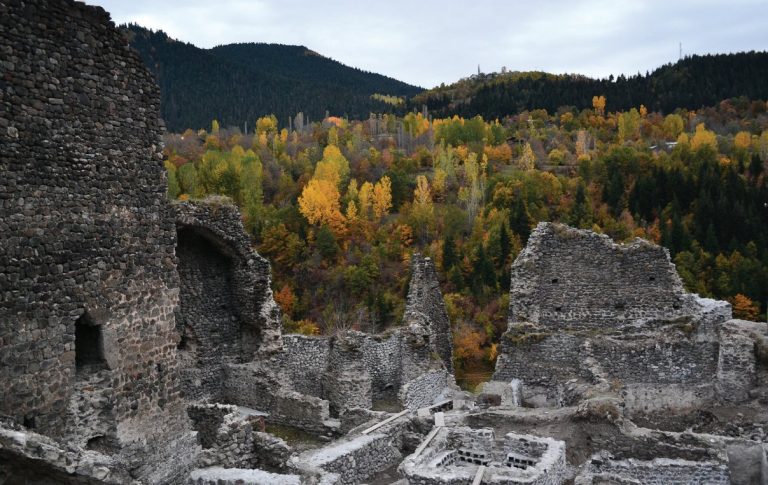
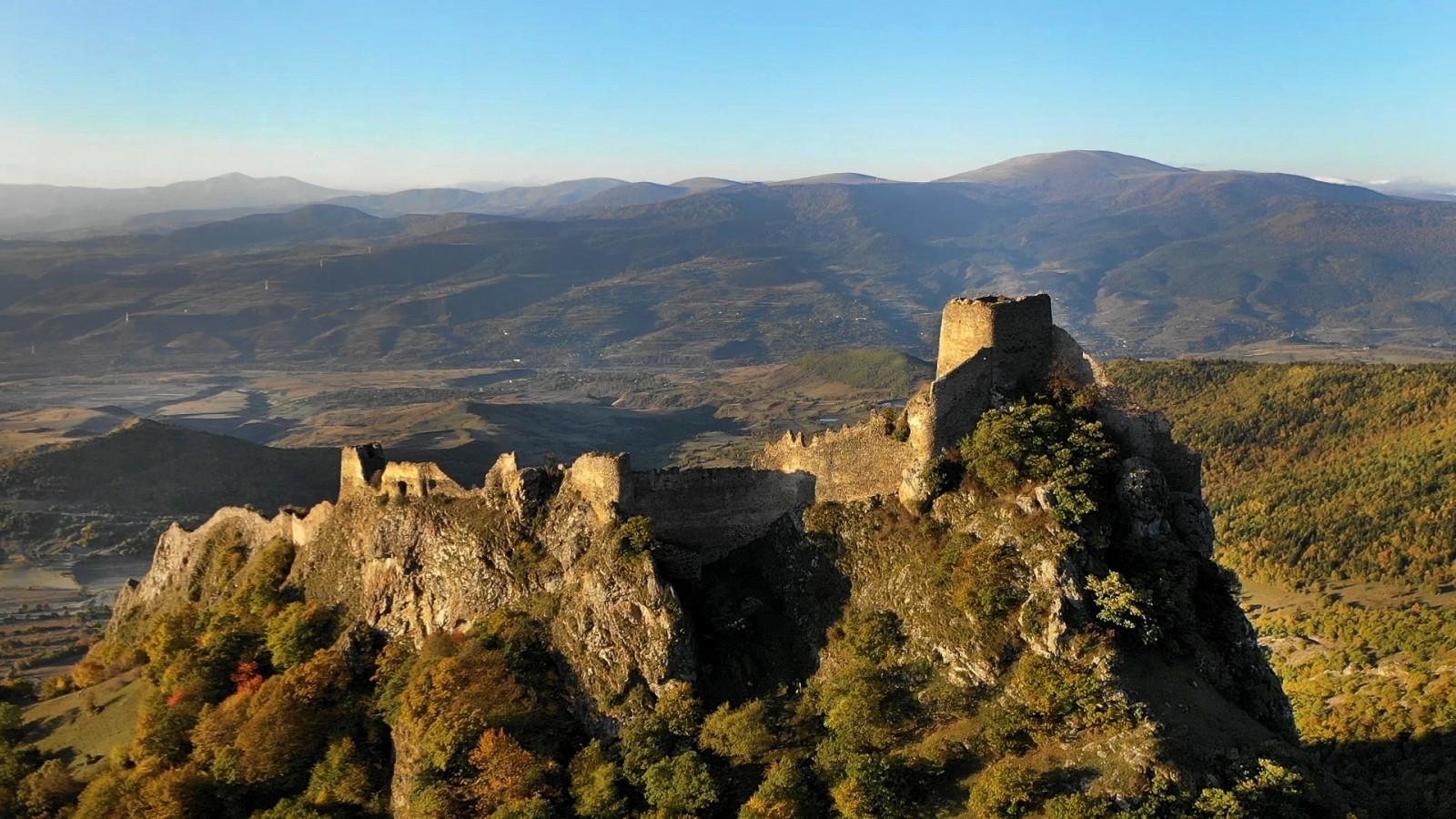
The fortress occupies a steep rocky mountain at about 1,700 metres above sea level, roughly 500 metres above the Adigeni valley. Its irregular, multi-level plan follows the ridge and slopes, with massive stone walls and foundations fitted to the underlying rock. It is among Georgia’s largest medieval fortifications.
Fortress layout and defenses
Ridge walls
The upper part of the fortress occupies the ridge crest, while walls descend along both the northern and southern slopes. The most extensive section lies on the south, where several nearly parallel wall lines follow the terrain. The walls, built from large, roughly dressed stone blocks, reach about 10 metres in height and blend into the rock beneath them.
Towers and wall supports
Small buttresses and several larger towers reinforce the walls. One tower stands on the highest rock, overlooking the complex. The towers also gave defenders separate places of shelter.
North entrance
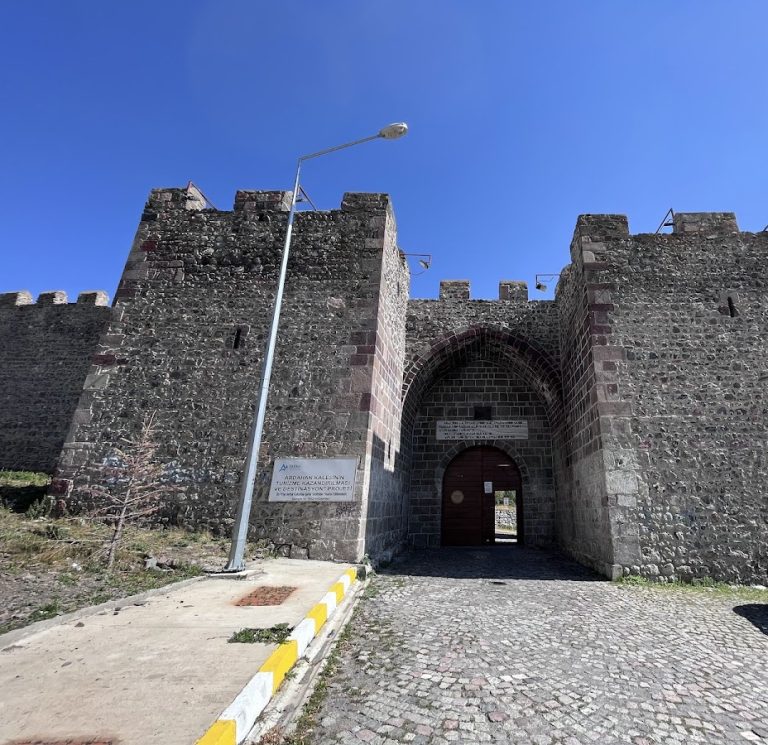
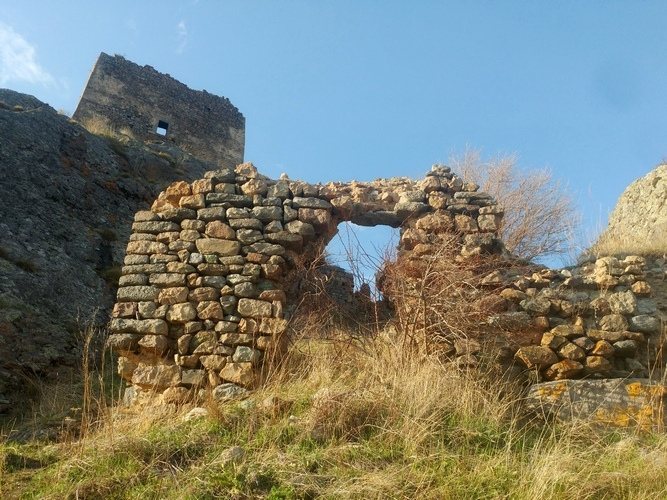
The entrance is on the north side. Large stones frame it on all four sides, and the opening is about 1.5 metres high and narrower than its height. The adjoining wall is more than 2 metres thick. Sockets beside the entrance indicate that it held a double-leaf door secured by a heavy bolt, and the bolt’s socket also survives.
A second wall stands in front of the entrance. Above it, a large opening allowed defenders to drop stones and pour hot pitch on attackers.
Interior and rocky setting
A description from the mid-19th century noted a cross carved into the gate stone and the ruins of a Christian church inside the fortress. It also characterized the rocky site as detached from the main mountain chain and exceptionally steep, with unusual formations attributed to volcanic eruptions.