Fort Grey: A Martello Tower and Coastal Defence on Guernsey
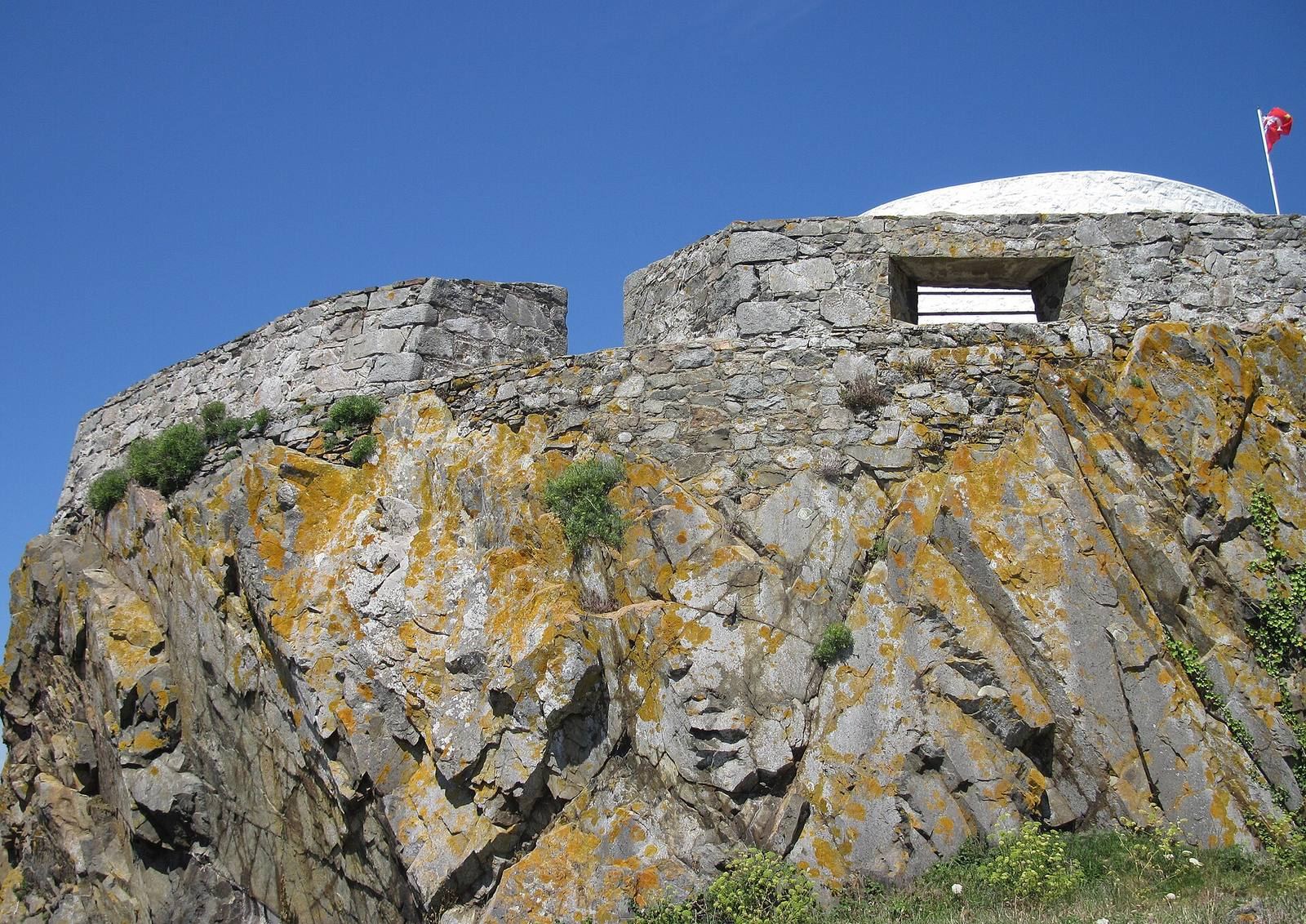
Site at a Glance
- Country
- Guernsey
- Primary era
- Modern
- Eras represented
- Medieval, Modern
- Civilizations
- British, English
- Site type
- Military
- Remains
- Fort
On this page9 sections
History
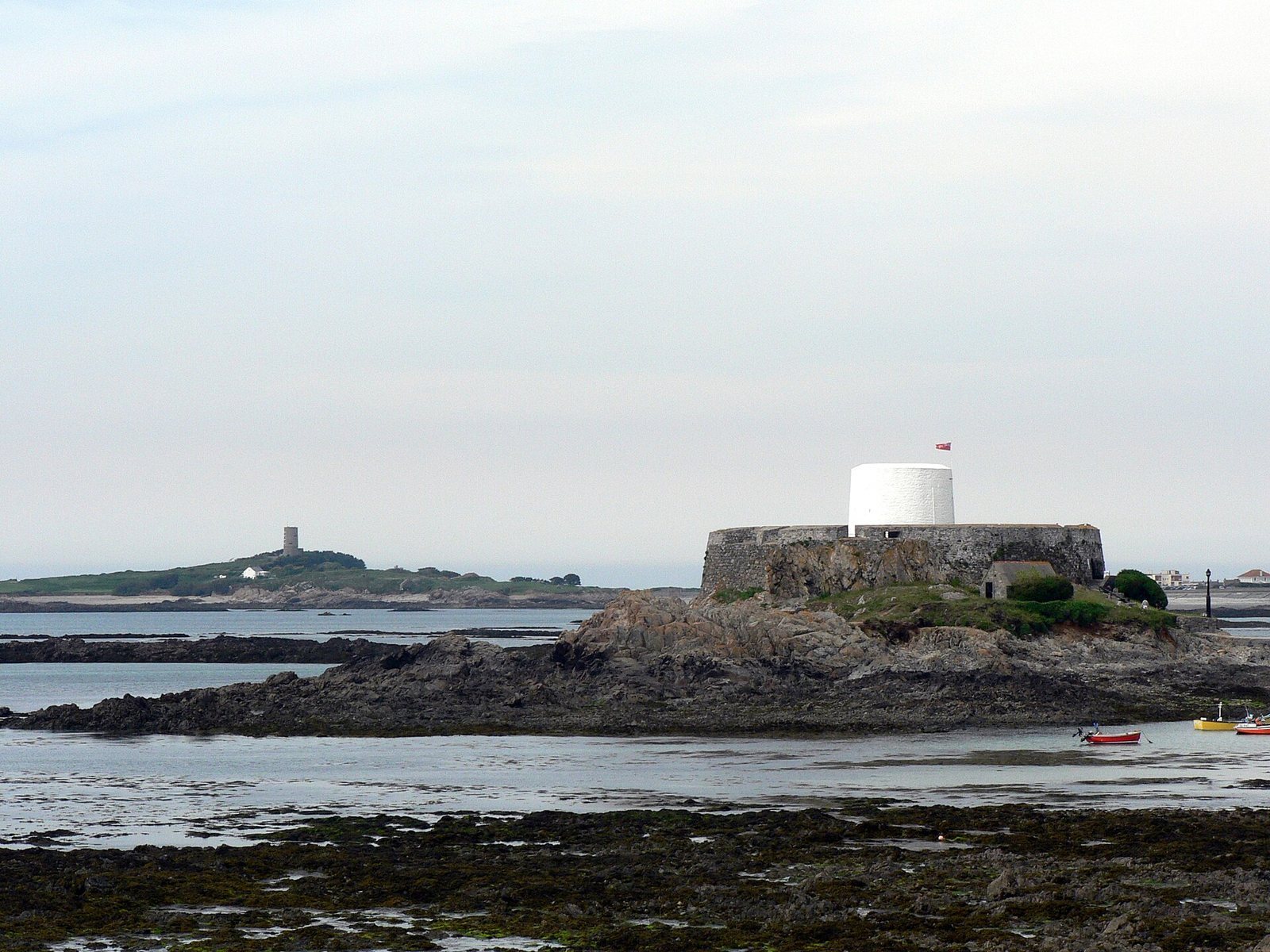
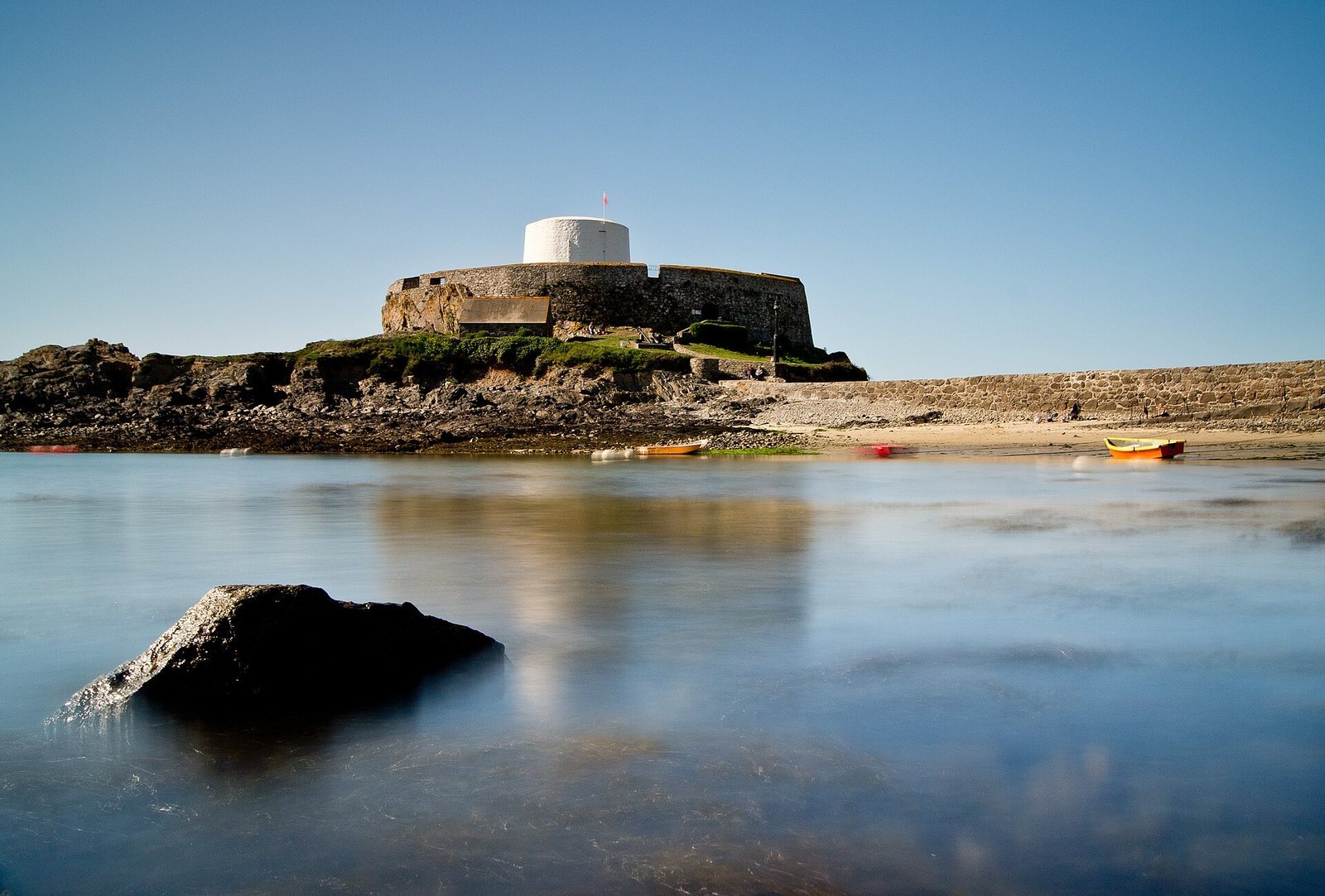
Fort Grey is a coastal fort on a tidal rock in Rocquaine Bay, on Guernsey’s west coast. Built in 1804 as a British coastal defence, it takes the form of a Martello tower, a compact coastal fortification. The Napoleonic Wars were European conflicts involving Napoleonic France and shifting coalitions, fought from 1803 to 1815. Fort Grey later became one of three places on Guernsey where a warning shot would be fired if an invasion threatened.
Earlier fort and folklore
A smaller fortification probably stood on the rock in the Late Middle Ages. In the 1620s Guernsey’s militia used it, although it was considered too weak to resist an assault. The site also became associated with stories of witches’ sabbaths, an alleged gathering from European folklore and witchcraft accusations. Local gatherings were linked to the rock in the 16th century, while tradition placed supposed nocturnal pagan ceremonies there as far back as the Middle Ages.
In 1617, a report described a meeting between local girl Isabel Becquet and the devil. That year, Marie de Callais of St Martin was convicted of belonging to a coven and burned at the stake on 17 October.
Construction and coastal defence
The present fort was built over the earlier fort’s remains in 1804. It was named for Charles Grey, 1st Earl Grey, who served as Guernsey’s governor from 1797 to 1807 and is credited with commissioning the work. Thomas Henry of Clos du Valle was the local builder. Around 1808, the road between the fort and St Peter Port was improved for military use. The work was funded with proceeds from the sale of land reclaimed from Braye du Valle, a tidal area recovered from the sea.
Later use and occupation
The War Office sold Fort Grey to the States of Guernsey, the island’s parliament, in 1891 for £185. On 26 March 1938, the fort and Rocquaine slipway were listed together as a Protected Monument, a Guernsey heritage designation that provides legal protection.
During the German occupation of the Channel Islands in the Second World War, German forces took over the fort and called it “Resistance Nest Gray Tower.” They equipped it with a mobile 3.7-centimetre PaK 36 anti-tank gun and machine guns. Fort Grey was later adapted for peaceful use as a local shipwreck museum. Roman ship timbers found in St Peter Port harbour in 1982 were nicknamed “Asterix”; preserving them took decades.
Remains
Fort Grey occupies a tidal rock that forms a peninsula in Rocquaine Bay. Its white, rubble-stone Martello tower was built above the remains of the earlier fortification. The tower measures 10.8 metres across and 7.8 metres high. Its white finish made it conspicuous to mariners navigating this hazardous stretch of coast.
Tower and artillery
The tower was designed as a keep, or fortified strongpoint, for the artillery battery, the position for the guns. A 24-pounder carronade, a short-barrelled naval cannon that fired 24-pound projectiles, was mounted on the roof to protect the battery. Fort Grey’s tower was larger than those at Fort Saumarez and Fort Hommet, each of which measured 10.2 metres in diameter and 5.1 metres high.
Museum collections
Shipwreck objects
The museum holds marine-salvage objects from the wrecks of MV Prosperity and Elwood Mead. Its exhibits include a cannon from HMS Boreas, positioned to point toward the nearby Hanois Rocks, where the ship sank in 1807. The captain and at least half the crew died in the wreck, and the captain’s wife may also have been among the dead.
Roman ship timbers
The timbers nicknamed “Asterix” came from a third-century Roman ship.