Fort Victoria: A Victorian Coastal Fort on the Isle of Wight
Site at a Glance
- Country
- United Kingdom
- Primary era
- Modern
- Eras represented
- Modern
- Civilizations
- British
- Site type
- Military
- Remains
- Fort
On this page8 sections
History
Fort Victoria is a coastal fort at Norton on the Isle of Wight, United Kingdom, built in the 1850s to guard the Solent. It continued a coastal-defense role established at the site by an earlier fortification.
Tudor defenses
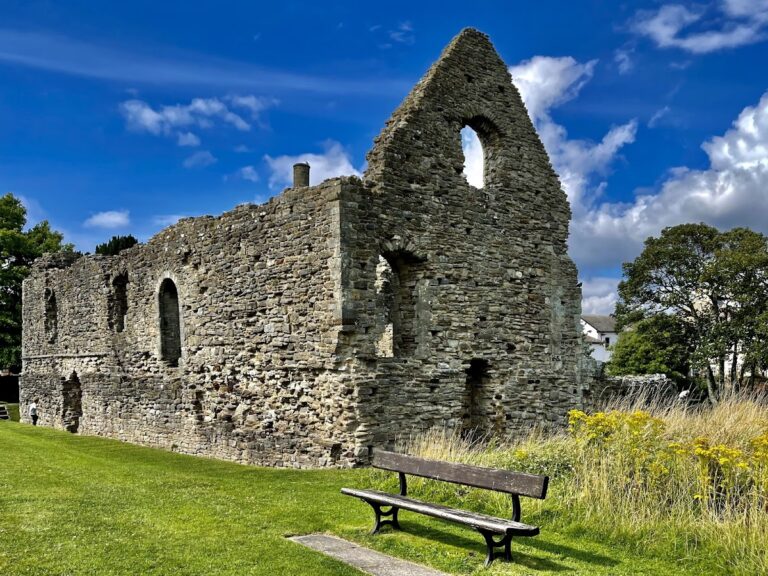
Sharpenode Bulwark was built between 1545 and 1547 during the reign of Henry VIII, king of England from 1509 to 1547. In 1587, George Carey, then Captain of the Isle of Wight, repaired the bulwark or possibly replaced it. The resulting defenses were known as Carey’s Sconce. They had fallen into disrepair by 1623, and only ruins remained by the early nineteenth century.
Construction and military service
Fort Victoria was built in the 1850s as part of new batteries on the heights above the coast. It served as a barracks and storehouse until the 1880s, when it was equipped with more modern weapons.
Twentieth century and country park
During the First and Second World Wars, the fort served as a landing point and storage site. Between the wars it saw little use, and the Royal Engineers, a British Army corps responsible for military engineering and related technical work, left in 1920. A car ferry between Fort Victoria and Keyhaven was proposed in the 1930s and authorized by the Pier and Harbour Order (Keyhaven) Confirmation Act 1936, but the plan was abandoned in 1938 because funds could not be secured.
At the start of the Second World War, the fort was used to train coastal gunners. After the war it became a National Service training station, under Britain’s system of compulsory military service. Military use ended in 1962. The rear barracks blocks were demolished in 1969, and their material was used in sea defenses. The Isle of Wight Council bought the remaining fort soon afterward, and its preserved parts became part of Fort Victoria Country Park. The fort was designated a Grade II listed building on 28 March 1994.
Remains
Fort Victoria stands on Sconce Point, west of Yarmouth, overlooking the Needles Passage and the approaches to Yarmouth. Hurst Castle on the mainland lies almost opposite, while Fort Albert is about one kilometre to the southwest. The fort forms part of Fort Victoria Country Park, which encompasses 20 hectares of woodland and shore on the Isle of Wight’s northwest coast.
Fort Victoria remains
Fort and barracks
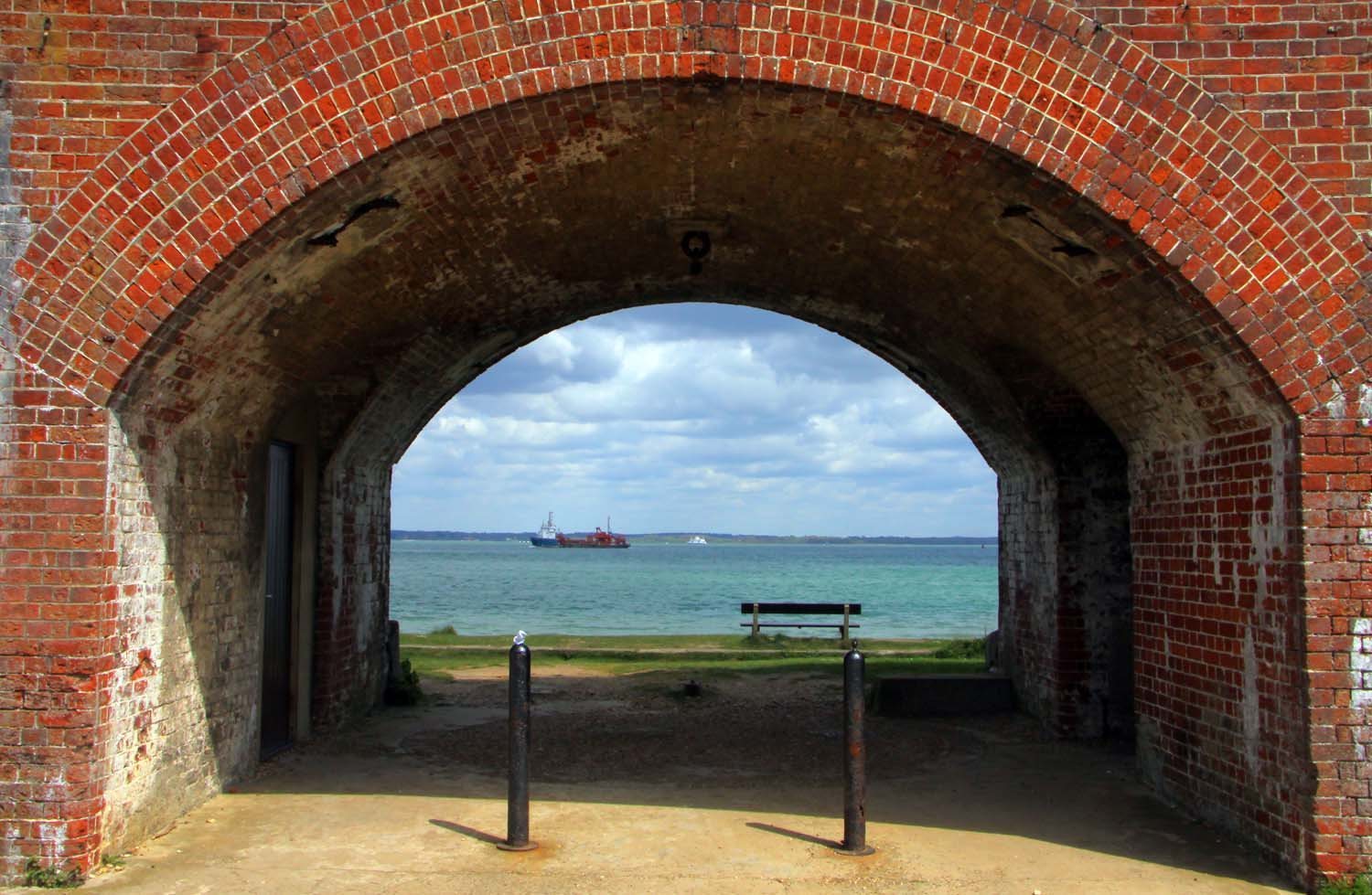
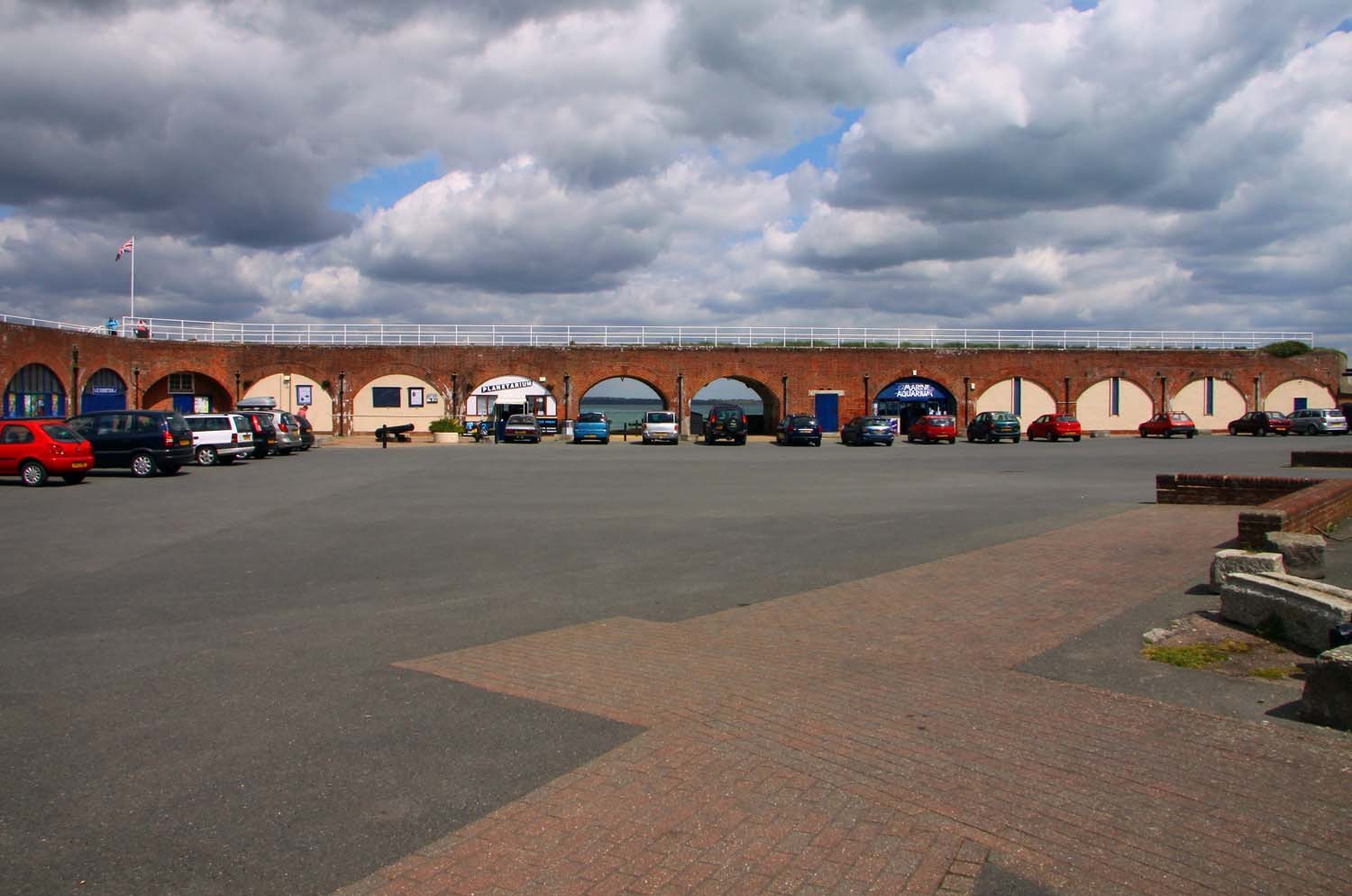
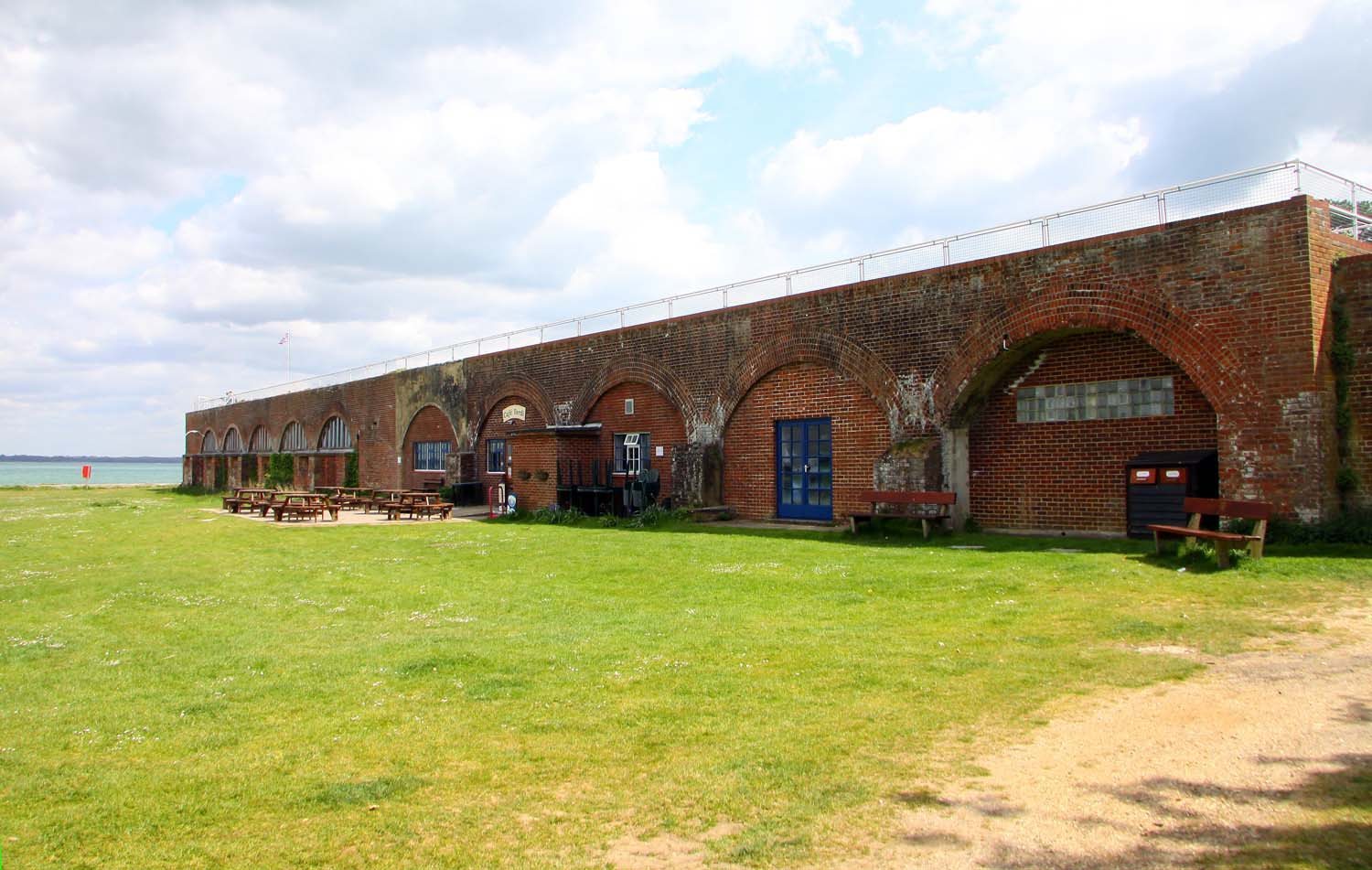
Built of brick in a triangular plan, the fort had two seaward batteries meeting at a right angle, with concrete floors for mounting guns. A fragment of the fort survives, including casemates, or enclosed fortified chambers. Brickwork also marks the foundations of the former barracks.
Pier
The pier built to serve the fort remains visible, although it is now derelict. Torpedo tubes were mounted on it during the Second World War.