Palazzo Fibbioni: A Renaissance Family Palace and Municipal Building in L’Aquila
Site at a Glance
- Country
- Italy
- Primary era
- Early Modern
- Eras represented
- Early Modern
- Civilizations
- Kingdom of Naples, Spanish
- Site type
- Domestic
- Remains
- Elite Residence
On this page7 sections
History
Construction and the Fibbioni family
Palazzo Fibbioni is a Renaissance palace in L’Aquila, Italy, built as the principal palace of the Fibbioni family. Its construction is attributed to the closing years of the 16th century. The building is among L’Aquila’s earliest examples of Renaissance-style civic architecture, and Giambattista Fibbioni was living there by 1578.
The family’s progenitor, Bertolomeo del Secco, moved to L’Aquila from the province of Novara during the 16th century and acquired the nickname “Fibbione,” from which the family name derived. The family became extinct in the late 19th century. In 1899, its last heirs, Teodora and Agnese Fibbioni, established a foundation to manage and protect the palace. The Fibbioni Foundation is its owner.
Earthquake damage and municipal use
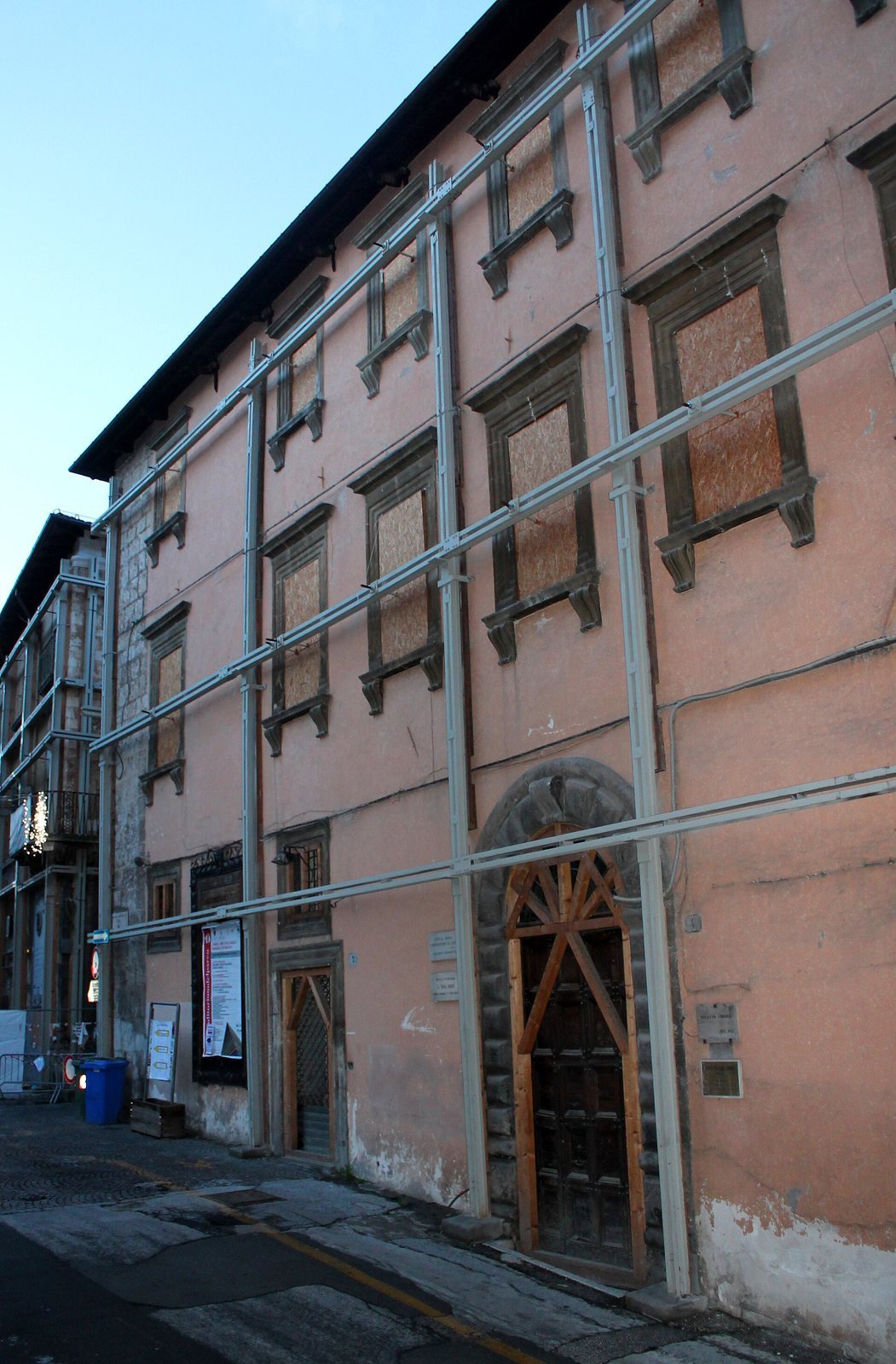
The palace was damaged by earthquakes in 1703 and 2009. Restoration began in 2012 and was completed in August 2014. From 2015 to 2023, the building served as L’Aquila’s municipal headquarters while Palazzo Margherita underwent restoration. Since 2023, it has housed municipal offices.
Remains
Architecture
Urban setting and façades
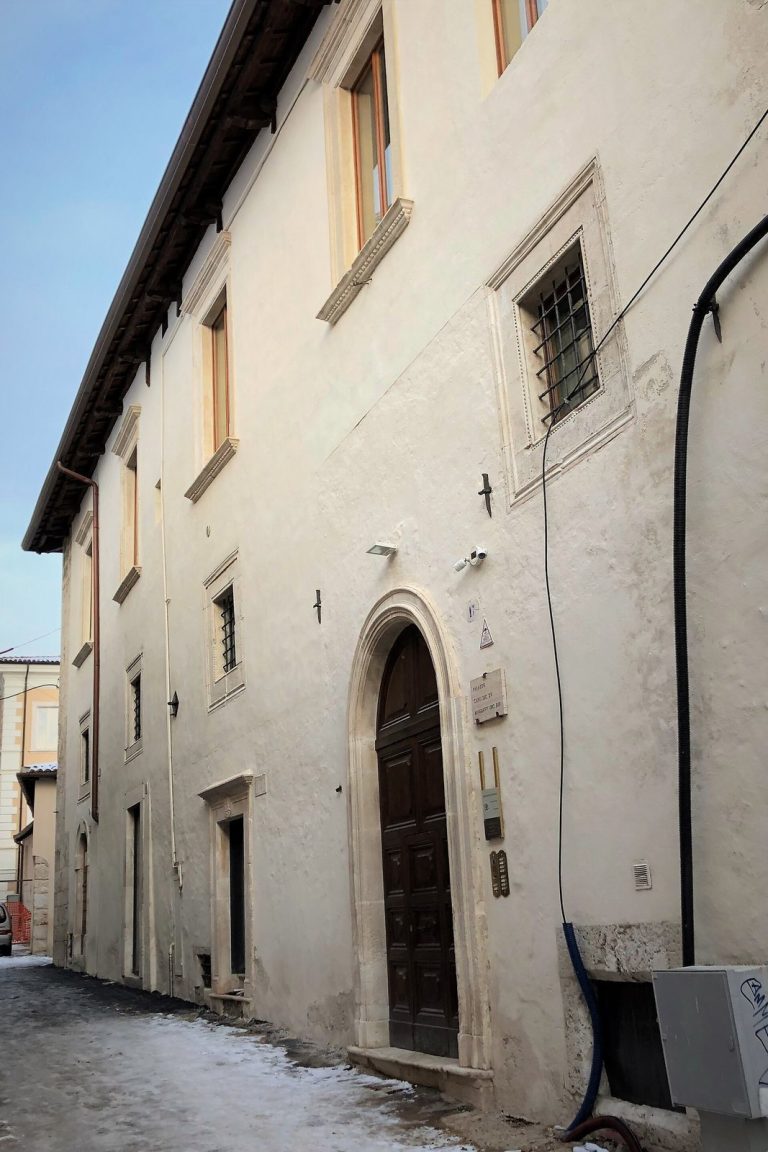
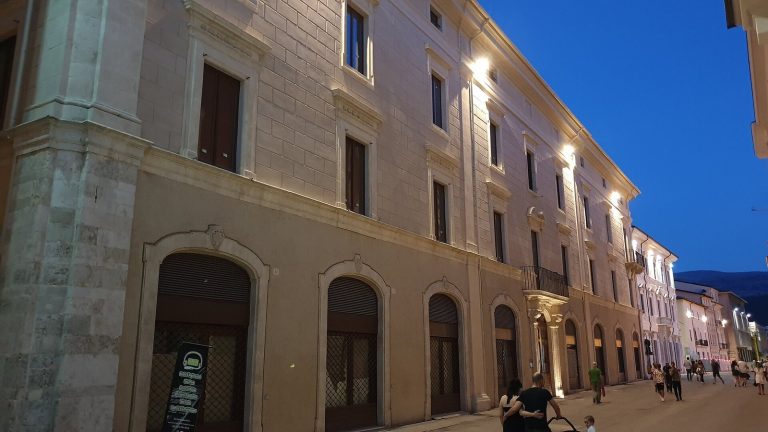
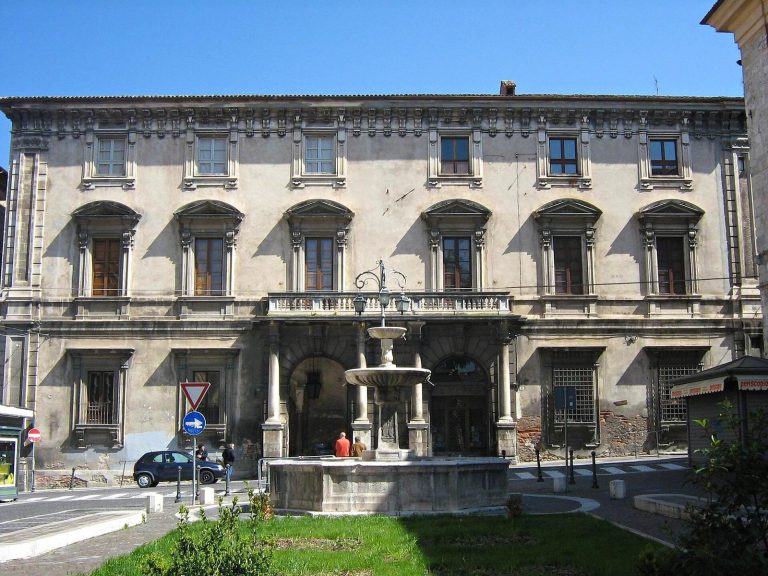
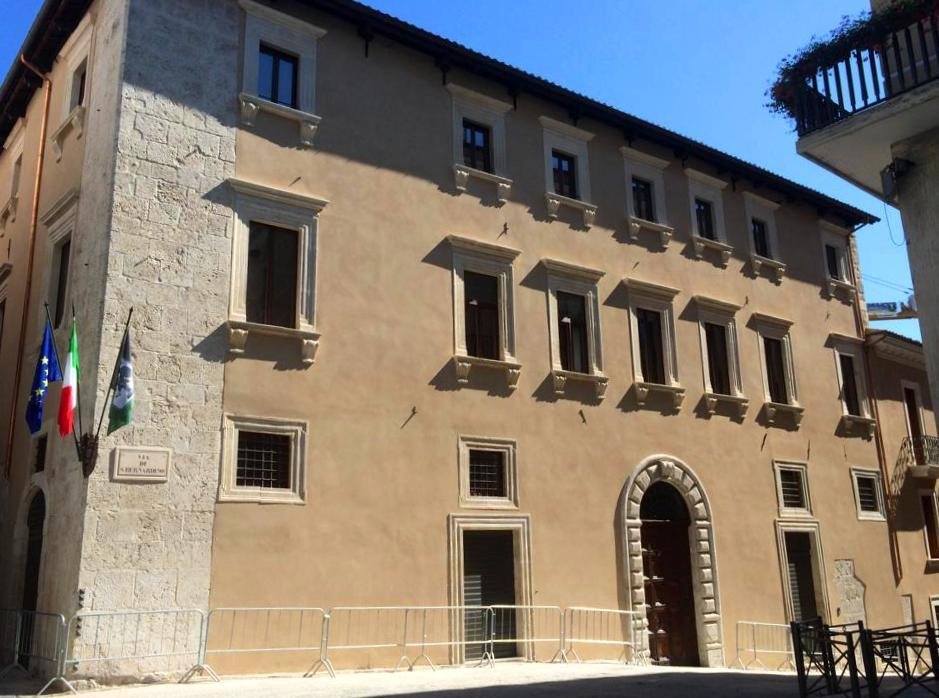
Palazzo Fibbioni stands at Quattro Cantoni, an intersection at the center of L’Aquila’s street plan, organized around principal north–south and east–west routes, a convention associated with Roman urban planning. The palace and the adjoining Palazzo Lopez form a single complex, also called Palazzo Fibbioni Lopez. The building has two public façades, one on Via San Bernardino and another on Corso Vittorio Emanuele. Each is divided into three horizontal sections, and the principal façade was probably altered in later centuries. Its rough-faced masonry portal is attributed to the 16th or 17th century, with classically styled, square openings grouped around it.
Interior ceilings
The interior contains wooden ceilings among the most important in L’Aquila, with paintings by Giovan Paolo Cardone.