Sala Silver Mine: Sweden’s Historic Silver-Mining Complex
Site at a Glance
- Country
- Sweden
- Primary era
- Medieval
- Eras represented
- Medieval, Early Modern, Modern
- Civilizations
- Swedish
- Site type
- Economic
- Remains
- Mine
On this page17 sections
History
Mining beginnings and royal control
Sala Silver Mine is a silver-mining complex in Sala, Sweden, where extraction began in the early or mid-15th century. It became Sweden’s foremost silver deposit, and its silver was important as a metal for coinage. Over the mine’s history, more than 450 tonnes of silver and about 35,000 to 40,000 tonnes of lead were extracted from as much as five million tonnes of rock.
The miners sought formal privileges in 1511, approaching Svante Nilsson, a Swedish nobleman and regent, at Christmas. Sten Sture the Younger, a later regent, issued a privilege charter in 1512. It required the miners to sell all their silver to the Crown. King Gustav Vasa then took control of the mine to enforce this royal right.
In 1534, Gustav Vasa ordered older smelting works in nearby villages closed and demolished, concentrating production at the mine, where it could be more closely controlled. He also gradually put royal bailiffs in charge of mining and silver extraction. The Crown’s share of extracted silver rose from one tenth at first to one seventh in 1539, one fifth in 1540, and one third in 1542. It paid a low price for the metal, and the miners gradually lost control. By the 1550s, the Crown was directing extraction.
Prosperity and decline in the 16th century
The mine had three major periods of prosperity: the early 16th century, the mid-17th century, and the late 19th century. Its strongest production years were the 1530s and 1540s, when output averaged about 3.5 tonnes of silver a year. At the 16th-century peak, annual production reached roughly three to five tonnes. Production under the earlier Sture rulers may have been higher.
Output fell after 1550. By 1560 it stood at about one third of its earlier level, then declined further; by 1600 it was around one fortieth of the 1540s output. Several cave-ins occurred, and King Johan III considered closing the mine. By the time of the 1571 Älvsborg Ransom, the number of local households was about one tenth of its level during the mine’s heyday. The ransom was a payment Sweden had to make to Denmark after a war.
King Charles IX tried to find rich ore veins but did not restore production to its earlier level. He called the mine the kingdom’s foremost treasure. Prisoners of war and convicts worked there during some periods in the 16th and 17th centuries, while experienced German miners were often brought in for senior roles.
The town, mining association, and recovery
King Gustav II Adolf granted Sala town privileges in 1624, and the settlement moved from the mining village to the town’s new location. Miners opened new shafts in search of further deposits, but each proved barren after a time. Production rose from its low point in the late 16th century, though it never returned to the levels reached under Gustav Vasa.
The Crown began leasing the mine to operators during Gustav Vasa’s reign. From the mid-17th century, miners increasingly joined together to negotiate leases. In 1682, operation passed in perpetuity to Sala Bergslag, an association of Sala miners; the privilege was renewed in 1741. The mine also had its own mining district, first called Sala Silver Mining District and later Sala Bergslag. Its First Mining District was an administrative jurisdiction overseen by a mining superintendent, while a mine court had earlier handled criminal cases connected with mining.
Improvements in the 18th and 19th centuries
Labor shortages during the Great Northern War, a conflict between Sweden and its rivals in northern and eastern Europe, contributed to very low production in the early 18th century. Daniel Bergenstierna, mining superintendent from 1734 to 1761, upgraded the mine, after which production improved.
In the early 19th century, rising wages and low silver prices made the mine unprofitable. After Jakob Henrik af Forselles became mining superintendent in 1817, he improved the equipment used to extract ore. Silver prices also rose. In 1863, annual output reached a level not seen since the 17th century, although production later fell again.
Improved working methods in the 1870s and a new ore-concentration plant built by mining engineer August Heberle in 1880 and 1881 raised output. In the late 1880s, Heberle also developed a way to recover silver from old waste heaps. Falling silver prices and a shortage of ore rich enough to work eventually made continued mining uneconomic.
The mine’s dams had flooded large areas of land, prompting objections from the 1860s onward. After a long investigation, the Crown transferred the mine to Sala Bergslag without payment in 1887 on condition that the flooded land be drained. Later drainage recovered 1,000 tunnland, a historical Swedish unit of land area, for cultivation.
Later owners and modern protection
Sala Bergslag sold the mine to Sala Silfververks AB in 1890, and the company built a new smelting works there. The mine changed hands again in 1894 and 1905. The 1905 owner, AB Sala Zink, intended to extract zinc rather than silver. After it also proved unprofitable, the mine was sold to Sala Gruv AB in 1909. The main mine had operated continuously until 1908; Sala Gruv extracted little silver there and instead processed ore from other mines. Later owners included AB Svenska Metallverken and Avesta Jernverks AB.
Some extraction at the main mine resumed in 1950 and 1951. The separate Bronäs Mine, which was not physically connected to the old mine, operated from 1945 to 1962 and was the last of the mines in the area to close. It produced lead and zinc, as well as very small quantities of silver. Sala Municipality has owned the mine since 1988, and Sala Silvergruva AB was formed in 2005. In December 2013, the Västmanland County Administrative Board protected the mine complex as a historic building complex, covering about 50 buildings. The designation recognized the mine’s long history and the importance of its productive periods to Sweden’s economy.
A local legend from Österfärnebo parish tells of a spirit at the Nässja silver mine who said her sisters were richer. After searching at Vira, Lura, and Kulla, the miners reached the richest sister, Sala, where they found a rich deposit.
Remains
Underground workings
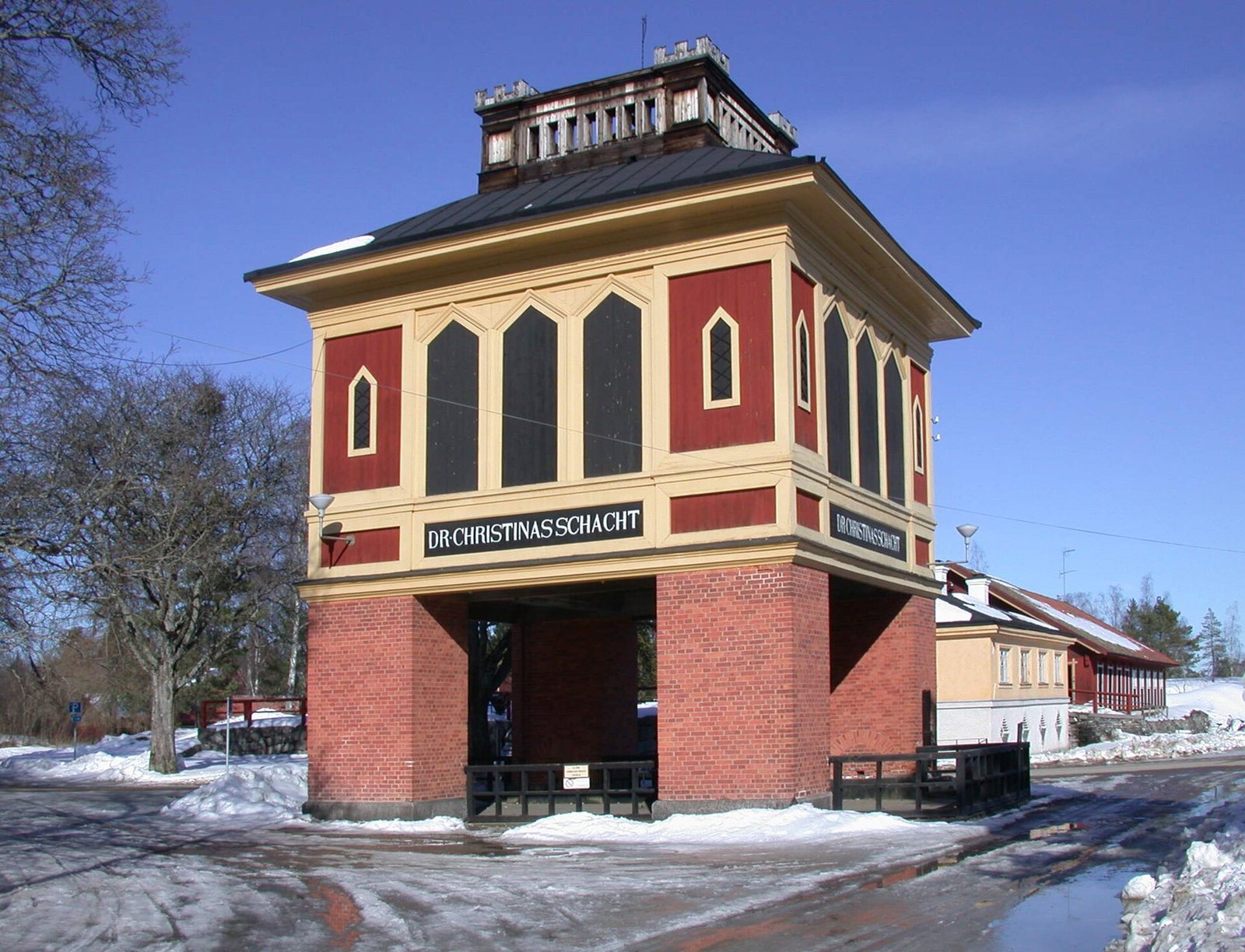
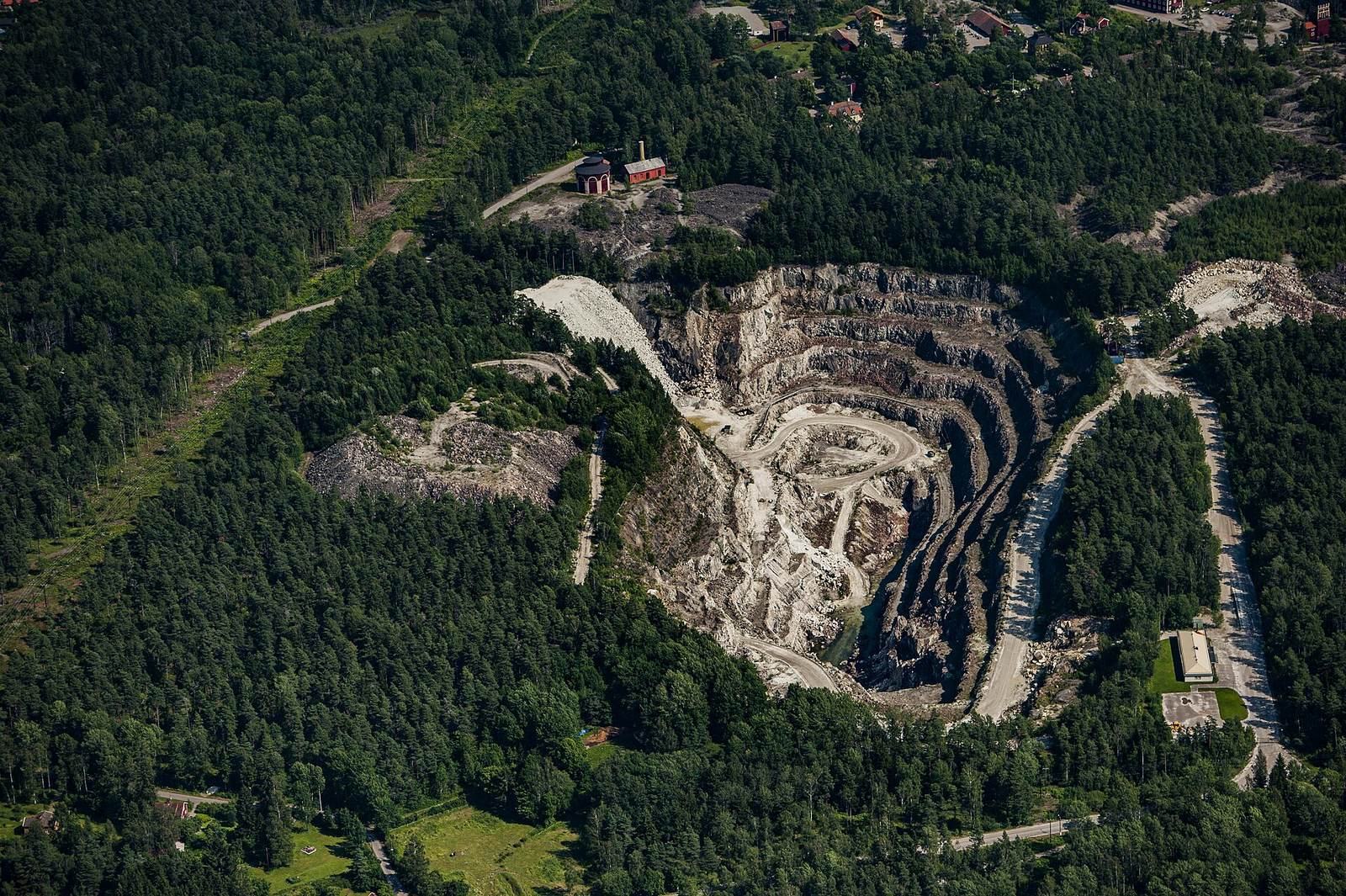
The mine’s underground workings extend about 700 metres in length and 100 metres in width, reach a maximum depth of 318.6 metres, and comprise more than 20 kilometres of tunnels and rooms. Named shafts include Sandrymingen, Kungsrymingen, Knektschaktet, Kristinaschaktet, and Makalösen; Queen Christina’s Shaft and Charles XI’s Shaft are also among the mine’s features. The underground rooms include Lillgruvan, an exhibit presenting work and life in a medieval mine. Some passages were already open to the surface during mining.
When older silver ore began to run out, miners reopened previously abandoned and flooded workings at Aspenstorp, Biskopsgruvorna, and Gravgruvan. They drained these areas and reached them through a tunnel from the old mine. Because the workings were unstable, miners reinforced their walls and roofs.
Geology and ore
Bedrock and ore-bearing structures
The bedrock formed about 1.89 billion years ago, during the Paleoproterozoic, an interval in Earth’s early history. Dolomitic marble, a marble rich in the mineral dolomite, is the principal rock containing the ore. Usually gray to green and locally white, it takes on its green color partly from minerals including serpentine, diopside, tremolite, and chlorite. The marble has been folded, altered by heat and pressure, and sheared. It borders Salagranite to the east and metamorphosed volcanic rock to the west.
The Storgruveskölen shear zone, a band of rock deformed by movement, runs north-northwest, parallel to the mined ore bodies. It generally lies close to the ore and guided miners searching for deposits. Much of the marble contained no silver ore; the silver-bearing material occurred mainly in fractures and pockets.
Silver and lead-zinc ores
Galena, a lead sulfide, and sphalerite, a zinc sulfide, were the principal minerals mined. Silver occurred mainly in microscopic inclusions within them, including amalgam, dyscrasite, allargentum, pyrargyrite, tetrahedrite, and miargyrite. Native silver was rare. Galena generally contained about 0.15 to 1 percent silver, while silver content in sphalerite was about 0.015 to 0.02 percent.
In the 16th century, miners also worked a brownish, exceptionally silver-rich ore called kofring, whose composition is uncertain but is thought to have included pyrargyrite. Sala ore is unusually rich in antimony, a principal constituent of pyrargyrite; the pure mineral contains 59.75 percent silver. Lead ochre is known in Sweden only at Sala and Långban.
Water systems and historic buildings
Waterworks
Two extensive water systems of lakes, dams, and canals supplied power to the mine and its smelting works. The water drove machinery used to pump the workings, raise ore, and support smelting.
Buildings and foundations
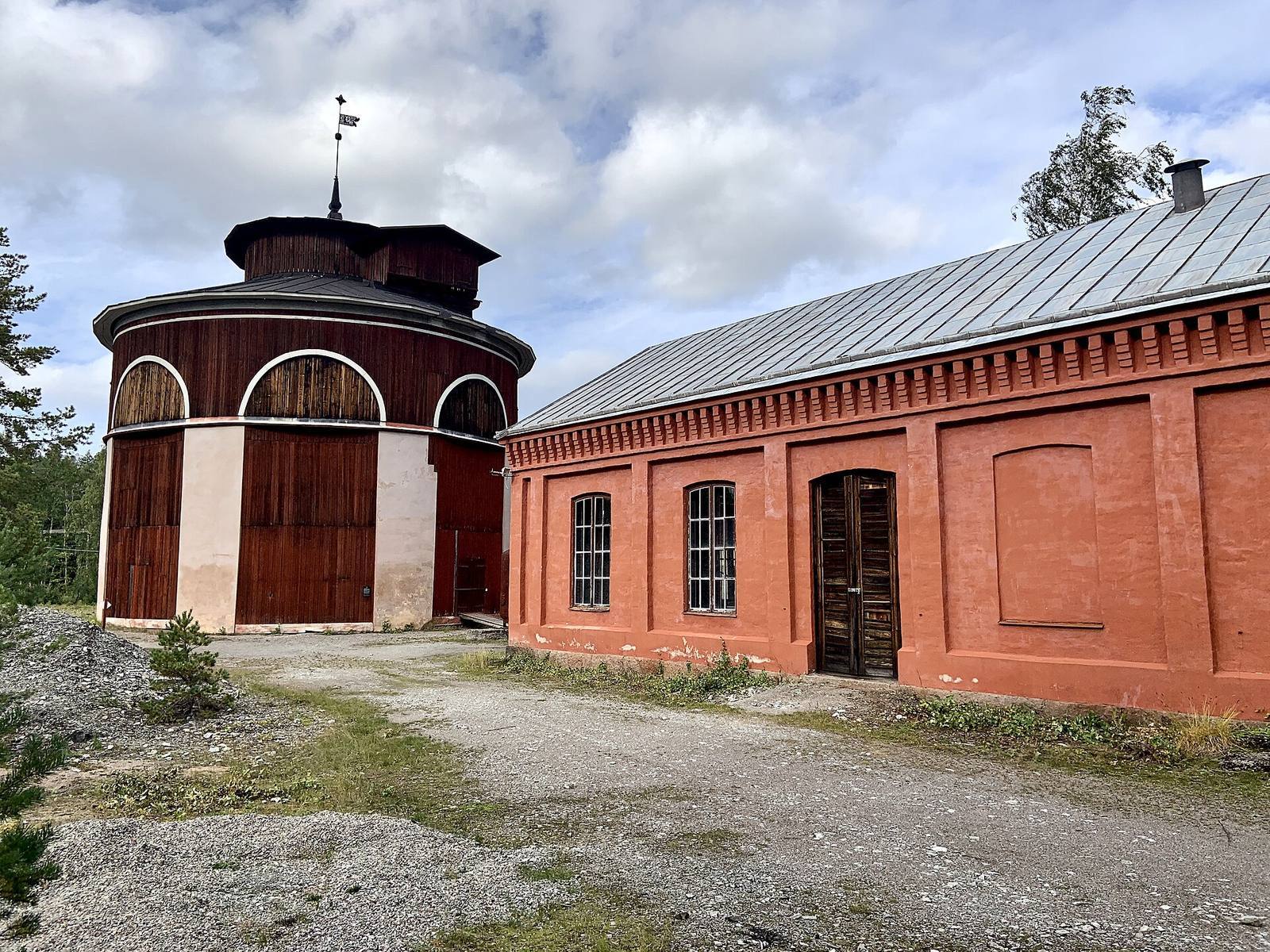
About 50 historic buildings form part of the mine complex. Salagranite, a local building stone, appears in several mine-building foundations. One example is a foundation associated with the winding-house structure at Queen Christina’s Shaft. A portion of a former office building is also among the surviving features. The Tistbrottet dolomite quarry, about 100 metres west of the mine, extracts purer white dolomitic marble.
Museum and ground openings
Museum collection
The mine museum contains archaeological finds from the 16th-century mining village, along with minerals and mining tools. Its objects include a 17th-century barrel identified as Charles XI’s barrel.
Openings around the mine
Openings about 10 to 40 metres deep occur around the mine. Near the former Silverrasten restaurant, a chamber in the Bronäs Mine collapsed and took part of a cycle path with it. The resulting opening is now water-filled and fenced. Deep openings have also appeared in the Hagaberg residential area, built over Gravgruvan.