Forcona: An Ancient Settlement and Medieval Diocesan Seat
Site at a Glance
- Country
- Italy
- Primary era
- Classical
- Eras represented
- Classical, Medieval, Early Modern
- Civilizations
- Kingdom of Naples, Roman
- Site type
- City
On this page11 sections
History
Forcona was an ancient settlement of the Vestini at present-day Civita di Bagno in the Province of L’Aquila, Italy. The Vestini were an ancient Italic people of the Aterno-Pescara valley, and Forcona’s earliest identified structures date to the second and first centuries BC, during the Roman Republic. The settlement later became a diocesan seat, and its community joined other valley settlements in contributing to the foundation of L’Aquila.
Roman settlement
The name Forcona may have referred to a group of settlements rather than one city. Its origin is uncertain. One possibility is that Furconium came from Forum Conae, which may itself have derived from a word for a pond or lake, perhaps referring to the nearby lakes of Bagno.
Forcona flourished during the Augustan period, the rule of Augustus and the establishment of the Roman Empire. Finds from that era reflect the settlement’s prosperity. It declined during the later Roman imperial period. Around AD 250, Maximus of Aveia was martyred nearby and later venerated as a Christian saint.
Early medieval religious center
In the period before Lombard rule, Forcona was also known by names meaning City of Furconia and City of Saint Maximus. The latter reflected the burial there of Maximus of Aveia. After the Lombards, a Germanic people who established rule in parts of Italy during the early Middle Ages, destroyed Aveia, Maximus’s remains were transferred to Forcona. Historian Francesco Lanzoni argued that Aveia’s diocese moved there at the same time.
A diocese is a church district governed by a bishop. Forcona served as a diocesan seat from the seventh century until 1256. It flourished again in the early Middle Ages under the control of Farfa Abbey, a major medieval monastery. On 10 June 957, Emperor Otto I and Pope John XIII visited to honor Maximus’s remains.
From regional lordship to L’Aquila
In the eleventh century, Forcona belonged to the Counts of Marsi, regional lords. Its inhabitants rebelled against them. The county later broke into several counties and was annexed to the Kingdom of Sicily, a medieval state in southern Italy.
In the thirteenth century, Forcona joined Amiterno and other Aterno valley settlements in contributing to the foundation of L’Aquila. As construction of the city’s cathedral proceeded, Pope Alexander IV issued the bull Purae fidei on 22 December 1256. A bull is a formal papal document. It transferred Forcona’s diocese to the new seat, whose cathedral also received Maximus’s remains. Berardo da Padula, formerly bishop of Forcona, became bishop of L’Aquila in practice. The transfer and L’Aquila’s growth contributed to Forcona’s decline and gradual abandonment.
Archaeological investigation
Excavation campaigns from the 1960s onward recovered numerous finds associated with Forcona’s late Republican settlement. Work carried out between 1995 and 2000 identified the earliest structures.
Remains
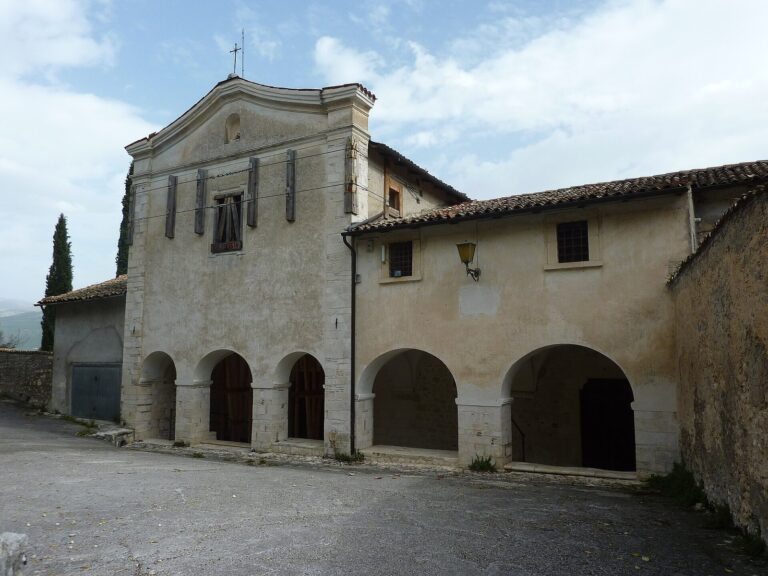
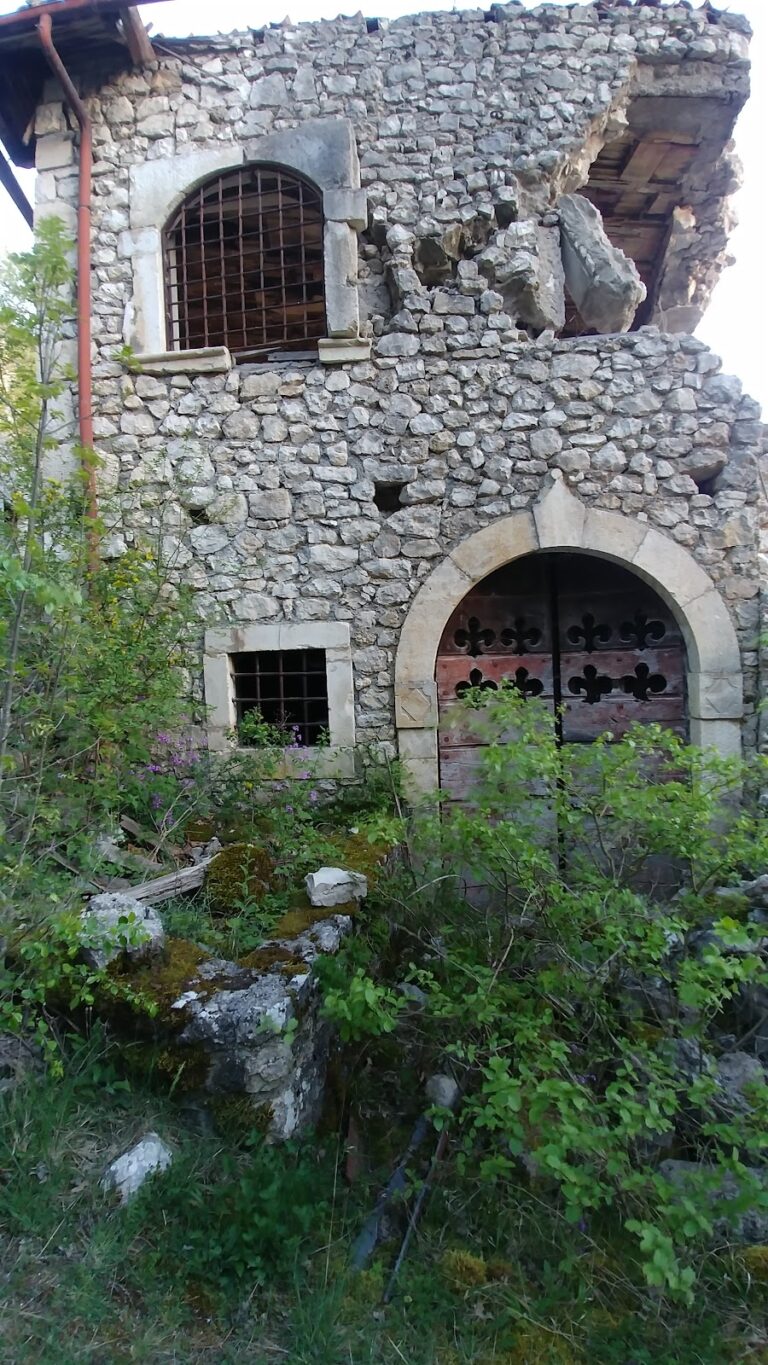
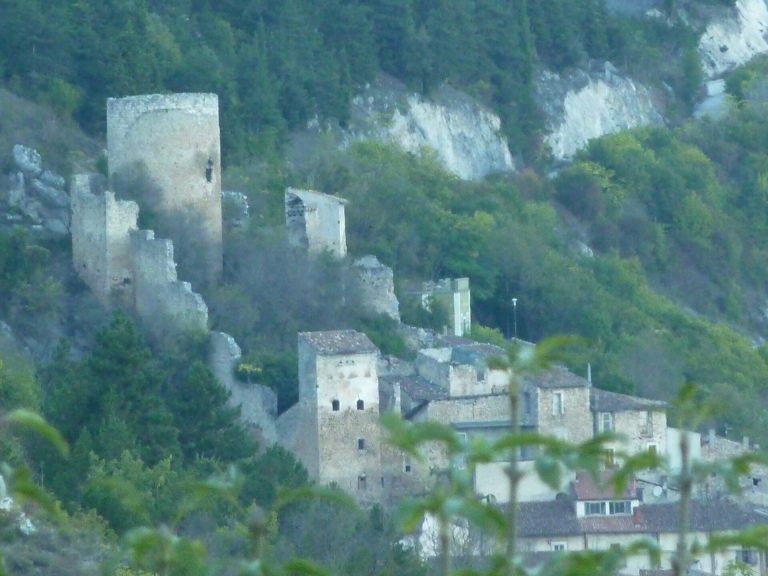
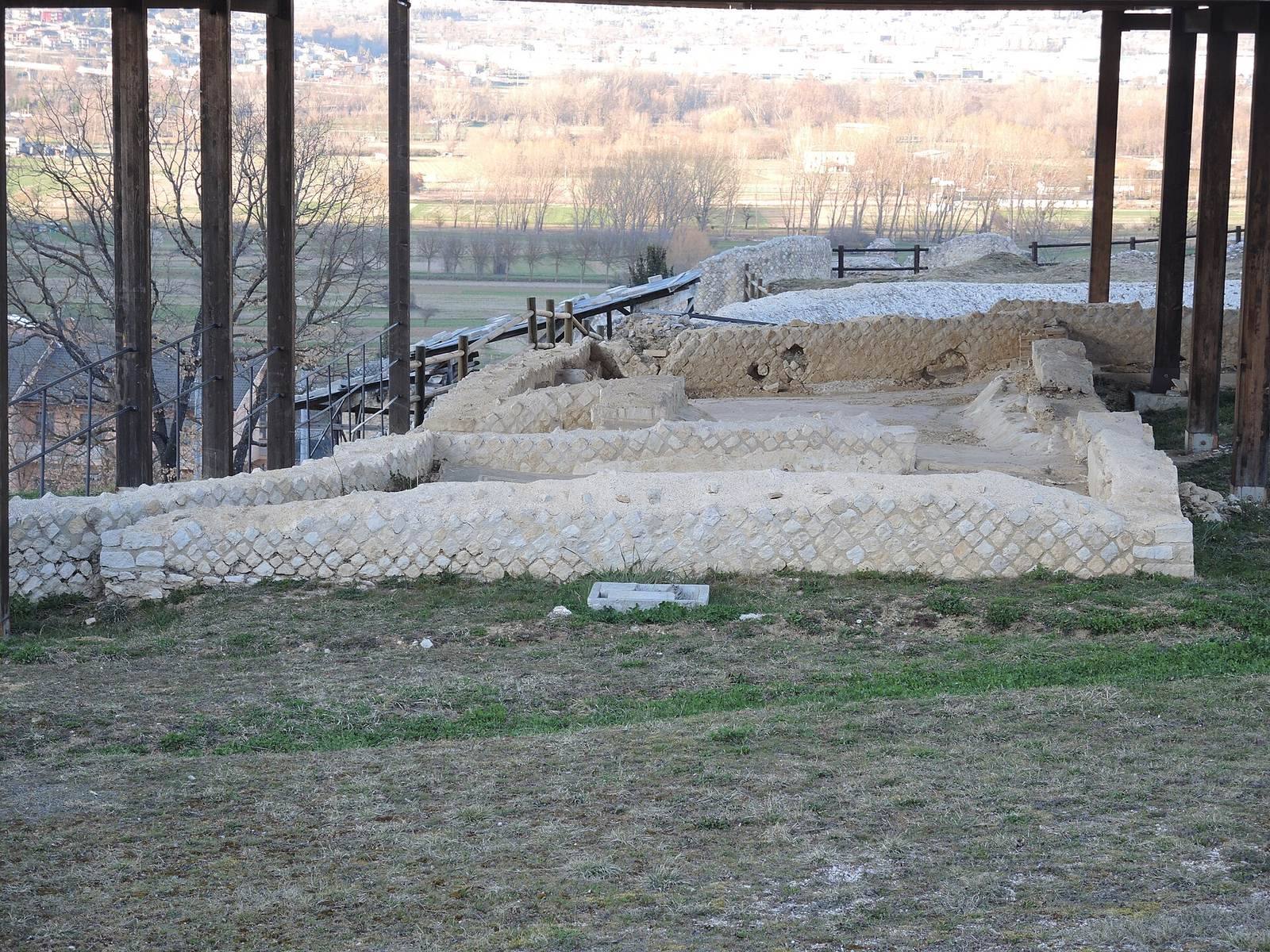
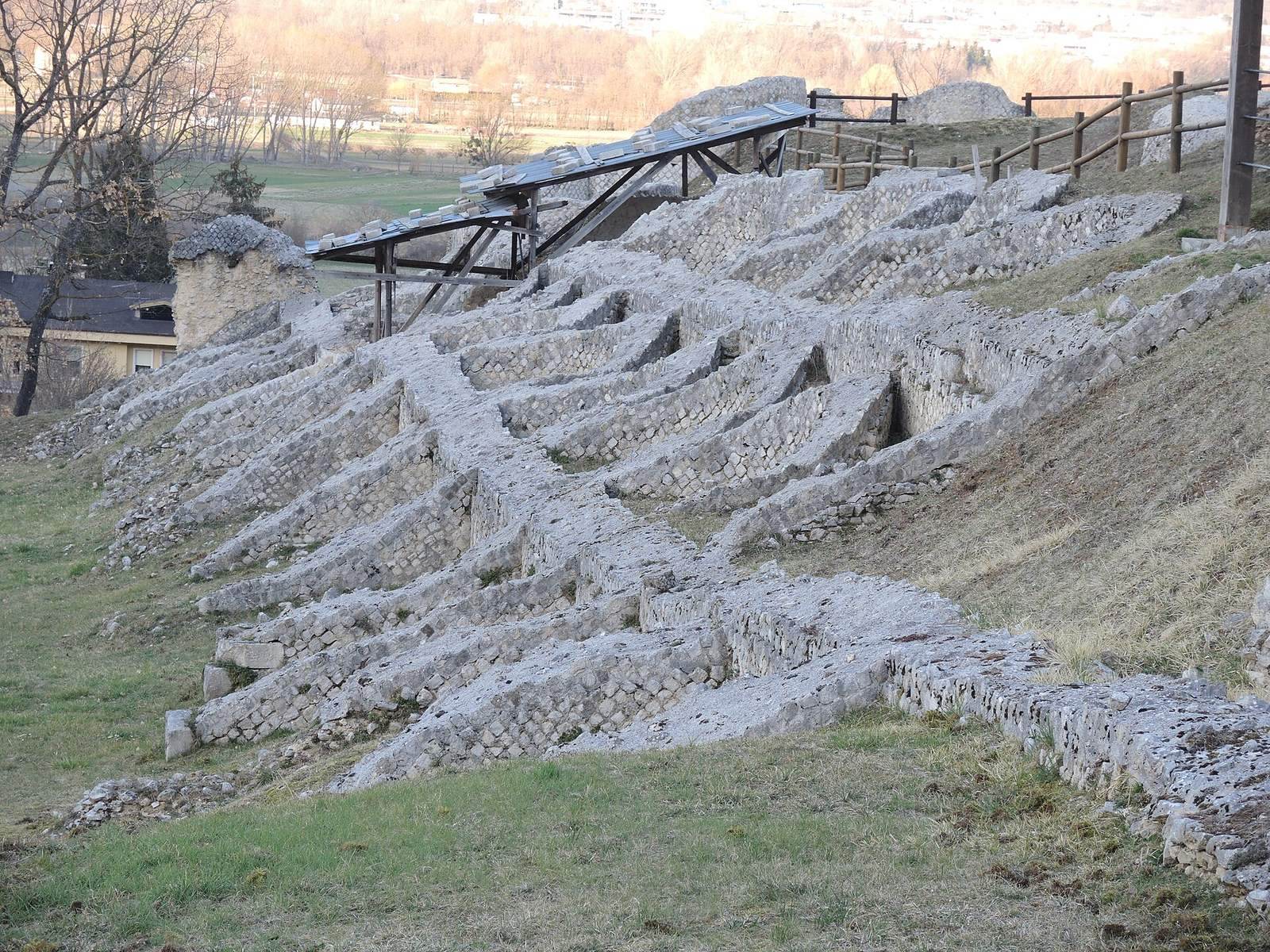
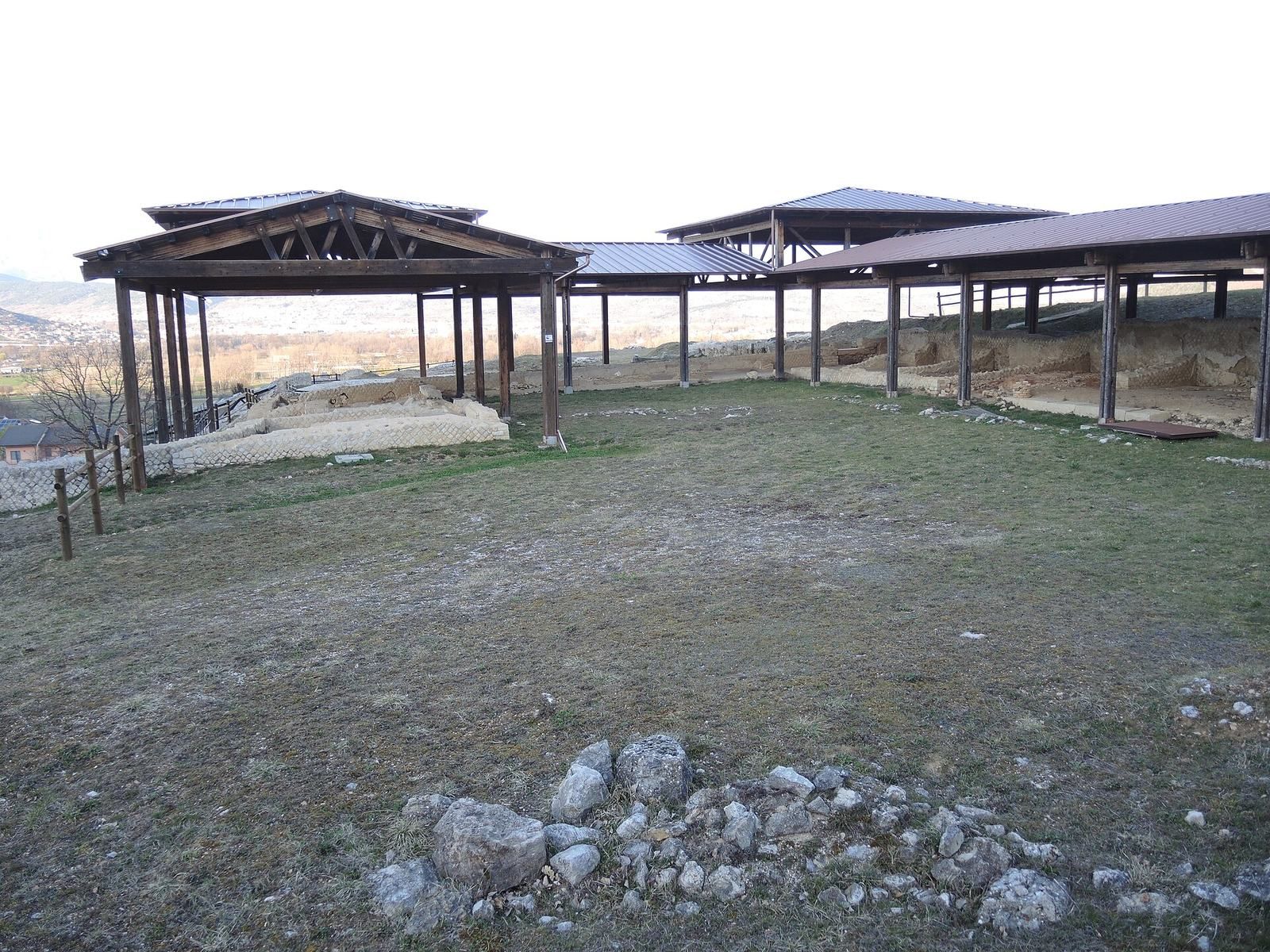
The archaeological area lies in the Aterno valley, near the southern edge of the L’Aquila basin and southeast of modern L’Aquila. Forcona stood on the Via Claudia Nova, which connected the Via Salaria and Via Valeria, and on the Tratturo Magno, a route used for seasonal livestock movement. Roman Aveia was nearby. The remains include structures from the settlement and its cathedral, along with buildings incorporated into later construction.
Archaeological remains
Former Cathedral of San Massimo
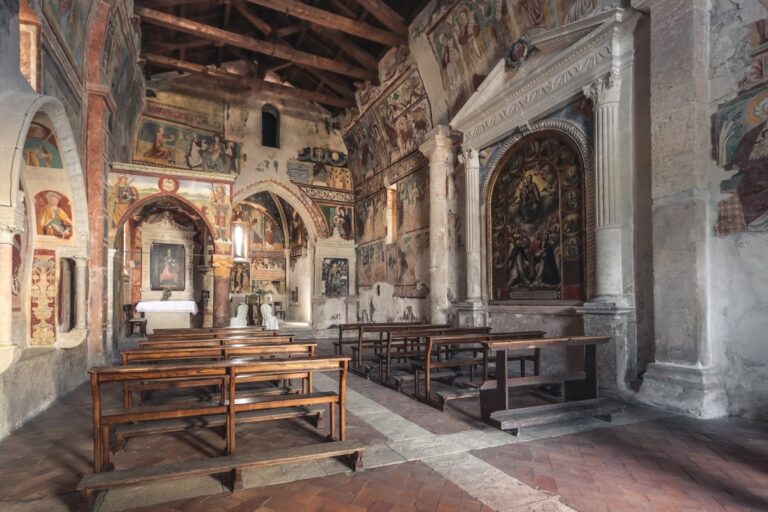
Remains of Forcona’s cathedral, dedicated to Maximus of Aveia, survive in the archaeological area. Roman structures lie beneath the former Cathedral of San Massimo.
Bath complex at Villa Oliva
Remains of a bath complex are incorporated into the foundations of the sixteenth-century Villa Oliva.
Temple of Feronia
A temple dedicated to Feronia, an Italic goddess also worshipped in Roman religion, was found and reburied in the 1970s.
Inscriptions and finds
The archaeological area includes numerous funerary and dedicatory inscriptions, as well as other finds associated with the late Republican settlement.