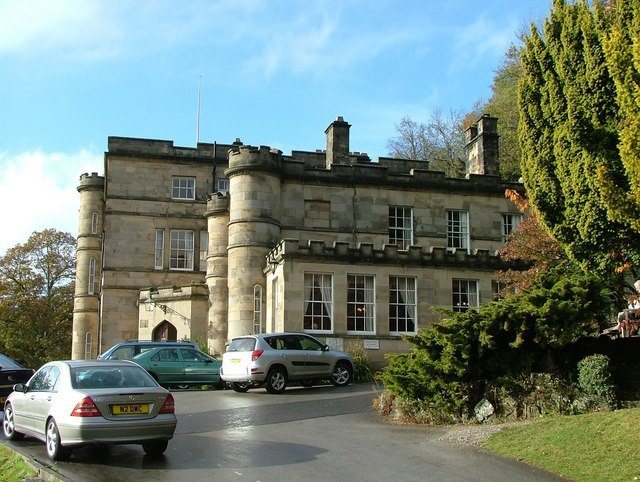
Codnor Castle: A Medieval Stone Fortress in England
Site at a Glance
- Rating
- 2.3
- Popularity
- Very Low
- Country
- United Kingdom
- Primary era
- Medieval
- Eras represented
- Medieval
- Civilizations
- English
- Site type
- Military
- Remains
- Castle
On this page11 sections
History
Codnor Castle is a medieval stone fortress in Codnor, United Kingdom. Its foundation is attributed to William Peverel, a Norman noble who held authority over the surrounding lands after the Norman Conquest, the Norman takeover of England in 1066. Construction of the stone castle is generally dated to the thirteenth century. The site later belonged to the Grey family, whose members held the hereditary title of Lords Grey of Codnor.
The Grey family
By 1211 the castle belonged to Henry de Grey, a descendant of the Norman knight Anchetil de Greye. Henry’s son Richard settled at Codnor and served Henry III, king of England from 1216 to 1272. Richard and his brother John served the king in the Holy Land. John later distinguished himself in the Scottish wars and, with William D’Eincourt, was assigned command of the knights of Derbyshire and Nottinghamshire in case of invasion.
The last Grey baron of Codnor, Henry, was a philosopher and alchemist. Henry IV, king of England from 1399 to 1413, licensed him to practise alchemy, a premodern pursuit that included attempts to turn base metals into precious ones. Henry died around 1526 without a legitimate heir. Some of his lands passed to his illegitimate sons, Henry and Richard, and his widow, Katherine Stourton; the remainder went to his aunt Elizabeth Grey.
The Zouches and later owners
Elizabeth Grey married Sir John Zouche in 1429. A younger son of the fourth Baron Zouche of Harringworth, Sir John served three times as High Sheriff of Derbyshire, a senior royal official in the county. The castle remained in the Zouche family for about two centuries.
In 1634 the Zouches sold the estate to Archbishop Neile and his son, Sir Paul, and emigrated to Virginia. Richard Neile, a descendant, sold the castle estate to Sir Streynsham Master in 1692. The sale included Heanor, Loscoe, Langley and the manor of Codnor Park.
Decline and later history
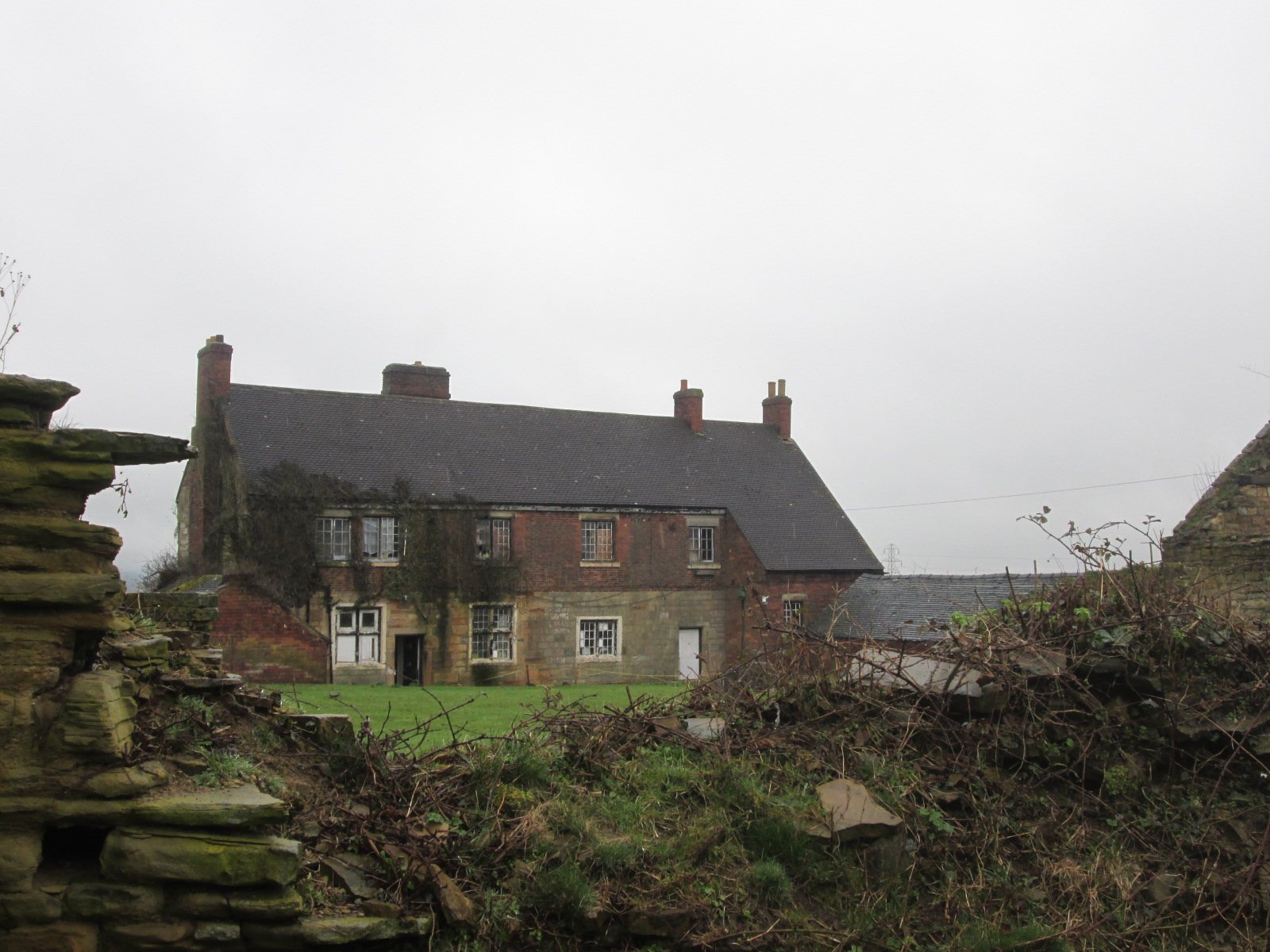
Master, who served as High Sheriff of Derbyshire, lived at the castle by 1712 and is regarded as its last resident. The building was already in disrepair during his residence. After his death in 1724 it deteriorated further, and material from the ruins was used to build at least six farms and their outbuildings.
Codnor Castle is a Scheduled Monument, a legally protected historic site, and a Grade II listed building, a category for buildings of special architectural or historic interest. In 2008 it was recorded as a Building at Risk, with complete ruin considered a threat.
Remains
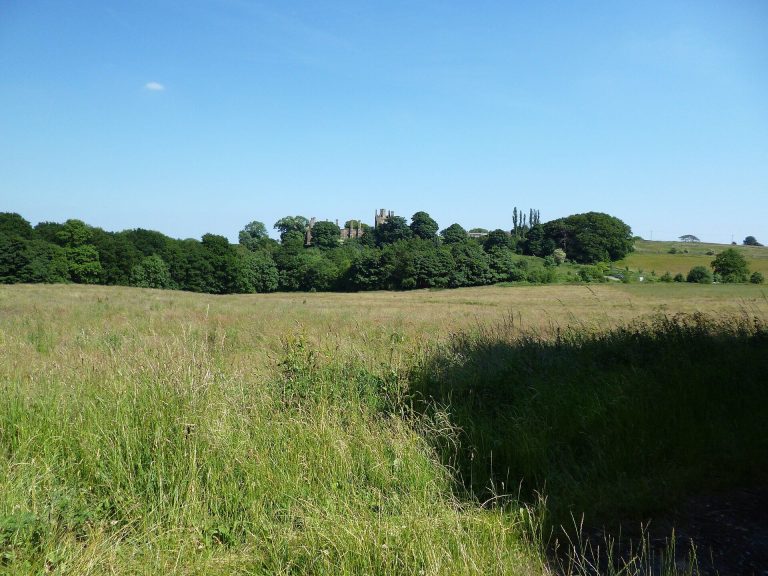
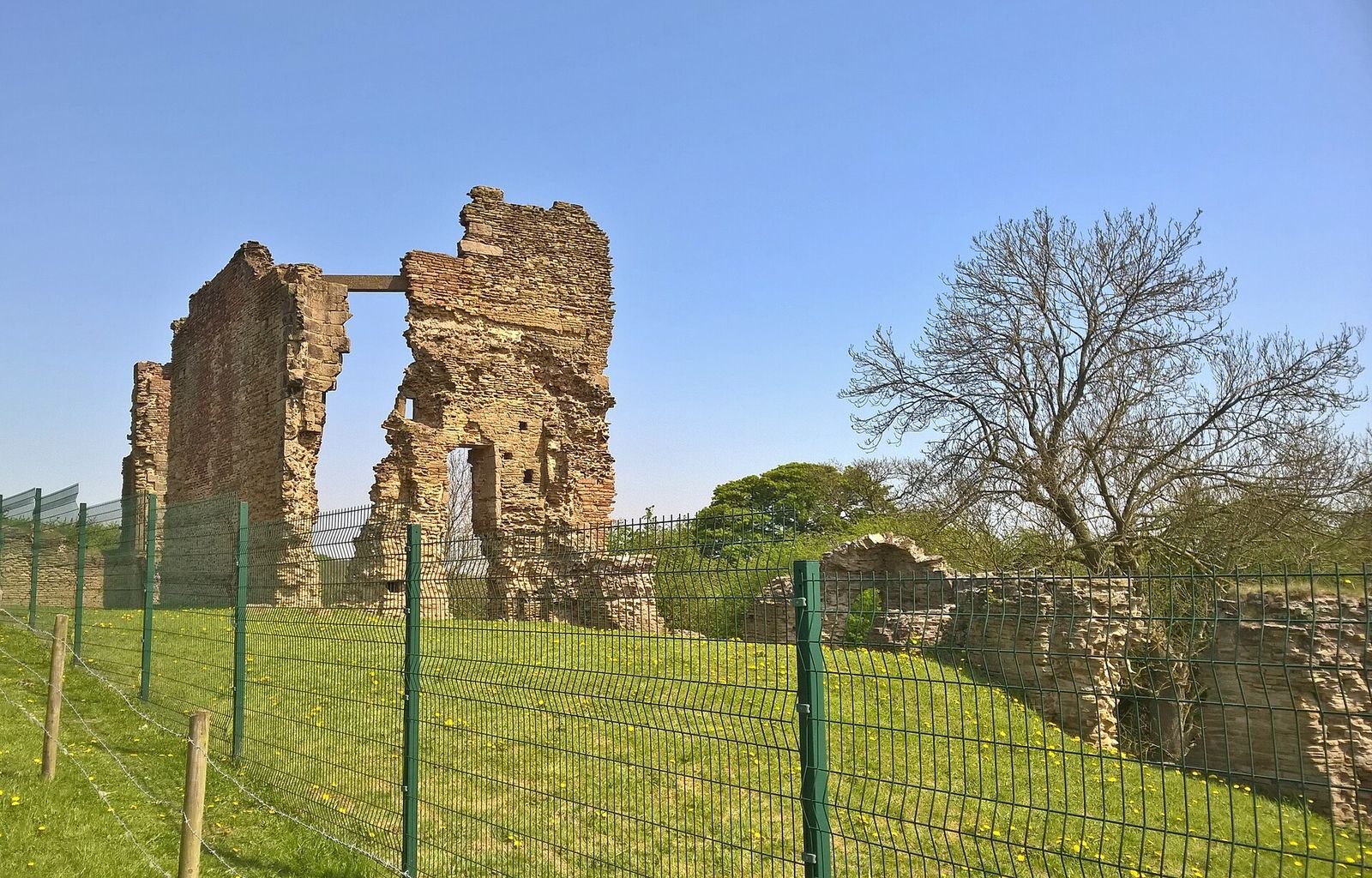
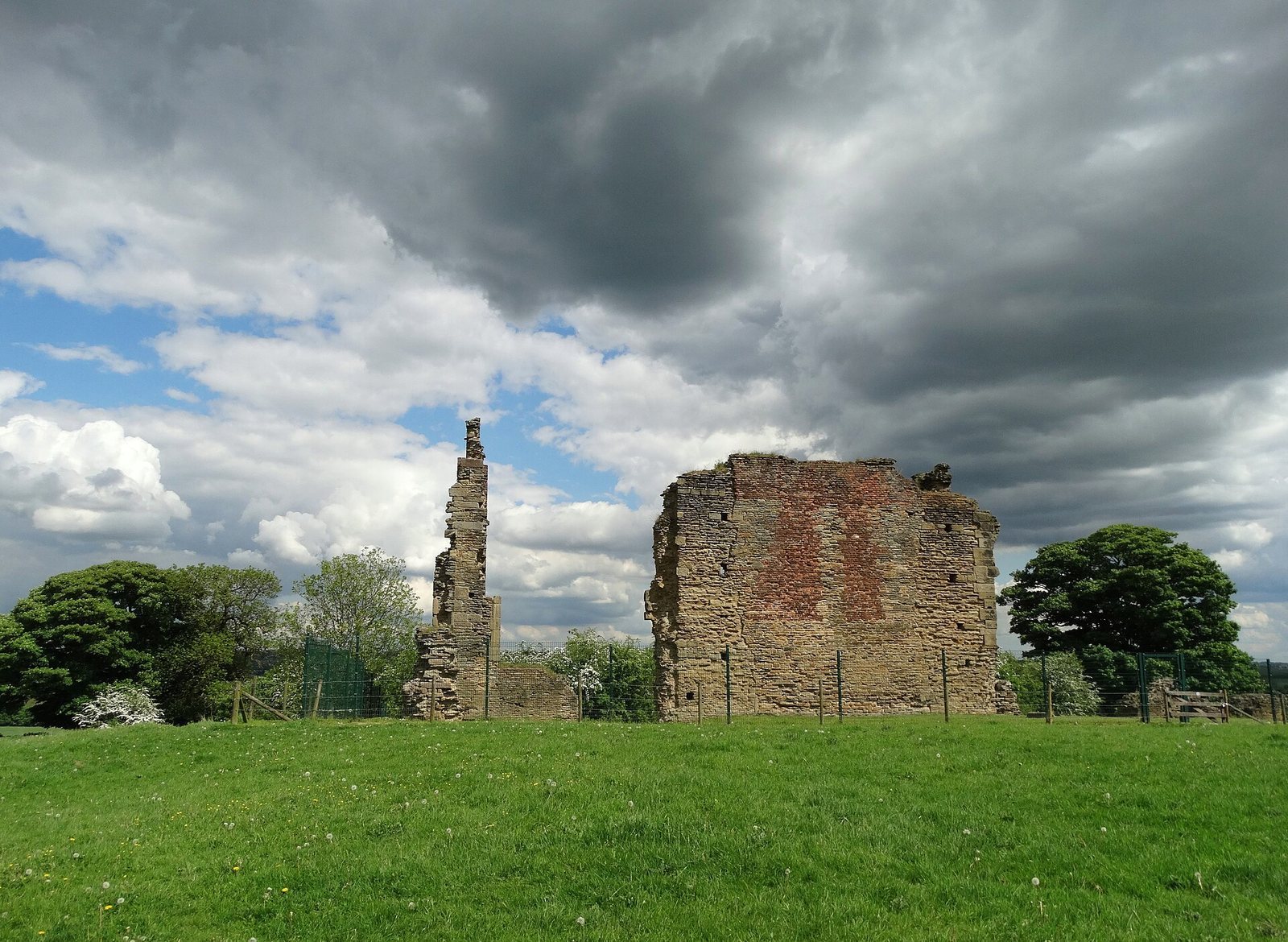
Codnor Castle was a stone fortress centered on a principal fortified tower and enclosed courtyard, with a later outer enclosure at a lower level. Its fragmentary remains stand on elevated ground overlooking the Erewash valley and the counties of Derbyshire and Nottinghamshire, with a broad plain to the east.
Plan and defenses
Keep and defensive walls
The surviving fragments indicate a three-storey keep, the castle’s principal fortified tower, together with a substantial curtain wall enclosing the defended area, a ditch and round towers flanking the defenses. Traces of narrow openings for archers remain in parts of the outer walls. The walls and foundations show that the castle was once a substantial structure.
Courtyards and outer bailey
A large, roughly square courtyard lay south of the castle, with two entrances leading from it into the fortress. On the west side, a fortified courtyard had large round towers with battlements. The outer bailey, an additional enclosed courtyard, was built later and lay at a lower level.
Moat and surviving evidence
Moat and tree-lined bank
The castle originally had a deep moat. A double row of trees grew along its eastern bank; the trees were felled around 1738.
Surviving fabric and finds
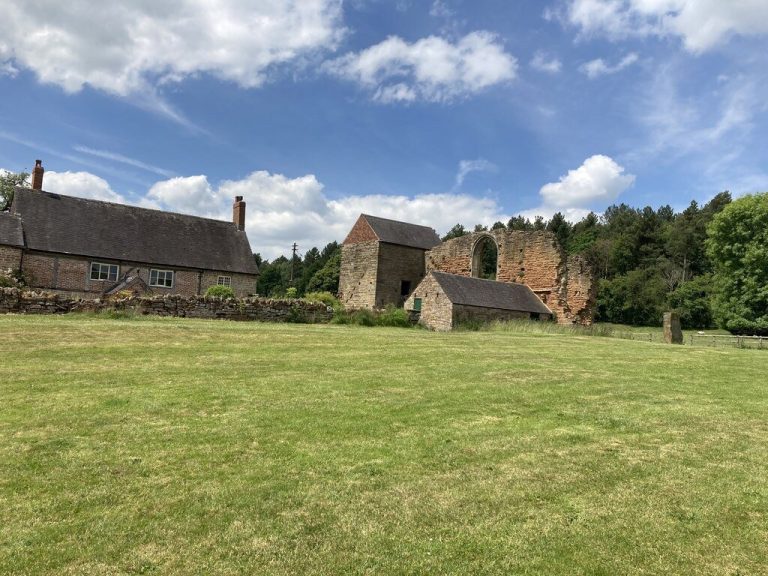
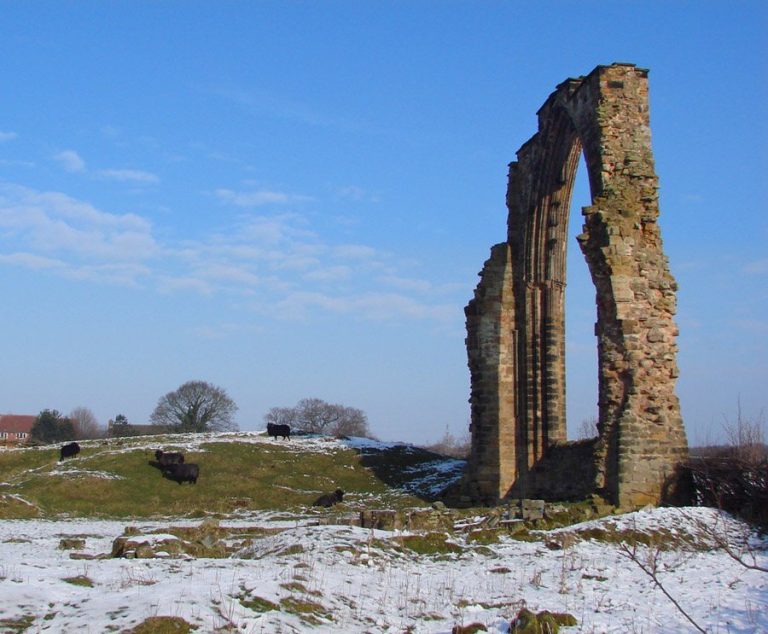
Only a small portion of wall and a dovecote, a structure for housing pigeons, are identified among the surviving remains. The ruins are fragile, and scaffolding supports some standing sections of wall. During an excavation around the castle in June 2007, a well-preserved gold noble, a medieval English coin of Henry V, was found in the moat. It is now displayed at Derby Museum and Art Gallery.