Castello Cantelmo: A Castle in a Regional Defensive Network
Site at a Glance
- Country
- Italy
- Primary era
- Medieval
- Eras represented
- Medieval, Modern
- Civilizations
- Italian
- Site type
- Military
- Remains
- Castle
On this page5 sections
History
Early castle and Norman lordship
Castello Cantelmo is a castle on Guardiola Hill above the Gizio Valley and Valle Peligna in Italy. It is thought to have taken shape around the 11th century around an existing lookout tower, part of a regional defensive network that also included castles at Popoli, Pacentro, Raiano, Vittorito, Prezza, and Anversa. Its precise foundation date is uncertain.
Under Norman rule in the late 12th century, the castle belonged to Oddo, son of Oddone di Pettorano. The Normans, a people of Scandinavian origin who established rule in southern Italy, governed through a feudal system in which a fief was territory held under a lord. Oddo’s fief extended from the Gizio Valley to the Cinquemiglia plateau, and from the Sangro Valley to Ateleta.
Later ownership and museum conversion
The castle’s transfer to the Cantelmo family is dated to 1310 and associated with the aftermath of the Battle of Benevento, fought in 1266. The grant is attributed to Charles I of Anjou, a ruler of southern Italy who died in 1285. These dates are inconsistent: both the battle and Charles’s death preceded the stated transfer. The Cantelmo family held the fief until 1750, when it passed to the Tocco family of Montemiletto, who retained it until 1806.
In 1992, while the castle belonged to the municipality of Pettorano sul Gizio, the L’Aquila Superintendency for Architectural Heritage carried out renovation and consolidation work, adapting the building for use as a museum and exhibition facility.
Remains
Castle layout and surviving features
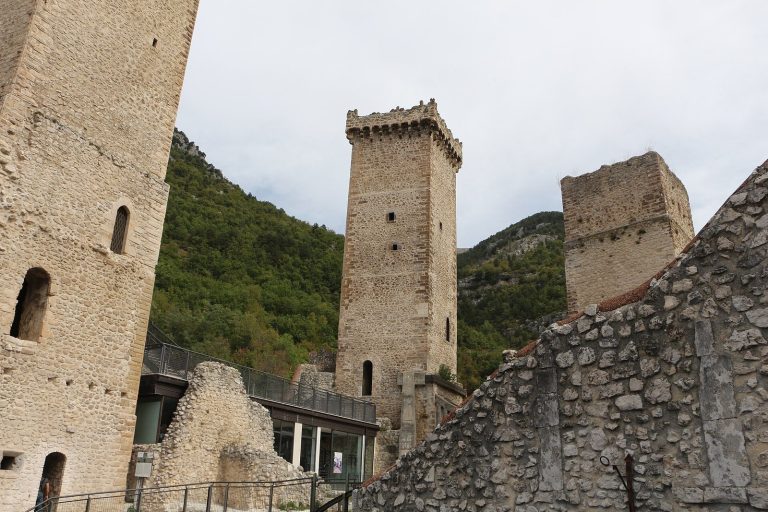
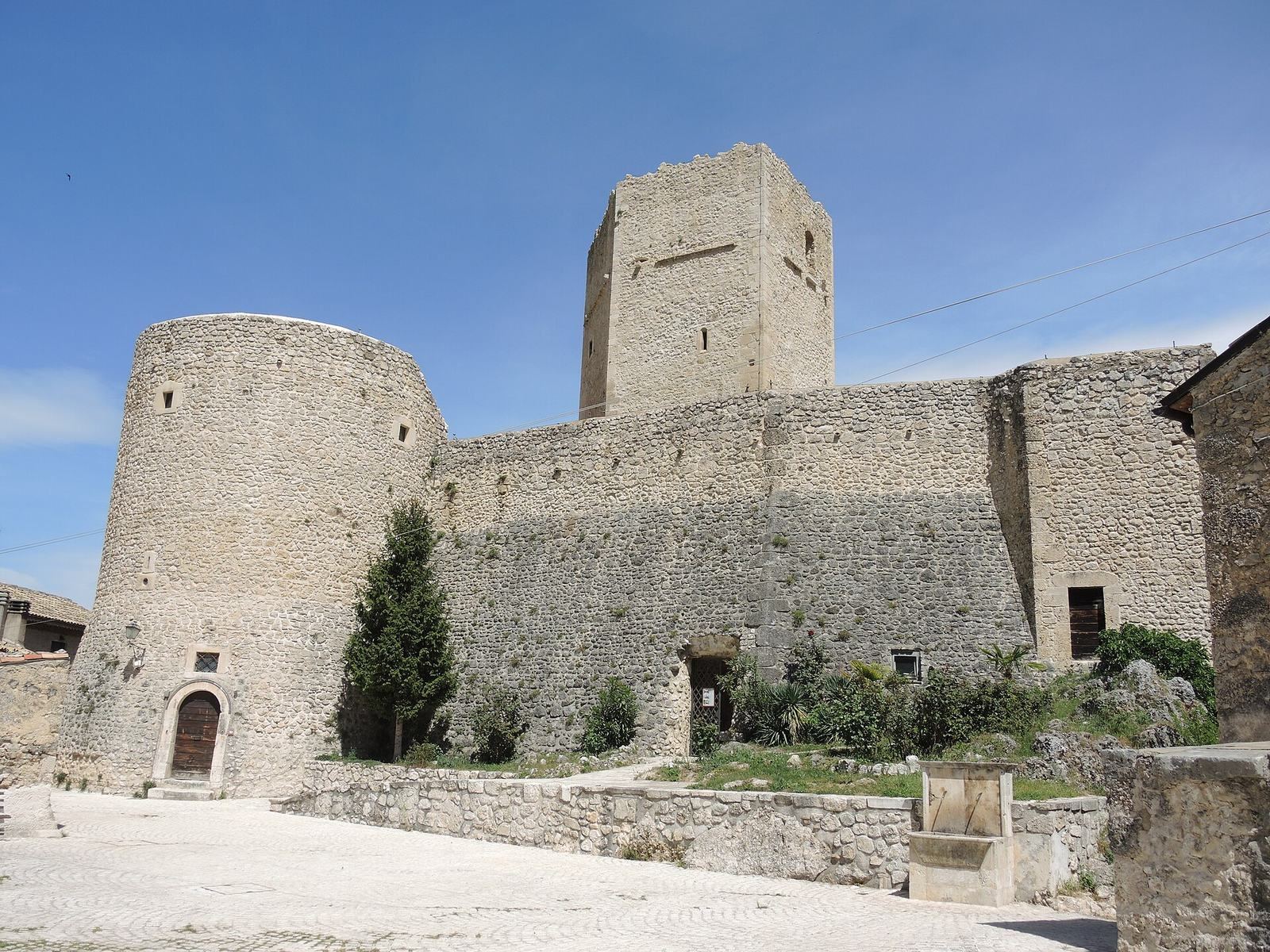
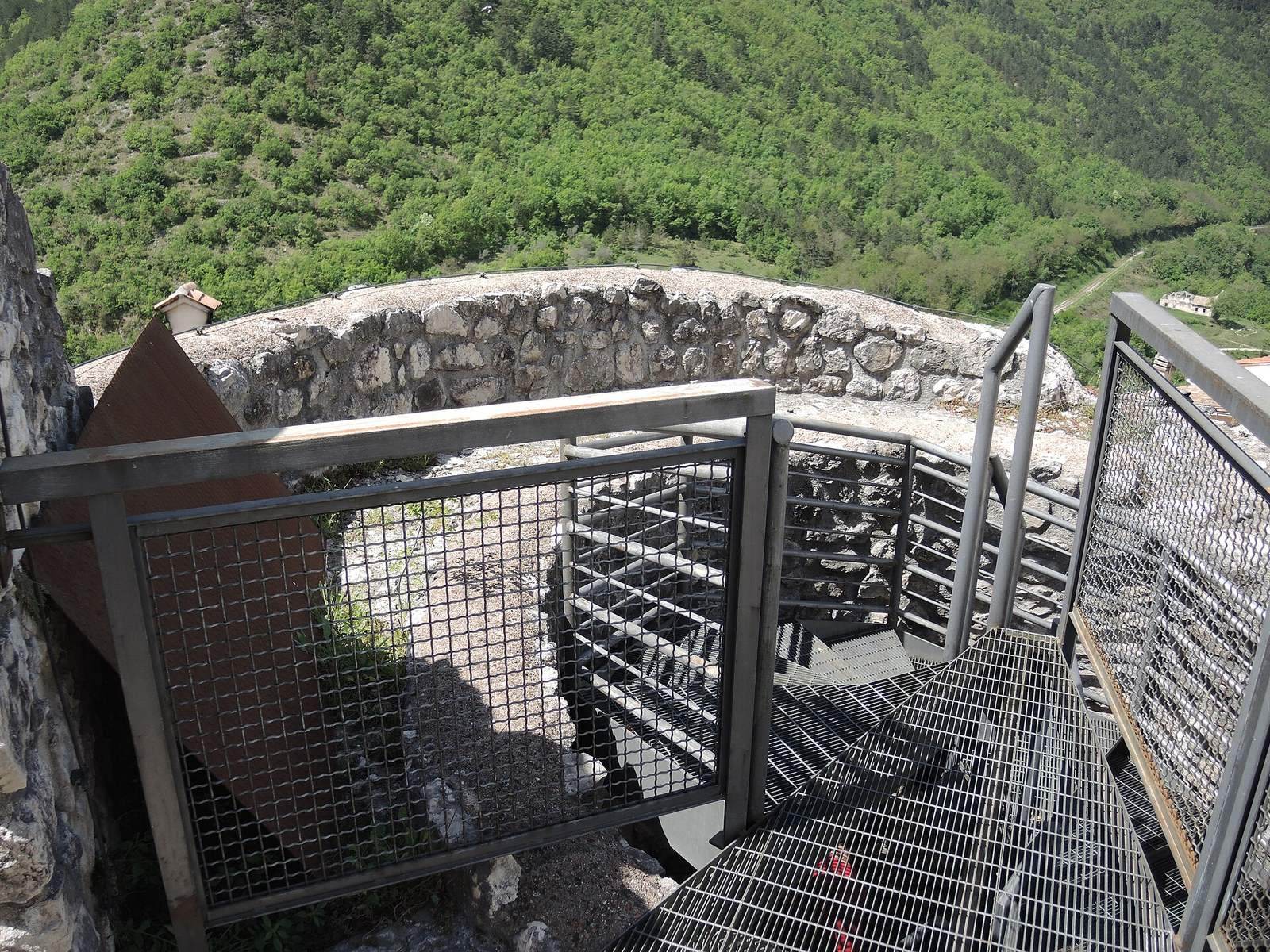
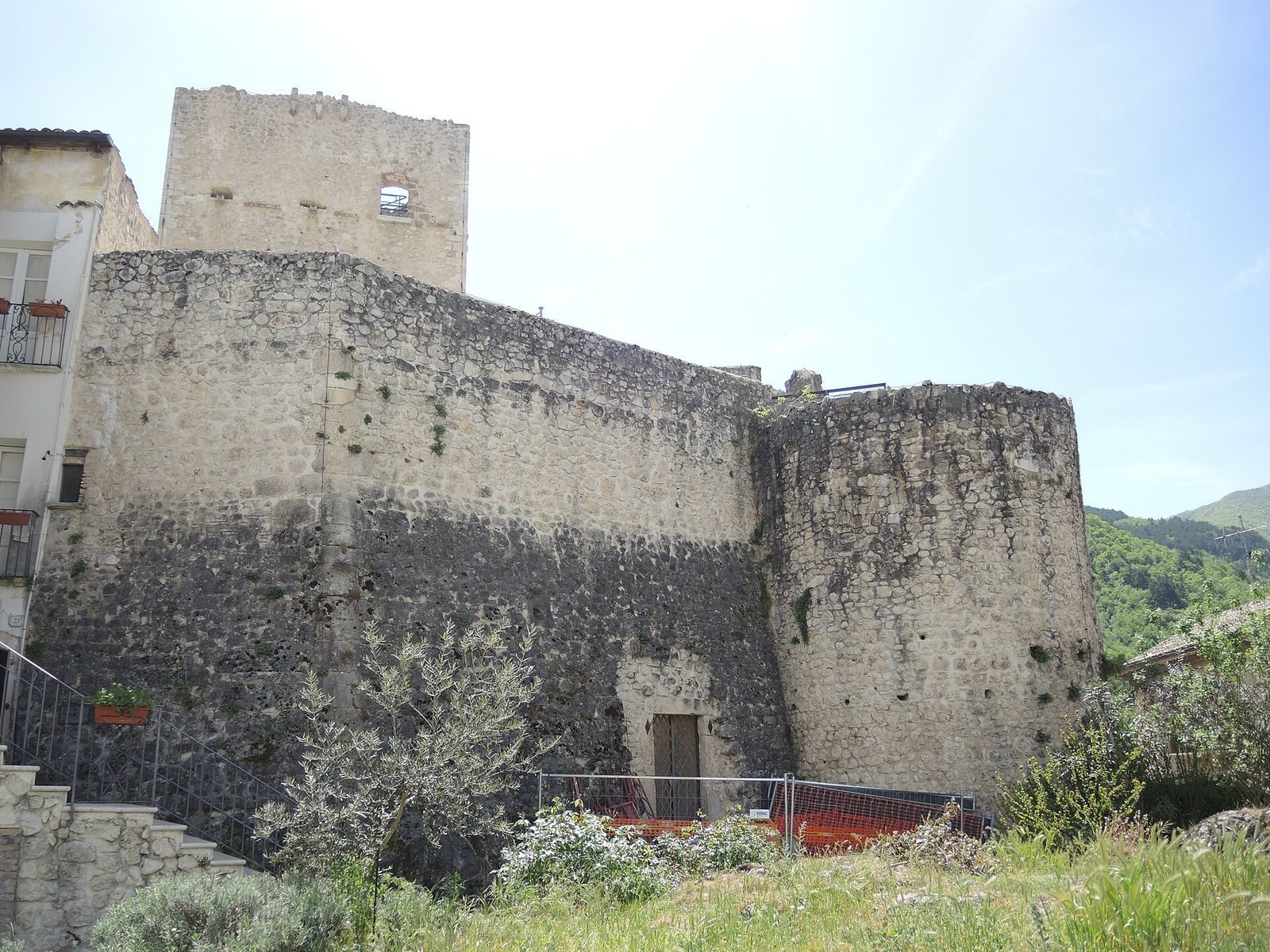
The castle occupies Guardiola Hill and has an irregular plan, with perimeter walls built above a continuous sloping defensive base and pierced by small loopholes. Cylindrical towers mark the northwest and southwest corners. At the northeast corner, the structure is incorporated into private residences, while remains of a square tower survive at the southeast. The oldest part is a central pentagonal tower, whose elevated entrance is reached by a spiral staircase. Inside, later remodelling created a conference hall and several exhibition rooms, including one devoted to the history and anthropology of polenta rognosa, a traditional one-course dish.