Wetzikon-Robenhausen: A Neolithic Lakeside Settlement in Switzerland
Site at a Glance
- Popularity
- Low
- Country
- Switzerland
- Primary era
- Stone Age
- Eras represented
- Stone Age
- Civilizations
- Unclassified
- Site type
- Domestic
- Remains
- House
On this page15 sections
History
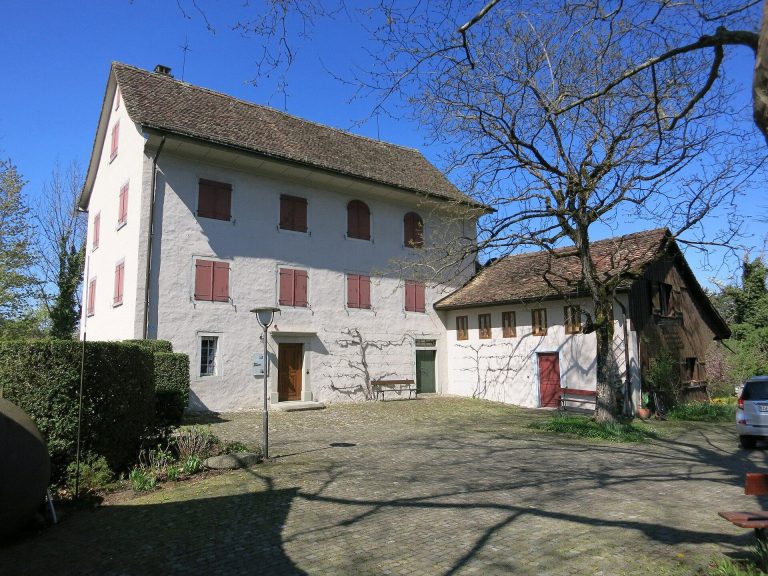
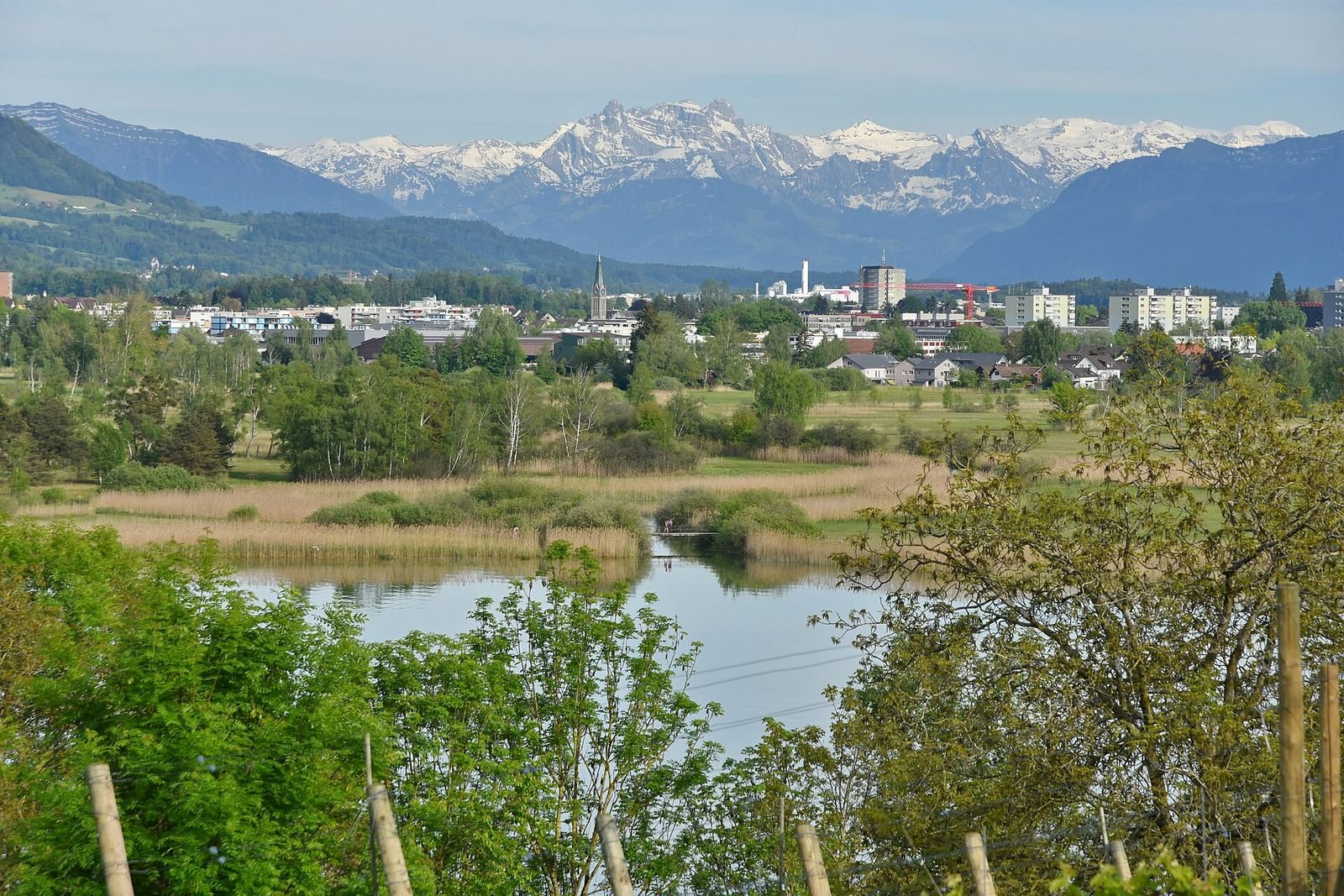
Wetzikon-Robenhausen is a prehistoric lakeside settlement in the Robenhausen wetland on Lake Pfäffikon, within Wetzikon, Switzerland. People have inhabited the lake’s southern shore for more than 10,000 years. Mesolithic hunter-gatherers made storage bins in the area, and Neolithic communities later established permanent settlements along the shore. The remains at Wetzikon-Robenhausen reveal successive occupation and rebuilding.
Prehistoric occupation
Archaeologists classify the lakeside sequence through four material cultures: Cortaillod, dated to 4400–3700 BCE; Pfyn, 3700–3300 BCE; Horgen, 3300–2700 BCE; and Corded Ware, 2700–2400 BCE. The last is named for pottery decorated with impressions made by pressing cord into the clay. Most finds from Wetzikon-Robenhausen are assigned to the Pfyn culture, although the transition between late Cortaillod and early Pfyn is difficult to distinguish. Some researchers regard early Pfyn material as closely related to late Cortaillod.
Fire destroyed the settlement at least twice. After the first destruction, residents rebuilt it. A second fire ended that phase, and a smaller community then occupied the earlier ruins until around the beginning of the Bronze Age, a period named for the growing use of bronze. The settlement was eventually abandoned. Increasing peat growth may have made the lakeshore too swampy to cross easily, while bronze tools may have encouraged people to move to firmer ground.
An excavation at Tösstalstrasse revealed a settlement linked to the Bell Beaker culture, a prehistoric tradition named for its distinctive bell-shaped pottery. Two individual finds from the area belong to the Middle European Bronze Age.
Excavation and recognition
Jakob Messikommer, a Swiss archaeologist who investigated prehistoric lake settlements, excavated at Robenhausen between 1856 and 1858. He identified two settlement layers separated by peat and interpreted them as evidence of rebuilding. His work also uncovered traces of weaving and food production, among other activities. A memorial stone and an oak in the Robenhausen reed commemorate his investigations.
Early interpretations treated the artifacts as evidence of one long occupation. In the late nineteenth and early twentieth centuries, artists also produced idealized images of pile dwellings that went beyond the available evidence. One painting drew more on Polynesian imagery than on the Robenhausen site. Debate about whether pile dwellings stood on dry ground, in shallow water, or above deeper water has since given way to the view that these buildings occupied a range of water settings.
In 2011, Wetzikon-Robenhausen became one of 111 component sites in UNESCO’s Prehistoric Pile Dwellings around the Alps World Heritage property; 56 of the component sites are in Switzerland. UNESCO, the United Nations Educational, Scientific and Cultural Organization, recognizes sites of outstanding universal value through its World Heritage program. Wetzikon-Robenhausen is also classified as a Class A object of national importance in Switzerland’s cultural-property inventory. Federal protection under the 1966 Federal Act on the Protection of Nature and Cultural Heritage makes unauthorized research and deliberate collection of finds criminal offenses.
Remains
The settlement lies within a wetland of about two square kilometres, while its archaeological area is described as roughly ten hectares. Its rectangular timber houses were pile dwellings, buildings raised on posts over wet ground, set above mud at the lake bed.
Housing
Piles and layout
Houses measured about six to seven metres in length and had floor areas of approximately 40 square metres. The best-preserved structural evidence consists of piles made from logs 12–18 centimetres across. Builders cut and shaped the timber with stone axes, repeatedly burning and chopping the ends to form points about 30 centimetres long. They left bark on the upper portions, and mud around the driven piles formed an airtight seal. Longer supports within the pile grid held the gables.
Walls and interiors
Walls consisted of roundwood about four to five centimetres thick, coated with a thin layer of clay mixed with plant matter, grass, and straw. Small wall openings provided light and let smoke escape. Inside, flat floors were cushioned with moss, beech leaves, and straw. Around each hearth, a thicker layer of clay and flat sandstone slabs protected the floor from fire.
Rebuilding and spacing
Charred piles and replacement posts beside them preserve evidence of repair and rebuilding. Where fire had spared the underground foundations, builders could reuse parts of them; elsewhere, they set new piles alongside burnt ones, sometimes extending the house footprint. The houses stood close together, and their roofs may have met. This arrangement could have offered shelter from cold winds and snow, though close spacing also increased the chance of fire spreading. Each house had its own loom, provisions, and mill.
The wooden door
An emergency excavation recovered a wooden object first thought to be a chest lid or piece of wall, then identified as a door. Radiocarbon dating places it roughly 4,700 to 5,300 years ago. The object is made from sapwood, the younger wood beneath a tree’s bark, and was probably flattened with hewing tools. Holes along one edge may have allowed it to be tied to a doorframe with leather or flax cord. It is displayed in the Swiss National Museum’s “Archaeology in Switzerland” exhibition.
Tools and manufacture
Finds include longbows made from yew, stone and stag-horn axes, and tools made from bone, tusk, and flint. Flint served for spear and arrow points, saws, and small knives; a flint-tipped lance on a long wooden shaft may have been used as a secondary weapon. Some third-layer axes were made from saussurite gabbro, an altered coarse-grained rock, or nephrite, a jade mineral. A wooden drilling frame used a cord-driven spindle and hollow bits, with sand as an abrasive for shaping stones. Messikommer also recovered an unusual dugout, a carved wooden knife, scoops, a yoke, and a flail. Natural pitch or asphalt helped attach blades and axe heads to wooden handles.
Pottery
Potters mixed clay with sand and shaped vessels by hand, making cups, bowls, and spoons, as well as later jugs and larger containers. They formed pots by coiling or hand-shaping the clay and could fire them in earth pits or over open flames at about 400–650°C. Some charred vessels contained food remains, pigments, and sand. Because settlement fires could also have affected pottery, it is uncertain whether all vessels were deliberately fired.
Textiles
The site’s organic remains include textiles and parts of a Neolithic loom, alongside rope, twine, net fragments, baskets, and unspun flax. Analyzed threads were made chiefly from flax, young tree bark, and marsh reeds. Fibres were probably gathered in bundles, combed, and spun on wooden spindles. Plain-weave fabric, in which threads pass alternately over and under one another, survives among the textile finds.
Animal remains and subsistence
Livestock
Animal remains indicate the keeping of dogs, cattle, sheep, goats, and pigs. Cattle included small, short-horned peat cattle and larger animals identified as aurochs. Pens near the houses may have formed part of the raised structures; branches, leaves, and straw lined their floors, where dung accumulated. Livestock probably grazed in fenced lakeside meadows in warmer months and returned to the settlement at dusk.
Wild animals and fish
Red deer were an important wild resource, and their bones served as tools. Residents also hunted wild boar; cut marks on fox bones indicate that fox meat was eaten. Lake Pfäffikon supplied fish, especially pike, with some remains suggesting fish could weigh as much as 20 kilograms. Other identified species include perch, carp, ide, chub, rudd, and Atlantic salmon.