Street House Anglo-Saxon Cemetery: A Seventh-Century Burial Ground
Site at a Glance
- Popularity
- Medium
- Country
- United Kingdom
- Primary era
- Medieval
- Eras represented
- Iron Age, Medieval
- Civilizations
- Anglo-Saxon
- Site type
- Burial
- Remains
- Necropolis
On this page19 sections
History
Street House Anglo-Saxon cemetery is an early medieval burial ground in Newcastle upon Tyne, United Kingdom, established by an Anglo-Saxon community in the second half of the seventh century. It occupied a much older enclosure and was used for a short period, perhaps about 30 years or one generation. Its richly furnished bed burial and evidence of connections beyond the local region offer insight into a community living during a period of religious change.
An older landscape
The cemetery lay within an enclosure dating to about 200 BC, amid a landscape with much earlier prehistoric monuments. The old enclosure was still visible when the burial ground was established. Reusing it may have connected the cemetery with a past that remained part of the surrounding landscape.
A Northumbrian burial community
The cemetery was laid out in what appears to have been a single episode, then used for a relatively brief time. At the time, the northern kingdoms of Deira and Bernicia had united as Northumbria, a major Anglo-Saxon kingdom. Objects buried with the dead point to connections with southern and eastern England: some jewellery and beads have parallels in Kent and East Anglia, while two much older coins came from the Corieltauvi, an Iron Age people of the East Midlands.
The burial of a woman on a bed was central to interpretations of the cemetery. Her identity is unknown, but the amount and quality of her jewellery indicate very high status. She may have been an aristocrat or princess, and perhaps came from outside the region. Archaeologists have proposed that she and some of those buried nearby migrated from the south, where bed burials were more familiar. Steve Sherlock suggested that she was buried first and that other graves were arranged around hers; a probable male burial nearby may also have been connected to her. Her status may have helped establish the cemetery, which may have fallen out of use after the last members of its community died.
The cemetery’s religious character is uncertain. East–west grave alignment and other features have been read as signs of Christian practice, while the bed burial and plain triangular grave markers have been associated with older, non-Christian customs. The Conversion Period describes the gradual spread of Christianity among Anglo-Saxon communities, when older customs continued. One interpretation sees the cemetery as a mixture of Christian and non-Christian practices; Christian burial forms may also have become local social conventions. Sherlock considered the bed burial strongly pagan and proposed that the woman may have been at the centre of a local cult alongside Christian worship. Another view links the coexistence of rites to Pope Gregory the Great’s advice in 601 to adapt some existing shrines and observances for Christian use. The late seventh-century burial of Eormengyth, a Christian Kentish royal woman placed in a traditional barrow, has been cited as a parallel.
Discovery and later work
Aerial photographs revealed a rectangular enclosure near prehistoric monuments at Street House Farm. Archaeologist Steve Sherlock returned to investigate, and a ten-day excavation in September 2004 initially treated the site as Iron Age or possibly Romano-British. A later survey detected a large Iron Age roundhouse. Excavation in July 2005 then uncovered Anglo-Saxon graves, with 30 found that season and 12 more in 2006. A survey in 2007 brought the total to 109. Work in 2010–11 examined nearby prehistoric monuments and two areas within the enclosure; an excavation in 2012 identified a Roman villa south of the cemetery.
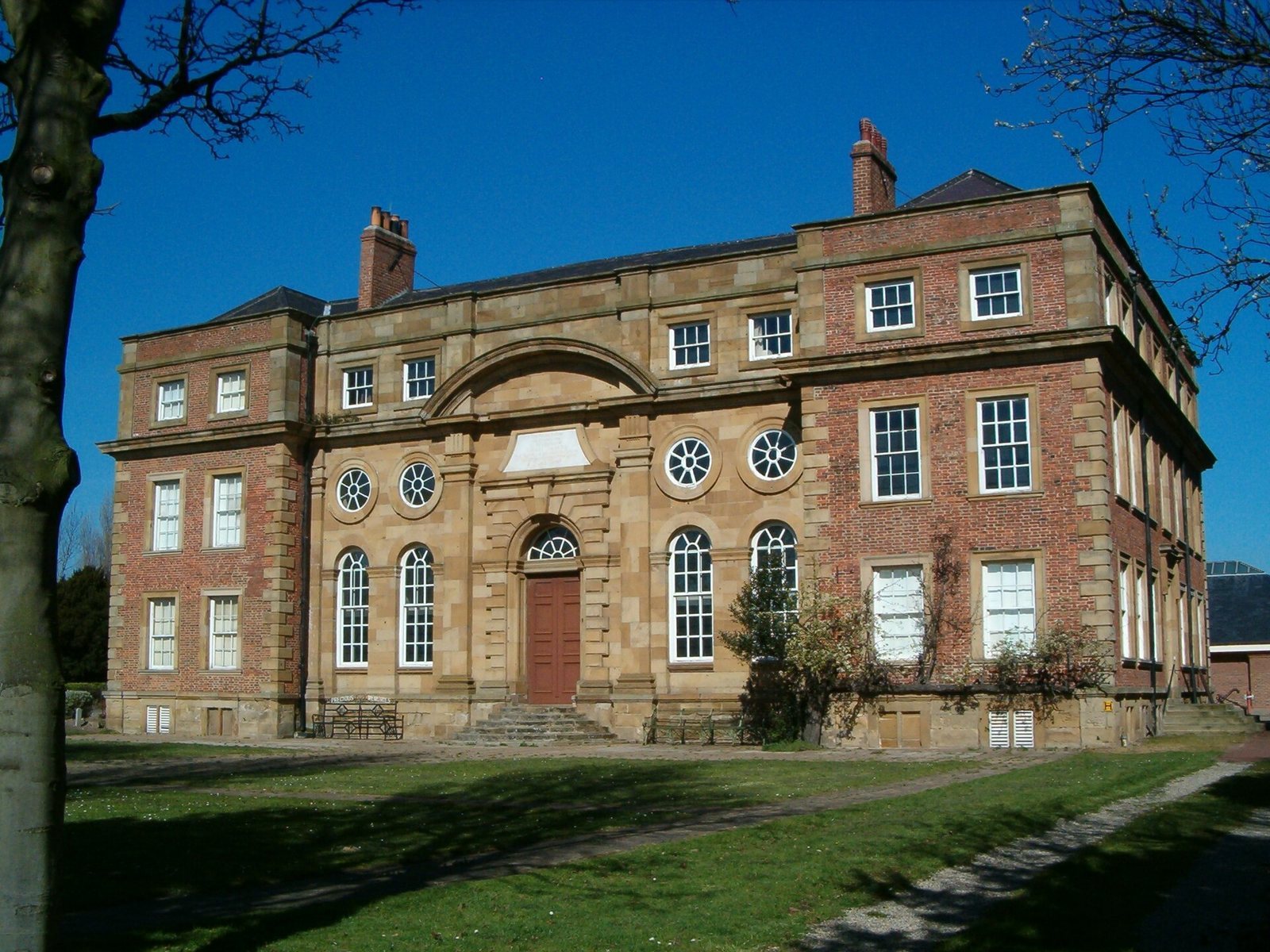
After a coroner’s inquest in October 2008, the finds were declared treasure under the Treasure Act 1996. The landowner waived his share of their assessed value, allowing Kirkleatham Museum to acquire the collection in April 2009. Specialists at Durham University and York Archaeological Trust conserved the finds, which have been displayed at the museum since 2011.
Remains
The cemetery occupied a nearly square area measuring about 36 by 34 metres within an Iron Age enclosure. Its carefully arranged graves formed a larger square plan, with entrances and buildings set among the burial areas. The landscape also preserves evidence of earlier prehistoric structures and burial monuments.
Prehistoric features
Long cairn and barrow
An Early Neolithic long cairn, an elongated stone burial mound, and an associated mortuary structure date to about 3300 BC. An Early Bronze Age round barrow, a circular burial mound, was later built over them. The long cairn was excavated in three seasons from 1979 to 1981.
Street House Wossit
Dating to about 2200 BC, the structure nicknamed the Street House Wossit was a segmented circle of 56 wooden posts about 8 metres across. Two D-shaped posts stood at its centre within a raised stone bank. After a short period of use, the structure was dismantled and its posts burned. Its purpose is uncertain, though it may have had religious or cultic importance.
Iron Age enclosure
The cemetery was established within the rectangular enclosure, which dates to about 200 BC. A survey detected a large roundhouse at its centre, and later excavation revealed three roundhouses and several ditches. An Iron Age roundhouse had occupied the cemetery’s north-west quadrant before the graves were laid out.
Cemetery plan and buildings
Burial ground layout
Most graves followed a planned square arrangement, including double rows along the north and south sides. The main opening was on the south, while a smaller gap to the east provided another entrance or exit. The apparent main entrance aligned with the older enclosure’s entrance. Graves were generally about 2.5 metres apart from east to west and 2 metres apart from north to south, and their arrangement avoided cutting into other graves. About 22 per cent did not follow the overall square plan.
A larger mound stood a short distance from the central bed burial and was partly surrounded by a ring ditch, a circular trench around a mound. It may have served as a mausoleum or memorial for an important person. The bed burial and several graves in the north-east quadrant formed an arc around it, and the mound may have been a focal point in the cemetery.
Buildings within the cemetery
Several buildings stood on the ridge crest, where they would have been prominent to travellers approaching from the south. Postholes mark an east–west rectangular building on the eastern side, possibly a chapel or shrine. A smaller building partly dug into the ground near the centre may have served as a mortuary chapel.
Graves and markers
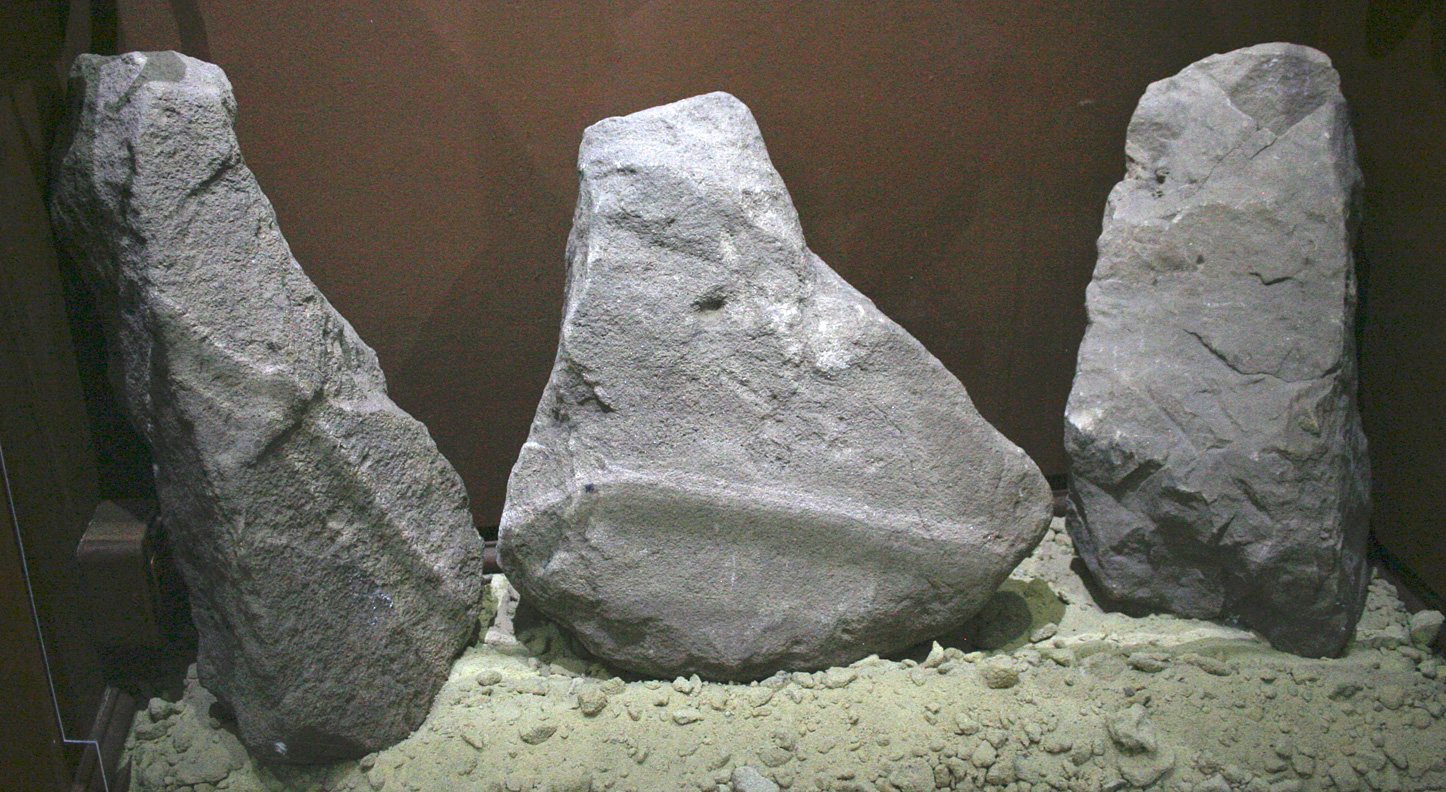
Graves were generally rectangular, with rounded corners and flat bases, measuring about 2 metres long, 0.8 metres wide and originally around 0.6 metres deep. The dead were buried clothed with personal possessions or objects given by mourners. Many graves may have been intended for women laid out fully extended; some were too short for an adult and may instead have held crouched burials. Plain triangular stones marked the end of some graves. Stakeholes cutting into some grave edges may relate to wooden posts or structures associated with burials.
Objects from the graves
Personal and domestic objects
Finds accompanied 64 graves, about 59 per cent of the total. Thirty-four graves held objects associated with gender: 19 with items linked to women and 15 with items linked to men. The women-associated graves were concentrated mainly in the north and west, and the men-associated graves mainly in the south and east. Paired graves may have held spouses. Iron objects came from 25 graves, including small domestic knives, belt buckles and keys. Grave 81 held two knives, each resting on a whetstone. The cemetery’s only weapon was a single-edged knife or short sword from grave 29. It was originally about 55 centimetres long and had a punched design along the blade’s upper edge.
Beads, coins and pendants
About 100 beads came from 16 graves, although only two graves contained more than ten. Their range reflects a shift from the many relatively plain beads common in sixth-century necklaces towards fewer, higher-quality examples by the mid-seventh century. Some later beads may have been strung on wire or carried in a bag. Grave 21 contained eight beads and two perforated gold coins minted by the Corieltauvi between about AD 15 and 45. More than 600 years old when buried, the coins remained in excellent condition, suggesting little or no use as currency. They may have come from a hoard, and their reverse designs were cross-shaped.
Grave 10 yielded a 27-millimetre gold pendant decorated with fine wirework, or filigree, and three beads. Its eight-shaped design was characteristic of jewellery made after AD 650; its resemblance to the numeral was coincidental. Grave 70 contained a 44-millimetre gold pendant with filigree and four circular settings for red gemstones, two of which survive. Nearby beads may have belonged to the same necklace.
The bed burial
Bed and burial construction
Grave 42, near the cemetery’s centre, was a deep, wide pit for the bed burial. The deceased was placed on a wooden bed beneath an earth mound. Although the body and bed did not survive, 56 pieces of ironwork and other finds allowed the bed to be reconstructed. Made of ash wood, it measured 1.8 by 0.8 metres. Iron plates, cleats, staples, nails, stays and decorative scrolls joined its parts. It may have had a canopy or cloth stretched over wooden posts. Mineralised cloth and traces of grass or reed attached to some nails may relate to its bedding. Repairs and reuse on two iron pieces suggest that the bed had been used before the burial and may have been dismantled, moved and repaired for the interment.
Jewellery and materials
The grave contained three gold pendants, two glass beads, a bead made from gold wire and part of a jet hairpin. The jewellery and beads may have formed a necklace. Two pendants were gold cabochons, gemstones shaped with smooth, rounded surfaces; the third was a shield-shaped jewel set with 57 red garnets and a larger scallop-shaped gem. A thin layer of gold leaf beneath the garnets reflected light, and differences among the stones suggest that older pieces may have been reused. The jewel’s workmanship has been compared in quality with objects from Sutton Hoo, an Anglo-Saxon burial site in Suffolk known for richly furnished graves.
X-ray fluorescence, a method for analysing the elements in a material, found that the shield-shaped pendant contained 37 per cent gold, with silver and some copper making up the rest. Its gold may have come from melted Merovingian coins. The scallop shape was associated with classical goddesses and, from the fourth century, with Christian rebirth through baptism and the soul’s journey towards reunion with God; it later became associated with pilgrimage. A nearby grave held a gold pendant, a silver brooch and glass beads. Its occupant may have been a relative or attendant of the woman in the bed burial.