Ocriticum: An Italic and Roman Settlement and Sanctuary in Italy
Site at a Glance
- Popularity
- Medium
- Country
- Italy
- Primary era
- Classical
- Eras represented
- Iron Age, Classical, Medieval
- Civilizations
- Roman
- Site type
- Religious
- Remains
- Sanctuary
On this page14 sections
History
Ocriticum was an Italic and Roman settlement at Cansano, Italy, whose principal sanctuary was active from at least the fourth century BC to the second century AD. Evidence from the area spans the Neolithic to the Early Middle Ages, but its main development took place in classical antiquity. Ocriticum lay within the territory administered by Sulmona, then a Roman municipium, or self-governing town with defined civic status, about seven miles from ancient Sulmo.
Roads, settlement, and worship
Routes connecting Corfinium and Sulmo with Samnium, an ancient region associated with the Samnites in central and southern Italy, helped support Ocriticum’s religious, commercial, residential, and productive life. The Peutinger Table, a medieval copy of a Roman road map, associates the area with the name Jovis Larene and places Ocriticum seven miles from Sulmo and twenty-five from Aufidena. A nearby road station, or stopping place on a major route, also bore the name Jovis Larene.
The sanctuary drew pilgrims, travellers, traders, and shepherds. Its religious activity accompanied the settlement’s growth, while its buildings were expanded and developed on a monumental scale. The Roman temple was probably dedicated to Jupiter, the chief Roman god. Offerings from the older Italic temple point to worship of Hercules, though he may not have been its sole focus. A funerary inscription discovered in 2000 refers to a priestly college and uses the word Ocriticani. This may refer to Jupiter or to members of the cult, and may also be connected with the name Ocriticum.
The place-name may derive from ocre, meaning a fortified center, on nearby Mount Mitra. The later name Santa Maria di Oclerici has also been proposed as evidence that an older form of the name survived in oral tradition.
Earthquake, decline, and later use
A violent earthquake in the second century AD badly damaged the sanctuary and other buildings. The sanctuary was not rebuilt, and the wider settlement declined. Abandonment was largely complete by about the sixth century, though religious use of the area continued for a time: two burials from that century were placed within the sacred enclosure.
In the Early Middle Ages, a hut built beside the Roman temple reflects the area’s reuse as grazing land. Surviving buildings could shelter shepherds or provide material for new construction. Later, when the land became a fief and agricultural fields, low dry-stone walls divided the ground; some followed the lines of ancient buildings.
Excavation and modern use
Although the remains were known before systematic excavation, clandestine digging and looting affected the area from the late nineteenth century through the twentieth. The site’s discovery is dated to the 1990s. Excavations began in 1992 in connection with a gas pipeline and continued until 2005, building on earlier twentieth-century studies. The archaeological and natural park of Ocriticum was established in 2004, together with a documentation center in Cansano.
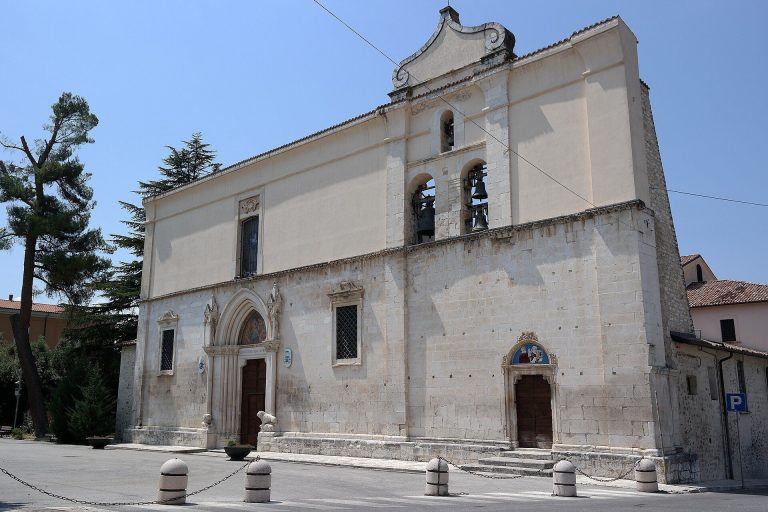
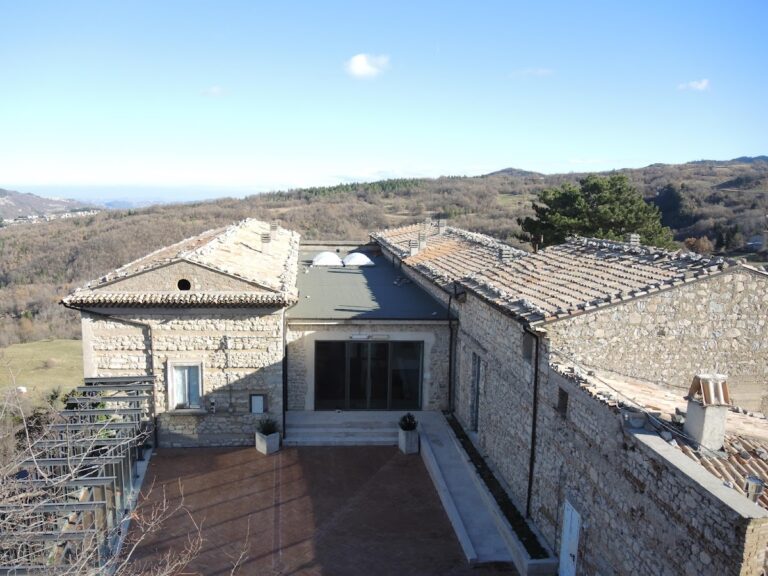
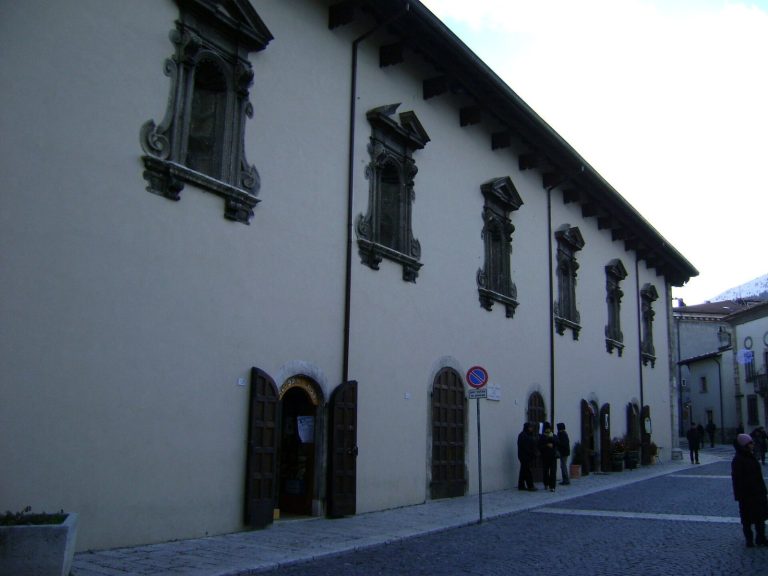
The center occupies a former church built in the mid-fifteenth century and dedicated to Our Lady of Loreto, a title of the Virgin Mary. After the plague of the seventeenth century, devotion in the building shifted to Saint Roch, a saint traditionally invoked for protection against plague. The church served this devotion until the twentieth century. It was deconsecrated in the middle of that century, when worship moved to a new church in Piazza XX Settembre, and the former church became a covered parking area. After 1997, the regional heritage authority acquired it and converted it to museum use.
Remains
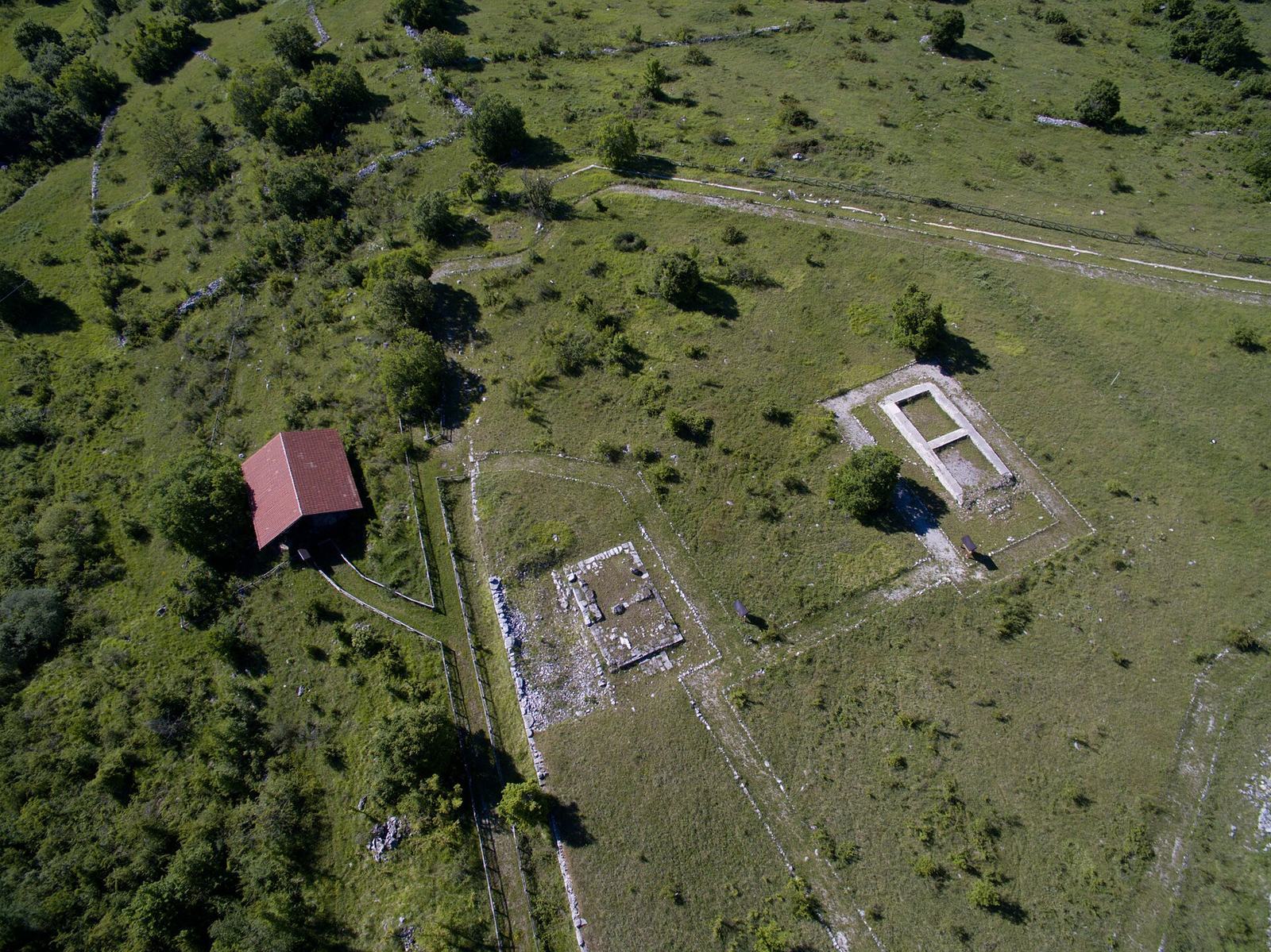
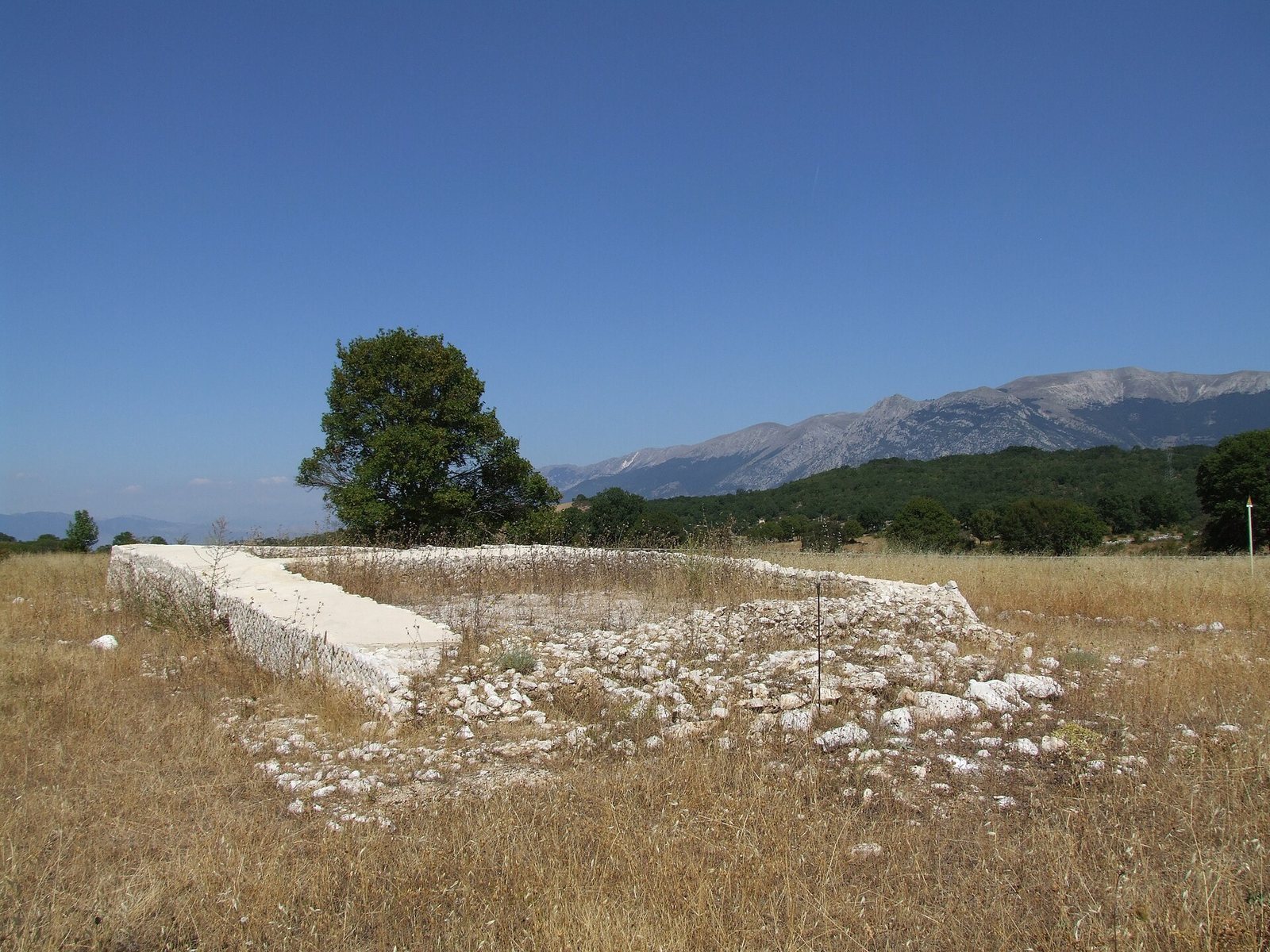
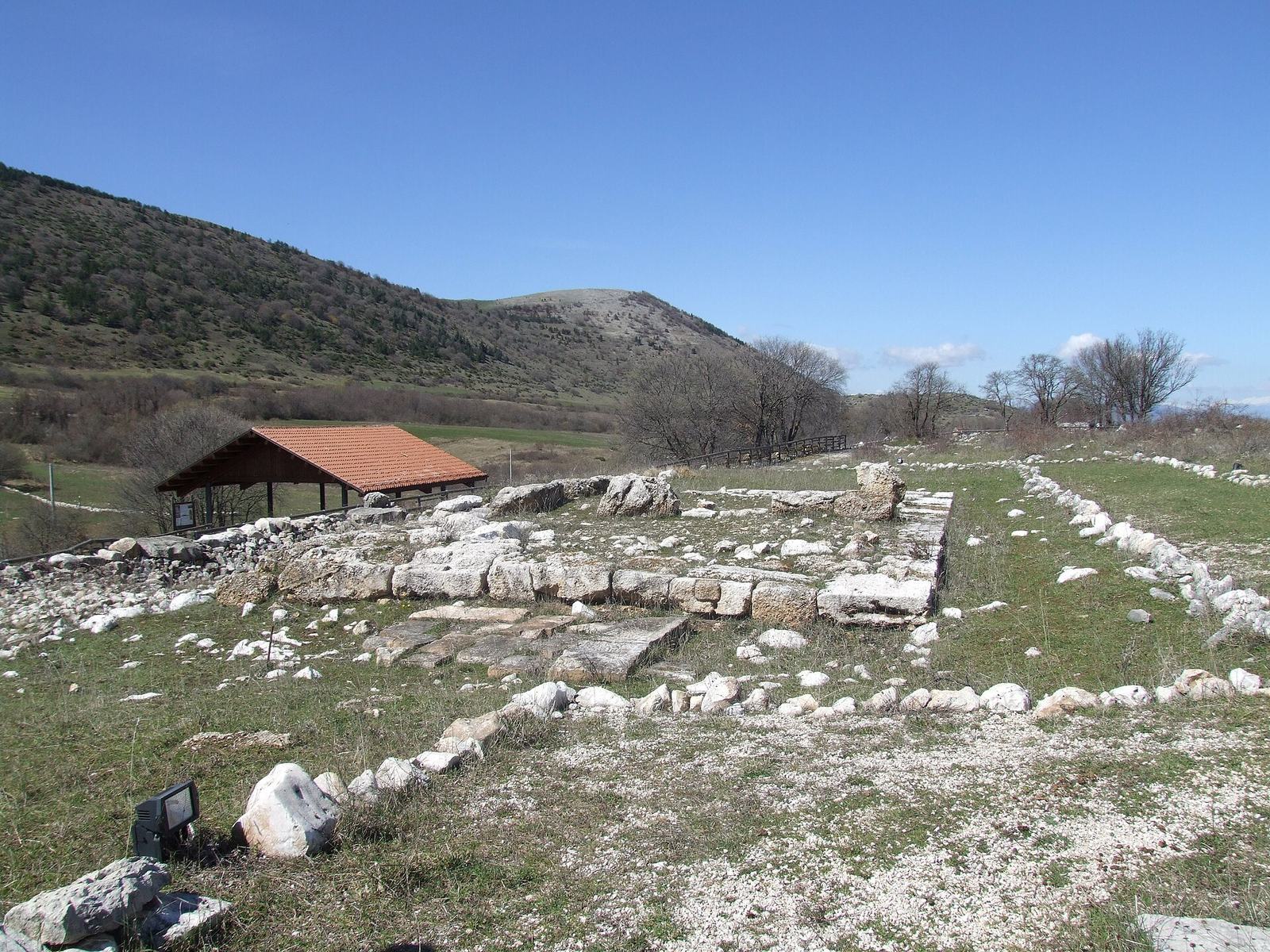
The archaeological area lies at about 840 metres above sea level on a plateau below Mount Mitra and, farther away, the Maiella massif. It extends across the localities of Polmare, Pantano, Tavuto, and Tre Croci, also known locally as Zeppe, Pantano, and Tavuto. The sanctuary occupied two terraces along an ancient road, with its buildings grouped within an enclosed sacred precinct. The settlement’s fragmentary remains lie about 100 metres southeast of the Italic sanctuary, along a gravel road.
The sacred precinct
The precinct’s three principal buildings were an Italic temple and a Roman temple on the terraces, and a smaller shrine on a lower terrace to their west. A temenos, an enclosure around sacred ground, bounded the precinct. The sanctuary’s buildings and enclosure developed through several phases.
Italic temple
The oldest temple was a roughly rectangular, single-room building measuring 12.1 by 7.6 metres. It faced southeast and was aligned northwest to southeast. Its proportions followed modules based on the Oscan foot, an ancient southern Italian unit of length. The earliest phase dates to the end of the fourth century BC and stood within a dry-laid stone boundary. The building rested directly on bedrock, without a separate foundation. It was given monumental scale in the second century BC, and a later phase enlarged both the temple and its enclosure.
A porch was added in the later phase, using a building technique notably different from that of the inner chamber. The surviving remains define the temple’s perimeter. A deposit of votive offerings, objects dedicated to a deity, contained about 600 items dating from the fourth to the first century BC. These included around one hundred draped female figures, fifty heads with halos, sixty animal figures, a small bronze figure of Hercules, and a bronze fitting shaped like a vine leaf. The Hercules figure lay by itself at the bottom of the deposit.
Roman temple
Built around the beginning of the first century BC on a higher terrace, the Roman temple was aligned with the Italic temple. It had a rectangular plan and was a Doric building with a front porch of four columns. A staircase stood before its southeast-facing entrance. Inside, an entrance porch and an inner chamber of equal size formed the two main rooms. The surviving raised platform is built in opus reticulatum, Roman masonry made from small, net-patterned blocks. Small mosaic tiles found nearby indicate the floor’s decoration.
The enclosure expanded in connection with this temple. Rooms along its inner northern side served as storage spaces and shops for people engaged in the sanctuary’s religious activities.
Smaller shrine
The square shrine stood west of the two larger temples on a lower terrace, aligned with them and surrounded by a four-sided enclosure. Probably built between the third and second centuries BC, it may have had a plan with side spaces or wings. A deposit of offerings lay beside it. A section of its compacted-earth wall survives with plaster and painted surfaces; plaster fragments and fine-grained sandy material were found in its single inner room.
The shrine had a pitched roof covered with large tiles and a corridor linking it to the lower level. A floor made of red mosaic tiles and portions of the interior plaster are also recorded. Glass flasks and small containers for scented oils found inside retained traces of ointments, perfumes, and cosmetics. The shrine was probably associated with Ceres, Venus, and Proserpina.
Settlement, roads, and funerary remains
Settlement structures
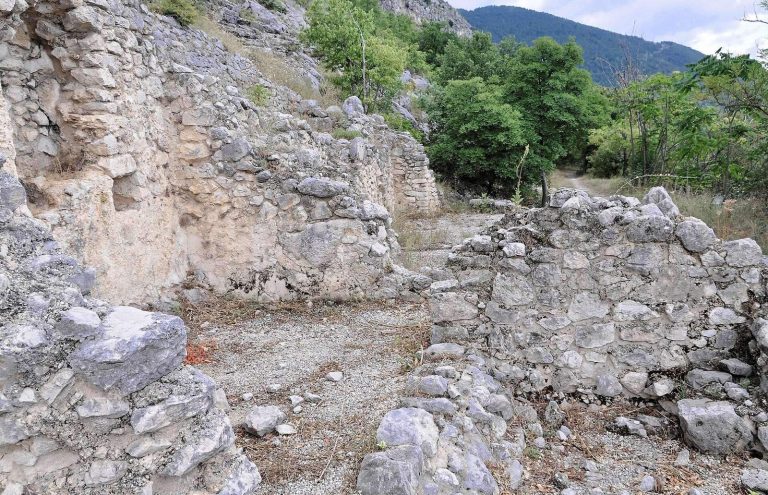
Fragmentary structures along the gravel road southeast of the Italic sanctuary date from the first to the third century AD. Their function remains uncertain. They may have served religious, craft, or commercial purposes, or offered a stopping place beside the road.
Road and lime-working building
A gravel road branched from the Via Nova, crossed the plateau, and climbed the eastern hill. Its surface combined a stone road base with crushed stone mixed with mortar. The road led to a large rectangular building set directly on bedrock and divided into rooms of different sizes.
On the building’s eastern side, a large cylindrical opening cut into the slope formed a lime kiln. One room retains its original terracotta floor. Other spaces were used for cooling, keeping, storing, and selling lime.
Tomb and burials
Near the road and lime kiln, the base of a large tomb was found. It was probably a mausoleum of either block-shaped or altar-shaped form. Two sixth-century graves lay close to the sacred enclosure and the Italic temple’s foundations. One held the remains of a mother and daughter, with a modest collection of jewellery placed inside terracotta vessels.
Finds from the plateau
The documentation center displays selected finds from Ocriticum in six cases with explanatory panels. The objects include clay and anatomical offerings, masks, flasks, containers for scented oils, and divine figures. Among them are a finely made statuette of Venus and a paired figure of two goddesses kissing, interpreted as Ceres and Proserpina either meeting or parting. The collection also includes black and red pottery, both coarse and fine, plain, decorated, painted, or sealed; Roman coins from different dates; jewellery; multicoloured glass; and painted pottery.