Sempringham Priory: The Founding House of the Gilbertine Order
Site at a Glance
- Popularity
- Medium
- Country
- United Kingdom
- Primary era
- Medieval
- Eras represented
- Medieval
- Civilizations
- English
- Site type
- Religious
- Remains
- Monastery
On this page11 sections
History
Sempringham Priory was a Gilbertine religious house at Sempringham in Lincolnshire, England, founded by the cleric Gilbert of Sempringham. Gilbert began a community there in 1131, and the house became the origin of the Gilbertine Order, the sole English monastic order founded by someone later recognized as a saint.
Foundation and formation
Gilbert first gathered seven young women whom he had instructed in religious life, supporting them with property inherited from his father. The group expanded to include women who served the nuns and lay brothers, members of the community who undertook practical work. Its first buildings and cloister, a covered walkway around a courtyard, soon proved inadequate. In 1139 Gilbert accepted three carucates, medieval units for assessing land, from his feudal lord Gilbert of Ghent. A larger priory was established on the land and completed during the 1140s; Gilbert of Ghent was consequently remembered as one of its founders.
The community brought together nuns and canons, religious men who could serve as priests, as well as lay brothers and lay sisters. The canons followed the Augustinian rule, a code for religious life, with customs also drawn from the Premonstratensian order of regular canons. The nuns observed the Rule of Saint Benedict, while the lay brothers followed the practice of Cistercian lay brothers. In 1147 Gilbert asked Cistercian abbots to take charge of the nuns, but they declined. He then met Bernard of Clairvaux, a leading Cistercian abbot, and Pope Eugene III. Bernard helped him prepare statutes for the new order, which the pope confirmed. After returning to England in 1148, Gilbert appointed canons to provide priestly services and help administer the community.
Sempringham’s canons eventually numbered 40. The order’s head, known as its master, was elected for life, and Henry II granted the order the right to choose its own leader, a privilege Richard I confirmed in 1189. Representatives of its houses met each year in a general chapter, an assembly of the order, at Sempringham on the Rogation Days, days of prayer observed before Ascension Day.
The house faced disputes within and beyond its community. In 1165 Gilbert and other priors were accused of sending money to Thomas Becket, Archbishop of Canterbury and an opponent of Henry II, and helping him escape England. The king’s representatives deferred judgment until Henry returned from Normandy and allowed the priors to leave. In 1170 lay brothers rebelled against the strictness of their rule. Pope Alexander III initially supported their cause, but Henry II and several bishops backed Gilbert. Changes to rules governing the brothers’ food and clothing were agreed in 1187.
Growth, pilgrimage and resources
Gilbert died at Sempringham on 4 February 1189 and was buried there three days later. Healing miracles were associated with his grave. Around 1200 Hubert Walter, Archbishop of Canterbury, began seeking Gilbert’s canonization, the formal recognition of a person as a saint. Following an inquiry into the reported miracles, Pope Innocent III decreed Gilbert’s sainthood. His remains were moved to a shrine on 13 October 1202, and church authorities granted indulgences, remissions of temporal punishment for sin, to pilgrims. Sempringham consequently became a place of pilgrimage.
By 1189 the priory’s possessions included the township of Sempringham, its parish church and a chapel at Pointon. Its other holdings included agricultural estates, or granges, at several nearby places, mills, land rights and churches across the region. The endowment helped Gilbert set limits of 120 nuns and lay sisters and 60 canons and lay brothers. Even with these resources, the priory experienced poverty.
Wool and cloth were important sources of income, and cloth produced at Sempringham was noted during King John’s reign. In 1193 the order’s wool harvest was taken to help pay Richard I’s ransom. Royal authorities later challenged the Gilbertines’ wool trading, threatening action in 1262 and 1302; Edward III ordered them to stop trading in 1342 and again in 1344. Henry III provided support in 1226 and, two years later, assigned the priory the income of Fordham church, partly to help cover the costs of its annual assembly. Sempringham also pursued payments connected to the former Scottish house at Dalmulin. After Paisley Abbey failed to pay, the priory appealed to Pope Innocent IV in 1246 and accepted part of the arrears in return for regular future payments. In 1247 the pope allowed the priory to take the income of Horbling church because 200 women there often lacked necessities.
Royal grants and church income sat alongside efforts to regulate the order. A visitation in 1223 led to reforms in discipline and daily observance; another, in 1268, produced instructions addressing governance, discipline and the nuns’ rights. The priory received the right to hunt specified game on its lands in 1253, and permission to hold fairs at Stow in 1268 and Wrightbald in 1293. In 1290 it was permitted to appoint a learned teacher of theology for its canons. Members of the order studied at Cambridge, and canons from Sempringham were able to study at Stamford.
Sempringham also supported literary work. Robert Mannyng of Bourne, a canon who had lived at the priory for 15 years, began writing Handlyng Synne in its cloister in 1303. The house’s annals were written in French between 1290 and 1326.
Rebuilding and mounting pressures
In 1301 Prior John de Hamilton began rebuilding the priory church after the earlier building had fallen into disrepair. The work was still incomplete in 1342. Famine from 1315 to 1321, disrupted payments from Paisley and continuing financial strain all hindered progress. The priory received permission to assign the revenues of Thurstanton and Norton Disney churches to the rebuilding in 1306, and those of Whissendine church in 1319 to help clothe its 40 canons and 200 women.
Women of high birth also entered the community. Gwenllian, daughter of the Welsh prince Llywelyn ap Gruffudd, was sent to Sempringham as a child after her father’s death in 1283. She became a nun and died there 54 years later. Edward I allowed land to be acquired for her support, and Edward III granted her an annual payment for life in 1327. Margaret de Clare, Countess of Cornwall, arrived in 1322, and Joan, daughter of Roger Mortimer, in 1324. Two daughters of Hugh Despenser became nuns and received an annual allowance from 1337.
Local violence compounded the priory’s difficulties. In 1312 Roger de Birthorpe, Geoffrey Luttrell of Irnham, Edmund of Colville and other knights attacked the monastery, assaulted members of its community and took goods. Prior John and some of his men later raided the park at Birthorpe to recover animals that had been impounded. A later petition indicates that the events belonged to a wider dispute in which both sides may have been responsible for wrongdoing. In 1330 the priors of Sempringham and Haverholme and their associates were accused of damaging property at Evedon. The following year Sempringham’s prior complained that local men had assaulted a canon and lay brother there and taken or damaged the priory’s crops and game.
Debt and tax demands added to the strain: in 1320 the priory owed £1,000 to Geoffrey of Bramton, and it could not meet royal taxes in 1337 and 1345. Just before Trinity Sunday in 1349 a storm and flood raised water in the church to the capitals of its pillars, while the cloister and other buildings were submerged beneath six feet of water. The flood destroyed books and damaged 18 sacks of wool. The priory later received the income of Hacconby church to help provide clothing for the nuns.
Late medieval changes
By 1366 the number of nuns had fallen to 67. A dispute over governance led them to appeal to Bishop John Bokyngham after master William of Prestwold refused to hear their prioress. In 1399 Pope Boniface IX permitted the order to lease its properties, including manors, churches and chapels. The change cost the order profits from wool, which had probably outstripped other income; disease among sheep also made its established farming and trade harder to sustain. In 1405 William of Beverley, master since 1393, was accused of misusing the order’s property and imposing excessive burdens. His successor was not elected until 1407.
Repairs to the priory church were supported by an indulgence in 1400, and a legacy for its bell tower followed in 1409. Lay brothers seem to have disappeared from the community early in the fifteenth century as less agricultural labour was needed. Henry VI exempted Sempringham and several other Gilbertine houses from specified taxes in 1445, although the priory paid £40 in 1522 toward a grant for Henry VIII’s expenses in France. The order’s general chapter resolved in 1501 to increase the number of canons, and Sempringham reached its allotted number before the priory’s dissolution.
The priory’s landholdings extended across Lincolnshire and neighbouring counties, including Rutland, Leicestershire, Nottinghamshire and Derbyshire. A 1535 valuation placed its clear annual income at £317 4s. 1d., including £128 16s. 7d. from church benefices. Six granges were managed by bailiffs, while the rest were leased. The Sempringham estate itself was valued at £26 13s. 4d. a year; in 1539, when the Crown’s bailiff held the property, its income was recorded as £383 5s. 5d.
Dissolution
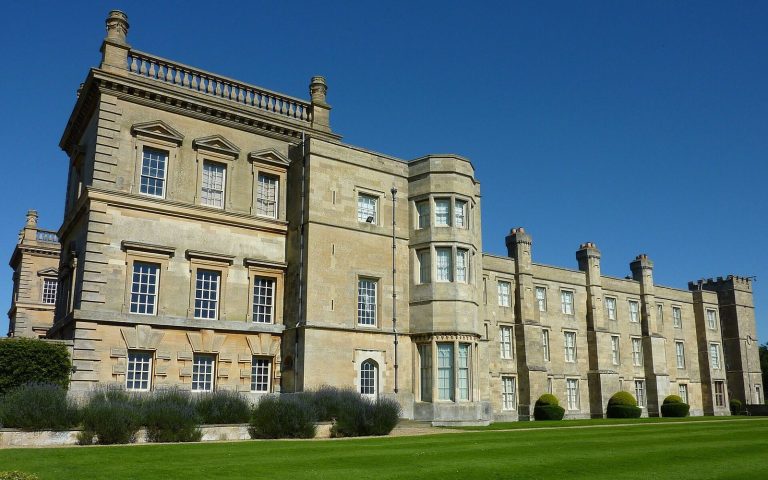
Robert Holgate, master of the Gilbertine Order from 1536, tried to prevent the houses from being surrendered under the act against smaller monasteries. Sempringham was nevertheless given up on 18 September 1538 by Holgate, Prior Roger and 16 canons to William Petre. The prior received Fordham rectory and an annual payment of £30, while canons, prioresses and 16 nuns were also granted pensions. The dissolution under Henry VIII ended the priory. The Clinton family took possession, demolished its buildings and reused the materials in a mansion.
Remains
The priory occupied about 80 acres of rolling limestone ground near the Lincolnshire Fens, below the ruins of a major Tudor house. The land was used for cultivation. The monastery itself extended about 350 feet (110 metres) in length and, when it was demolished, was considered comparable in size to Westminster Abbey. Its remains form a complex of church buildings, cloisters and accommodation associated with both the canons and the nuns.
Churches and community buildings
St Andrew’s and the first community
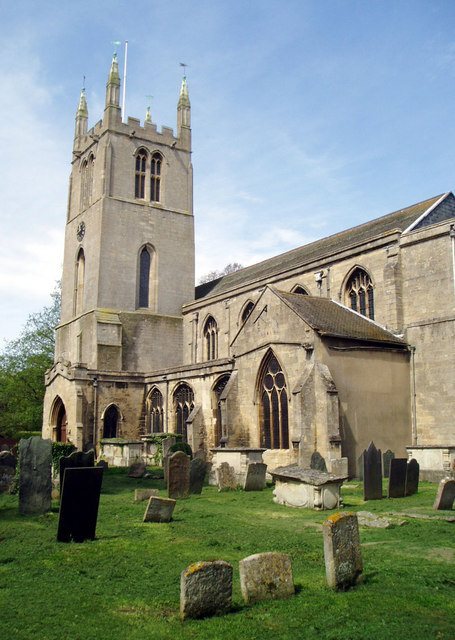
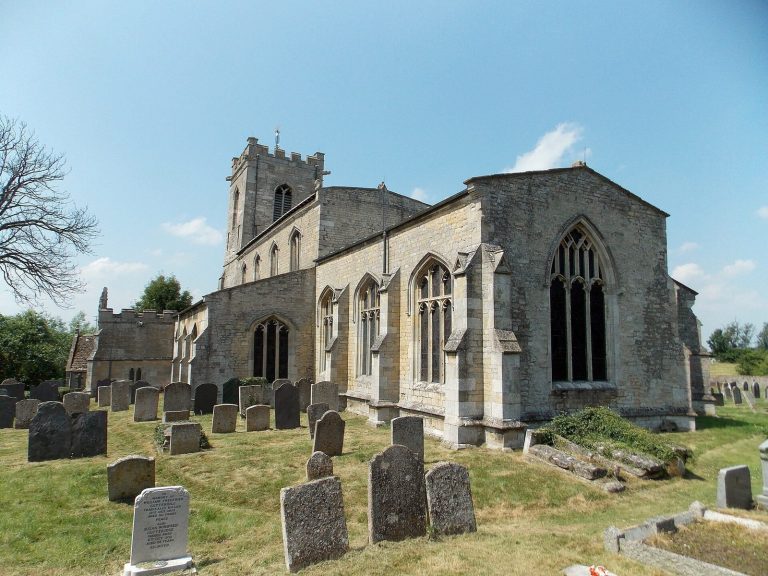
St Andrew’s parish church, built around 1100, stood beside the priory site. The earliest religious buildings and cloister were placed against the church’s north wall. The later priory was built nearby, forming a separate complex beside the older parish church.
The priory church and Gilbert’s tomb
The priory included a double church, with separate areas for the male and female members of the community, as well as cloisters and buildings for the canons and nuns. Housing surrounded by gardens formed part of the wider complex. Gilbert’s tomb stood between the altars of St Mary and St Andrew in the priory church, positioned so it could be seen from both sides of the dividing wall.
Buried remains and archaeological evidence
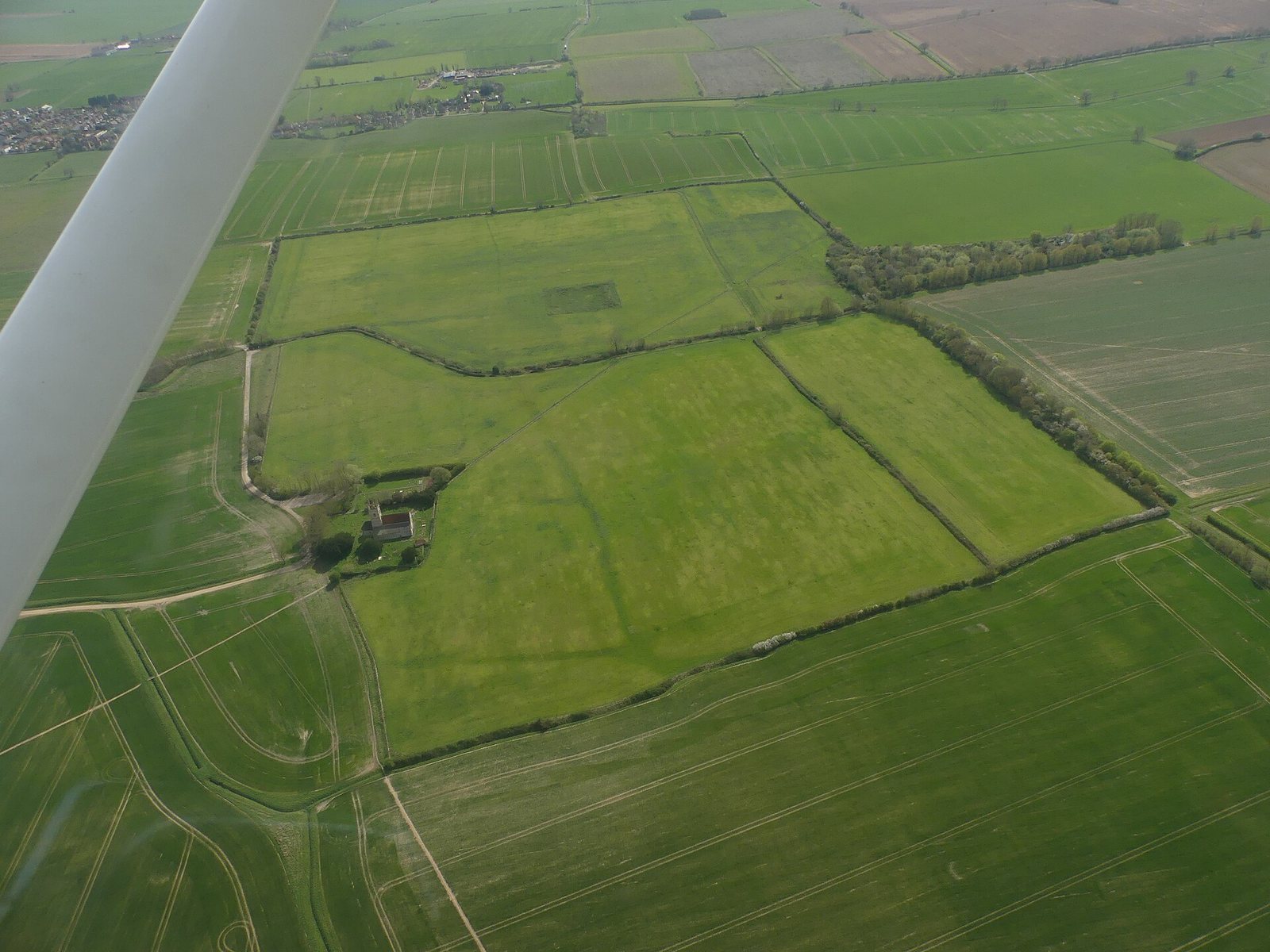
Surface traces indicate former walls and include a square feature; aerial photographs show their outlines. An archaeological investigation in 1939 revealed buried remains of the monastery and its housing complex. Later ground-penetrating radar, a survey method that maps buried features, traced the building plan on a five-metre grid, including the gatehouse. The foundation walls were judged to be in good condition. Investigations recovered artifacts associated with the priory within a total assemblage of 47,000 objects dating from prehistoric to post-medieval times.