Early Christian Cemetery of Tárraco: A Roman Burial Ground in Tarragona
Site at a Glance
- Popularity
- Low
- Country
- Spain
- Primary era
- Classical
- Eras represented
- Classical, Medieval, Modern
- Civilizations
- Roman, Spanish, Visigothic
- Site type
- Burial
- Remains
- Necropolis
On this page13 sections
History
The Early Christian Cemetery of Tárraco is a burial ground outside the ancient city of Tarraco, in Tarragona, Spain. It became a city cemetery in the mid-third century, during Roman rule, and is important for understanding the spread of Christianity and changing burial customs in Roman Tarraconensis, the province whose capital was Tarraco.
From suburban settlement to Christian cemetery
Before the cemetery developed, the area had served as a rural settlement and a pagan burial ground. Those uses ended before its conversion to a city cemetery. The broader sequence of activity in this suburb stretches from the Roman Republican period through the end of Visigothic rule, the era when Visigoths governed parts of the former Western Roman Empire.
The martyrs and the cemetery’s growth
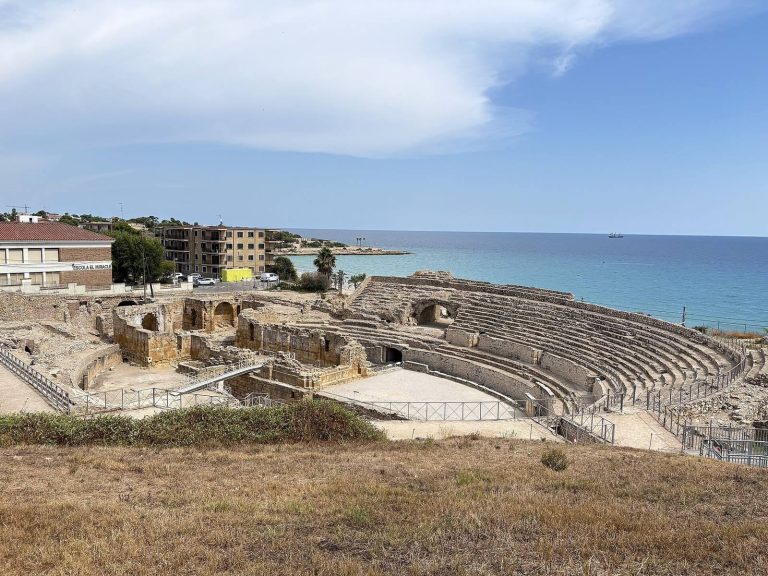
The cemetery’s development was probably linked to the burial of Fructuosus, bishop of Tarraco, and his deacons Augurius and Eulogius. On 21 January 259, the three men were burned in the city’s amphitheatre. Members of the Christian community recovered their cremated remains the following night and probably carried them to burial grounds near the river. A fragmentary inscription from the cemetery, restored to include their names, supports this proposed connection.
A funerary basilica was built in their memory, probably in the late fourth or early fifth century. Christians sought burial near the martyrs, making the cemetery a place of pilgrimage and contributing to the concentration of graves there. Its main period as a cemetery probably ended around the mid-fifth century, as burials increasingly took place at Christian places of worship. Burial within the basilica at this site continued into the early eighth century.
The cemetery and its basilica, together with another basilica identified beneath the Parc Central shopping complex, formed an extensive Christian center that appears to have endured until the late seventh century. The cemetery’s remains illuminate the transition from pagan to Christian funerary practice in the region.
Excavation and preservation
Archaeological remains came to light during foundation work for a tobacco factory in 1923. Excavations began under the Excavation Service of the Institute of Catalan Studies, led by Josep Colomines and Josep Puig i Cadafalch, and continued with the factory’s engineers. Joan Serra i Vilaró directed further work from 1926 to 1933 and published its results. The cemetery basilica’s remains were later lost when the factory was built during the first half of the twentieth century.
Serra i Vilaró helped preserve part of the cemetery in place and establish a museum, built in 1929–1930 and opened in 1930. The tobacco company owned it until 1941, when it became part of the Archaeological Museum. In 1969, Serra i Vilaró was buried in a crypt within the archaeological area. A funerary monument recovered during the 1920s excavations was dismantled and moved to its present position above the crypt.
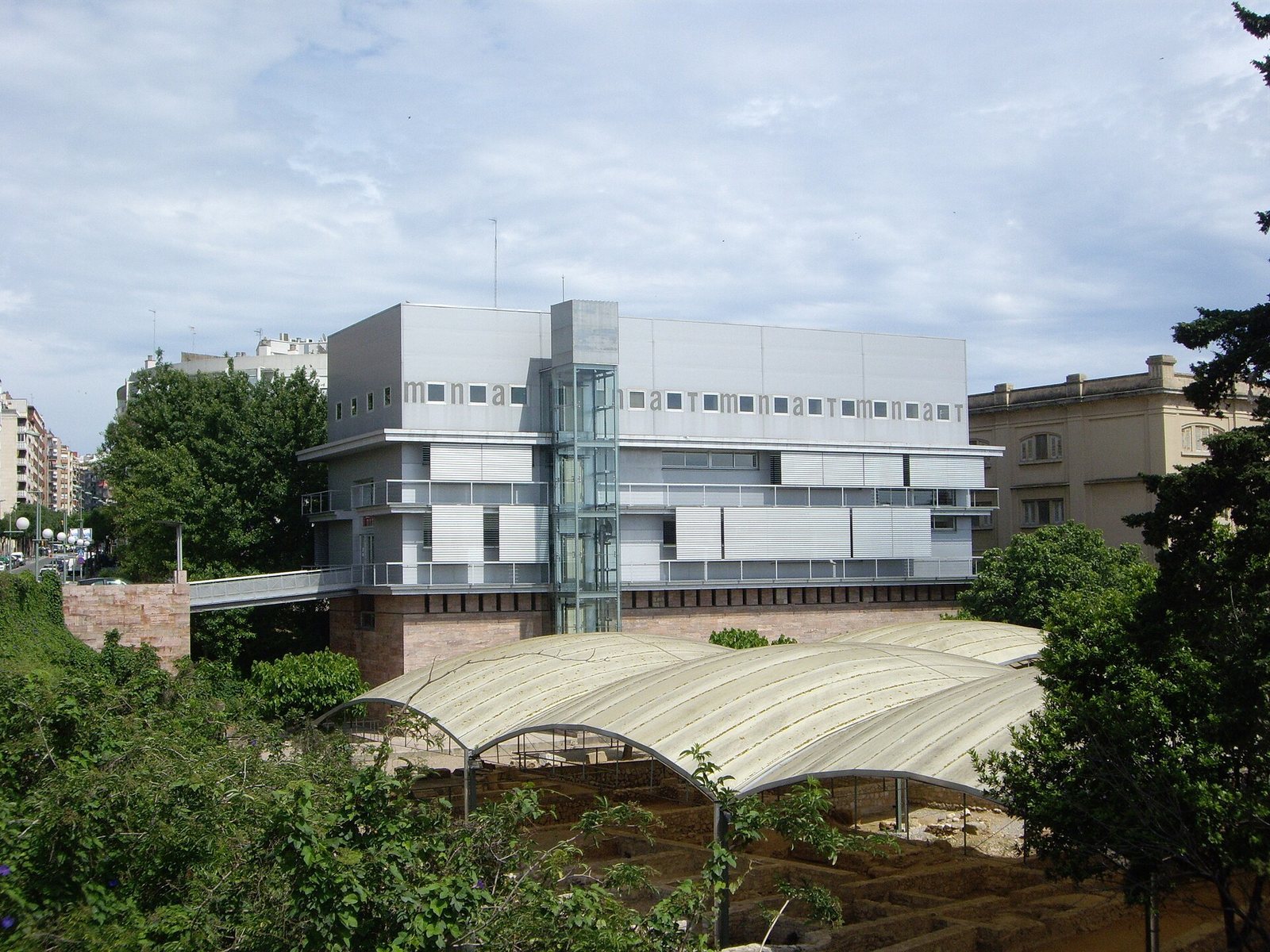
A protective cover was installed over the excavated area in 1971. Later work altered the museum and renewed the roof; a 2013 intervention improved conservation and interpretation and turned the access building into an interpretation center. The cemetery forms part of the Archaeological Ensemble of Tarraco, added to the UNESCO World Heritage List in 2000. It was declared a historic-artistic monument in 1931 and is protected as an archaeological zone of National Cultural Interest. The museum building and its contents received protected status in 1962.
Remains
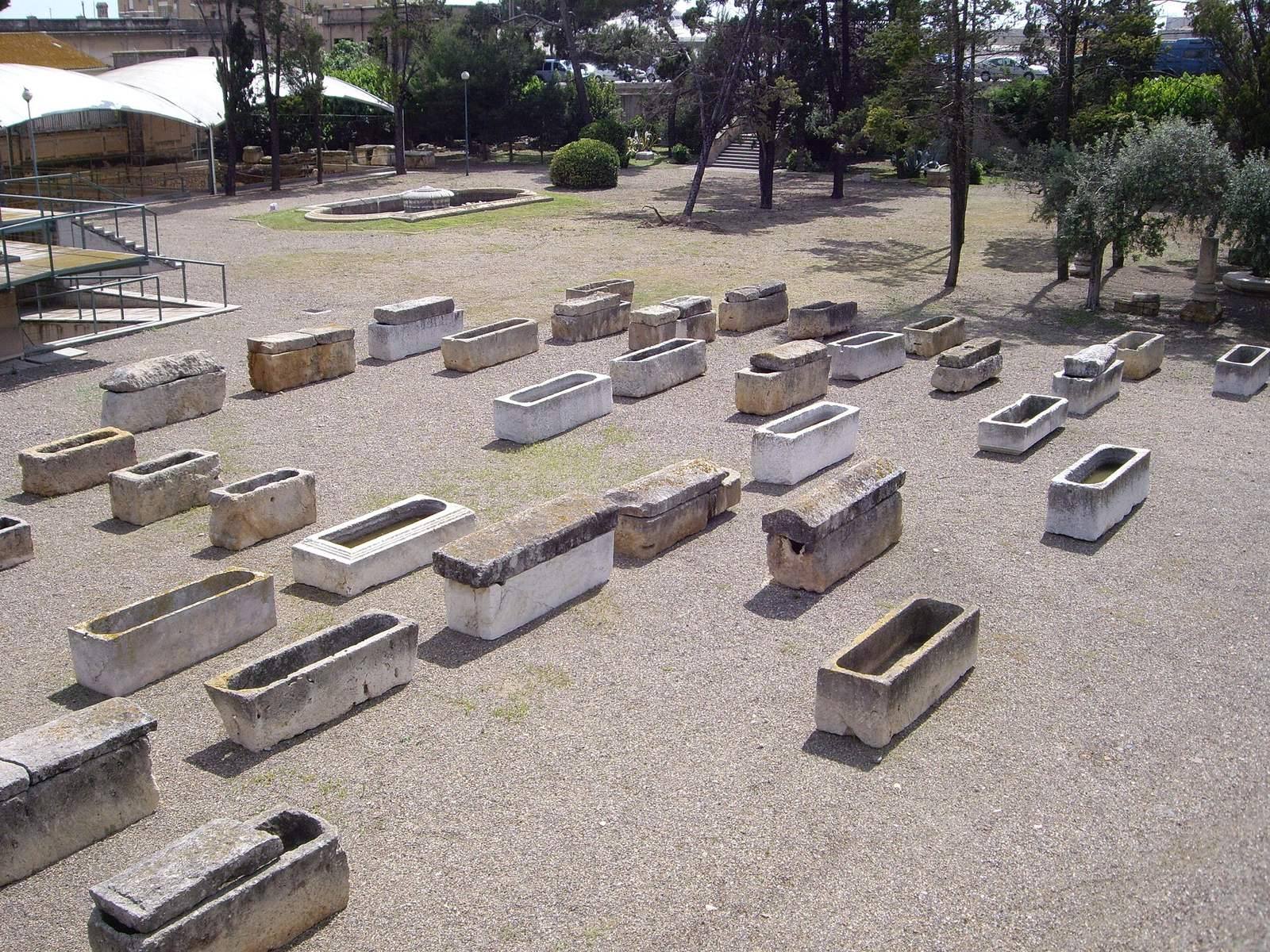
The site combines an excavated open-air area beneath a metal cover, a museum and interpretation center, gardens displaying sarcophagi, and underground burial chambers. The World Heritage component covers 1.3 hectares. The museum borders the in-place archaeological display on two sides. A raised route crosses the area, with two paths running perpendicular to its long axis and access points to the burial chambers.
Roads and suburban buildings
Roads and roadside burials
Excavated evidence includes suburban roads used from the first to the seventh century AD. In the first and second centuries, burials were placed beside roads. Sections associated with road changes under Augustus, Rome’s first emperor, were lined with funerary monuments. The Via Augusta crossed the nearby Francolí River by bridge and continued toward Valentia and Ilerda.
Houses and working areas
Agricultural storage pits from the first century BC form part of the area’s earlier remains. Suburban houses, baths, craft and productive buildings, and storage structures also occupied the area between the first and seventh centuries AD. These remains show how residential, working, and storage uses developed alongside roads and burial places.
Burials and funerary features
Graves and markers
Excavations uncovered more than 2,000 graves, with about 2,051 attributed to the cemetery area. Burial forms range from simple pits cut into clay to family tombs and mausoleums. Bodies were placed in amphorae, wooden coffins, lead or stone containers, and graves covered with flat or pitched roof tiles. Some were enclosed in stone or imported marble sarcophagi, including examples from North Africa. Grave markers varied from simple ground-level marks to built mounds with flat, prismatic, table-shaped, or rounded forms, sometimes ornamented.
Crypts and funerary buildings
Three burial chambers are open within the archaeological area: the Crypt of the Arches, the Crypt of the Roses, and the Engineers’ Crypt. One survives intact. The Arches and Engineers’ crypts contain arched recesses for stone sarcophagi, some decorated. Around a hundred catalogued burials were housed in roughly twenty funerary buildings, alongside family monuments and other tombs.
Sarcophagi and grave goods
Some sarcophagi have colored mosaic covers, including a notable example associated with Optimus. Twelve graves among the excavated total contained grave goods. In grave 152, a reused sarcophagus held the remains of a girl about six years old, with gold thread around her neck and along her body, and an articulated ivory doll dating to the fourth century. The doll is 23 centimetres tall, with movable joints at the shoulders, elbows, hips, and knees. Tomb builders also reused material from earlier buildings and the earlier cemetery, so pagan funerary elements and objects with secular themes appear among the burial remains. Sarcophagi and decorated mosaic grave slabs were also found beneath the basilica.
Basilica and other finds
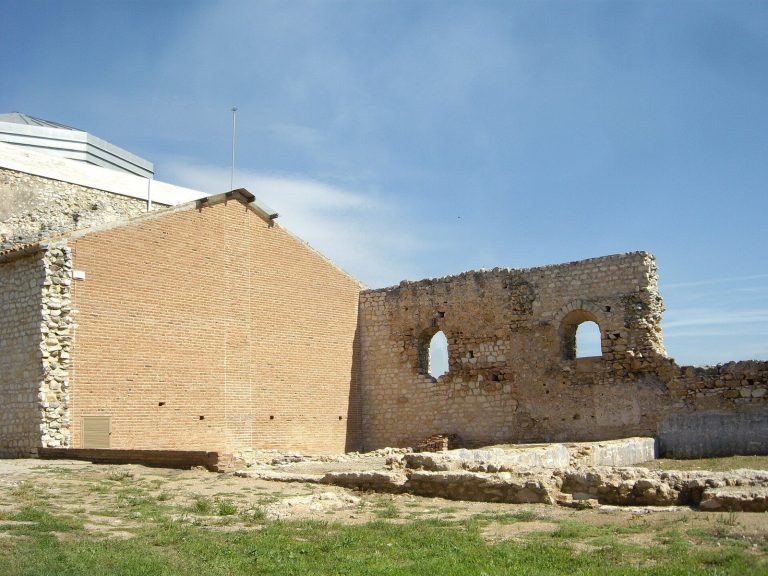
A three-aisled basilica in the cemetery area had an apse, a semicircular sanctuary end, projecting from its exterior end. Funerary chambers and a baptistery were added later. Substantial parts of a Visigothic basilica commemorating Bishop Fructuosus were identified in the area, including a three-aisled plan, adjoining burial chambers, and a baptistery. A mausoleum with a central layout also formed part of the remains.
The finds include many early Christian inscriptions, as well as glass, pottery, bone, and ivory objects. Excavators also recovered late Republican sculptures, probably from funerary monuments and later reused. They include works in shell-rich limestone and marble statues. A marble bust of a man in a toga, dating to the early third century, is the latest surviving example of its kind in Tarragona.
Human remains from the cemetery do not represent the population of Tarraco completely or exactly. Study indicates average heights of about 165 centimetres for men and 154 centimetres for women, and a predominance of the Mediterranean physical type. Pagan and Christian funerary inscriptions offer evidence of social status and origins, including freedpeople and people from the eastern provinces and inland Hispania; some inscriptions are in Greek.