Himera: An Ancient Greek Colony in Sicily
Site at a Glance
- Popularity
- High
- Country
- Italy
- Primary era
- Classical
- Eras represented
- Classical
- Civilizations
- Ancient Greek
- Site type
- City
On this page12 sections
History
Foundation and the Battle of Himera
Himera was an ancient Greek colony at Buonfornello, in the territory of Termini Imerese, Sicily, Italy. Founded around 648 BC, it was the first Greek settlement in this part of Sicily and a strategic outpost just east of territory controlled by Carthage. Himera was established by Zancle, and its population also included exiles from Syracuse. Its civic institutions reflected Chalcidian Greek traditions, while its people spoke a Doric Greek dialect.
Strabo and Scymnus placed Himera’s foundation after that of Mylae. Diodorus wrote that the city had existed for 240 years when it was destroyed, a figure that points to a foundation around 648 BC. Archaeological evidence indicates that Himera was rebuilt around 580 to 560 BC, following an earlier destruction whose cause is unknown. Aristotle’s account suggests that the city was once ruled by Phalaris, a Greek ruler. Around 490 BC, Himera gave shelter to Scythes, the expelled ruler of Zancle.
Himera later came under Terillus. When Theron, ruler of Agrigentum, drove him out, Terillus sought Carthaginian support. His alliance with Anaxilas, ruler of Rhegium and Zancle, and Anaxilas’s connections with the Carthaginian commander Hamilcar helped set the stage for Carthage’s expedition to Sicily in 480 BC. Hamilcar’s forces attacked Himera first. Theron defended the city until Gelon, ruler of Syracuse, arrived, and the Greek forces defeated the Carthaginians at the Battle of Himera. Greek tradition likened the victory to the Greek success at Salamis and held that both victories occurred on the same day. Ancient tradition also assigned Hamilcar an army of 300,000; he died during the conflict.
Resettlement and renewed prosperity
After the victory, Theron controlled Himera and Agrigentum but placed Himera under his son Thrasydaeus. When citizens appealed to Hieron, ruler of Syracuse, against Thrasydaeus’s harsh government, Hieron betrayed their appeal to Theron. Theron punished the dissenters, killing many and forcing others into exile. Around 476 BC, he brought new settlers to Himera, most of them Dorians, to replenish its population. The newcomers and existing residents lived together, but the city adopted a Doric identity, institutions, and policies. Himera remained within Theron’s dominion until his death in 472 BC.
Thrasydaeus briefly succeeded his father before Hieron defeated and expelled him from Himera and Agrigentum. In 466 BC, Himera sent troops to help Syracuse overthrow Thrasybulus. The exiles from Himera were then allowed to return, and the city enjoyed a period of prosperity without further civil conflict. During the Athenian expedition to Sicily in 415 BC, Himera supported Syracuse and refused entry to the fleet commanded by Nicias. Later, the Spartan commander Gylippus landed there and marched across Sicily toward Syracuse with a force made up largely of Himeraean citizens.
Destruction and the community at Thermae
In 409 BC, after capturing Selinus, the Carthaginian commander Hannibal Mago attacked Himera. The city was poorly prepared, but its defenders resisted fiercely and initially received support from about 4,000 Syracusan troops under Diocles. Diocles withdrew because he feared for Syracuse, leaving Himera to fight alone. The Carthaginians captured and destroyed the city, razing its buildings and temples. Many inhabitants were killed, and Hannibal Mago executed at least 3,000 prisoners in memory of his grandfather Hamilcar, who had died in the earlier battle.
Himera was never rebuilt. A treaty in 405 BC allowed exiles from the destroyed cities to return, provided they paid tribute to Carthage and built no fortifications. Diodorus dated the founding of nearby Thermae to 407 BC and attributed it to the Carthaginians, who established the settlement to prevent Himera’s reoccupation. Returning Himeraeans later settled there and maintained their identity. In 397 BC they supported Dionysius I of Syracuse, but the following year they returned to the Carthaginian alliance. A treaty of 314 BC still listed Himera as subject to Carthage. Later references to Himera as a city often reflect the survival of its community at Thermae rather than the rebuilding of the destroyed settlement.
Thermae under Rome
Thermae took its name from nearby hot springs, whose discovery was linked by legend to the wanderings of Hercules. With brief exceptions, it remained under Carthaginian rule until the Roman period. During the First Punic War, the first major war between Rome and Carthage, a Carthaginian commander named Hamilcar attacked Roman troops camped near Thermae in 260 BC and inflicted heavy losses. Before the war ended, Roman forces besieged and captured the city. Rome later restored Thermae and its territory to its inhabitants, granting them the use of their own laws in recognition of their loyalty; the date and circumstances of this restoration are uncertain.
After Rome captured Carthage, Scipio Aemilianus returned to the people of Thermae statues that had been taken from Himera. Valued as both historical relics and works of art, they reflected the continuing connection between the two communities. By the first century BC, Thermae was a prosperous trading city, although Cicero described it as not especially large. Under Augustus, it became a Roman colony, a settlement formally established or recognized by Rome as a colony, as an inscription attests. The city continued to exist during the Roman Empire and is associated with the ancient site and name of modern Termini Imerese.
Himera was home to the poet Stesichorus, who was born at Metauros around 630 BC and later moved to Himera, where he wrote poetry. Ergoteles, whose Olympic victory was celebrated by the poet Pindar, was a citizen of Himera but was not born there. Thermae was the birthplace of Agathocles, who later became ruler of Syracuse.
Remains
Layout and setting
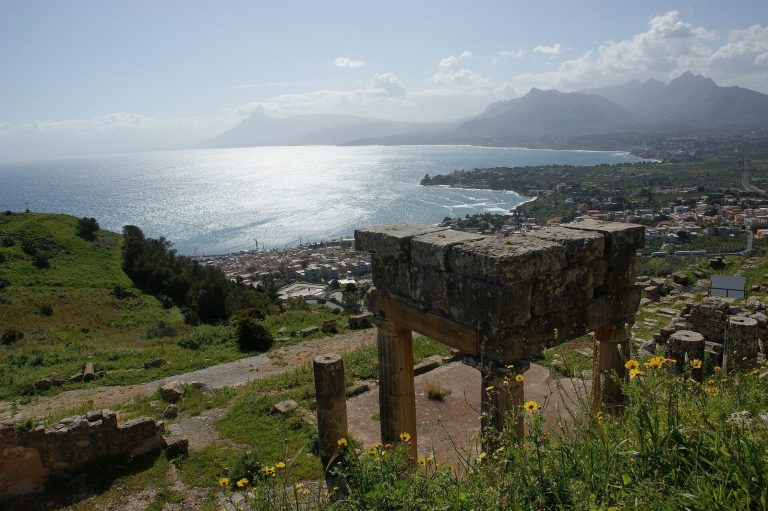
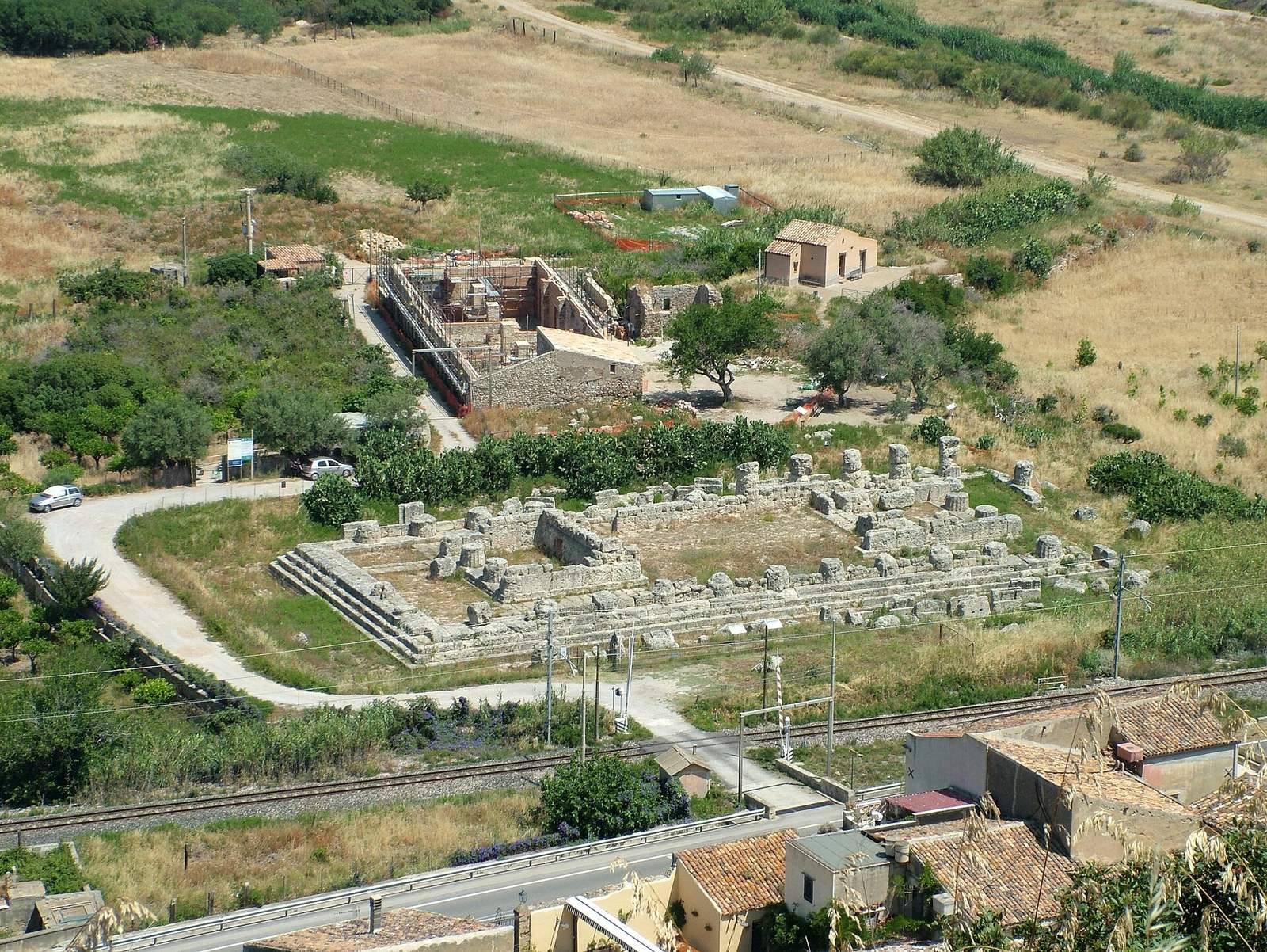
The archaeological site at Buonfornello lies near the mouth of the Imera Settentrionale, also called the Grande River, about 12 to 13 km east of Termini Imerese. It is situated between the ancient cities of Panormus and Cephaloedium. The remains include a lower city with a monumental temple and an upper city on a hill, where other temples and numerous buildings survive. Cemeteries occupied several areas around the settlement. The identification of the Grande River with ancient Himera’s location, debated by earlier writers, is now generally accepted.
Buildings and burial grounds
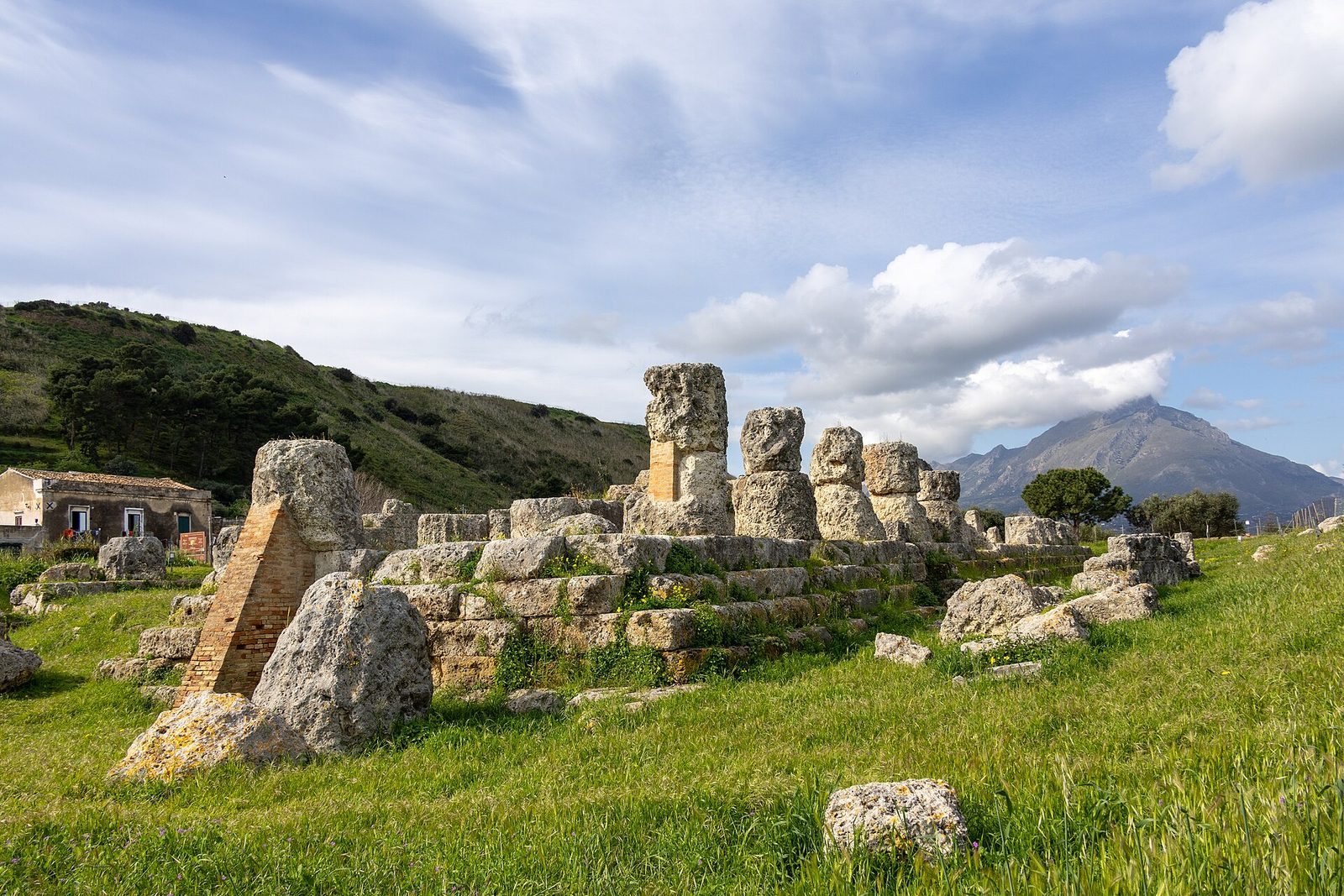
Temple of Victory
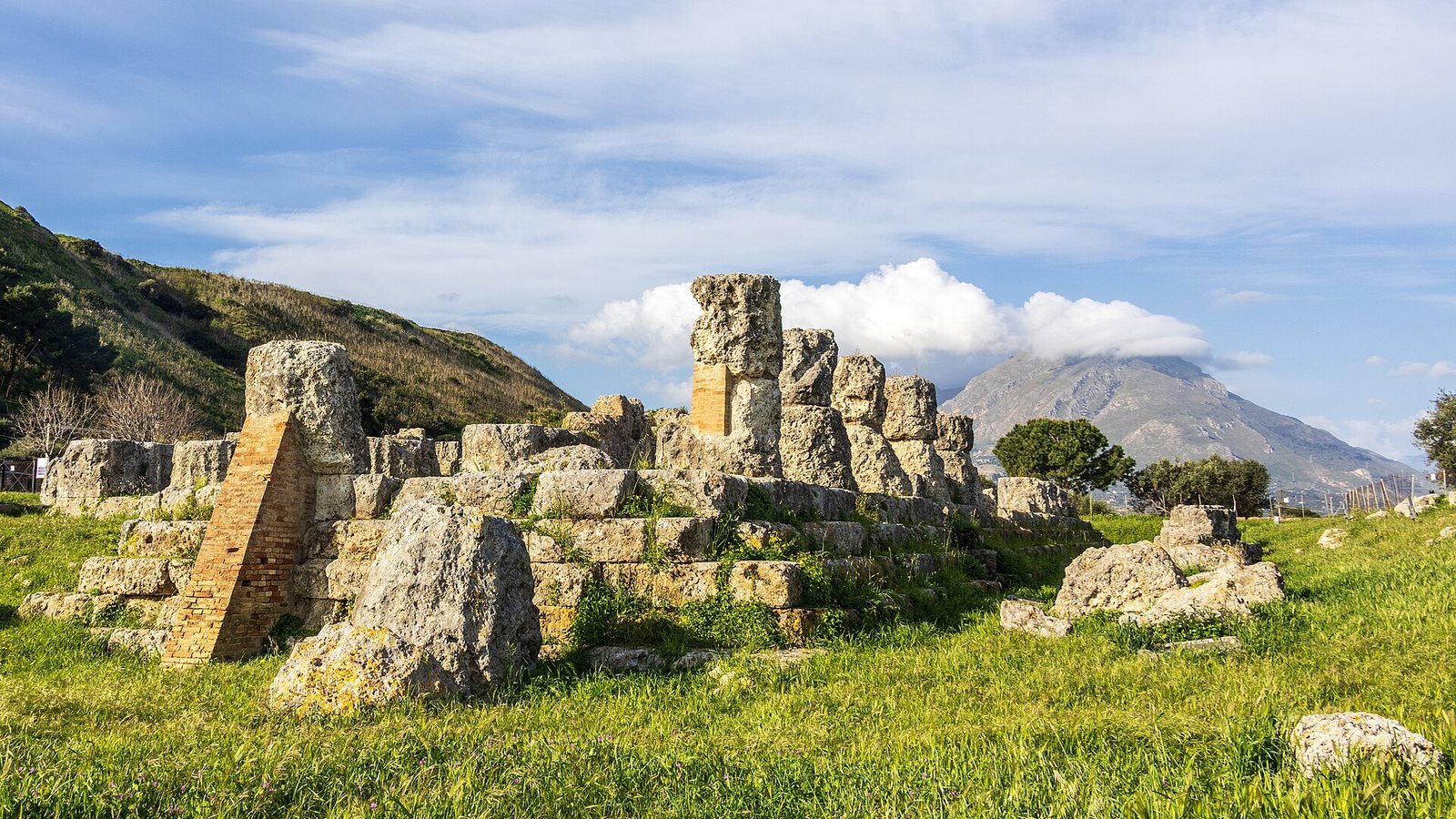
The principal visible structure in the lower city is the monumental Temple of Victory, built in the Doric style, a form of Greek temple architecture. It has traditionally been interpreted as a memorial to the Greek victory over Carthage in 480 BC, although that explanation has been questioned.
Upper city
On the hill above the lower city, remains include other temples and numerous buildings. Together with the lower city, these remains form the surviving built areas of Himera.
Cemeteries
Burial grounds lay at several points around the ancient city, including one south of the Temple of Victory. In 2008, excavations in Himera’s cemetery uncovered mass burials of children and soldiers. Many of the dead showed evidence of violent deaths.
Archaeological finds
Excavations near the mouth of the Grande River uncovered tombs, including chamber tombs, along with vases and bronze objects. Numerous coins associated with Himera attest to the city’s ancient wealth. Finds from the site are displayed in its small antiquities museum and in other museums; a larger collection is held by Palermo’s Regional Archaeological Museum.