Pushkalavati: Ancient Capital of Gandhara in Pakistan
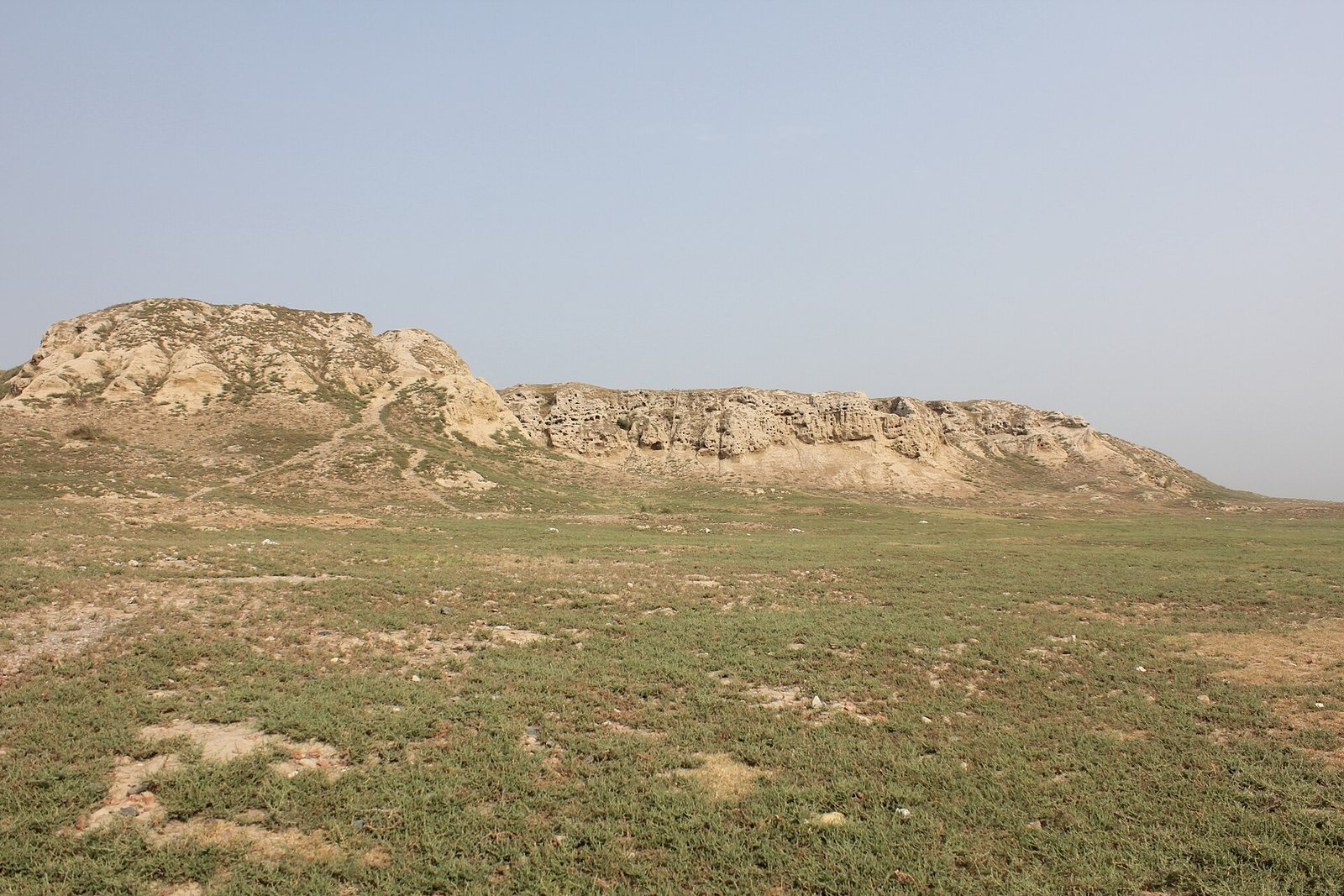
Site at a Glance
- Popularity
- Very High
- Country
- Pakistan
- Primary era
- Classical
- Eras represented
- Bronze Age, Iron Age, Classical
- Civilizations
- Gandharan, Indo-Greek
- Site type
- City
On this page10 sections
History
Gandhara and the early city
Pushkalavati is an ancient city site in modern Charsadda, Pakistan, and served as the capital of Gandhara, an ancient region of South Asia, from at least the sixth century BCE. Around 520 BCE, it may have become part of the Achaemenid Empire, the Persian imperial state that expanded into the region. The Avesta, the sacred text of Zoroastrianism, names the surrounding region Vaēkərəta and ranks it as the seventh most beautiful place created by Ahura Mazda, the religion’s supreme deity. The region was also described as Bactria’s crown jewel and as having held sway over nearby Taxila.
In the Ramayana tradition, the city took its name from Pushkala, son of Bharata and nephew of Rama, who received territory west of the Indus. The story appears in the epic’s concluding section, the Uttarakanda, which may have been composed somewhat after about 500 BCE. Greek writers knew the city as Peukelaotis.
Alexander and the city at Shaikhan Dheri
According to the ancient Greek historian Arrian, Pushkalavati surrendered to Alexander the Great in 327 or 326 BCE. Alexander, the Macedonian king whose campaigns reached South Asia, established a garrison in the city. In the second century BCE, Greek-speaking Bactrian rulers founded a new city at Shaikhan Dheri, called Peucela or Peucelaōtis. It subsequently came under Indo-Greek, Indo-Scythian, Indo-Parthian, and Kushan powers, which ruled parts of South and Central Asia.
Two Buddhist narrative scrolls written on birch bark around the first century CE refer to the city as Pokhaladi. Composed in Gandhari, an ancient language associated with Gandhara, the texts are avadanas, narratives about exemplary deeds. They may have come from a monastery of the Dharmaguptaka, an early Buddhist school, at Hadda in Afghanistan. Shaikhan Dheri remained inhabited into the early third century CE. A change in the course of the river flooded the city during the second century, after which the town moved to modern Rajjar.
Later references and changing names
Xuanzang’s seventh-century account is the last known reference to Pushkalavati by that name. The monk Hui Li’s account of Xuanzang’s visit describes a stupa, a Buddhist monument associated with relics or religious remembrance, east of the town. It was attributed to Ashoka, the Mauryan emperor, and stood at a place where tradition held that four earlier Buddhas had preached. These figures were believed to have preceded the historical Buddha.
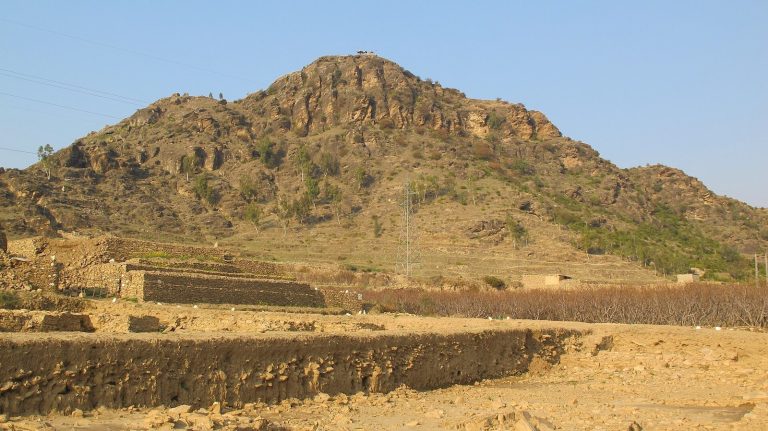
After Mahmud of Ghazni conquered the region in 1001 CE, the name Gandhara fell out of use. Pushkalavati probably became known as Shaikhan Dheri in the period that followed. In Pashto, dheri means mound or hill.
Archaeological investigations
John Marshall began excavating Bala Hisar in 1902. Mortimer Wheeler carried out further excavations there in 1962 and identified Achaemenid remains. Ahmad Hasan Dani partly excavated the former city at Shaikhan Dheri in the 1960s.
Remains
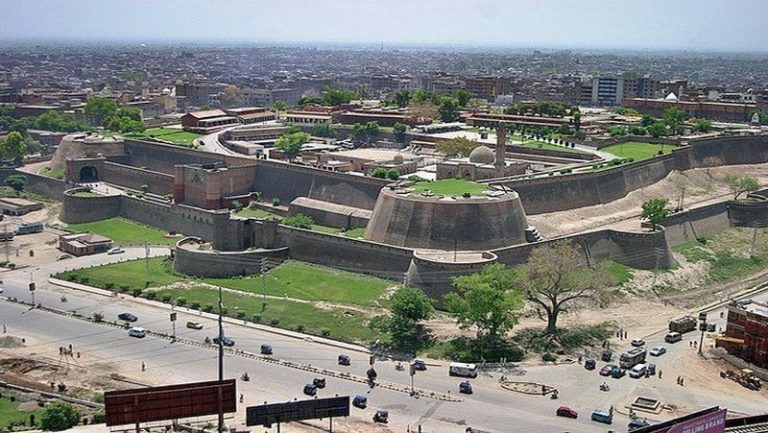
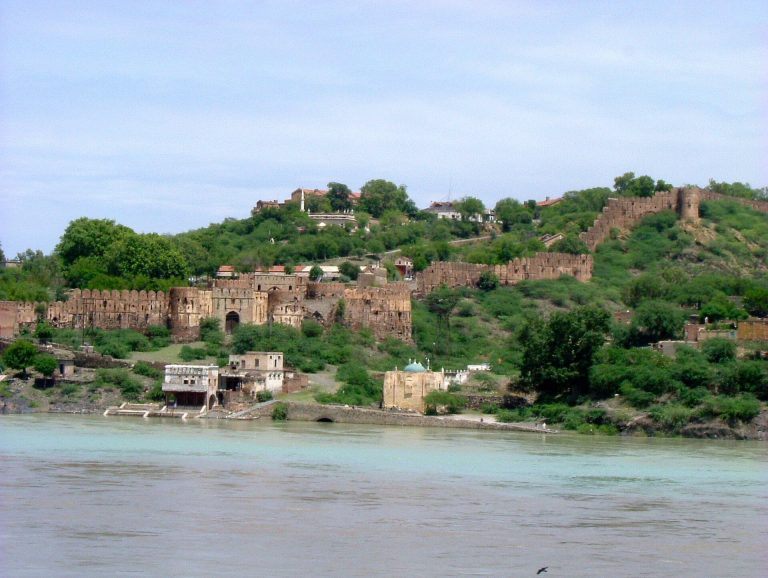
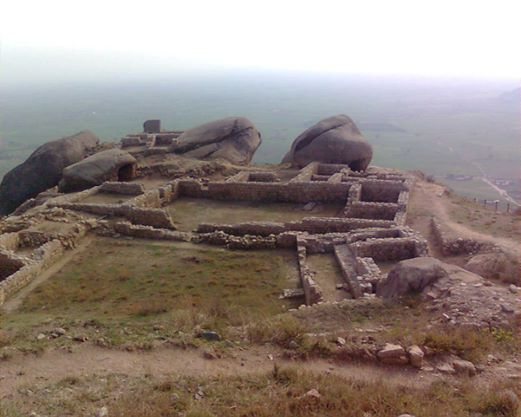
The archaeological remains include two ancient city areas and numerous stupas, spread around modern Charsadda about 35 to 42 kilometres northeast of Peshawar. The site lies near the meeting of the Swat and Kabul rivers and along the Jindi River. A small river, the Shambor, separates the southern area of Bala Hisar from Shaikhan Dheri to the north. Bala Hisar consists of eastern and western mounds; Shaikhan Dheri lies between the Shambor and Jindi rivers, about one kilometre northeast of Bala Hisar.
Bala Hisar
Occupation and pottery
The earliest occupation at Bala Hisar dates to the second millennium BCE. Early deposits containing polished red pottery have carbon dates of about 1420 to 1160 BCE, while the early phase is generally placed around 1400 to 800 BCE. Red pottery continued in use, with grooved decoration appearing in a later phase dated to about 750 to 500 BCE. Grey bowls with upright sides also occur; their shapes resemble Painted Grey Ware, a tradition of grey pottery with painted decoration from the Ganges Valley.
Vessel forms
Bowls known as tulip bowls, dated to about 400 to 325 BCE, reflect local imitation of Achaemenid drinking vessels. Lotus bowls have also been found at Bala Hisar. Reinhard Dittmann placed their earliest appearance between Alexander’s campaigns and the beginning of the Mauryan period, in the late fourth to early third centuries BCE. Cameron Petrie considered a later, post-Achaemenid date, from the late fourth to the second century BCE, more likely.
Prang
Prang remains a sacred place near the confluence of the Swat and Kabul rivers. Three branches of the Kabul River meet there, and a large cemetery lies north of the meeting point. Local people continue to use it for burials, and it is regarded as among the world’s largest cemeteries. Ahmad Hasan Dani proposed that the name Prang derives from Prayag, meaning confluence, through an intermediate form, Prag. He connected the name with the meeting of the Kabul and Swat rivers, which he argued must once have occurred there.