Aqua Marcia: Rome’s Third Aqueduct
Site at a Glance
- Popularity
- High
- Country
- Italy
- Primary era
- Classical
- Eras represented
- Classical
- Civilizations
- Roman
- Site type
- Infrastructure
- Remains
- Aqueduct
On this page21 sections
History
Aqua Marcia was Rome’s third aqueduct, built to bring water to Rome, Italy, between 144 and 140 BC under Quintus Marcius Rex, a praetor, or senior elected magistrate. It supplied water valued for its coldness and purity and became one of the city’s major sources. Its construction followed decades of concern about dwindling supplies and illegal diversions.
Foundation and contested destination
Rome’s first two aqueducts, Aqua Appia and Aqua Anio Vetus, had deteriorated, while unauthorized pipes reduced the water reaching the city. In 184 BC, Cato the Elder, a Roman statesman serving as censor, ordered illegal connections removed and private supplies cut off. When these measures did not meet rising demand, the Senate authorized a larger aqueduct intended to carry water to the Capitoline Hill.
In 144 BC, the Senate initially tasked Marcius Rex with repairing the existing lines and stopping diversions. It then approved a new aqueduct. Much of its construction was financed with spoils from Rome’s destruction of Carthage and conquest of Corinth in 146 BC. Marcius Rex supervised the work, and his term of office was extended by a year so he could finish it.
The aqueduct’s proposed destination remained disputed. In 143 BC, a board of ten officials consulted the Sibylline Books, prophetic texts used by Roman authorities, and advised that Aqua Anio Vetus should supply the Capitoline Hill instead. The Senate revisited the issue in 140 BC and accepted Marcius Rex’s position, allowing Aqua Marcia’s water to reach the Capitol.
Imperial repairs and changing supply
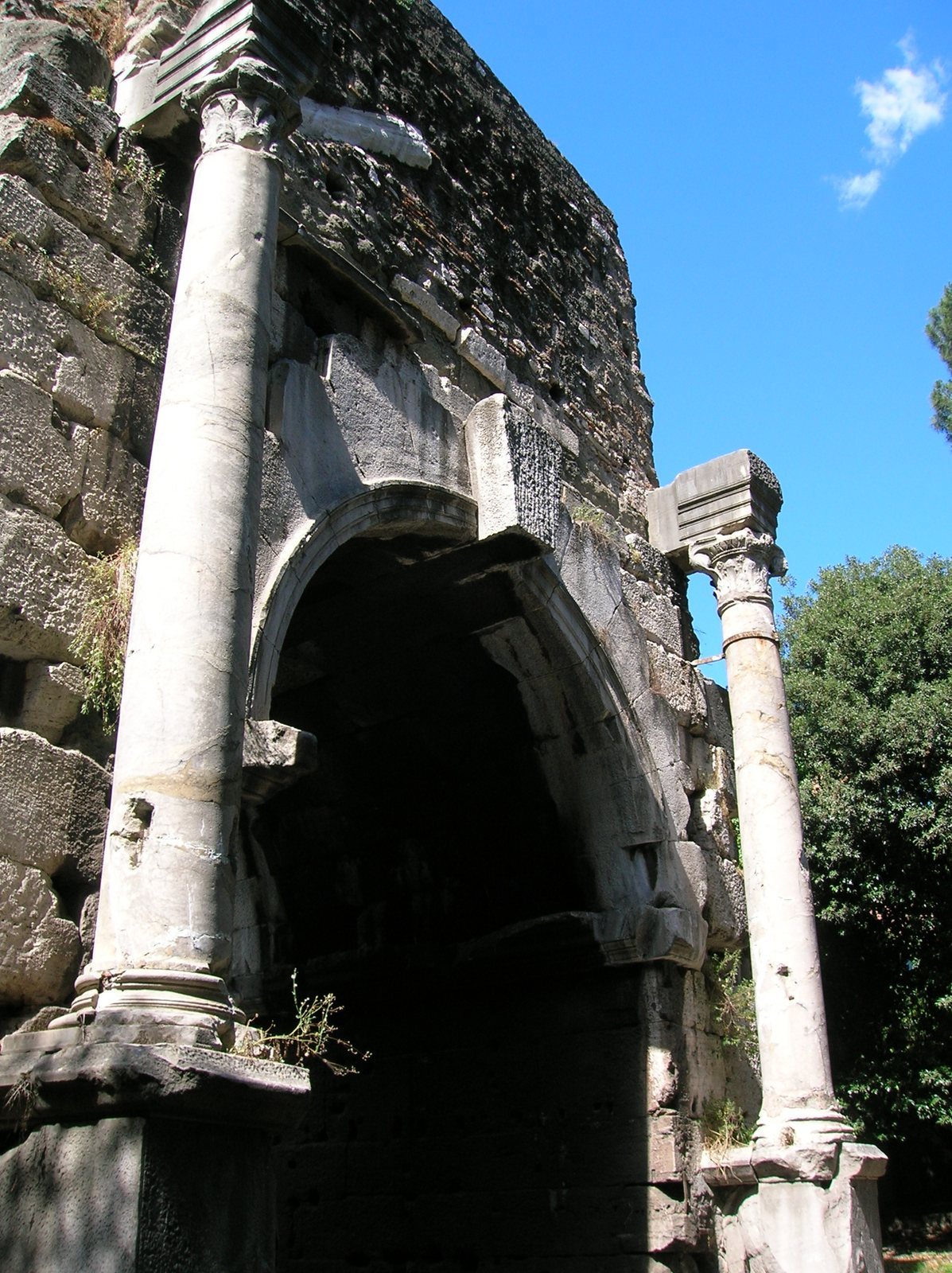
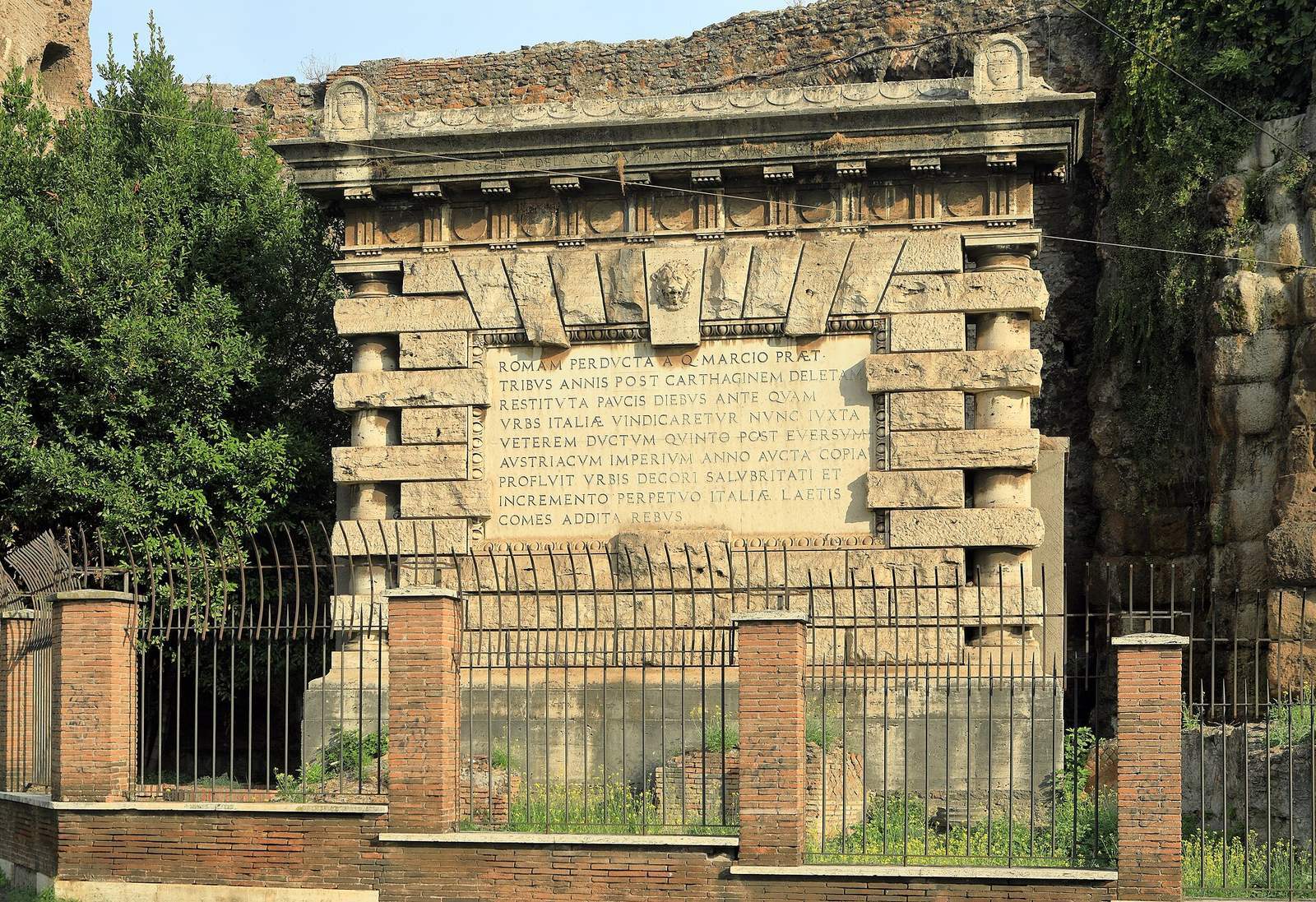
Agrippa repaired Aqua Marcia in 33 BC. Augustus, Rome’s first emperor, then largely rebuilt it between 11 and 4 BC after receiving a report from the consuls Quintus Aelius Tubero and Paullus Fabius Maximus. An inscription commemorating the work was placed on the arch over the Via Tiburtina, later incorporated into the Aurelian Wall. To protect supply during dry weather, Augustus added water from Aqua Augusta through a new conduit connected about 1.1 km from the original spring. This addition doubled the aqueduct’s capacity.
During Nero’s reign, extensive private diversions left little water for the city. Nero also bathed in one of the springs, an act regarded as a profanation of a sacred source. An illness that followed was interpreted as evidence of divine anger. Repairs were undertaken under Titus, and Trajan completely rebuilt the branch serving the Caelian and Aventine hills. He extended distribution to the Aventine using inverted siphons, conduits that carried water under pressure through lower ground. Hadrian also restored parts of the aqueduct.
Under Nerva, the different waters were kept in separate channels to prevent mixing from reducing Aqua Marcia’s quality. By the late first century AD, the administrator Frontinus recorded a capacity of 2,162 quinariae, a Roman measure of water flow whose modern volume is uncertain. The water curator measured 4,690 at the source, making Aqua Marcia Rome’s second-largest water source by recorded flow, after Aqua Anio Novus. Before the settling basin, 351 quinariae were assigned for distribution, including 164 to Aqua Anio Vetus and 92 to Aqua Tepula. A separate tally gave 2,944 reaching the city, of which only 1,840 were distributed; the rest had been diverted illegally. Frontinus’s measures restored the original allocation by the end of the century, and new arcades were built, including between the Caelian and Aventine.
Later imperial rebuilding and reuse
Repairs continued under Septimius Severus in 196 AD and under Caracalla in 212–213 and later. Caracalla cleared the springs, excavated new tunnels and added the source Fons Antoninianus. Its water entered a new branch called Aqua Marcia Antoniniana or Aqua Antoniniana Iovia. Diocletian may also have commissioned repairs after building his baths. The branch’s capacity was later increased under his rule and it became known as Forma Iovia; a separate branch supplied the Baths of Diocletian.
The aqueduct was cut during the Gothic Wars, sixth-century conflicts in Italy between the Eastern Roman Empire and the Ostrogoths, and was out of use by the sixth century. In 1586, Pope Sixtus V built the Acqua Felice, reusing or replacing parts of Aqua Marcia along a stretch of about 11 km. The newer aqueduct still follows much of its route, and springs that once fed Aqua Marcia continue to supply modern Rome. Modern surveys by archaeologists Esther Boise Van Deman and Thomas Ashby mapped the aqueduct.
Remains
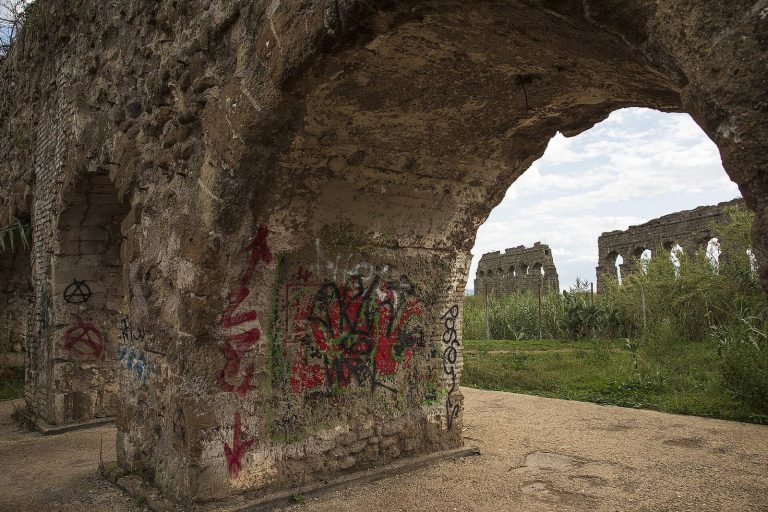
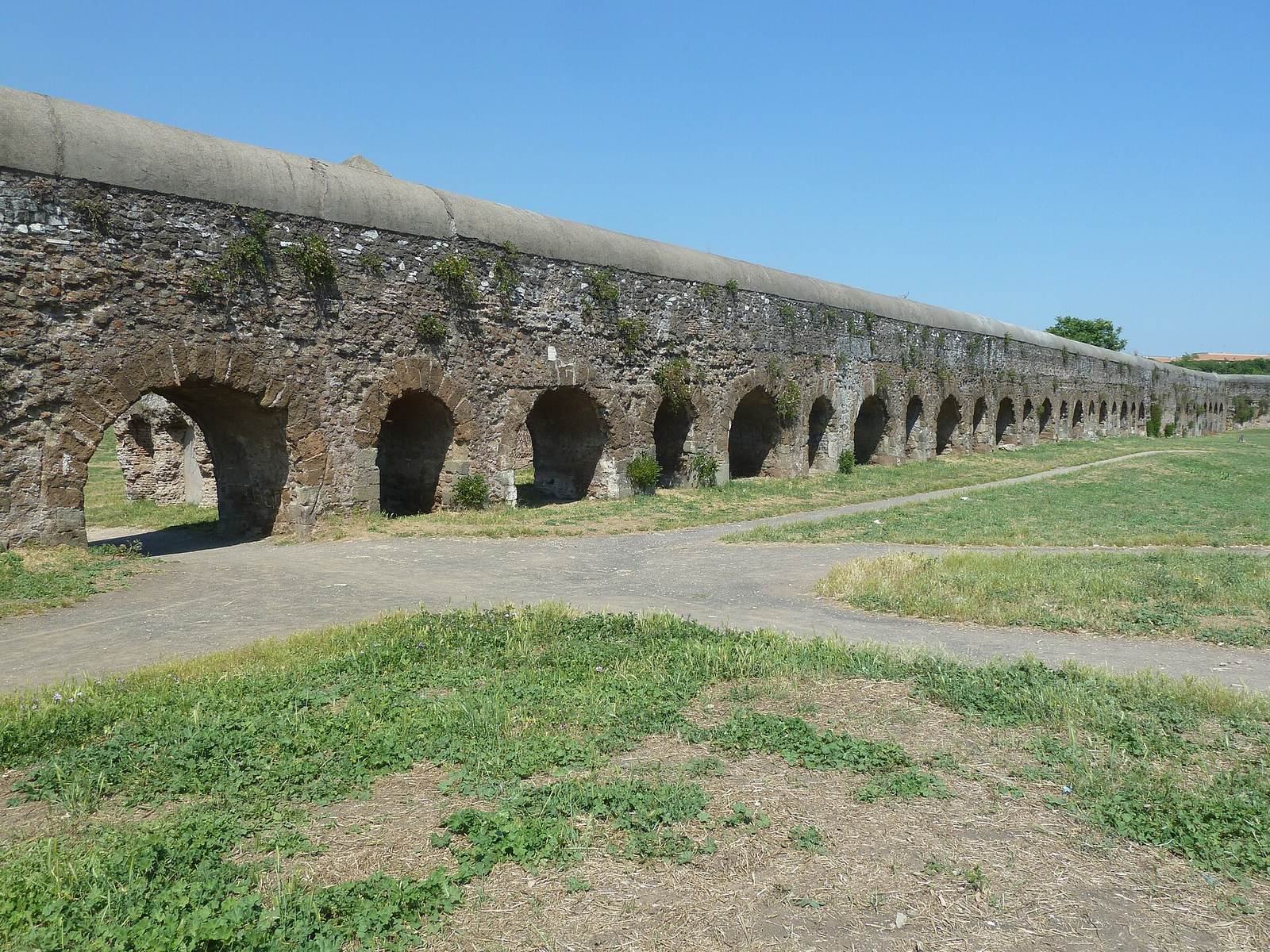
Aqua Marcia extended about 91 km from its springs to Rome, descending from approximately 318 m to 59 m above sea level. Roughly 80 km of its course ran underground; elsewhere, bridges, supporting structures and long arcades carried the water across difficult terrain. The original stone channel was later joined by brick channels above it, and sections of the route and several bridges survive.
Route from the springs to Rome
Sources and eastern route
The original springs lay in the Anio Valley near Arsoli, on the river’s right bank, where two springs formed small lakes. The water was first called Aqua Aufeia and came from Fons Pitonia. For most of its first 80 km, the conduit ran underground. It followed the Anio’s right bank, crossed the river by a bridge before Vicovaro, joined the lower route of Aqua Anio Vetus and continued toward Tivoli. It passed east of Villa Hadriana, then followed the foothills of the Montes Praenaestini westward.
Approach to the city
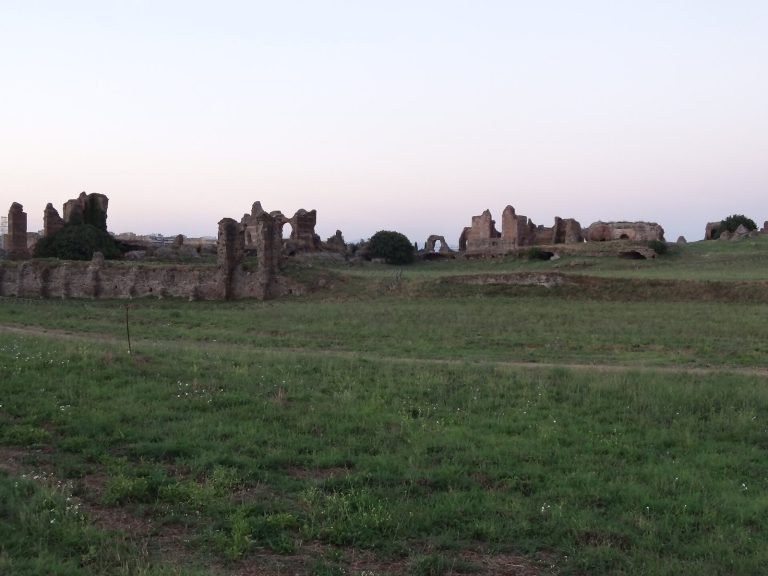
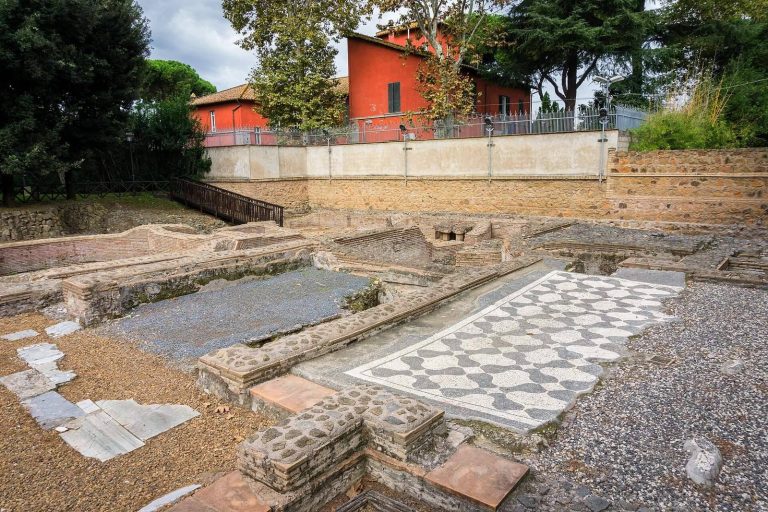
Farther along, the route crossed valleys and the Via Praenestina by bridges and underground passages. Its trace is known as far as Santa Maria di Cavamonte in Gallicano nel Lazio, then becomes uncertain before Aqua Tepula and Aqua Julia joined it near Romavecchia. The aqueduct passed Labicum near the Via Labicana and reached the Via Latina around its seventh mile, where a settling basin stood. On the final approach to Rome, monumental arcades ran beside the Via Latina toward Ad Spem Veterem, near Porta Maggiore, where several aqueducts converged. The line followed the course of the Aurelian Wall, crossed the Via Tiburtina on an arch later incorporated into Porta Tiburtina, passed the Viminal Gate and continued to the area of Porta Collina.
Channels and city distribution
Shared arcades and distribution points
Aqua Tepula and Aqua Julia joined Aqua Marcia before the Via Latina and shared its arcades toward Rome. Their channels remained separate, stacked one above another: Aqua Marcia ran at the bottom, Aqua Tepula above it and Aqua Julia at the top. All three reached the distribution complex called Piscina Trium Aquarum, north of the Baths of Diocletian. A principal distribution tank stood near Porta Collina, close to modern Via XX Settembre. Aqua Marcia’s network extended to the Quirinal and Capitol and served about two-thirds of the city. Water reached the Capitol by arcades or through an inverted siphon.
Rivus Herculaneus
The secondary branch Rivus Herculaneus left the main conduit shortly after Porta Maggiore. It began at a distribution tank built into the Aurelian Wall’s fifth tower, south of Porta Tiburtina. The branch ran underground across the Caelian, but its level was too low to supply the hill. It ended at a tank near Porta Capena, probably on the Caelian side, and served densely populated parts of Rome’s districts I, XI and XII.
Aqua Antoniniana Iovia
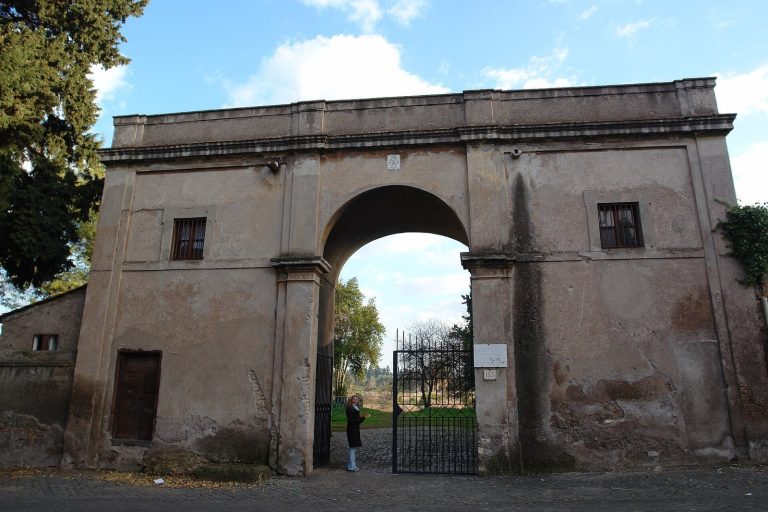
This branch separated from the main conduit near the third mile of the Via Latina and ran southeast to the Baths of Caracalla in district XII. It crossed the Via Appia at a vaulted structure adapted as a monumental arch. Known as Arco di Druso, the arch was confused with the nearby Arch of Drusus. It stood near Porta San Sebastiano, formerly Porta Appia. The branch ended in a large tank southwest of the baths, and sections remain visible.
Surviving bridges and service works
Ponte San Pietro
Ponte San Pietro crosses the Mola stream. Built from local porous limestone blocks, its central arch spans 16 m. The bridge’s abutments narrow from 3.84 m wide at the base to 2.77 m. The northwest side probably had a smaller arch, while the southeast side had three small arches. It was reinforced under either Titus or Hadrian, encased in concrete and rebuilt at its southeast end.
Ponte Lupo
Built as part of Aqua Marcia in 144 BC, Ponte Lupo crossed the deep Aniene Valley. It is estimated to have stood more than 30 m high and extended over 80 m in length. A road crossed its top, linking the two sides of the valley.
Ponte Caipoli
Ponte Caipoli originally carried the aqueduct over the Caipoli stream on a single large arch dating to 144 BC. That structure was later replaced by a double brick arch, 13 m high. Repairs from later centuries remain visible in its supports and curved underside.
Ponte della Bullica
This Augustan-period bridge crosses the Collafri stream on a single round arch made of wedge-shaped tufa blocks. Its arch spans 5.8 m; the bridge is 5.5 m high, 3.3 m wide and 10.6 m long. It has not undergone radical restoration. Roman rooms used by maintenance workers stood on the tuff banks about 30 m from the bridge on both sides.
Tunnel and maintenance access
Between Ponte Caipoli and Ponte della Bullica, a winding tunnel cut through tuff measures about 1.2 m wide and 200 m long. A separate service tunnel on the southwest bank near Ponte della Bullica was built with the aqueduct. About 230 m long and wide enough for vehicles, it had inspection shafts spaced every 30–40 m, leading down to the water channel. This arrangement made the shafts shorter and allowed carts to carry excavated material and maintenance supplies across Collafri Hill. Other surviving bridges include Ponte degli Arci, where an Aqua Marcia arch can be seen behind an arch belonging to Aqua Anio Novus.
Construction and archaeological evidence
Materials and channel construction
Aqua Marcia’s construction used tufa and peperino, both volcanic stones, as well as Roman concrete and brick. Stone supported the original water channel; the brick channels of Aqua Tepula and Aqua Julia were later carried above it. In some stone sections, builders cut vertical grooves into the ends of blocks so that, when joined, they formed a tube for the mortar that sealed the conduit.
Boundary stones and coin images
Stone boundary markers from the Augustan period help trace the routes of Aqua Marcia, Aqua Tepula and Aqua Julia. Coins dated 114/113 BC and 56 BC depict Aqua Marcia. In 56 BC, Lucius Marcius Philippus issued a silver coin that celebrated the aqueduct as an achievement of his ancestor from the Marcia family.