Amphitheatre of Bleso: A Roman Arena at Tivoli, Italy
Site at a Glance
- Rating
- 4.2
- Popularity
- Very Low
- Country
- Italy
- Primary era
- Classical
- Eras represented
- Classical
- Civilizations
- Roman
- Site type
- Entertainment
- Remains
- Amphitheatre
On this page9 sections
History
The Amphitheatre of Bleso is an ancient Roman amphitheatre at Tivoli, Italy, built during the second century of the imperial period. It stood outside the town’s ancient Republican walls and was associated with public spectacles involving gladiators and wild animals.
Roman origins and use
Before the amphitheatre was constructed, the area apparently supported ceramic production. Excavations recovered several manufactured objects, including finely made cups. The site was later converted for gladiatorial use by M. T. Blesus, whose contribution is said to have included 200 working days and 200,000 sesterces toward the building project.
An inscription dated to AD 184 names M. Lurius Lucretianus as the financier of a combat involving men and wild animals, as well as a contest between 20 gladiators. The construction of the amphitheatre has been associated with the introduction of gladiatorial games in the area. Its considerable size may relate to the possible presence of a gladiators’ training school, an institution where gladiators were housed and prepared for public combat, although the existence of such a facility remains uncertain.
Destruction and later transformation
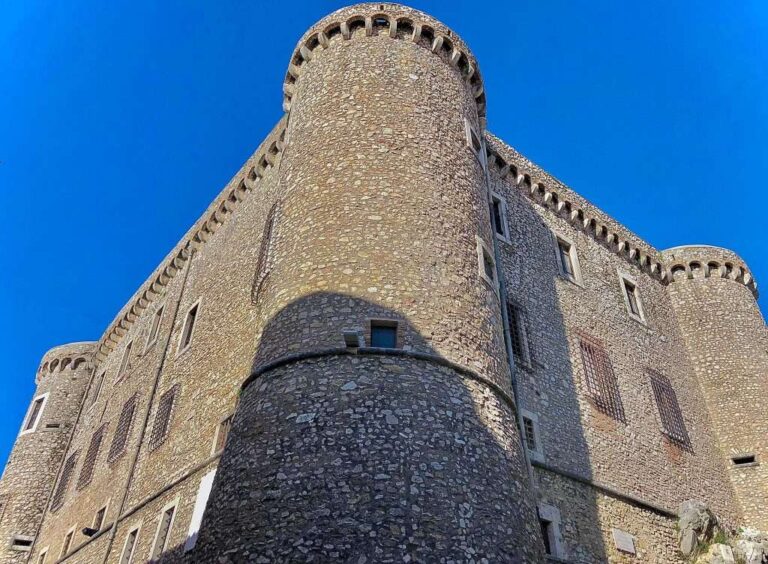
Part of the amphitheatre was destroyed when the Rocca Pia, a Renaissance fortress commissioned by Pope Pius II Piccolomini to protect Tivoli from enemy attacks, was built beside it. The area in front of the fortress was later turned into a hunting park by Ippolito d’Este, an Italian cardinal and Renaissance patron associated with Tivoli. In the early seventeenth century, Cardinal Bartolomeo Cesi converted it into a kitchen garden.
Medieval registers belonging to the abbeys of Farfa and Subiaco referred to the area as “Fundum Amphiteatrum,” preserving a memory of its earlier importance. The amphitheatre itself was rediscovered in 1948 during work on a road intended to connect Largo Garibaldi with Via dell’Inversata. Restoration work at the remains was documented in 1983. The site now forms part of Tivoli’s historical urban heritage beside the Rocca Pia and the Scuderie Estensi.
Remains
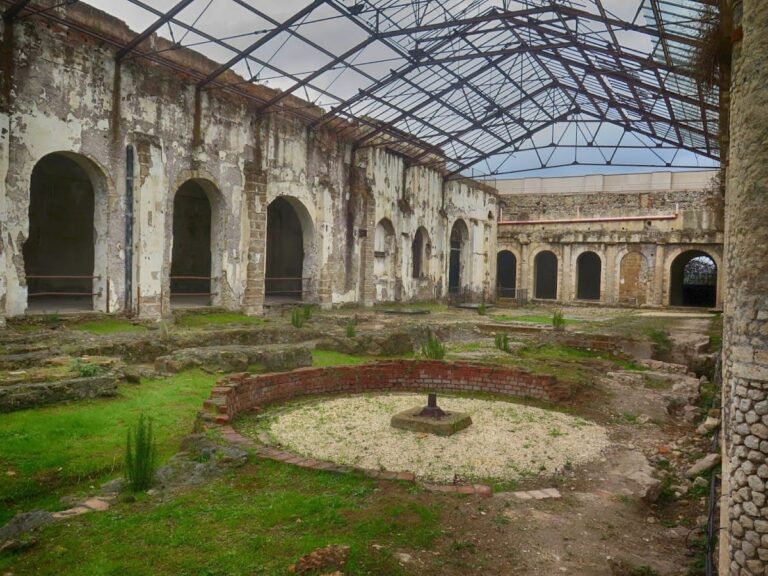
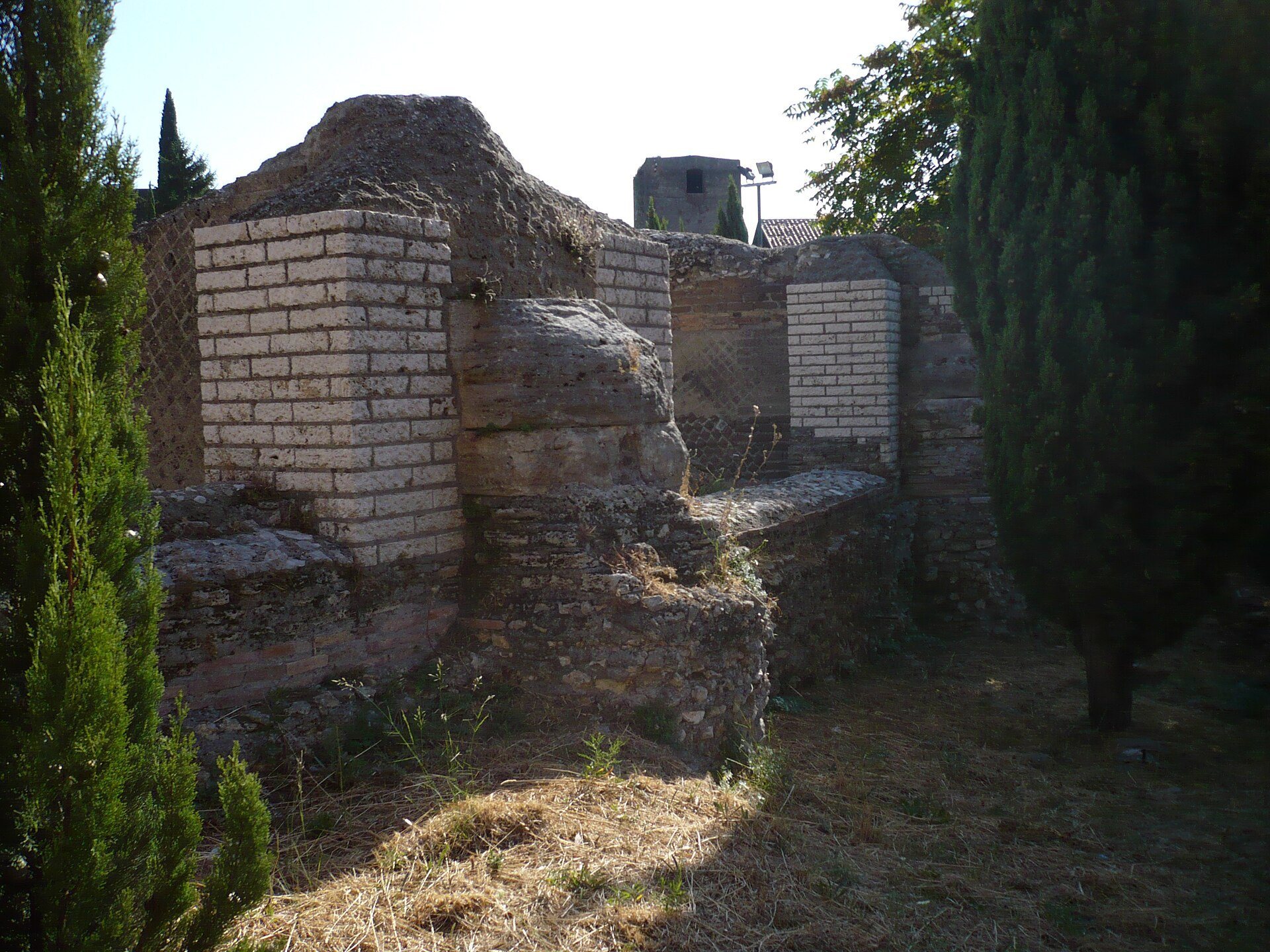
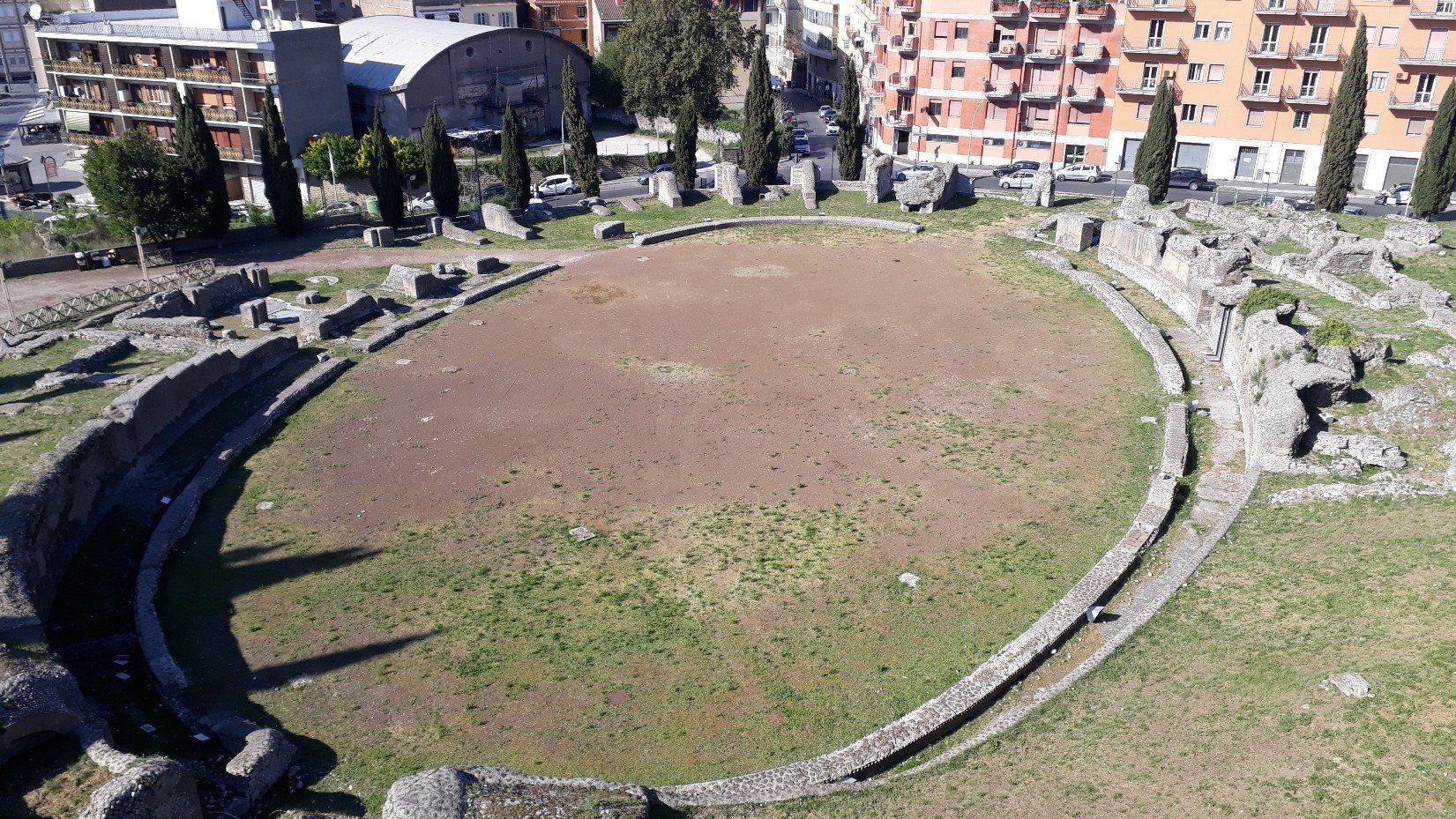
The amphitheatre occupies a sloping hillside and combines the natural incline with an embankment created from excavated material and the remains of earlier structures. Its construction therefore falls between an amphitheatre formed mainly from solid ground and one erected as a fully built-up structure. The oval plan measured approximately 90 metres along its major axis and 50 metres along its minor axis.
Seating and arena
Oval seating structure
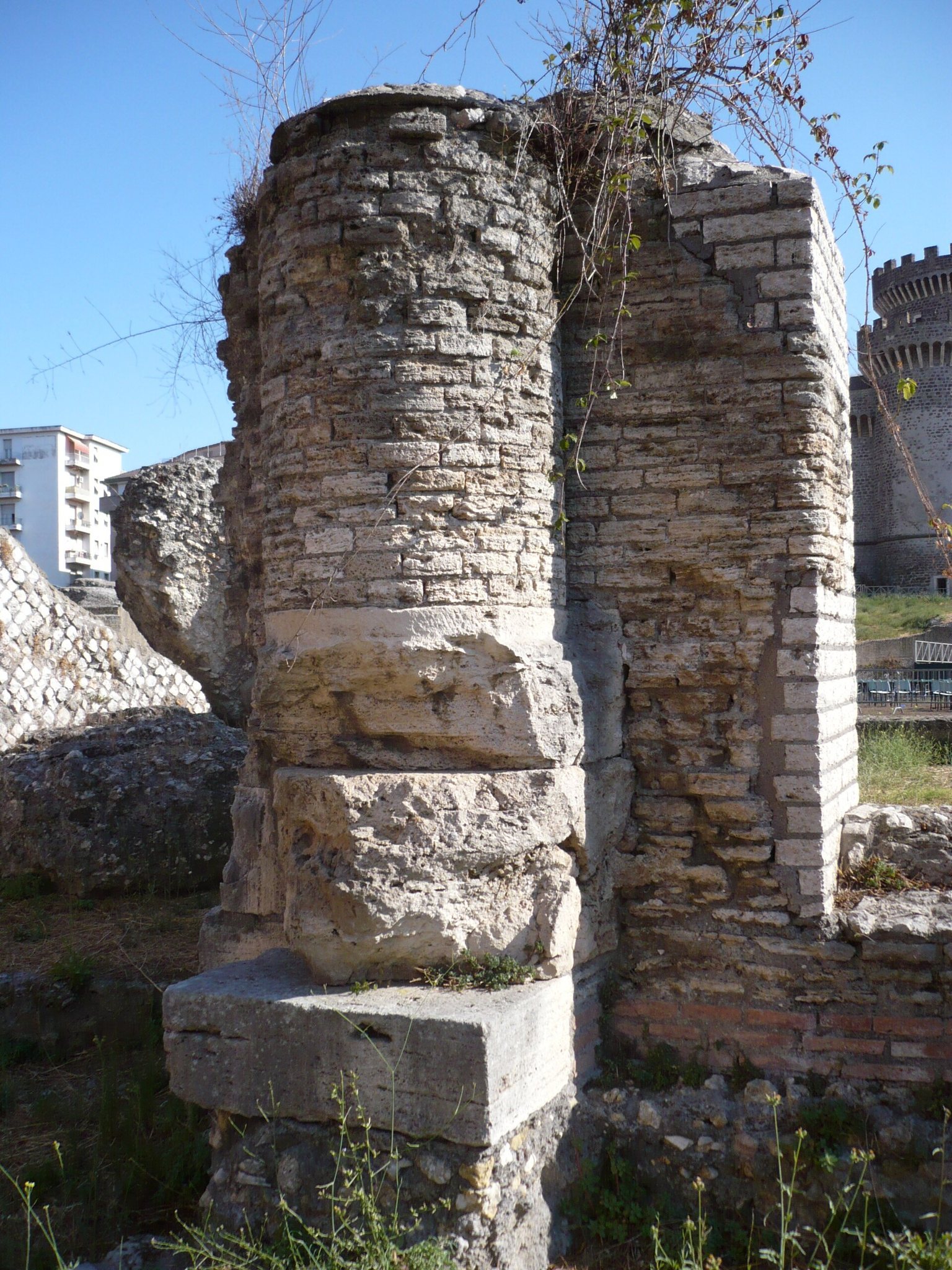
Semicolumns surrounded the principal structure and supported the seating. Wedge-shaped elements also carried the seats, resting on a large ellipse and on a covered corridor with a barrel-vaulted roof. These arrangements provided space for up to approximately 2,000 spectators. The masonry used opus mixtum, a Roman wall-building technique combining different types of masonry, mainly tuff and travertine drawn from materials abundant in the surrounding area.
Arena and covered corridor
The arena measured about 61 by 41 metres. A covered corridor followed its sides and apparently communicated with the arena through doors and/or windows. Four entrances were planned, although only one of the two secondary entrances was built. The floor apparently consisted of mortar mixed with breccia, a stone aggregate made from angular fragments.
Surviving archaeological features
Roman road
Only parts of the amphitheatre survive. Among the remains is a Roman road paved with stone blocks that was incorporated into the complex. The surviving area is used for concerts, exhibitions, film-related displays, and historical reenactments. Local cultural associations have also staged reenactments of gladiatorial combats, maintaining the historical memory connected with the arena.