Roman Temple of Alcántara: A Preserved Roman Votive Temple in Spain


Site at a Glance
- Rating
- 4.4
- Popularity
- Very Low
- Country
- Spain
- Primary era
- Classical
- Eras represented
- Classical, Medieval
- Civilizations
- Roman
- Site type
- Religious
- Remains
- Temple
On this page9 sections
History
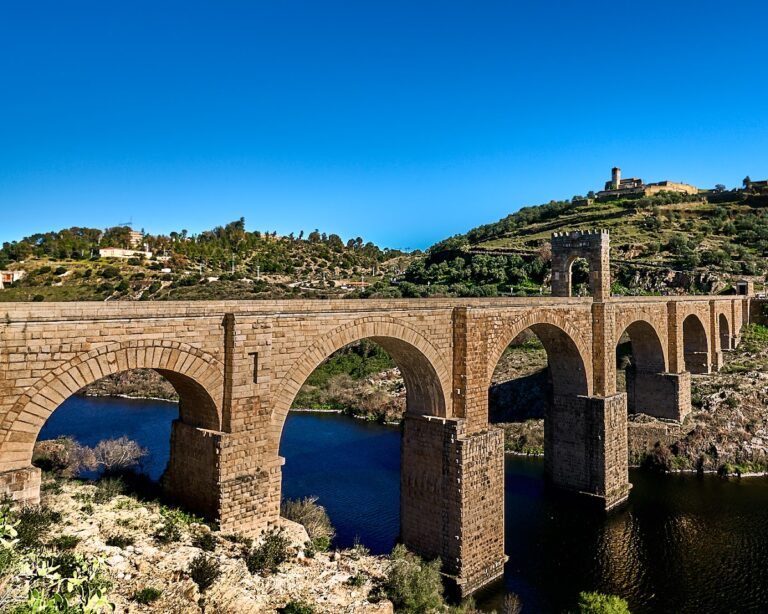
The Roman Temple of Alcántara is a Roman temple in Spain, beside the southern entrance of the Alcántara Bridge in Cáceres, Extremadura. Traditionally, it is dated to AD 103 and attributed to the Roman architect Gaius Julius Lacer, who is said to have built the temple, bridge, and triumphal arch. The complex is one of only two Roman temples in Spain preserved nearly complete. The temple was dedicated to the emperor Trajan and the Roman gods, or more broadly to deified Roman emperors.
Roman construction and traditional attribution
Lacer’s origin may have been local, although the complex is closely related in style to contemporary construction in Italy. He may therefore have studied there, or have been born there, before moving to Lusitania, the Roman province that covered much of present-day Portugal and parts of western Spain. The temple’s inscription traditionally identifies Lacer as the maker of both the temple and bridge. It also connects the dedication with the bridge’s construction and names Curius Laco Igaeditanus, associated with Idanha-a-Velha, as Lacer’s friend.
If the temple was still in use during the fourth century, it may have been closed during the persecution of pagan cults under Christian emperors. This possible end to its Roman religious function was followed by a major change in use during the medieval period.
Medieval chapel and later preservation
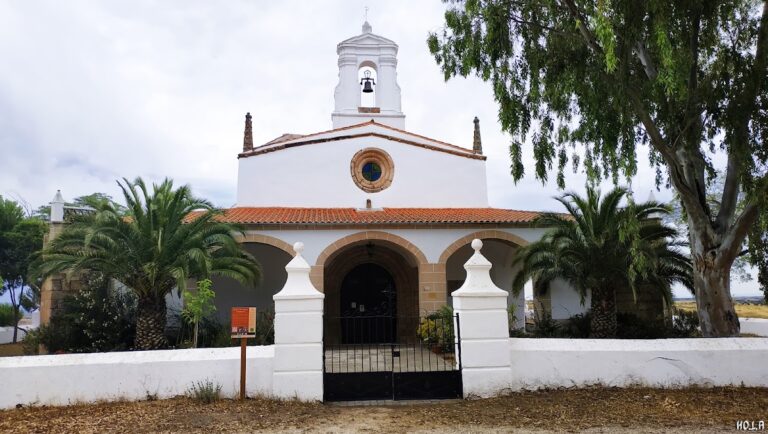
After Ferdinand II of León conquered Cáceres in 1169, the former temple was converted into a chapel dedicated to Saint Julian. A belfry and a skull with tibias were added during its Christian use. The belfry later disappeared, while the skull was moved to the rear of the building. This reuse helped preserve the Roman structure, which later became a landmark on the pilgrimage route to Santiago de Compostela, a major Christian destination associated with Saint James the Apostle.
Contested chronology and inscription renewal
A later hypothesis by Joan Carbonell and Helena Jiménez, supported by the Roman-roads engineer Isaac Moreno Gallo, challenges both the traditional date and the attribution to Lacer. It proposes that the bridge was built during the Augustan period, the reign of Augustus from 27 BC to AD 14, and that the temple was constructed during a fifteenth-century reform by the Order of Alcántara under Juan de Zúñiga y Pimentel. In this interpretation, the reform promoted a vision of Spain’s Roman identity and connected it with the monarchy of Ferdinand and Isabella through Trajan, who was born in Hispania.
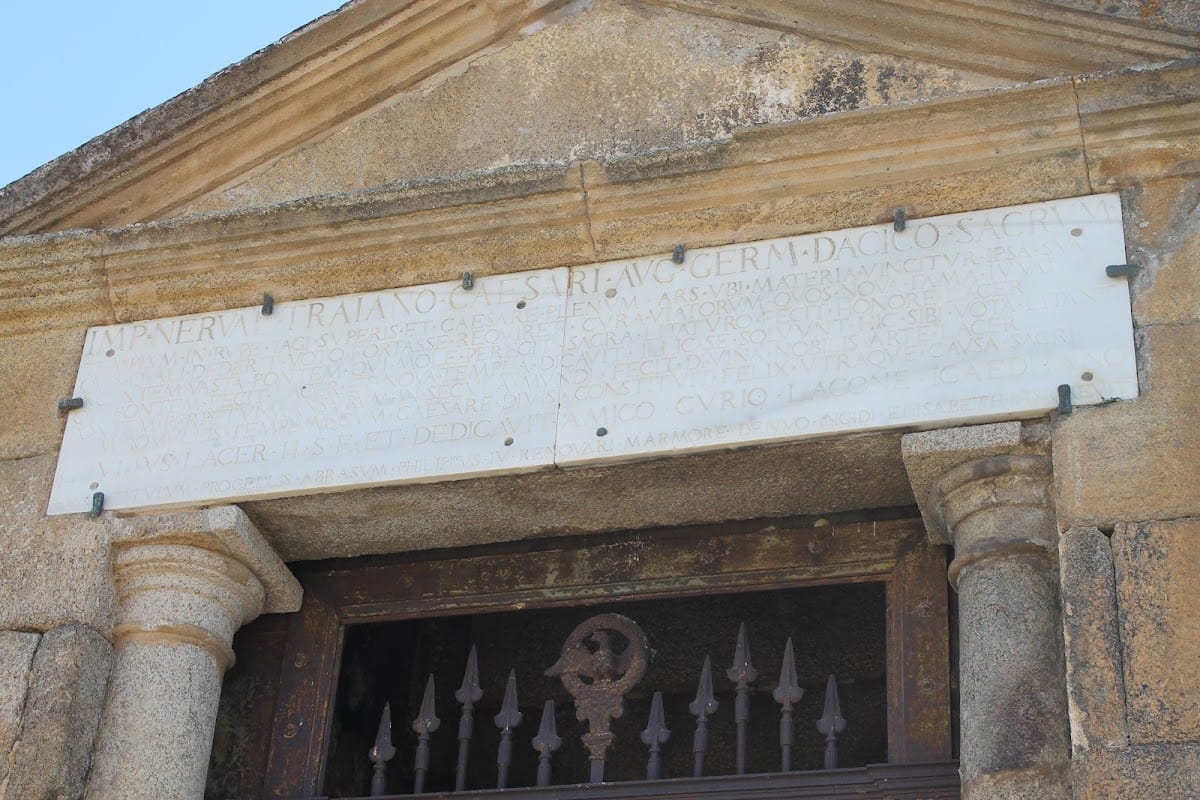
The same hypothesis proposes that material from the bridge was reused in the temple, that the surviving inscription was created during the fifteenth-century reform, and that Gaius Julius Lacer may never have existed. The traditional attribution to Lacer and the date of AD 103 therefore remain important but contested elements in the history of the complex. The inscription had been weathered by storms before Philip IV ordered its renewal; it was later recut in marble by order of Isabella II.
Remains
Temple structure and interior
The building is a small rectangular votive temple in antis, meaning that its principal entrance is set between projecting side walls and fronted by columns. It is built from granite ashlar blocks, with the temple and bridge using blocks of the same dimensions. An exterior staircase leads to the entrance, which is framed by two plain Tuscan columns. These columns have smooth shafts and simple capitals. Above them is a gabled roof made from stone slabs, while the pediment has moulded edges and a smooth, undecorated tympanum, the enclosed surface within the triangular facade.
Inside, the structure appears to have been divided into a naos, the main sacred chamber, and a pronaos, the entrance porch. The temple’s design has been compared with the Treasury of the Athenians at Delphi. The former chapel additions include the surviving skull with tibias, now positioned at the rear, while Lacer’s tomb remains inside the building.
Inscription and surviving additions
Dedication on the lintel
An inscription occupies the lintel above the entrance. The present text is a later copy rather than the original. It records the dedication by Gaius Julius Lacer to Trajan and the Roman gods, describes the temple as standing on the living rock of the Tagus, and links the dedication to the construction of the bridge. It also identifies Lacer as the maker of the temple and bridge and dedicates the chapel to his friend Curius Laco Igaeditanus.
Christian chapel features
The building’s conversion into a chapel introduced a belfry and the skull with tibias. The belfry has since been lost, while the skull was relocated to the rear of the temple. The marble recutting of the inscription, ordered by Isabella II after the earlier renewal associated with Philip IV, forms part of the building’s later physical history.