Bridge of Augustus in Narni: A Roman Crossing of the Nera River

Site at a Glance
- Rating
- 4.6
- Popularity
- Low
- Country
- Italy
- Primary era
- Classical
- Eras represented
- Classical
- Civilizations
- Roman
- Site type
- Infrastructure
- Remains
- Bridge
On this page8 sections
History
The Bridge of Augustus in Narni, Italy, is a Roman stone arch bridge built under Emperor Augustus around 27 BC to carry the Via Flaminia across the Nera River. The Via Flaminia was the major road from Rome toward the Adriatic and eastern Italy, and the bridge formed one of its principal crossings. At approximately 160 metres long and 30 metres high, it was considered one of the largest Roman bridges of its period.
Roman construction and use
Augustus, the first Roman emperor, ruled from 27 BC to AD 14, a period when Roman authorities expanded and consolidated roads and other infrastructure. The bridge’s complexity and irregularities suggest that its construction may have continued over time. Intensive use and natural disasters later caused structural failures, leading to substantial ancient repairs.
The bridge remained in service for about a thousand years. A collapse in the seventh century prompted rebuilding, but a flood of the Nera in the tenth century destroyed one of its arches. The damage was not repaired, and the crossing ceased to function as a roadway. By 1054 the bridge stood in ruins, and a wooden replacement was built farther downstream.
Collapse and conservation
Further losses followed over the centuries. In 1855, another flood brought down the third pier. By that time, after earlier failures, only the southern arch remained intact, although additional piers and fragments continued across the river toward the northern bank. The arches were strengthened during the 1970s. Earthquake damage in 2000 led Umbrian authorities to undertake further conservation, completed in 2005.
Literary and artistic associations
The bridge and its ruins became part of the Grand Tour, an early-modern and nineteenth-century educational journey through Italy undertaken by European elites and artists to study ancient monuments, art, and landscapes. J. M. W. Turner sketched the bridge in 1819, and Jean-Baptiste-Camille Corot painted The Bridge at Narni in 1826. Their works are held by the Tate Gallery and the Louvre respectively. Other artists associated with representations of the bridge include Jean-Victor Bertin, John Robert Cozens, Georg Abraham Hackert, Edward Cavendish Drake, and a Swedish artist.
Martial mentioned the bridge in an epigram, while Flavio Biondo described it in Roma antiqua et restaurata. The ancient literary reference connects the Nera with sulfurous waters. The bridge and its surviving remains are preserved as a conservation site.
Remains
Bridge form and construction
The bridge was built as a stone arch structure about 160 metres long and 30 metres high. Its roadway was approximately 8 metres wide, and the pier bases were about 20 metres across. Four arches carried the road from south to north, with unequal spans of roughly 19.20, 32.10, 18.00, and 16.00 metres. The second arch, with a span of about 32 metres, was the largest.
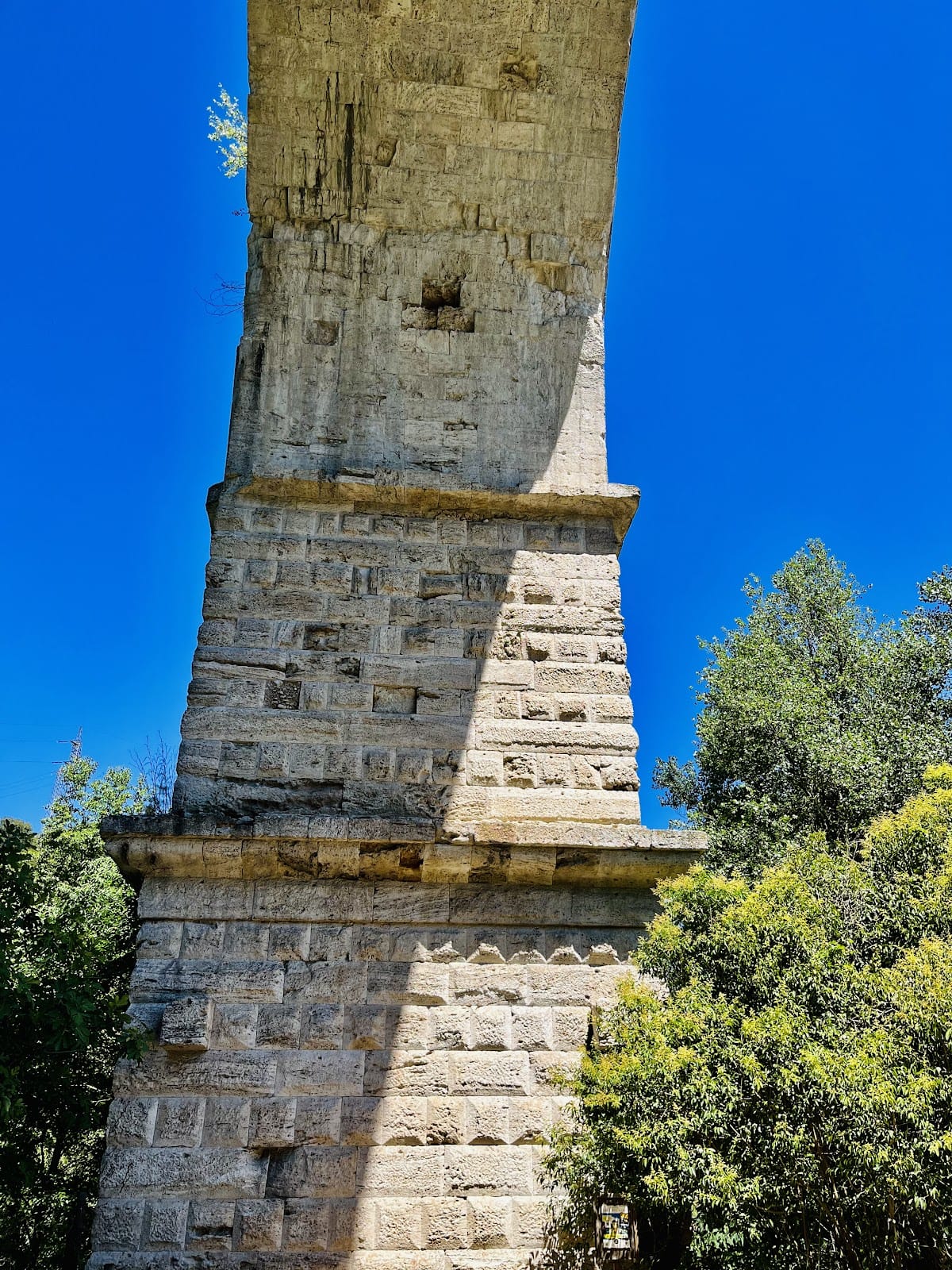
Large, carefully squared marble blocks formed the structure. A historical description emphasizes their close-fitting joints and reports no visible cement or iron clamps connecting them. The masonry therefore preserves a clear example of the materials and construction methods used in a major Roman road bridge.
Surviving arches and piers
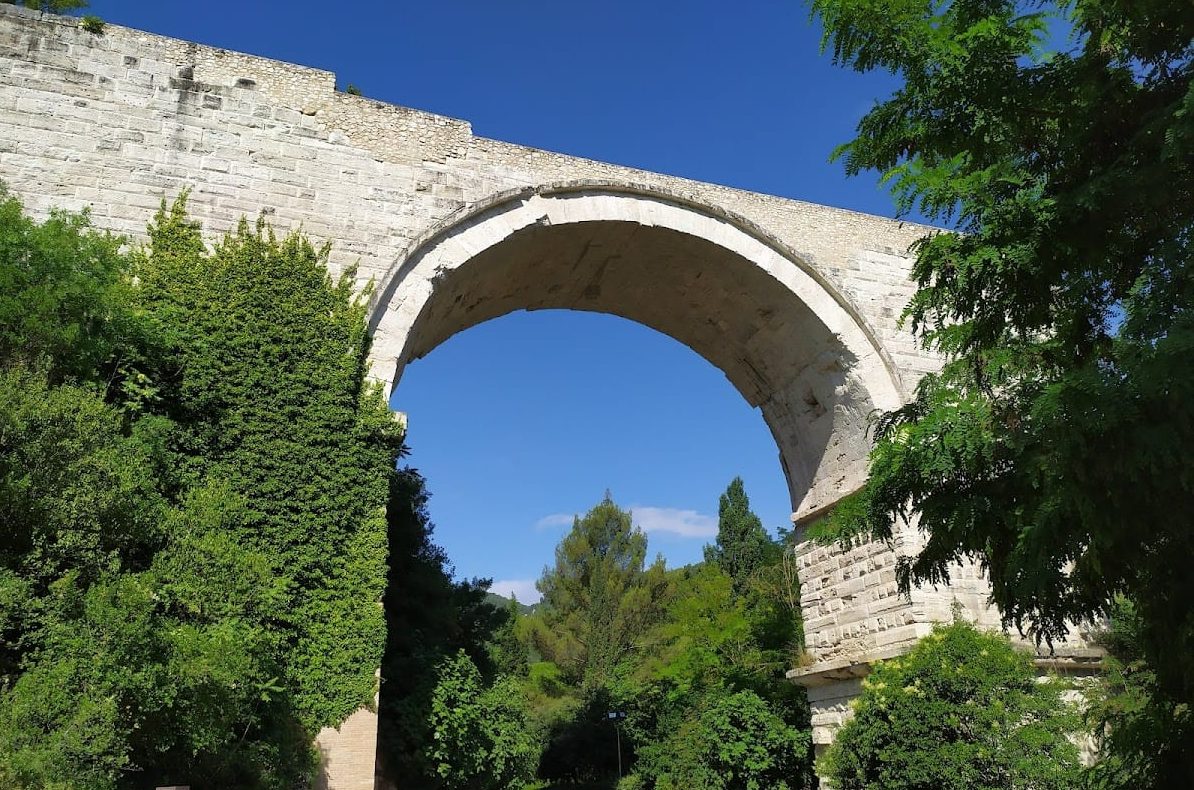
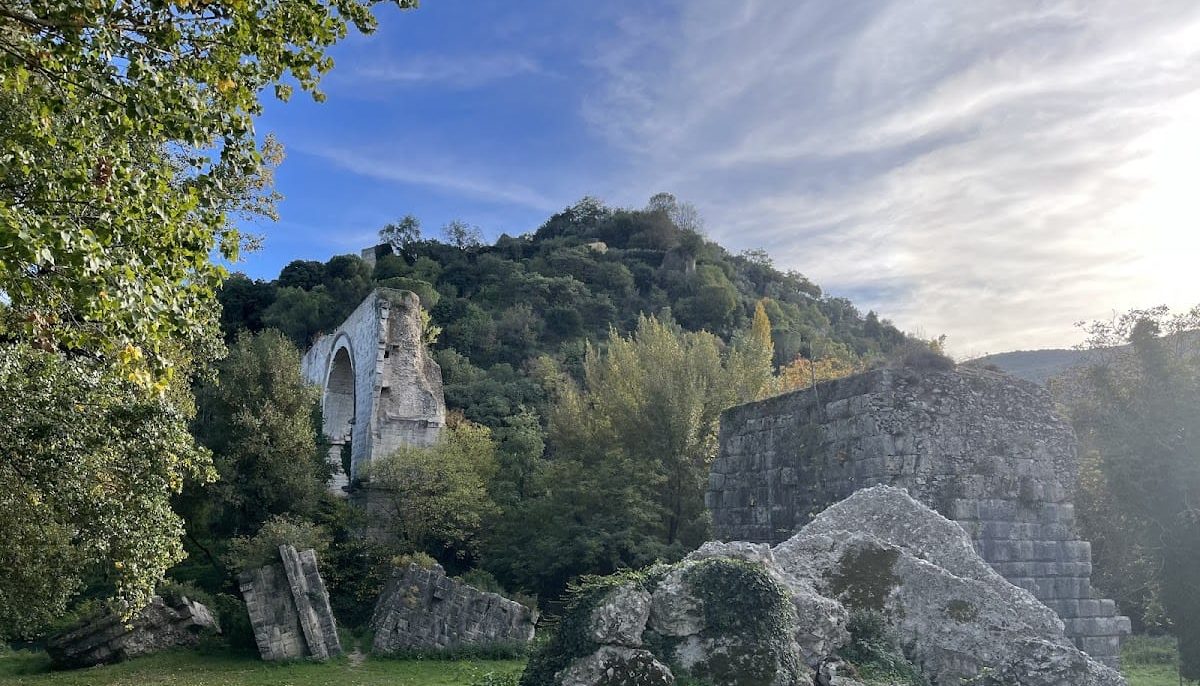
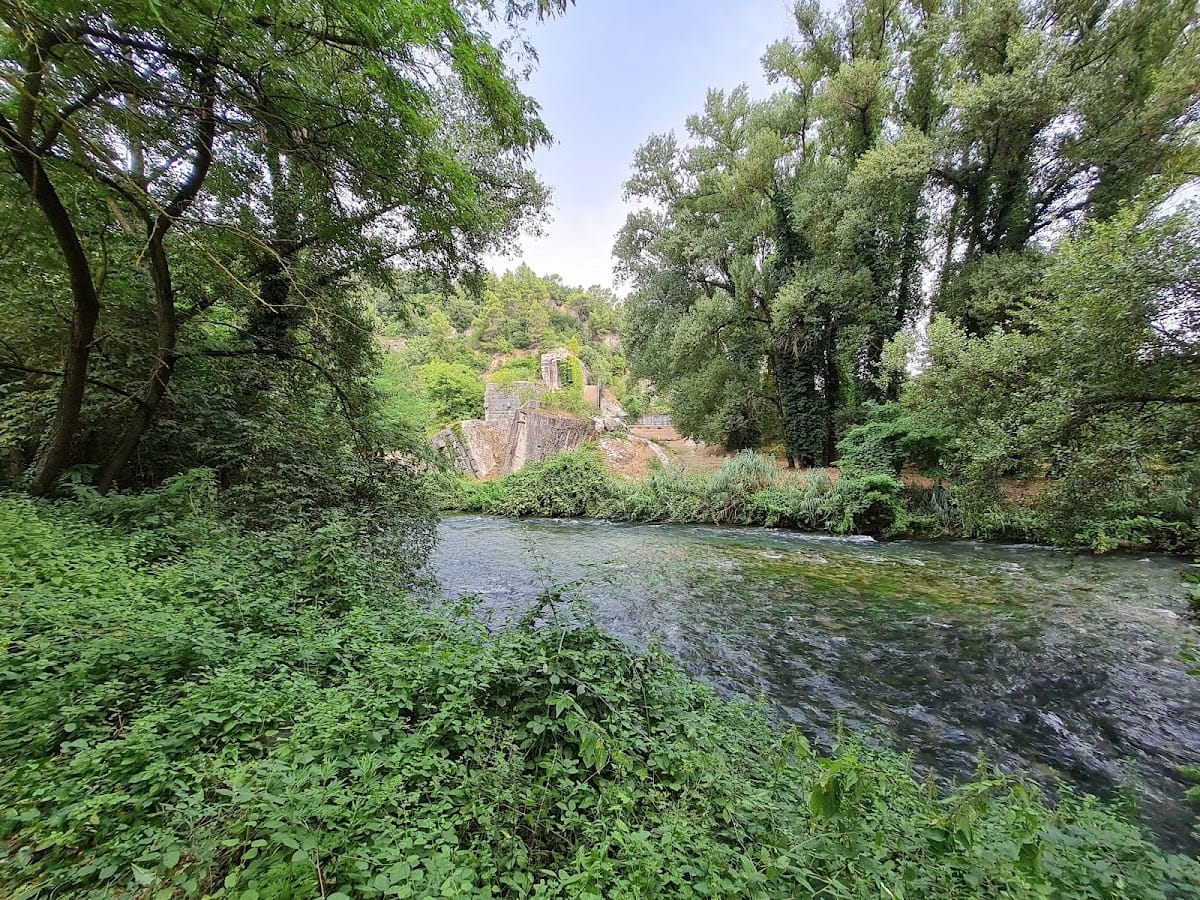
Only the southernmost arch survives intact on the southern bank. The other arches once stood over the river and were more exposed to flooding. Their piers and fragments remain near the bridge and extend across the riverbed toward the northern bank, preserving parts of the original crossing even though its roadway has disappeared.
Evidence of Roman building methods
Projections at the tops of the piers, positioned immediately before the arches began, supported transverse beams and temporary wooden centering. This framework held the stones in place while each curved masonry arch was built, after which the timber was removed. The projections remained as physical evidence of the process.
During the twentieth century, a railway was laid along the Nera’s northern bank. Constructing it required a tunnel to be cut through the bridge remains on that side, adding a later alteration to the surviving archaeological structure.