Arco di Riccardo: A Roman Arch in Trieste

Site at a Glance
- Rating
- 4.3
- Popularity
- Medium
- Country
- Italy
- Primary era
- Classical
- Eras represented
- Classical
- Civilizations
- Roman
- Site type
- Civic
- Remains
- Arch
On this page6 sections
History
Arco di Riccardo is a Roman arch in Trieste, Italy, associated with ancient Tergeste and given its present architectural form around AD 50–75. It is traditionally regarded as the only surviving part of the Roman city walls, constructed on the orders of Octavian, later Augustus, in 33–32 BC. As the first Roman emperor, Octavian ruled during the transition from the Roman Republic to the imperial system.
Roman fortifications and changing interpretations
The arch is commonly understood as one of the gates in Tergeste’s Roman defenses. Its construction date remains uncertain, however. Some interpretations connect it with the late first century BC, while its existing form is placed around AD 50–75, during the reigns of Claudius and Nero or, possibly, the later Flavian emperors. The Claudian–Neronian period covered the rule of Claudius and Nero, while the Flavian period followed under Vespasian, Titus, and Domitian.
The monument may have been added after the fortifications no longer served a primarily defensive purpose. Its proportions have also encouraged the interpretation that it formed a monumental passage between separate districts of the city. Another possibility identifies it as an entrance to a sanctuary of Magna Mater, also called Cybele, a major goddess of the ancient Mediterranean whose cult had been established at Rome during the Republic. None of these interpretations is certain.
Medieval survival and the name
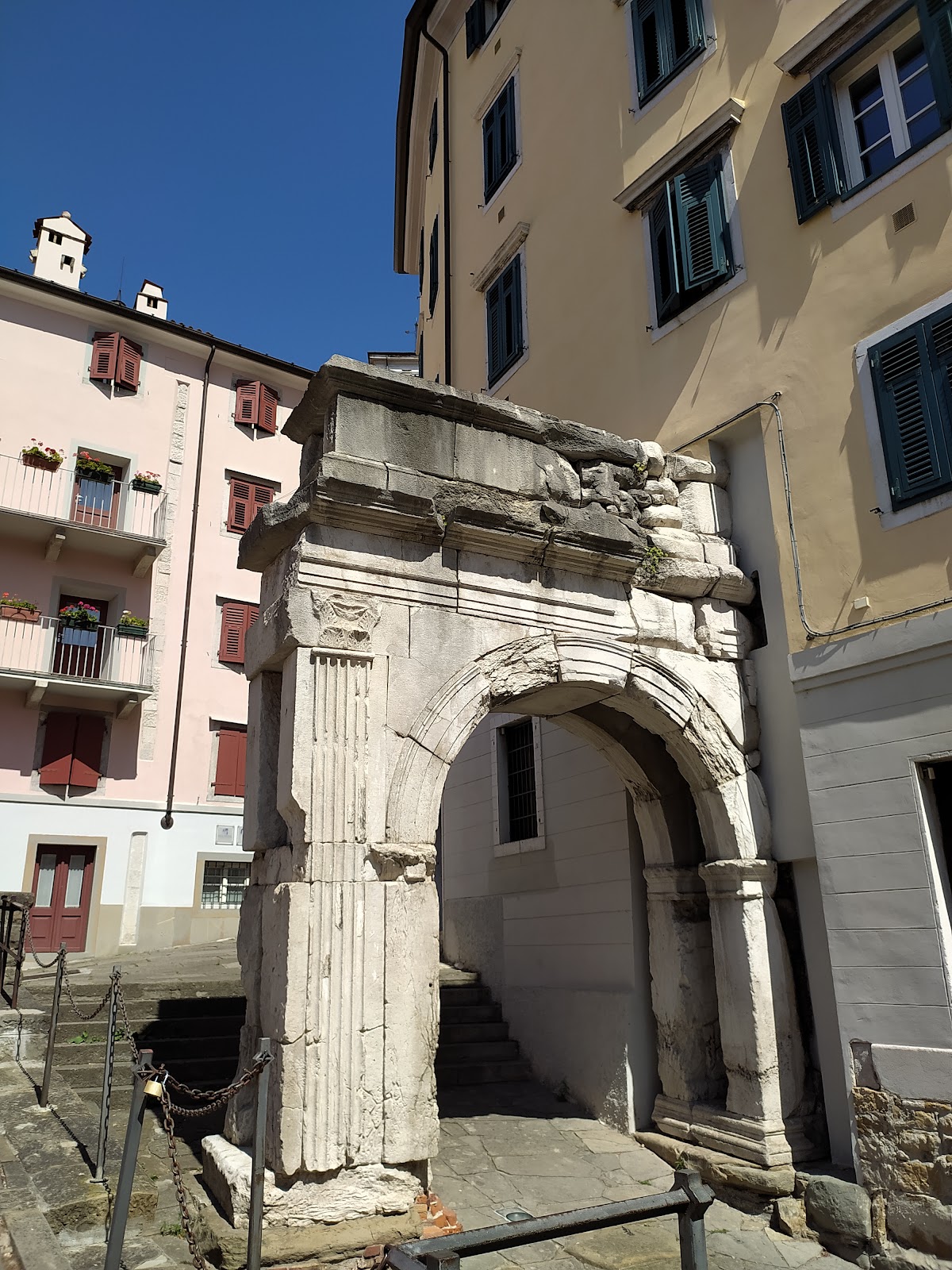
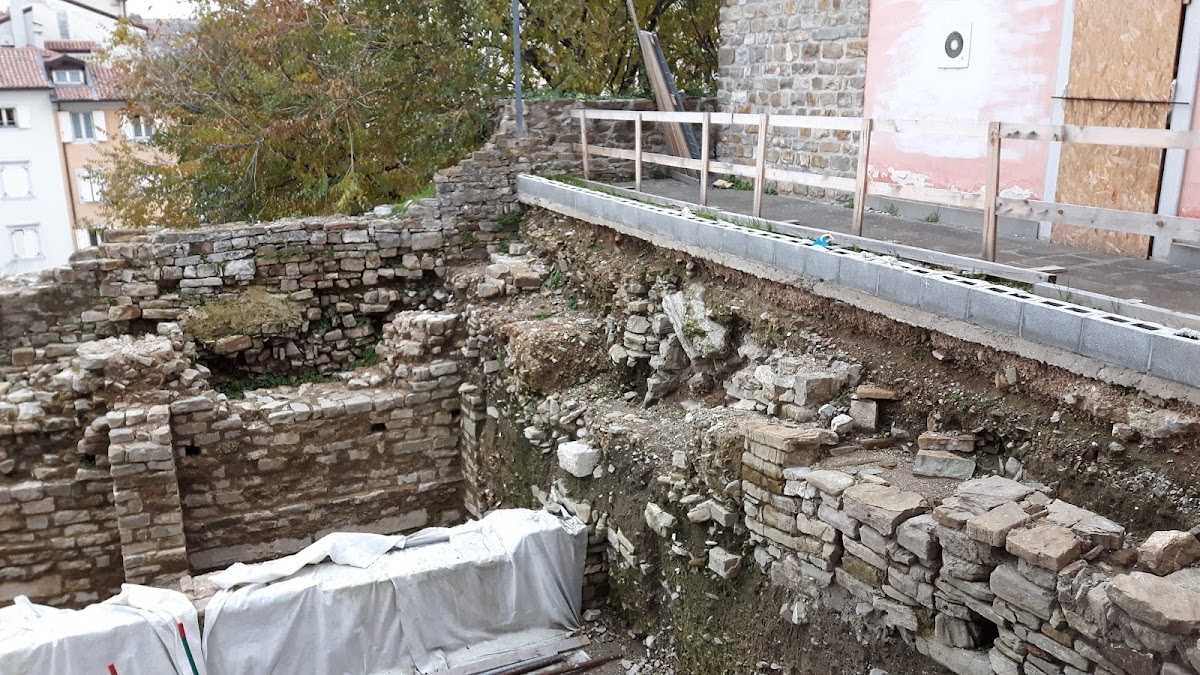
During the Middle Ages and the early modern period, surrounding buildings incorporated part of the arch, although much of the structure remained visible. Excavations in 1913 revealed its western pier together with Roman rooms and other nearby structures. The eastern pier remained partly enclosed within a later building, preserving the layered character of the monument’s setting.
The origin of the name Arco di Riccardo is uncertain. A popular tradition links it with Richard the Lionheart, the medieval king of England and a leading participant in the Third Crusade. He was associated with the Trieste area in the early 1190s and was traditionally said to have been imprisoned there while returning from the Holy Land or the crusade. A more strongly supported explanation derives the name from Arco del Cardo, referring to the cardo maximus, the principal north–south street of a Roman town. Other interpretations connect it with Arco del Ricario, named after a nearby medieval office or courthouse. A further local legend associates the arch with Charlemagne, the Frankish king and emperor who ruled much of western and central Europe in the late eighth and early ninth centuries, but this tradition does not establish the name’s origin.
Remains
Setting and surviving structure
The arch stands in Piazza Barbacan, in the historic center of Trieste, on the northwestern slope of San Giusto Hill. It is a single-span limestone structure measuring approximately 7.2 meters in height, 5.3 meters in width, and 2 meters in depth. The opening is framed by two fluted pilasters, each originally topped by a Corinthian capital, a capital type distinguished by stylized acanthus-leaf decoration. Only one of these side elements is now visible.
Architectural details and excavated remains
A plain upper crowning gives the monument a restrained exterior appearance. The underside of the arch was decorated with coffers, recessed panels set into a ceiling or arch surface, possibly incorporating a vegetal pattern. Excavation has fully exposed the western pier, while the eastern pier remains partly embedded in a later building. Roman rooms and additional structures discovered immediately around the arch provide physical evidence of the ancient urban fabric that once surrounded it.
Nearby sites