National Art & History Museum: Luxembourg’s State Museum of Archaeology, History and Art
Site at a Glance
- Rating
- 4.6
- Popularity
- Medium
- Country
- Luxembourg
- Primary era
- Classical
- External website
- Open
- Eras represented
- Iron Age, Classical
- Civilizations
- Roman
- Site type
- Museum
On this page10 sections
History
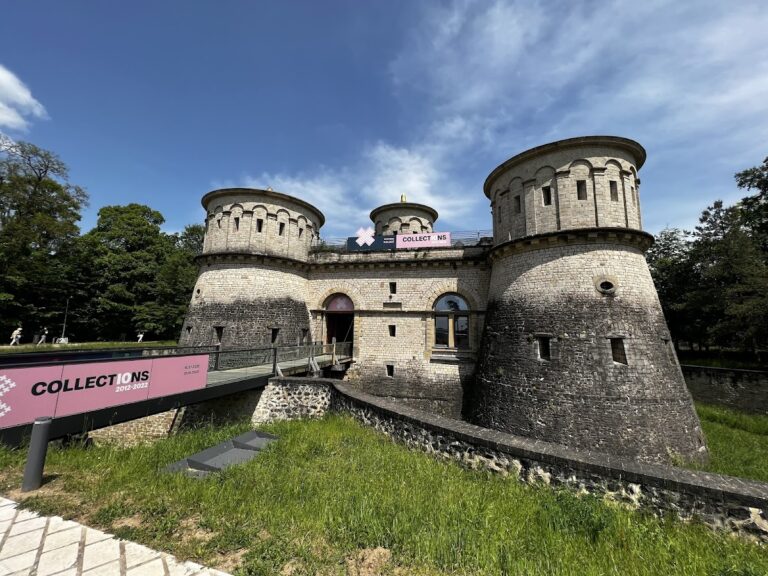
The National Art & History Museum in Luxembourg City, Luxembourg, is the state cultural institution officially known as the National Museum of Archaeology, History and Art. Its collections and activities cover archaeology, history, fine art, applied art, numismatics, research, conservation, exhibitions, and education. The institution manages the National Museum at Fishmarket, the Musée Dräi Eechelen, and Réimervilla Echternach, as well as the Documentation Centre on the Fortress of Luxembourg and the Luxembourg Art Archive.
Origins of a public museum
The idea of a public museum in Luxembourg emerged during the French occupation, when the territory formed part of the département of Forêts, a French administrative division. A museum was planned but never opened. Church artefacts were nevertheless confiscated for the proposed institution, and an astronomical clock purchased at a public sale in 1796 remains part of the museum’s displays.
A more lasting foundation was created in 1845, when Luxembourgish historians and archaeologists established the Society for the Study and Preservation of Historic Monuments in the Grand Duchy of Luxembourg. The organization later became generally known as the Archaeological Society. It assembled collections of coins and archaeological material, then enlarged them through purchases, inheritances, discoveries, historical objects, documents, and works of art. It also took responsibility for historic antiquities previously held by Luxembourg City’s Athenaeum.
In 1868, the society’s historical section joined the Royal-Grand Ducal Institute, Luxembourg’s learned society. This placed the preservation of archaeological and historical collections within a state-recognized institutional framework. A building commission was formed in 1874, and an architectural competition followed in 1919 as plans for a dedicated museum advanced.
Creation of the museum at Fishmarket
The state purchased the Collart-de-Scherff mansion at Fishmarket in 1922 and began converting it for museum use in 1927. The historical section transferred its collections to state custody, providing the foundation of the museum’s holdings. At the same time, the state began acquiring works by Luxembourgish artists. Financial difficulties slowed the conversion, but the building was completed in 1939 for celebrations of Luxembourg’s independence.
The planned inauguration could not take place because the Second World War began. In 1939, the collections were moved to safety. Following the German invasion of Luxembourg on 10 May 1940, the building was temporarily used as a shelter by the Red Cross and the Wehrmacht, the armed forces of Nazi Germany. At the end of that year, Nazi occupation authorities placed the museum under their control.
Between 1940 and 1945, about 3,500 objects entered the collection, most of them associated with folk culture. The occupation authorities sought to use the holdings to promote their conception of Luxembourgish “German” culture. Most of the collections returned undamaged after the war, and the museum reopened in 1946 as the Luxembourg State Museums. It initially brought together history-and-art and natural-history sections.
Expansion of collections and archaeological work
From 1958, an acquisitions commission regularly added works by international contemporary artists, while annual exhibitions of contemporary art gave this field a continuing place in the museum’s programme. In 1966, excavations at Giewel-Nouspelt revealed four exceptional graves dating partly from the end of the Second Iron Age, the later part of Europe’s Iron Age, and partly from the beginning of the Gallo-Roman period, when Roman culture and institutions became established among the local populations of Gaul.
The Giewel-Nouspelt discovery encouraged the professional organization of archaeology in Luxembourg. The first archaeological post within the State Museum was established in 1972, and subsequent excavations continually enlarged the archaeological collections. Until 2022, the Centre national de recherche archéologique, which was subordinate to the museum, was responsible for Luxembourg’s national archaeological heritage. Under the law of 25 February 2022, it became the National Institute for Archaeological Research, directly subordinate to the Ministry of Culture, while the archaeological collections at the Fishmarket museum remained under the museum’s care.
Institutional and architectural development
In 1988, the former State Museums were divided into the National Museum of History and Art and the National Museum of Natural History. The natural-history collections moved to the renovated Hospice Saint-Jean in Luxembourg’s Grund district in 1996, while the history-and-art collections remained at Fishmarket.
A major expansion in 2002 doubled the museum’s exhibition space. The applied-art and folk-art section later gained further accommodation when three historic aristocratic and bourgeois houses on Rue Wiltheim were acquired and renovated between 2012 and 2014. The institution received its present name and current legal competences under the law of 16 December 2022. These responsibilities include collecting, studying, conserving, developing, exhibiting, publishing, and interpreting national and international holdings, together with research, educational activities, archives, and thematic libraries.
Remains
Fishmarket complex
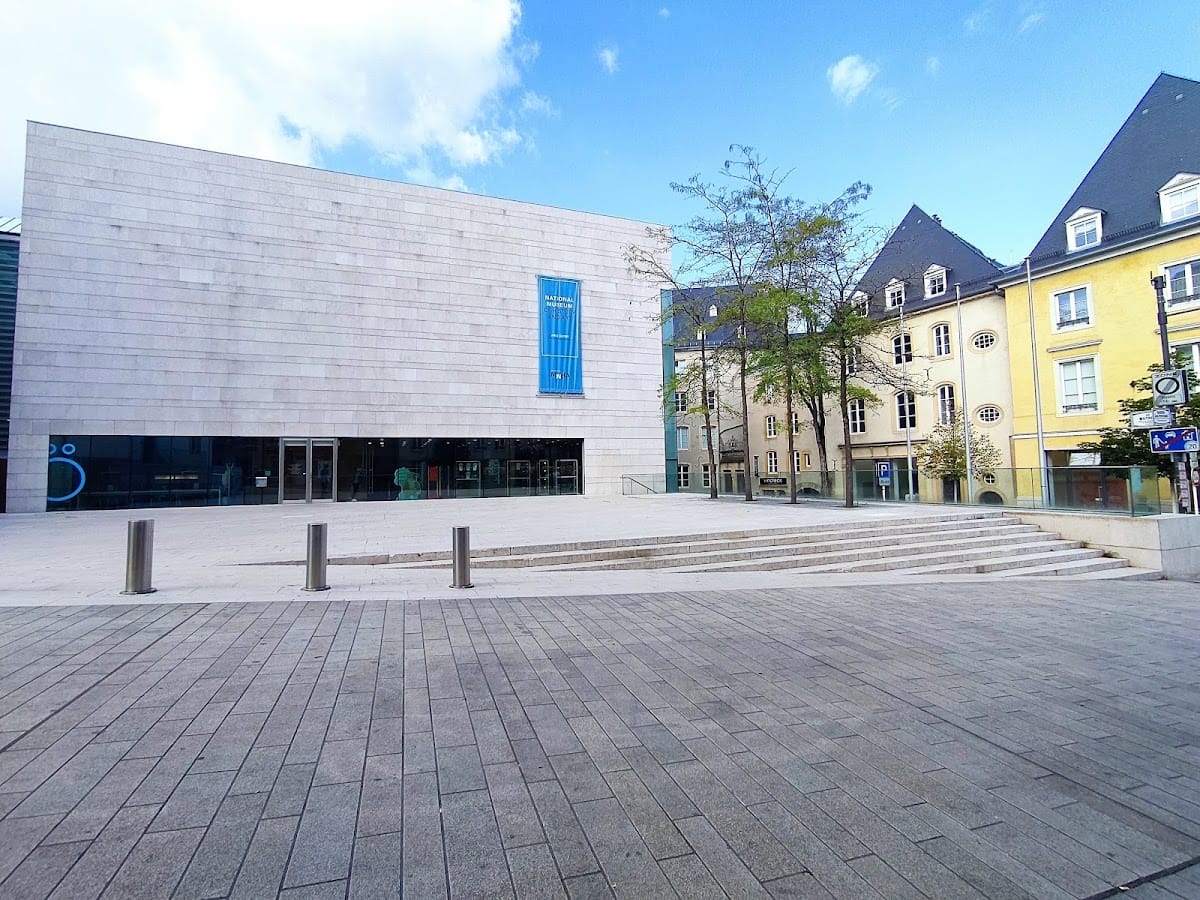
The museum stands at Fishmarket in the historic centre of Luxembourg City, in the Ville Haute district. Its complex combines the former Collart-de-Scherff mansion, later additions, and a modern extension. The original building was adapted for museum use from 1927 and completed in 1939. It was altered and enlarged again after Luxembourg’s 1995 Year of Culture.
Main building and underground extension
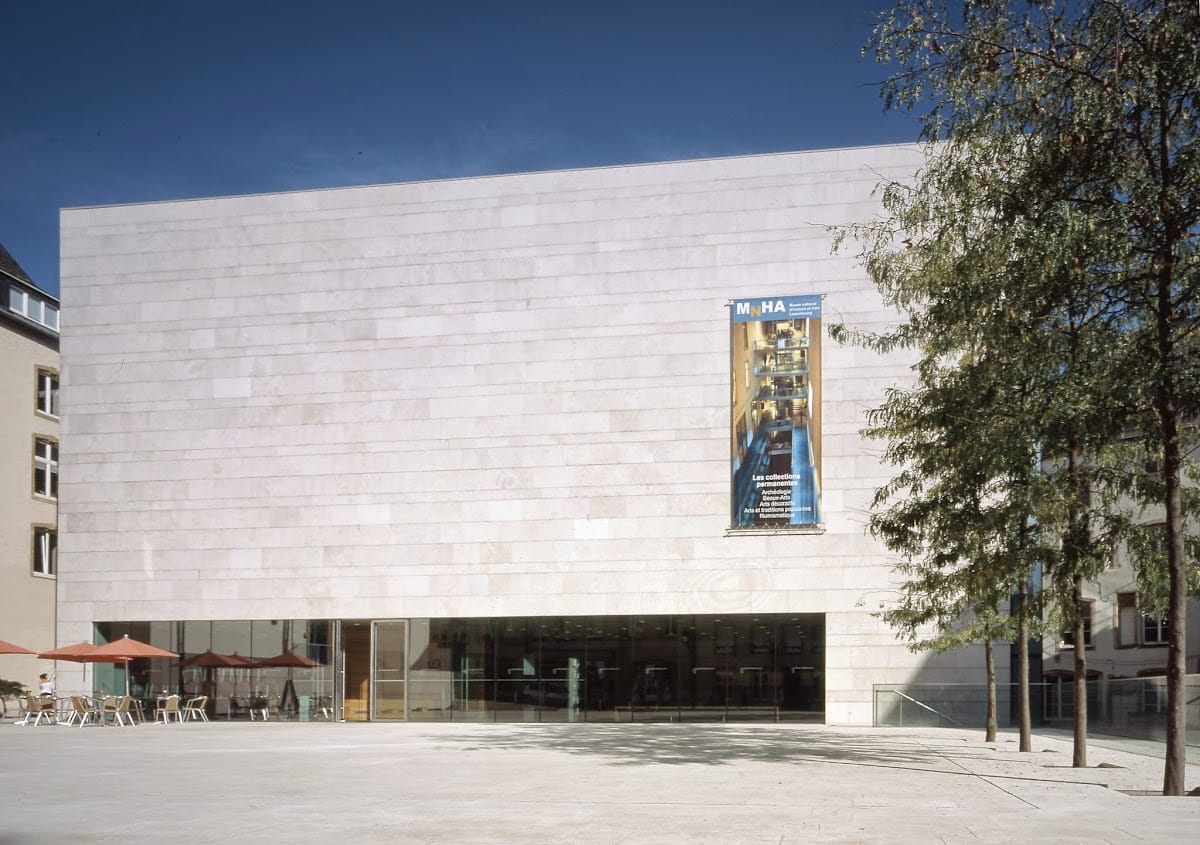
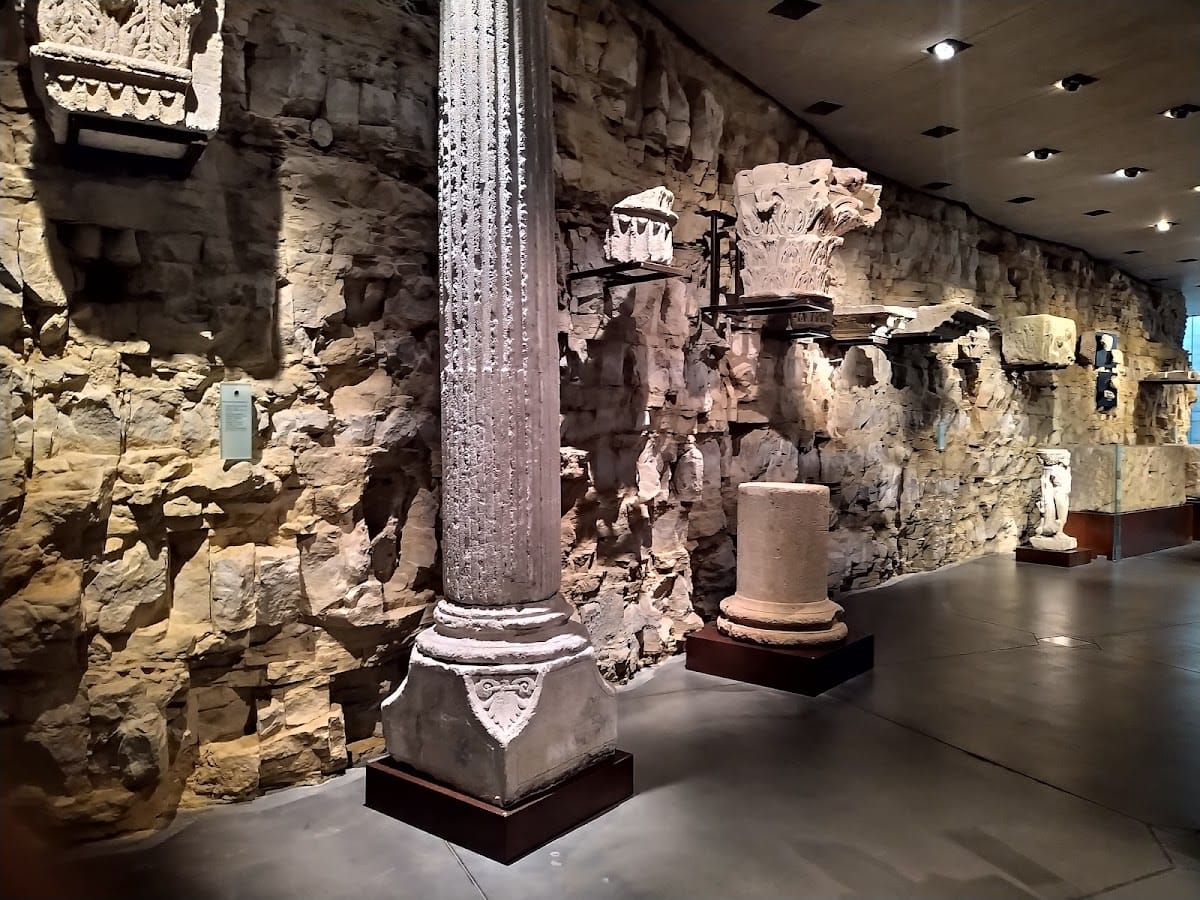
The 2002 extension, designed by Christian Bauer et Associés, was created by excavating the rock beneath the existing building. Five underground floors were formed, allowing the exhibition area to double without acquiring neighbouring property. The former side façade of the main building was replaced by a strictly rectangular façade with no windows apart from those in the entrance area, producing a deliberate modern contrast with the older building. The above-ground part opened on 22 June 2002, and the underground floors followed on 29 November 2002.
Wiltheim Wing
Opposite the main museum on Rue Wiltheim, the Wiltheim Wing occupies three former aristocratic and bourgeois houses. A glass pedestrian bridge on two levels connects them to the main building. The wing provides approximately 1,500 square metres of additional exhibition space and includes two studios for the museum’s education department.
Archaeological and historical displays
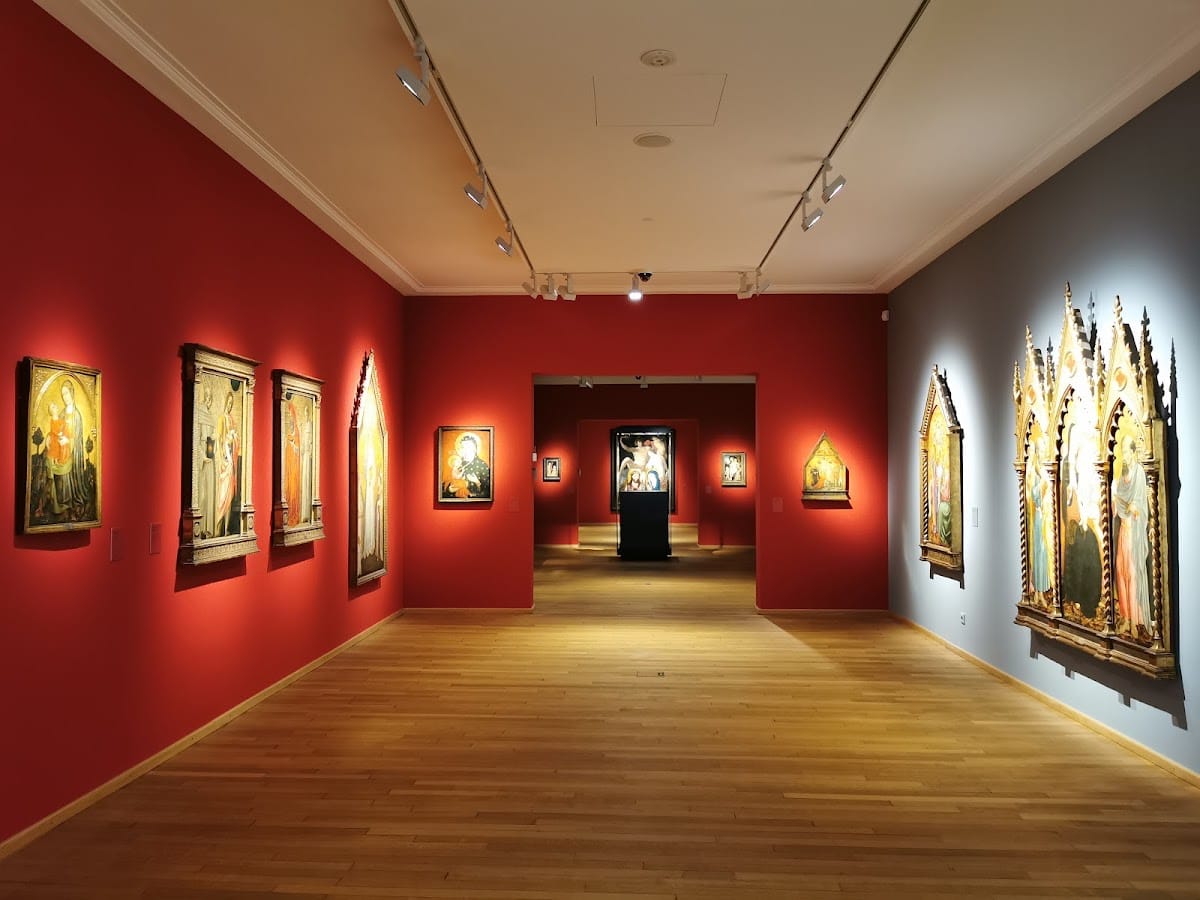
The archaeological displays occupy the underground floors, while the fine-arts section is arranged on the above-ground floors. Together, the collections include artworks and artefacts from all periods of Luxembourg’s history. Archaeological objects include a pig figurine from Titelberg, dated from the first century BC to the first century AD; a Roman helmet found at Hesperange; and a relief of Epona, a Celtic and Gallo-Roman deity associated especially with horses and horsemanship.
A Roman-period mosaic floor depicting the Muses, Greek and Roman goddesses associated with the arts and intellectual pursuits, was found at Vichten. The archaeological displays also include a gold medal showing the Roman emperor Gratian, found at Wormeldange-Machtum. The astronomical clock acquired at the 1796 public sale survives as a direct material link to Luxembourg’s earlier, unrealized French museum project.