Ponte Fabricio: Rome’s Oldest Surviving Bridge


Site at a Glance
- Rating
- 4.6
- Popularity
- Medium
- Country
- Italy
- Primary era
- Classical
- Eras represented
- Classical, Medieval, Early Modern
- Civilizations
- Papal States, Roman
- Site type
- Infrastructure
- Remains
- Bridge
On this page11 sections
History
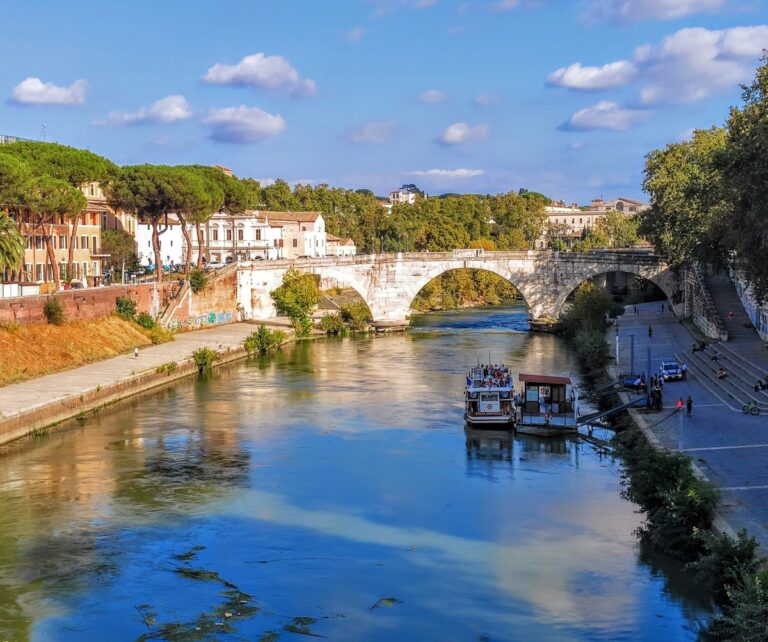
Ponte Fabricio is an ancient Roman bridge in Rome, Italy, built in 62 BC to connect the eastern bank of the Tiber with Tiber Island. It is the oldest surviving bridge in Rome and the oldest Roman bridge still in use. Rather than crossing the entire river, it forms one part of the route to the island, whose opposite-bank connection was provided by the ancient Pons Cestius.
Roman Construction and Restoration
The bridge replaced an earlier wooden crossing destroyed by fire. Lucius Fabricius, a Roman public official responsible for roads and a member of the Fabrician family group, commissioned its construction. The date came one year after Cicero’s consulship in 63 BC, when the prominent Roman statesman and writer held Rome’s highest annual magistracy.
A restoration associated with the consuls Marcus Lollius and Quintus Aemilius Lepidus took place in the late first century BC. The bridge continued to serve as a crossing through later centuries, preserving its Roman function while undergoing repairs and changes to its surface and facing.
Medieval and Early Modern Changes
During the pontificate of Eugene IV, who reigned from 1431 to 1447, the roadway was paved with travertine slabs. The medieval name “Bridge of the Jews” came from the Jewish quarter established beside the bridge on the left bank from the thirteenth century.
A further restoration took place under Pope Innocent XI, probably in 1679. A small inscription beneath the central relieving arch refers to work on the parapets and brick facing. The name Ponte dei Quattro Capi, meaning “Bridge of the Four Heads,” refers to two double-headed marble herms, pillars carrying sculpted heads, that were moved to the bridge in the fourteenth century from the Church of Saint Gregory at Monte Savello. Their heads have been identified with Janus, the Roman god of passages and transitions, or with Hercules.
Later Interpretation and River Management
Ponte Fabricio was repeatedly depicted by painters, draughtsmen, and engravers. Giovanni Battista Piranesi made both an architectural reconstruction and a general view of the bridge. His 1756 etching may have influenced Charles Cameron’s design for the Cameron Gallery in Catherine Park at Tsarskoye Selo. One of the bridge’s herms also appears on the nearby 1913 monument to the Roman poet Giuseppe Gioachino Belli in Trastevere.
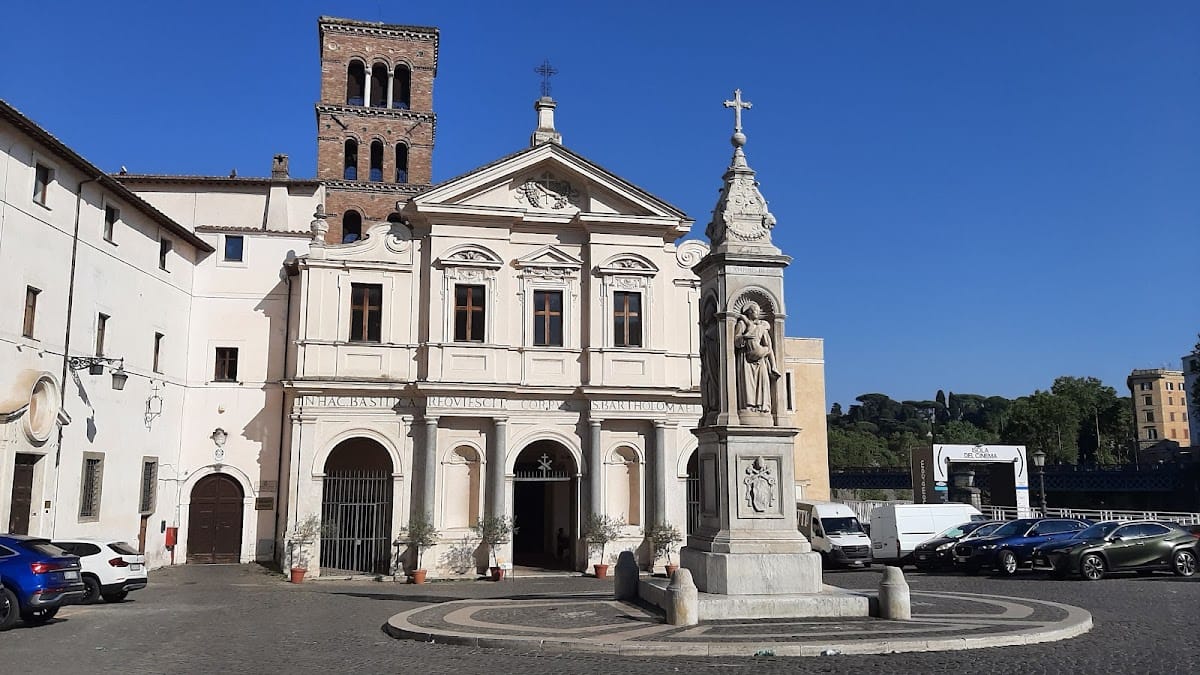
On Tiber Island, the site of a temple of Asclepius, the Greco-Roman god of healing, during the reign of Tarquinius Superbus, traditionally regarded as Rome’s last king, later became associated with a hospital, a poorhouse, and the Church of San Bartolomeo. South of the bridge, a small artificial weir regulates the river’s flow. Nineteenth-century stone embankments and related hydraulic works formed part of Rome’s reorganization of the river system after the major floods of 1870.
Remains
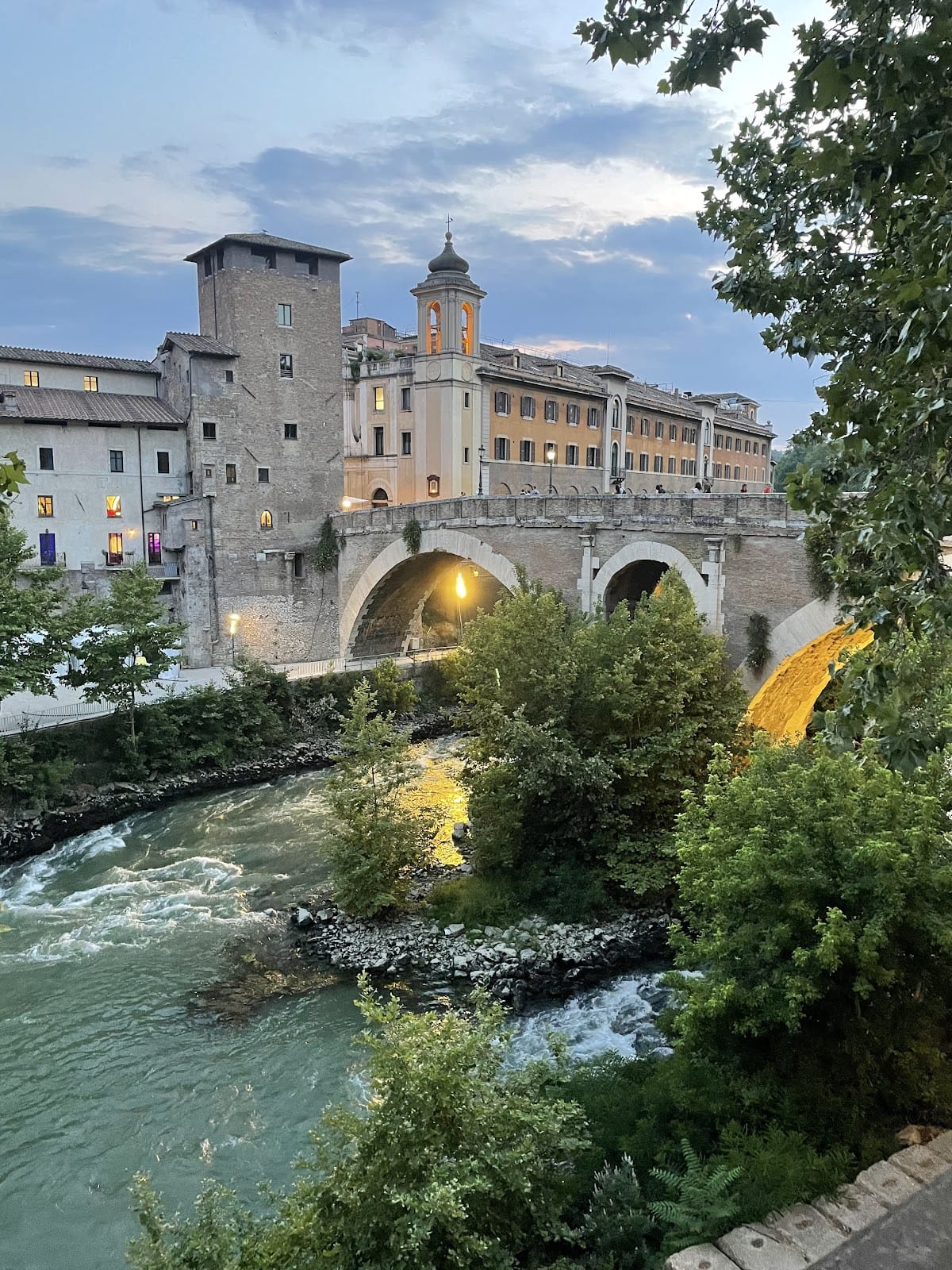
Ponte Fabricio is a 62-metre-long bridge approximately 5.5 metres wide. Its stone core consists of squared blocks of volcanic tuff, while the surviving exterior combines light travertine with red brickwork associated with the seventeenth-century restoration. Two principal arches span the river, supported by a central pier, and two ancient side arches once extended the structure toward the banks.
Main Bridge Structure
Principal Arches and Pier
The two principal spans measure approximately 24 to 24.5 metres each. They are described both as semicircular arches and as part of an early Roman bridge whose arches were not semicircular, possibly because the semicircular sections lay below the waterline. The central pier contains a relieving arch about 6 metres wide. This opening reduced pressure on the structure and also allowed additional floodwater to pass through. The two ancient side arches, each about 6 metres wide, are now concealed beneath later reinforcements along the riverbanks.
Inscriptions and Four Heads
An inscription commemorating Lucius Fabricius is repeated four times, once on each side of each principal arch. It states that Lucius Fabricius, son of Gaius and superintendent of the roads, took responsibility for the work and approved its construction. A smaller inscription beneath the relieving arch records the restoration carried out under Innocent XI, probably in 1679.
The two double-headed marble herms stand beside the parapet and give the bridge its name Ponte dei Quattro Capi. Their sculpted heads have been associated with Janus or Hercules. They are later additions to the bridge, having been transferred there in the fourteenth century from the Church of Saint Gregory at Monte Savello.
Tiber Island and River Works
Torre Caetani
Torre Caetani, a watchtower, stands at the entrance to Tiber Island beside the bridge. The island itself preserves the historical association of the former temple site of Asclepius with a hospital, a poorhouse, and the Church of San Bartolomeo.
Artificial Weir
South of Ponte Fabricio, a low artificial dam built into the river controls the Tiber’s flow. It forms part of the hydraulic system regulating the two branches of the river around Tiber Island. Modern stone embankments and related works were added in the nineteenth century as Rome reorganized its river channels after the floods of 1870.