Totnes Castle: A Norman Motte-and-Bailey Fortress in the United Kingdom

Site at a Glance
- Rating
- 4.2
- Popularity
- Medium
- Country
- United Kingdom
- Primary era
- Medieval
- External website
- Open
- Eras represented
- Medieval
- Civilizations
- English, Norman
- Site type
- Military
- Remains
- Castle
On this page10 sections
History
Totnes Castle is a Norman motte-and-bailey fortress in the United Kingdom, established after the Norman Conquest of 1066. It became the caput, or principal administrative center, of the feudal barony of Totnes, a major landholding granted by the monarch in return for service and allegiance.
Foundation after the Norman Conquest
The first fortification is traditionally attributed to Juhel of Totnes, also known as Judhael, a Breton lieutenant of William the Conqueror. William granted him the barony in 1068, after which Juhel established the castle and founded Totnes Priory, a Christian religious house governed by a prior. The earliest defenses probably consisted of a wooden palisade and tower, securing Juhel’s control of the area.
After William I died, Juhel lost his lands, possibly because he had supported the rebellion of 1088. The barony then passed to Roger de Nonant, a Norman nobleman, whose descendants appear to have held it for three generations.
Stone rebuilding and royal repairs
The castle later came into the possession of William de Braose, 3rd Lord of Bramber. He was probably responsible for building the first stone shell keep, a defensive stone enclosure around the edge of the mound, together with stone walls.
By 1326, the castle had fallen into ruin while it was controlled by the de la Zouch family. A royal order required repairs, leading to its refortification with a new shell keep, curtain walls, and a stable. A constable, the official responsible for administering and defending a castle, was also appointed.
Decline and later occupation
After the Wars of the Roses, the fifteenth-century dynastic conflicts between rival branches of the English royal family, Totnes Castle again fell into disrepair. It was occupied for a period during the English Civil War, the seventeenth-century conflict between supporters of King Charles I and Parliament, but saw no notable action.
Sir Richard Edgecomb became the castle’s owner in 1485. In 1764, Edward Seymour, 9th Duke of Somerset, and his family took up residence there. They introduced leisure facilities including a tennis court and tea room, reflecting the site’s later residential use.
English Heritage has managed Totnes Castle since 1984. The castle is a scheduled monument and a Grade I listed building.
Remains
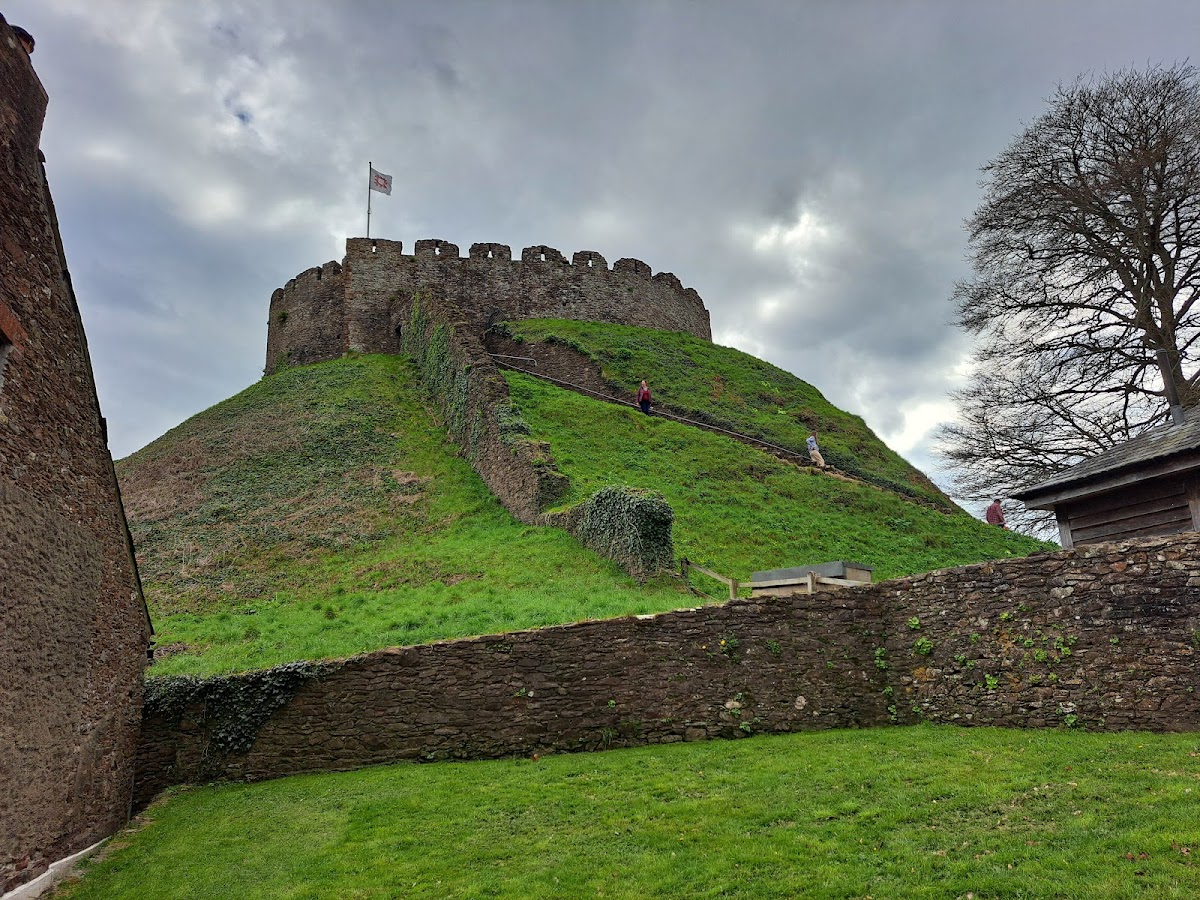
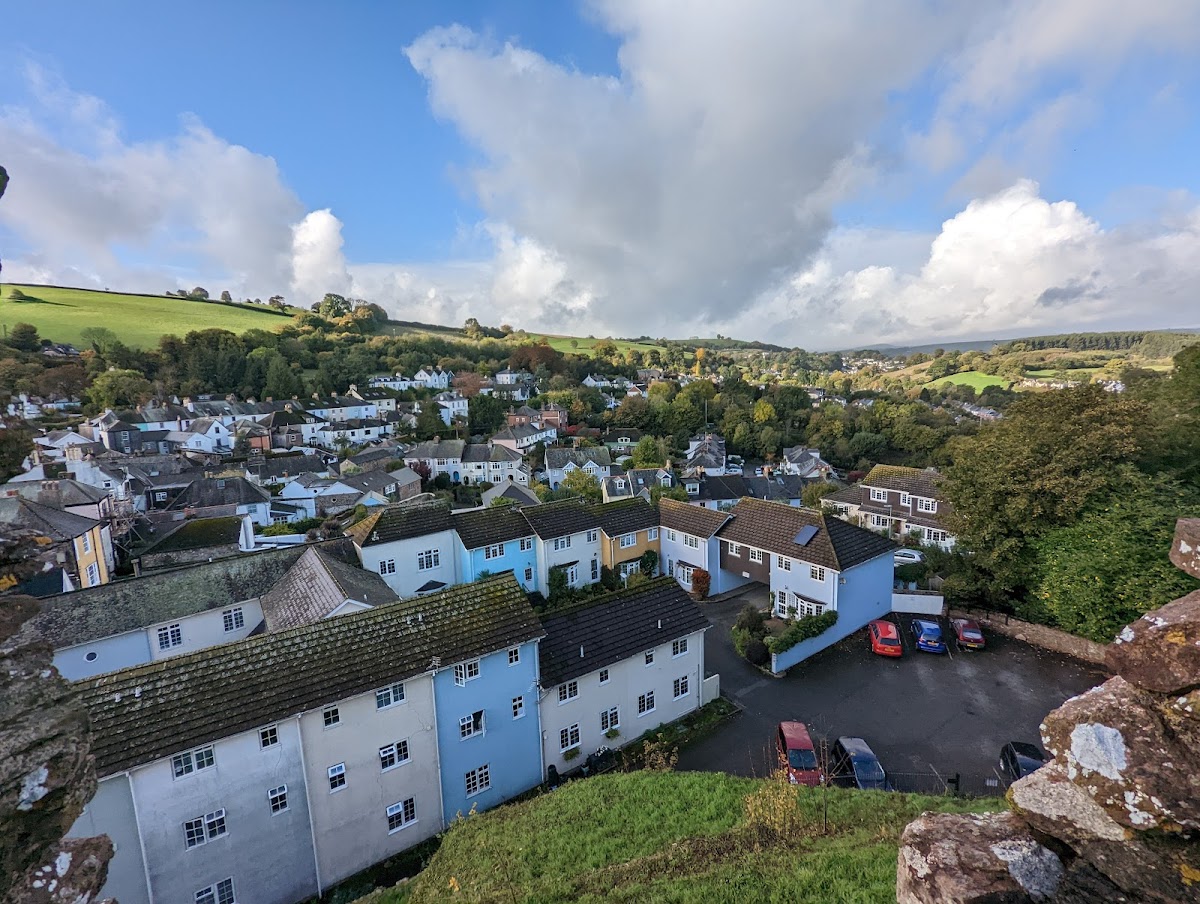
Totnes Castle occupies a large hill within the valley of Totnes, near the River Dart, at approximately 35 metres above sea level. Its position overlooks the approaches to three valleys. The surrounding terrain is mainly level, becoming hillier to the southeast, while the wider landscape is predominantly grassland. The site retains the characteristic arrangement of a motte-and-bailey castle, combining a raised earthwork mound with a defended enclosure.
Fortifications
Early defenses
The earliest castle probably used a wooden palisade and tower. These defenses formed the first fortified arrangement on the mound before the later stone rebuilding.
Stone shell keep
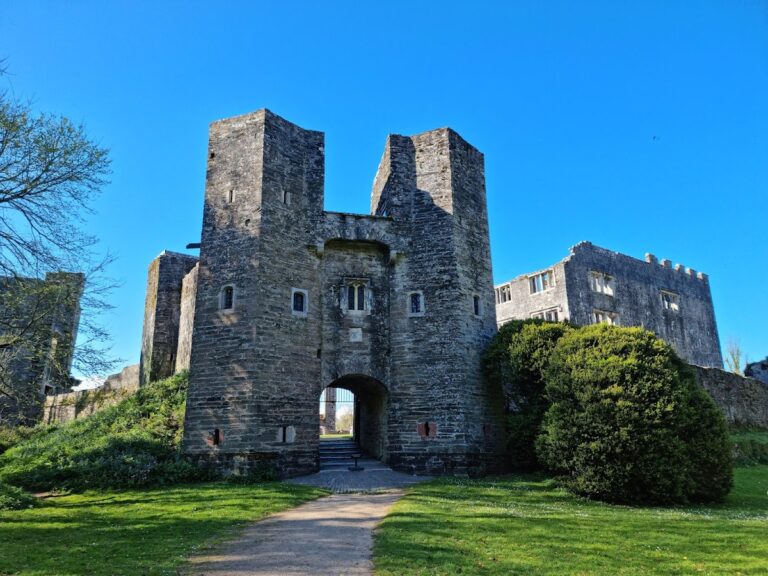
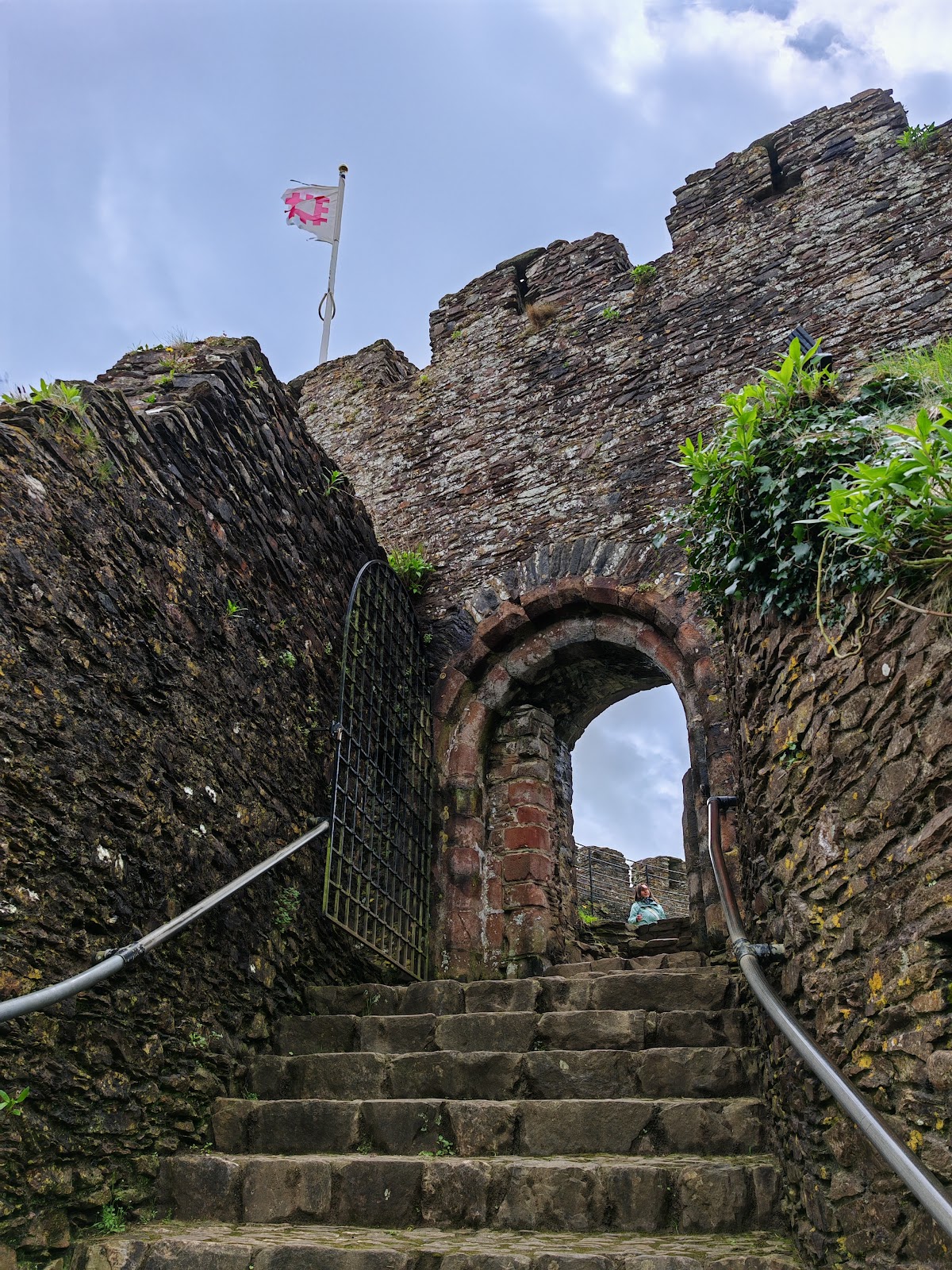
The surviving stone keep is a shell keep, a stone-walled enclosure built around the edge of the mound rather than a massive solid tower. The later keep and its associated fortifications were constructed from Devonian limestone and red sandstone. The present stone keep dates from around the fourteenth century.
Curtain walls and stable
The curtain wall, an enclosing defensive wall linking the main fortified elements, survives with the keep as part of the castle’s stone defenses. The fourteenth-century rebuilding also included a stable, connecting the refortified stronghold with its practical needs.
Later residential additions
The castle’s physical remains also include additions associated with the Seymour family’s residence from 1764. A tennis court and tea room were introduced during this period, when the site served a residential and leisure purpose as well as preserving its earlier fortified form.