Ham-sur-Heure Castle: A Municipal Seat in Belgium
Site at a Glance
- Rating
- 4.4
- Popularity
- Very Low
- Country
- Belgium
- Primary era
- Early Modern
- External website
- Open
- Eras represented
- Early Modern
- Civilizations
- Belgian, Habsburg
- Site type
- Domestic
- Remains
- Castle
On this page6 sections
History
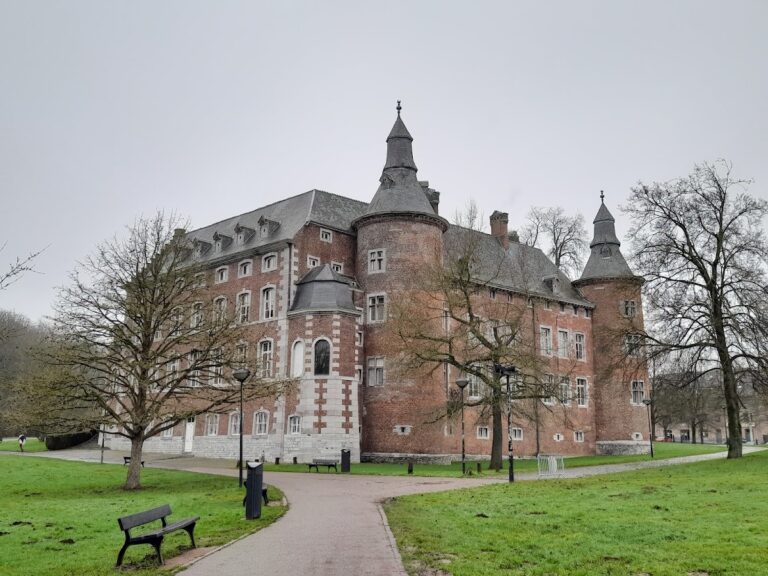
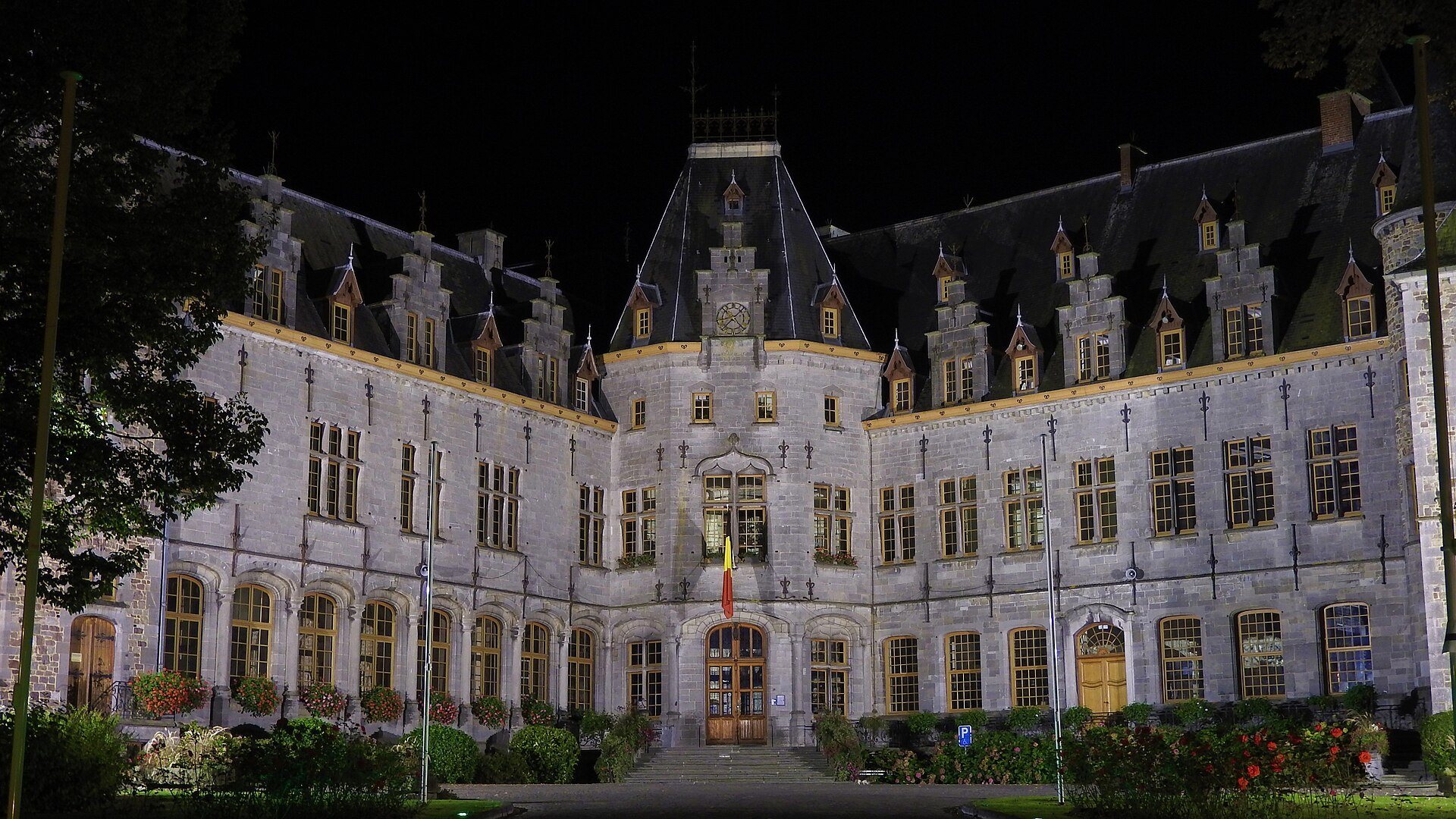
Ham-sur-Heure Castle is a historic castle in Belgium, in the village of Ham-sur-Heure within the municipality of Ham-sur-Heure-Nalinnes. Its history reaches back to the Florennes family in the eleventh century, while the earliest known written evidence for the castle dates from the thirteenth century, when it was owned by Isabeau de Morialmé.
Medieval ownership
The castle changed hands repeatedly during the Middle Ages. The House of Condé held it in 1209, followed by the Béthune family in 1230 and Guy of Dampierre, a medieval nobleman from the Dampierre ruling family, in 1246. The House of Condé regained it in 1259. Ownership later passed through the Houses of Luxembourg, Fosseux, and Burgundy, before the lords of Enghien held it by the fifteenth century.
The Merode period
The House of Merode, a historic Belgian noble family, acquired Ham-sur-Heure Castle in the late fifteenth century and retained it until 1941. The family is associated with the castle’s present appearance. Heavy damage in 1667 and 1689 was followed by reconstruction as a luxurious residence in the early eighteenth century. Further alterations began in 1776 but remained unfinished because of the French Revolution, the political upheaval that began in France in 1789 and extended across its wider territories.
Rebuilding and municipal use
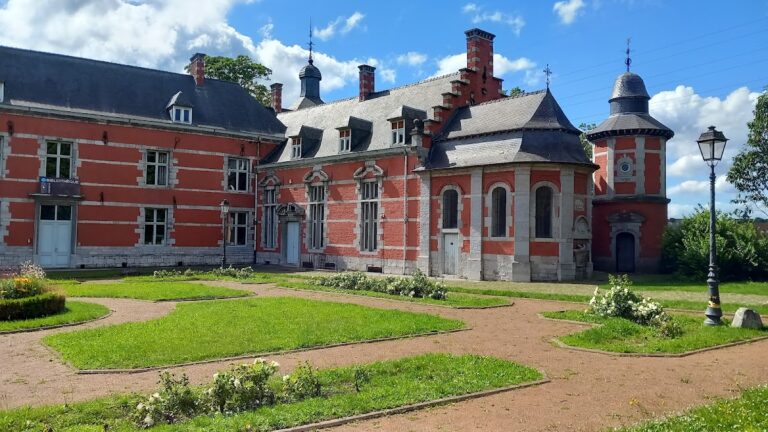
In the late nineteenth century, the ruined castle was rebuilt in its present form in work associated with the Leuven architect Pierre Langerock. Léonie de Rochechouart de Mortemart, Countess of Merode and widow of Senator Louis Ghislain de Merode, directed the last major restoration between 1898 and 1900. She bequeathed the castle to her daughter, Victurnienne Renée de Merode, and her son-in-law, Charles-Jean d’Oultremont, also known as John d’Oultremont.
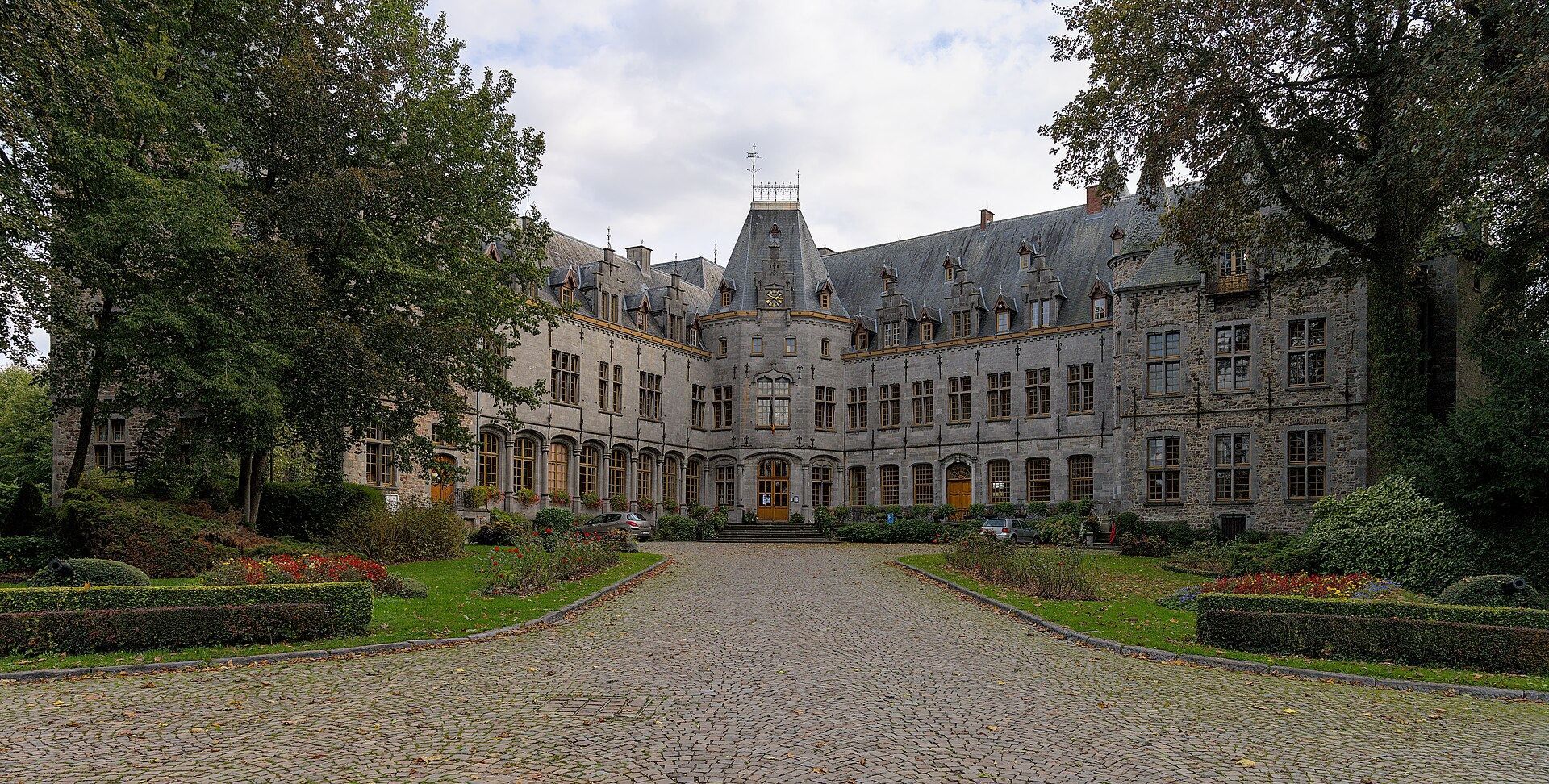
Inheritance brought the castle to the d’Oultremont family in 1941. After Raymonde Vitali, Countess d’Oultremont, died in 1952, her heirs sold the property to the municipality of Ham-sur-Heure. The building then became the seat of municipal administration and was locally known as the communal castle. It continued in that role after the 1977 municipal reorganization, when it became the seat of Ham-sur-Heure-Nalinnes. The municipality owns the castle, which has been a classified heritage site under legal protection since 1936.
Remains
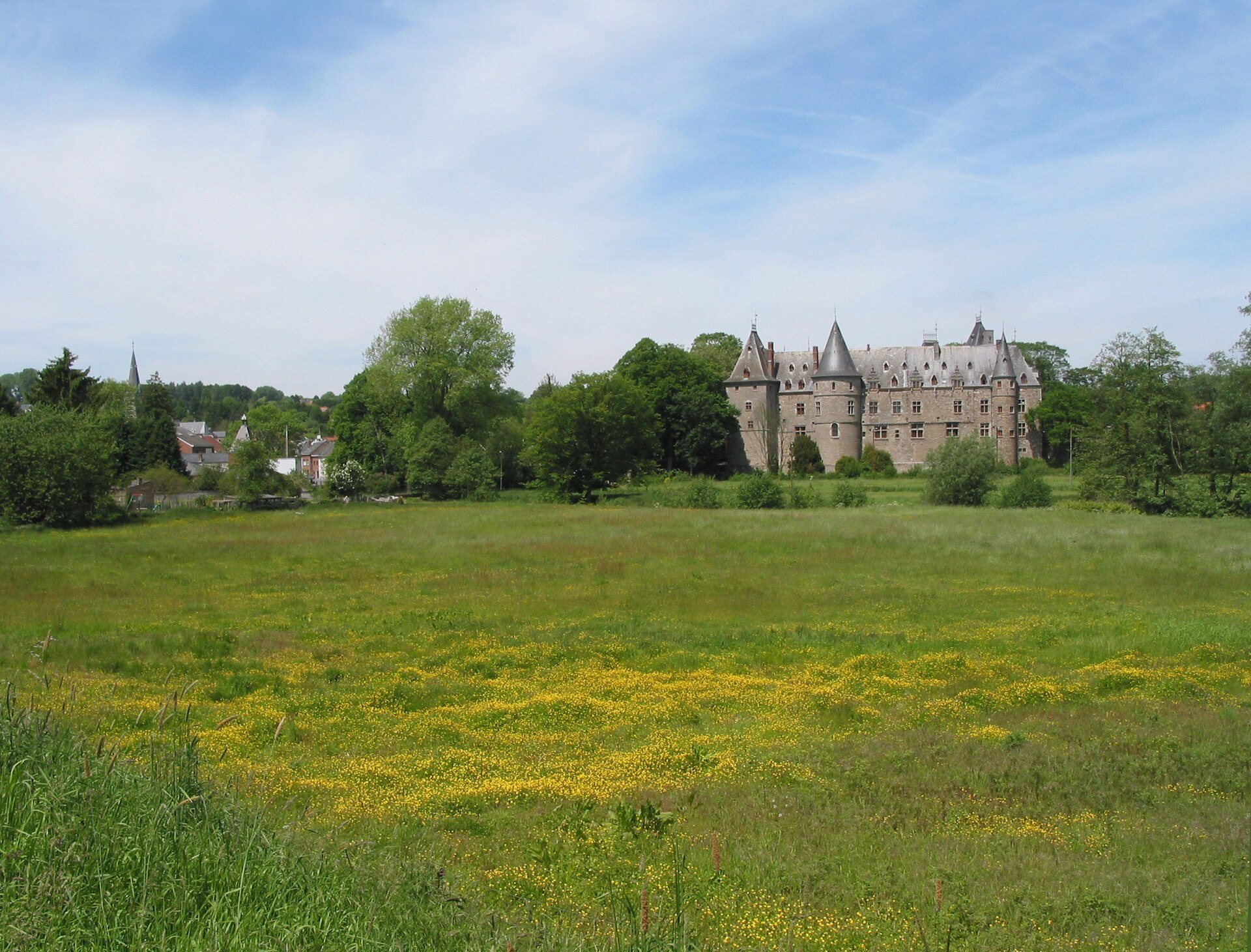
Castle complex and setting
The castle complex consists of a courtyard, rear and south facades, and an associated park. The rear of the building overlooks the Eau d’Heure, while views from the park, from below the park, and across the surrounding fields form part of its physical setting. Its current form reflects successive rebuilding and restoration campaigns, including the transformation into a luxurious residence, the later rebuilding of the ruin, and the restoration completed between 1898 and 1900. The castle now accommodates municipal administrative offices.