Bajang Ratu Temple: A Majapahit Ceremonial Gateway in East Java
Site at a Glance
- Rating
- 4.6
- Popularity
- Medium
- Country
- Indonesia
- Primary era
- Medieval
- Eras represented
- Medieval
- Civilizations
- Unclassified
- Site type
- Religious
- Remains
- Temple
On this page8 sections
History
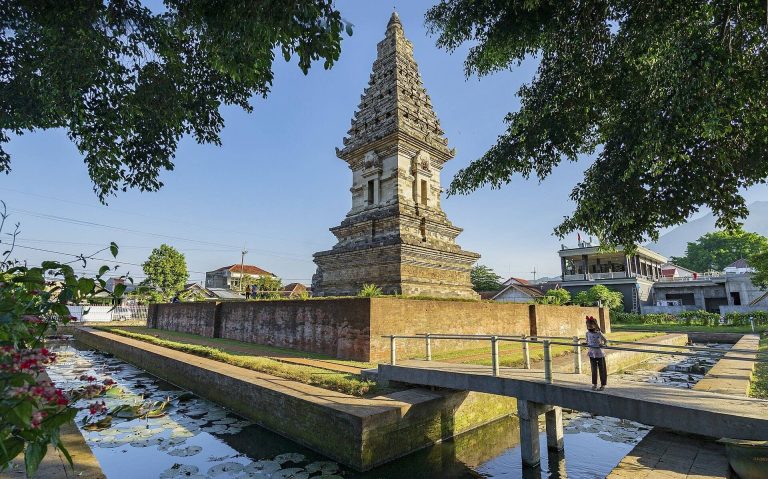
Bajang Ratu Temple is a Majapahit-period paduraksa gateway in Temon Village, Trowulan, East Java, Indonesia, generally dated to the thirteenth or fourteenth century and often described as a fourteenth-century building. The Majapahit Empire was a Hindu-Buddhist kingdom whose political centre lay at Trowulan during its most powerful period.
Royal Gateway and Memorial Site
Before the death of King Jayanegara, the second ruler of the Majapahit dynasty, Bajang Ratu is understood to have served as a rear entrance to the royal complex. It later came to be regarded as the entrance to a sacred commemorative structure dedicated to Jayanegara after his death in approximately AD 1328. Such a site was intended for the posthumous religious honouring of a deceased ruler.
Historians have associated the gateway with Çrenggapura, also known as Çri Ranggapura or Kapopongan, a sacred memorial place at Antawulan, the name used for Trowulan in the fourteenth-century Nagarakretagama, a Javanese court poem about places, ceremonies, and Majapahit kingship. The gateway and the foundations of an enclosing structure form the surviving physical evidence connected with this memorial setting.
Name, Traditions, and Restoration
The name Bajang Ratu first appears in the Oudheidkundig Verslag of 1915. The word “Bajang” can refer to someone small, dwarf-like, or physically impaired. Its association with Jayanegara has been linked to traditions that he was still young when crowned. A local legend says that he fell at the gateway as a child and became physically disabled.
The gateway’s association with death and release has been connected with its Sri Tanjung reliefs and wing-like side structures. Sri Tanjung is a Javanese tale concerned with death, fidelity, and passage to the afterlife. The interpretation also relates to a Trowulan custom in which mourners traditionally leave through a rear door while accompanying a dead person.
Bajang Ratu was restored and formally inaugurated in 1992 by Indonesia’s Directorate-General of Culture within the Ministry of Education and Culture. A continuing local belief holds that government officials should not pass through or enter the gateway, because doing so is thought to bring bad fortune.
Remains
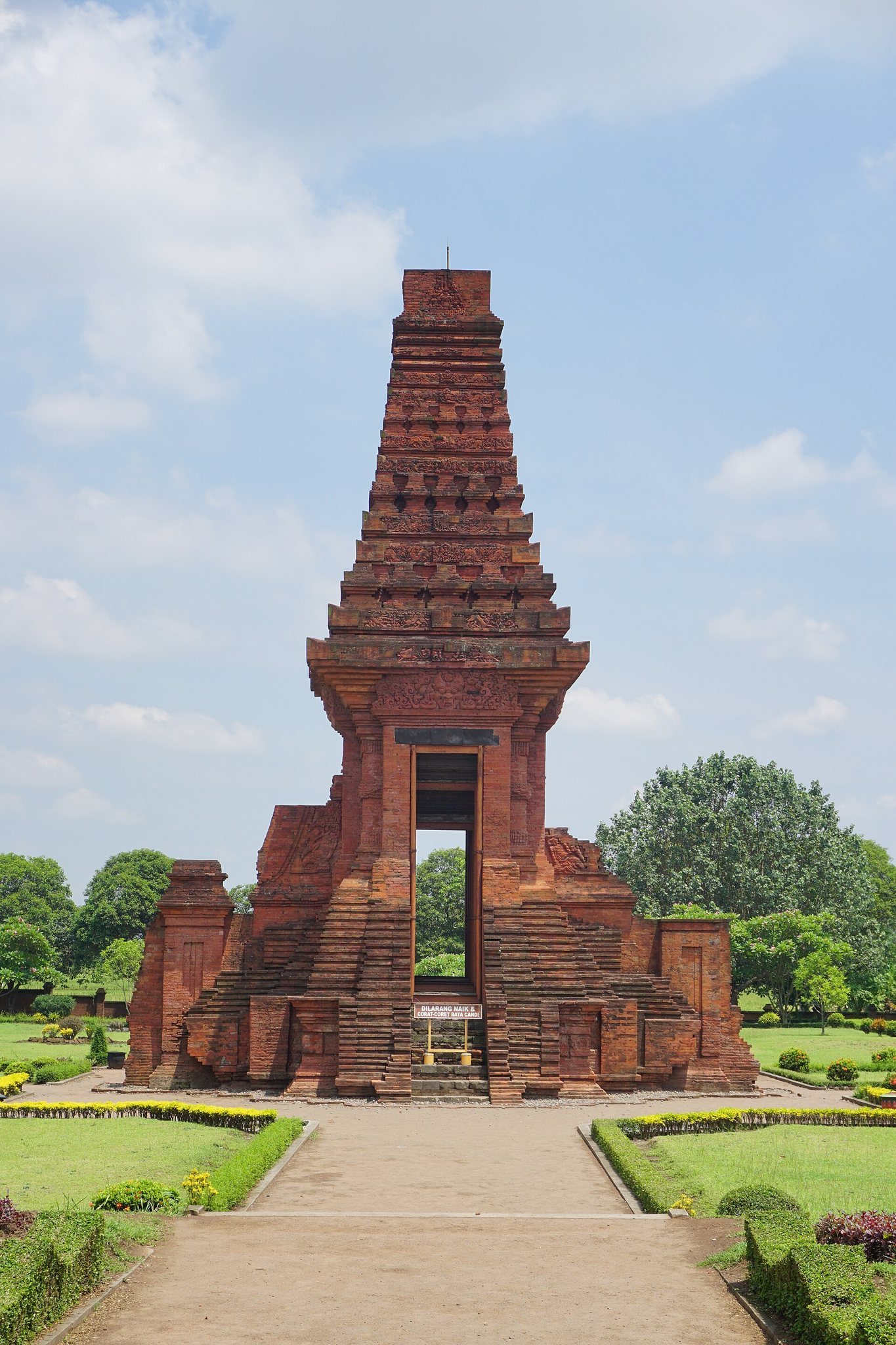
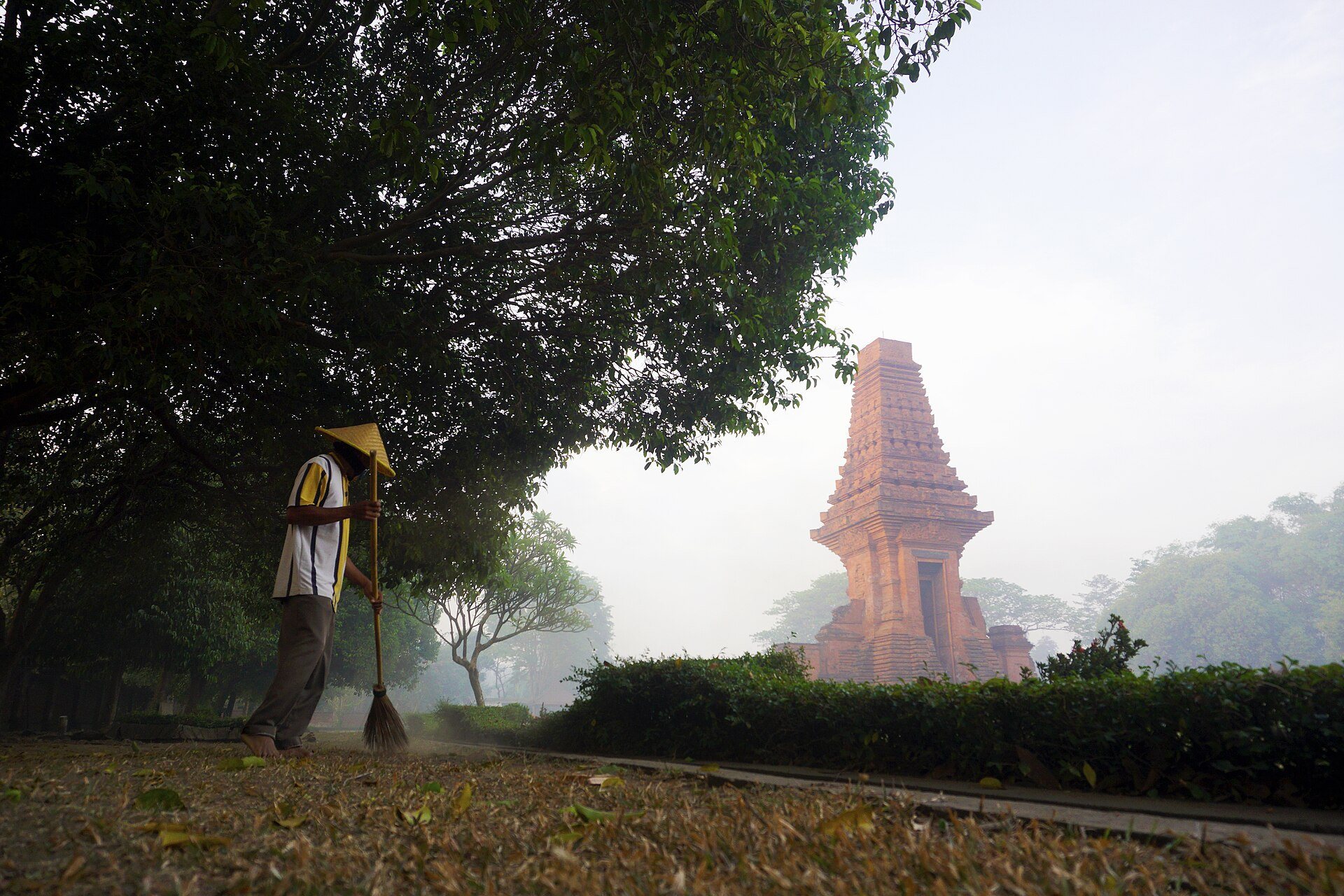
Bajang Ratu is a roofed paduraksa, an Indonesian temple-gate form with an enclosed upper structure spanning the passageway. Built primarily of red brick, it has a rectangular plan approximately 11.5 metres long and 10.5 metres wide. The monument stands about 16.5 metres high at an elevation of approximately 41.49 metres above sea level, with its long axis oriented northeast to southeast. Wing-like extensions and masonry wall fences flank the gateway.
Gateway Structure
Base and Doorway
The gateway is vertically divided into a base, a body, and a roof. Its base is approximately 2.48 metres long and consists of lower and upper mouldings separated by a central body. Flat bands and bell-shaped frames form the mouldings, while the corners carry simple decoration. The stair flooring and the lower and upper thresholds are made of andesite, contrasting with the red-brick construction. The entrance passage is approximately 1.4 metres wide.
A relief of the Sri Tanjung story appears on the front-left corner of the base. Above the doorway, the body carries a kala relief surrounded by vine-like ornament. A kala is a mythological protective face commonly used in Indonesian and Southeast Asian temple decoration.
Roof and Side Extensions
The roof has elaborate relief decoration, including a kala head flanked by lions, solar imagery, a legged serpent, a garuda head, and a one-eyed or monocle-like figure. In Majapahit religious culture, these motifs were understood as protective devices intended to repel danger. The right wing displays scenes from the Ramayana and carvings of long-eared animals.
Waterways and Surrounding Features
A canal lies approximately 200 metres in front of the gateway and connects directly toward the central part of the Majapahit canal system. Bajang Ratu stands about 2 kilometres east of the former central waterway area and approximately 0.7 kilometres from Tikus Temple. These measured relationships place the gateway within the wider water-management and monument landscape of Trowulan.