Huaca Cao Viejo: A Moche Ceremonial and Administrative Monument in Peru
Site at a Glance
- Rating
- 4.7
- Popularity
- Very Low
- Country
- Peru
- Primary era
- Classical
- Eras represented
- Classical, Medieval
- Civilizations
- Moche
- Site type
- Religious
- Remains
- Sanctuary
On this page6 sections
History
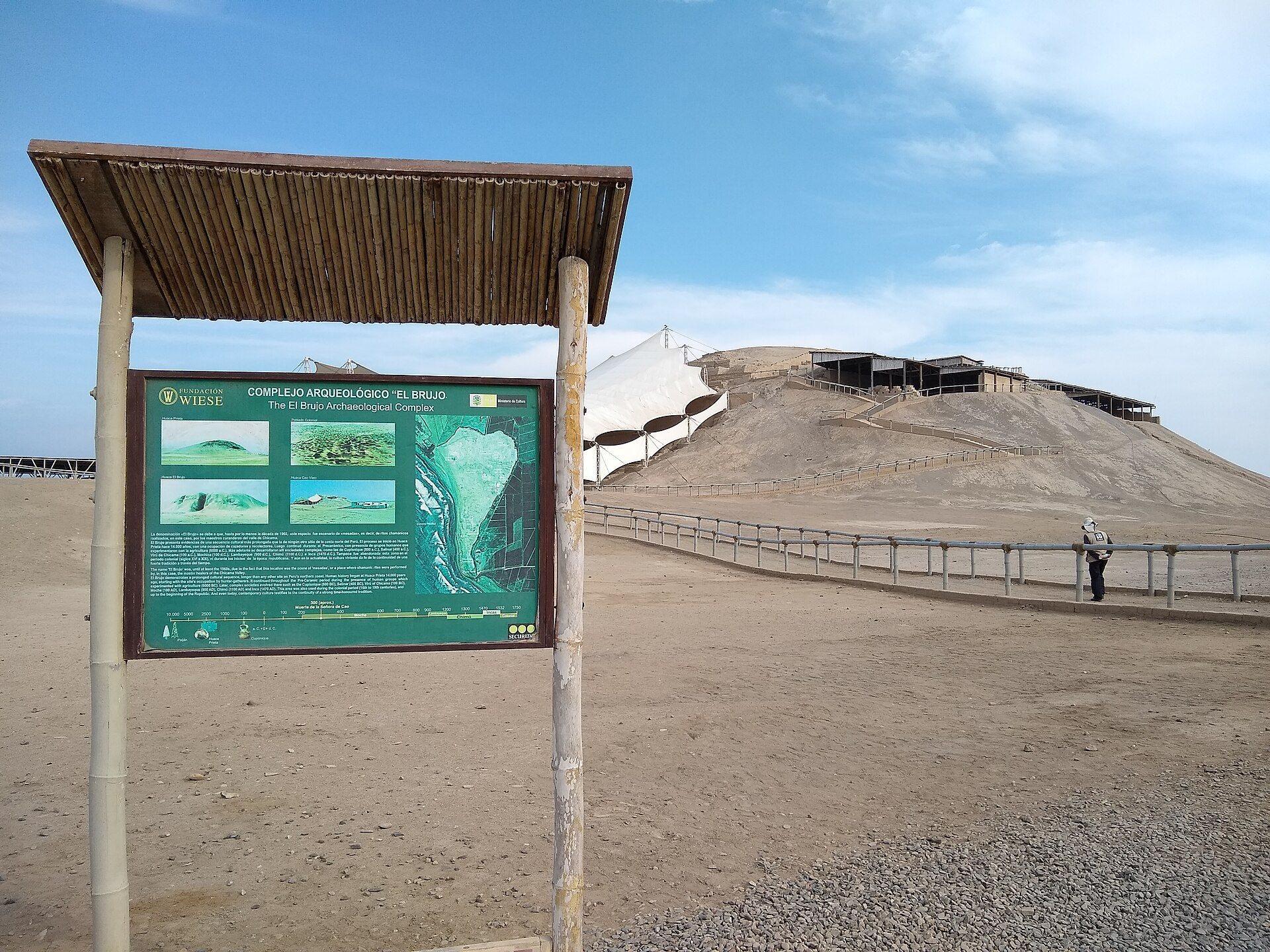
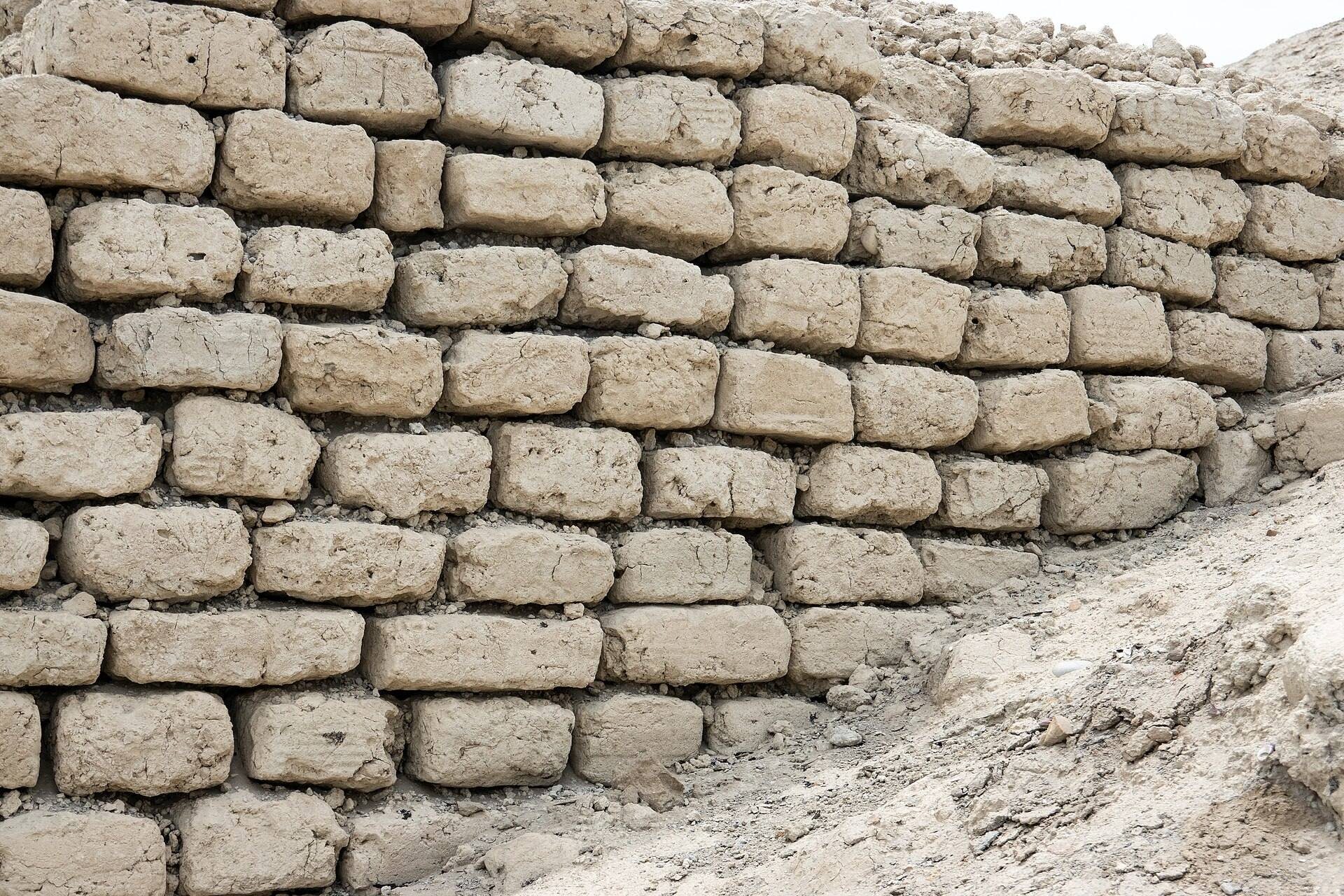
Huaca Cao Viejo is a Moche sacred adobe monument in the Chicama Valley of northern Peru. Construction began around AD 200, and the site served as an administrative and ceremonial center that controlled the valley. It was developed through successive building phases over approximately five centuries, forming one of the three principal sites of the El Brujo Archaeological Complex.
The Moche ceremonial center
The Moche, also called the Mochica, were a complex society of the pre-Columbian northern Peruvian coast, with centralized political and religious institutions and a tradition of monumental adobe construction. Huaca Cao Viejo belonged to this cultural world and was repeatedly enlarged as new buildings were raised over earlier ones.
The monument was abandoned around AD 650, shortly before an exceptionally intense El Niño climatic event. In northern Peru, such events can bring torrential rainfall, and the resulting storms severely damaged the huaca. During the later Lambayeque period, approximately from the eighth to the fourteenth century, part of the complex was reused as a cemetery. The Lambayeque were a later pre-Columbian society of northern Peru whose funerary and monumental traditions followed those of the Moche in the region.
Excavation and the Lady of Cao
Study of Huaca Cao Viejo began in 1990 through the El Brujo Archaeological Project, directed by archaeologist Régulo Franco. Work supported by the Augusto N. Wiese Foundation, the La Libertad Institute of Culture, and the National University of Trujillo greatly expanded knowledge of Moche culture. The tomb of the Lady of Cao was discovered and publicly announced in 2006. Dating to approximately AD 400, it contained the mummified remains of a woman identified as a Moche ruler of the Chicama Valley.
An exhibition was established at the site to present the Lady of Cao’s mummy and the objects buried with her. Huaca Cao Viejo is recognized as Cultural Heritage of the Nation of Peru.
Remains
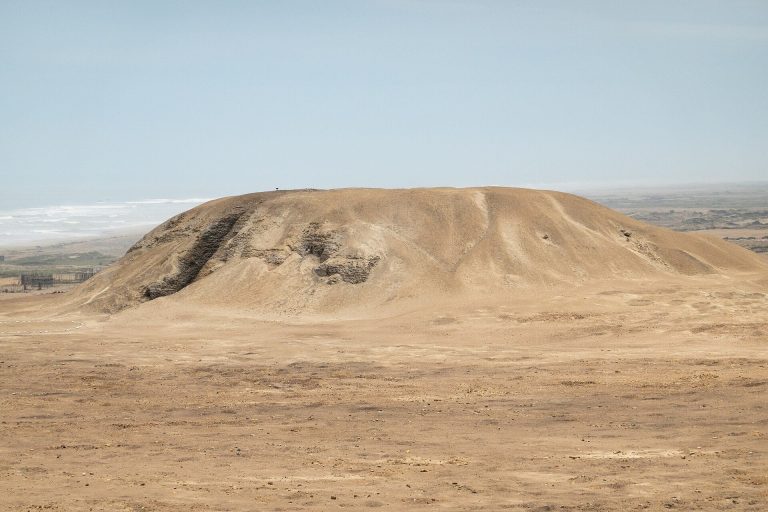
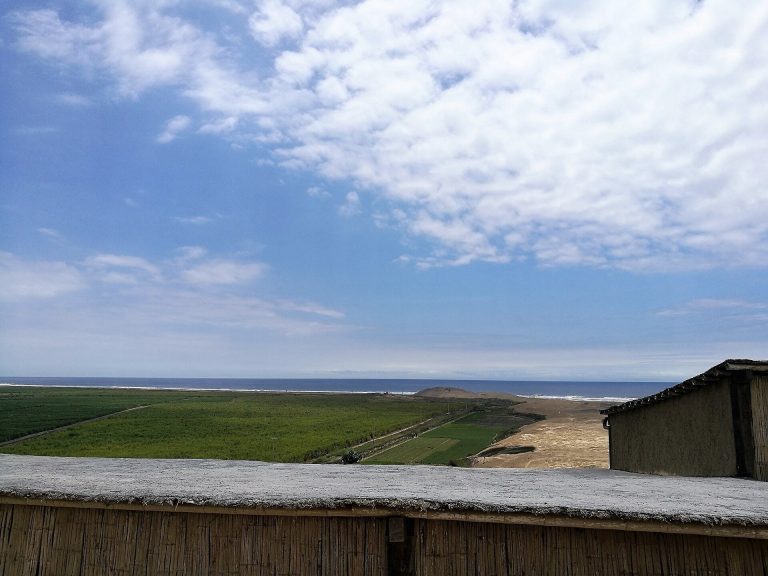
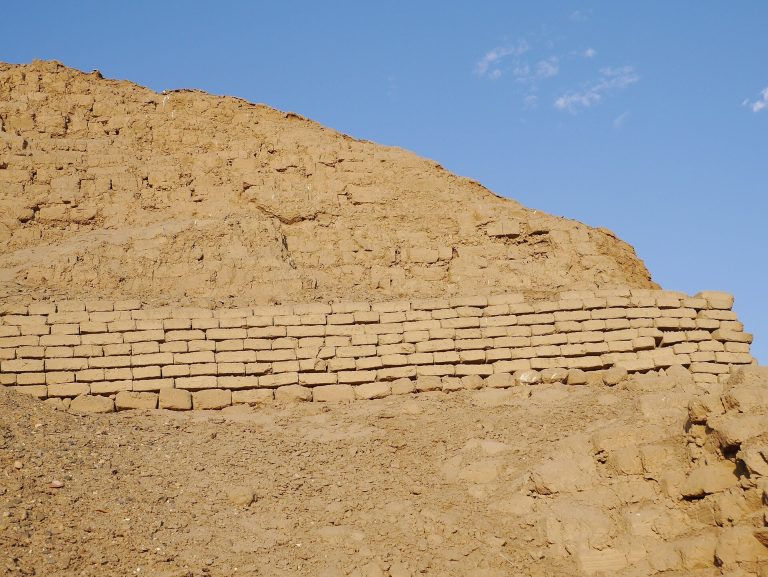
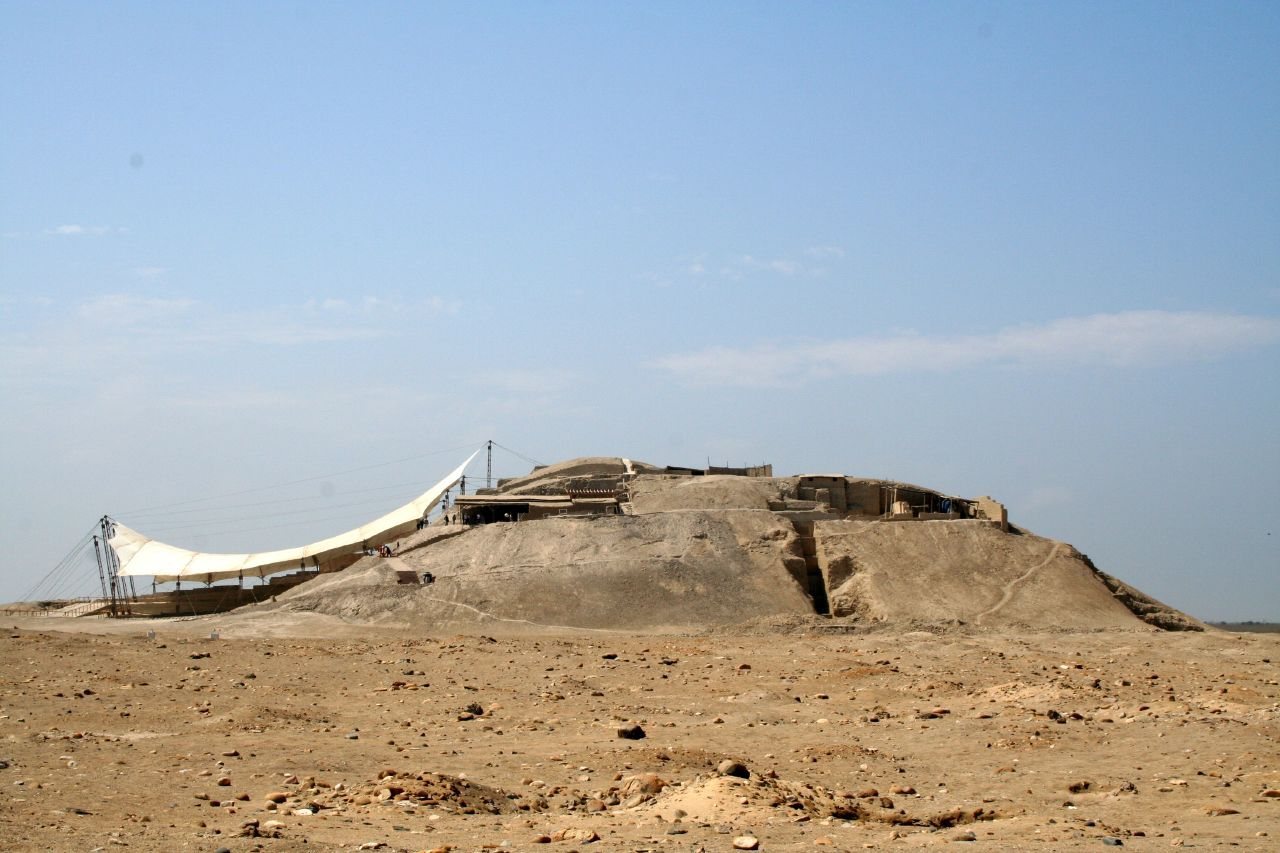
Huaca Cao Viejo stands on the right bank of the Chicama River, facing the Pacific Ocean. Its principal monument is a truncated adobe pyramid that reached approximately 30 meters in height and occupied a roughly square base about 120 meters on each side. The complex includes the pyramid, a walled ceremonial plaza in front of it, and associated platforms and enclosures.
Pyramid, plaza, and summit
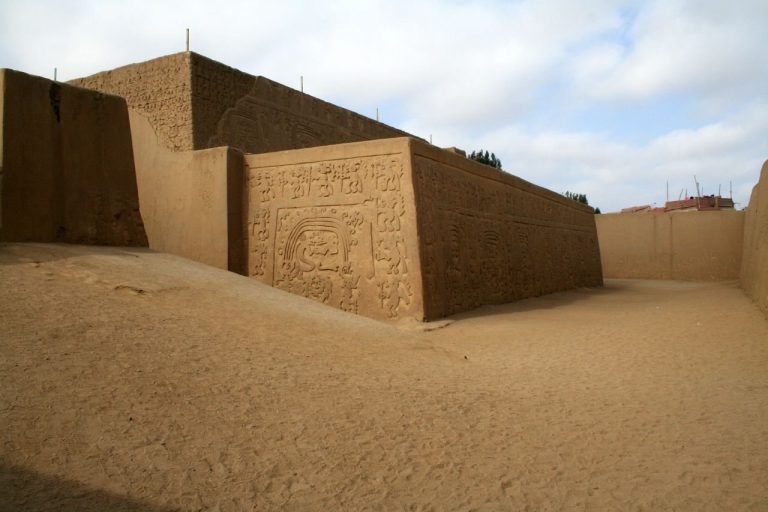
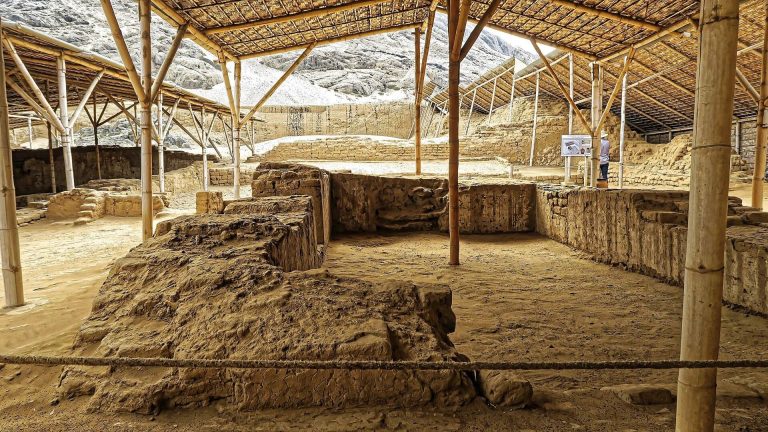
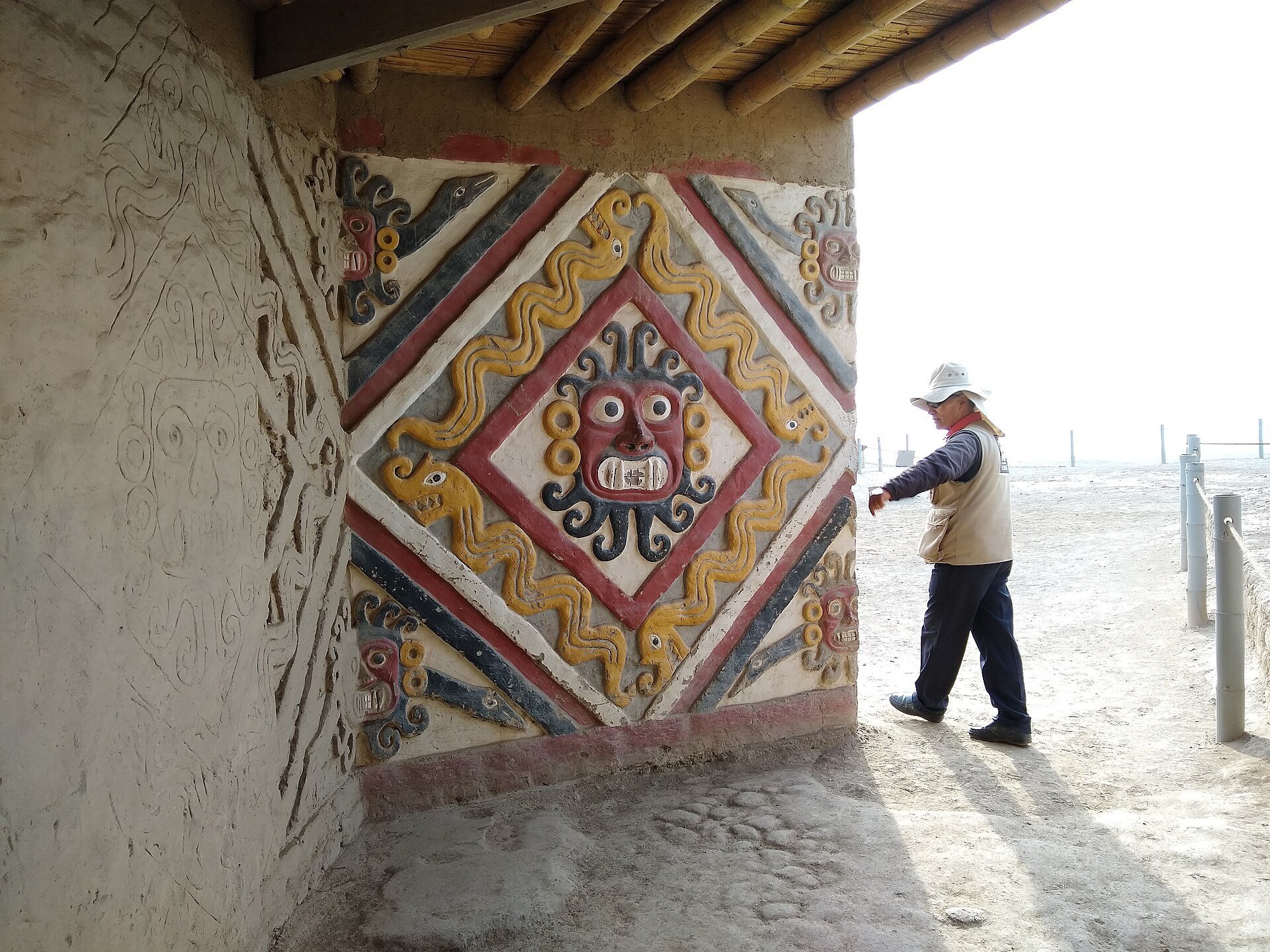
The pyramid was built as seven superimposed structures. Each earlier building was filled in before the next was erected above it, a practice characteristic of coastal Peruvian ceremonial architecture. A long ramp on one side led to the summit. Along one side of the plaza is a long annex or platform, while a small relief-decorated enclosure, called the Ceremonial Enclosure, occupies a corner beside one end of the pyramid.
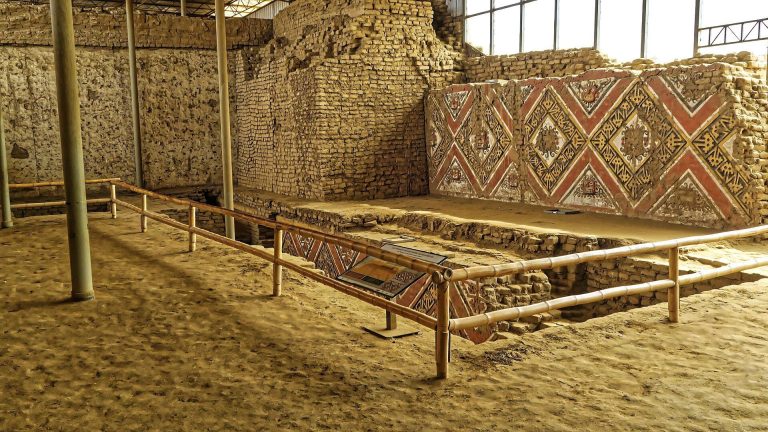
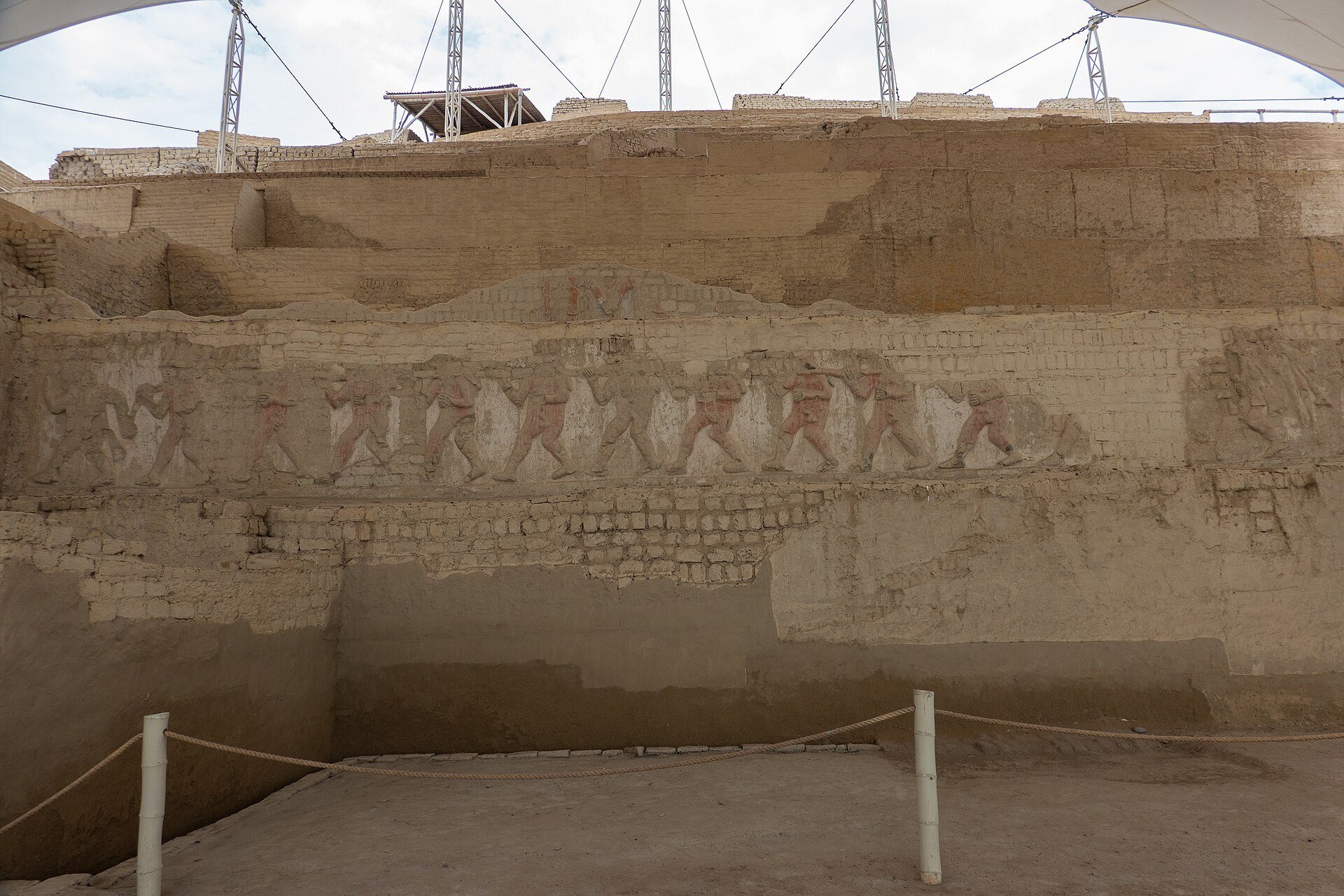
The summit contains a ceremonial court, another ceremonial enclosure, a principal platform, and an altar. Monumental polychrome reliefs cover the walls with dramatic scenes and motifs. Their themes include fantastic figures, human sacrifice, Ai Apaec in crab form, linked figures, groups of people, combatants, warriors, a procession of captives, and masks of Ai Apaec. Ai Apaec was a prominent Moche supernatural figure represented in both human and animal-associated forms.
The tomb of the Lady of Cao
The tomb of the Lady of Cao was placed on an intermediate platform of the pyramid. The woman was approximately 1.45 meters tall and between 20 and 25 years old. Her burial included 18 necklaces made from gold, silver, lapis lazuli, quartz, and turquoise, along with 30 gold and silver nose ornaments, headdresses, and crowns of gilded copper.
Other grave goods included wooden scepters covered with copper. These were used ceremonially as symbols of power and authority. Loose metal plates covered a shroud made from natural cotton. Snakes and spiders remain visible as tattoos on the woman’s body. The designs may have symbolized the fertility of the earth and may also have indicated her abilities as a diviner.