El Brujo: An Ancient Ceremonial and Funerary Complex in Peru
Site at a Glance
- Rating
- 4.7
- Popularity
- Medium
- Country
- Peru
- Primary era
- Classical
- External website
- Open
- Eras represented
- Stone Age, Classical, Medieval
- Civilizations
- Moche
- Site type
- Religious
- Remains
- Sanctuary
On this page13 sections
History
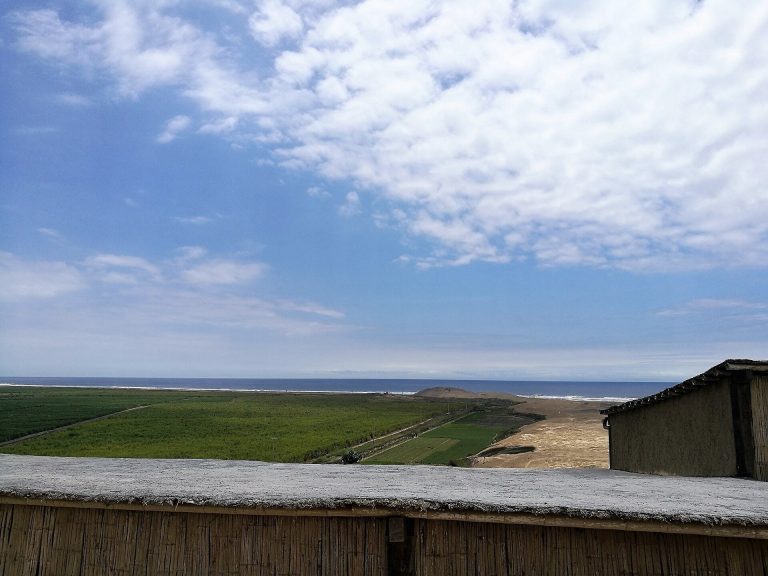
El Brujo is an ancient archaeological complex in the Chicama Valley of northern Peru, about 60 kilometres north of Trujillo. Occupied for more than 5,000 years, it developed as a ceremonial, ritual, sociopolitical, and funerary centre for successive communities, including the Cupisnique, Moche, Lambayeque, Chimú, and Inca cultures. The complex covers approximately 540,000 square metres and is recognized as Cultural Heritage of Peru.
Early occupation and Huaca Prieta
Human activity at El Brujo began with mobile hunter-gatherers and continued through the Preceramic period, the era before pottery became widely used in the Andes. Sedentary agricultural communities later occupied the area and combined simple farming with fishing and shellfish gathering. Their remains at Huaca Prieta include semi-subterranean rooms built from stone and mud, early textile production, and decorated gourds. These communities had not yet adopted pottery or maize cultivation.
American archaeologist Junius Bird investigated Huaca Prieta in 1946 and 1947. The remains were among the first in Peru to be dated through radiocarbon dating, a method that estimates the age of organic material by measuring radioactive carbon. Their approximate date of 2500 BC substantially changed the accepted chronology of early Peruvian archaeology.
Moche ceremonial development
The principal Moche, or Mochica, occupation dates broadly from about AD 100 to 700, during the Early Intermediate Period, an era associated with the rise of regional cultures in the central Andes. The largest monuments at El Brujo were built during the early and middle Moche phases. Their construction probably came under the control of local political leaders, and their architecture, imagery, and evidence of sacrifice point to a ceremonial and funerary purpose.
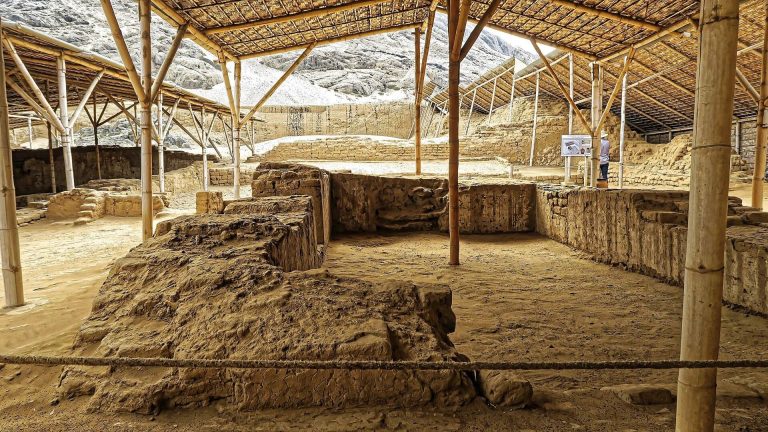
Huaca Cao Viejo and Huaca Cortada were constructed through successive building phases rather than in a single foundation event. At Cao Viejo, seven buildings were erected over approximately five centuries, with each earlier structure buried before another was built above it. The abandonment of the huacas at the end of the Early Intermediate Period may have followed political instability and upheavals in the southern sphere of Moche culture. Extreme climatic events have also been proposed as a cause of Moche decline, although the evidence for the final phase remains limited.
Lambayeque, Chimú, and Inca periods
The Lambayeque culture arose in the Chicama Valley around AD 900. The area was later incorporated successively into the Chimú and Inca empires. These political changes did not end El Brujo’s association with ceremonial and funerary activity. The complex continued to serve as a place connected with collective memory across changing cultural and political traditions.
Excavation and interpretation
Since the 1990s, the El Brujo Archaeological Complex Project has investigated Huaca Cao Viejo and Huaca Cortada under the archaeologist Régulo Franco. Work supported by the Augusto N. Wiese Foundation, the La Libertad Institute of Culture, and the National University of Trujillo transformed Cao Viejo from an abandoned mound into an important source of evidence for Moche society.
Excavations at Huaca Cao Viejo uncovered the tomb and mummified body of the elite Moche woman known as the Señora de Cao. Her remains are regarded as the earliest known evidence of a female ruler in Peru, although her precise status remains possible rather than certain. A seventeenth-century document found during excavations may contain decimal numerals written in Quingnam, sometimes called Pescadora. If so, it would provide the first physical evidence for this poorly documented coastal language, although the relationship between the two names remains uncertain.
El Brujo opened to the public on 12 May 2006. The Cao Museum, inaugurated in 2009 and managed by the Wiese Foundation, preserves the Señora de Cao’s mummy and presents the long history of the complex through archaeological research and exhibitions.
Remains
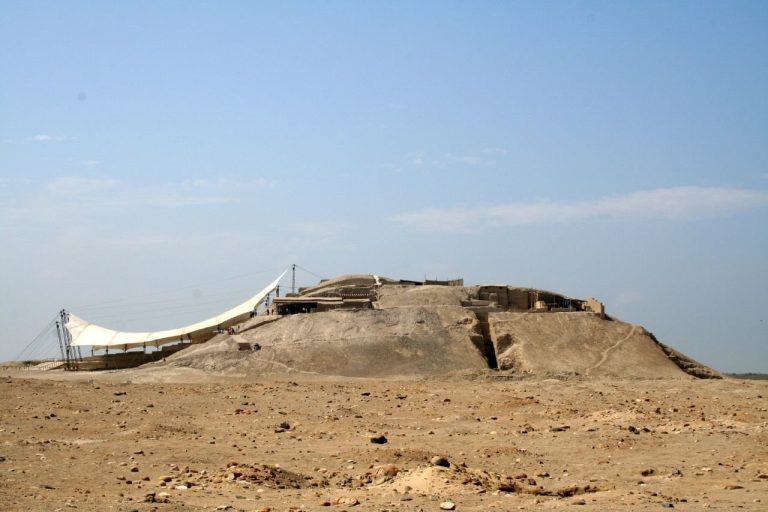
El Brujo is organized around three principal huacas, a term for a sacred place in the ancient Andes that here refers chiefly to large ceremonial mounds and pyramidal structures. Huaca Prieta is the earliest monument. Huaca Cao Viejo and Huaca Cortada are the largest Moche monuments, positioned at the northern corners of a terrace and forming an architectural ensemble.
Preceramic mound
Huaca Prieta
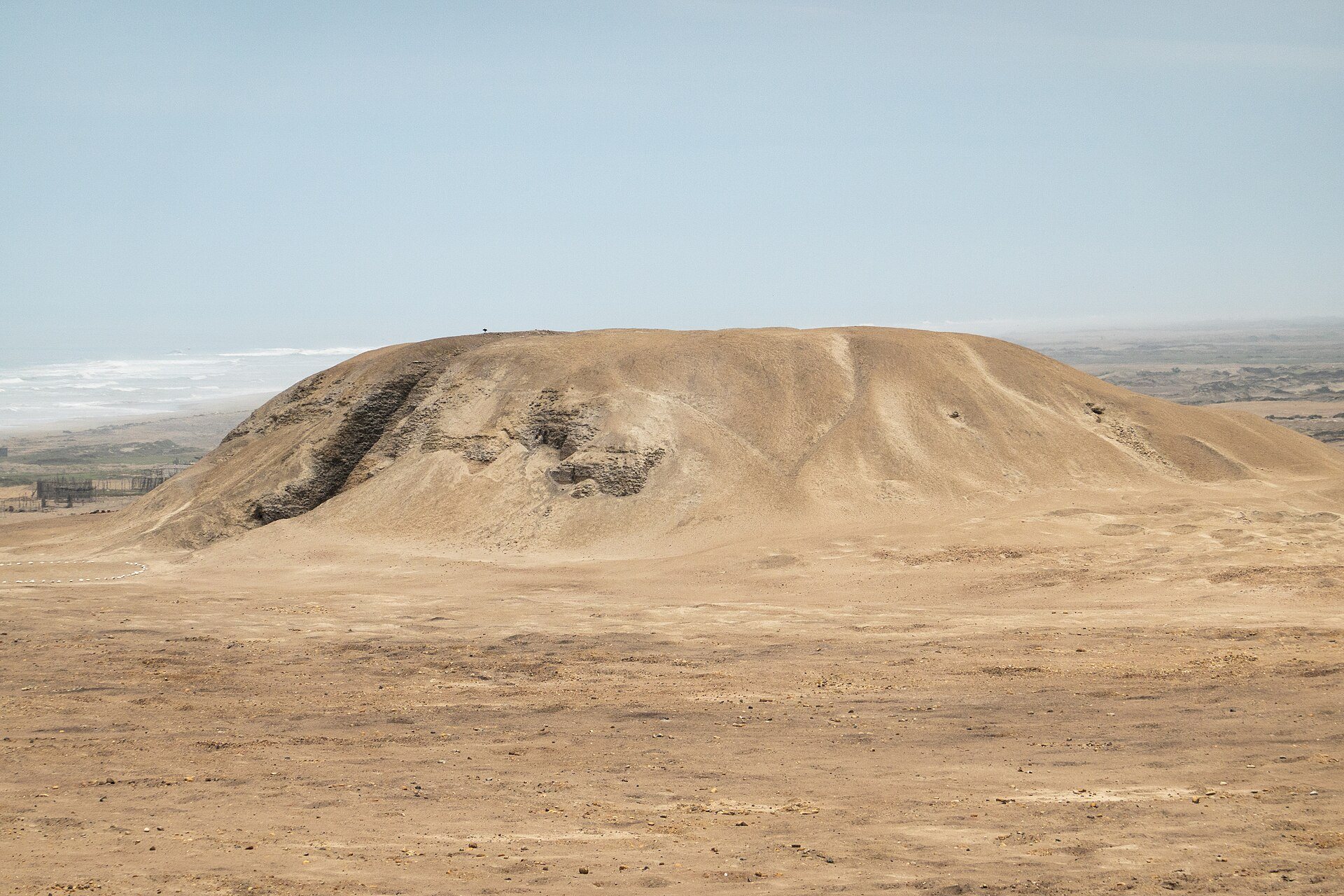
Huaca Prieta is a Preceramic mound dating to approximately 2500 BC. Its unusually dark appearance comes from a substantial accumulation of ash and decomposed refuse. The remains include semi-subterranean stone-and-mud rooms, evidence of early textile production, and pyroengraved gourds bearing zoomorphic and human designs. Fishing, shellfish gathering, and simple agriculture supported the communities associated with the mound.
Moche ceremonial monuments
Huaca Cao Viejo
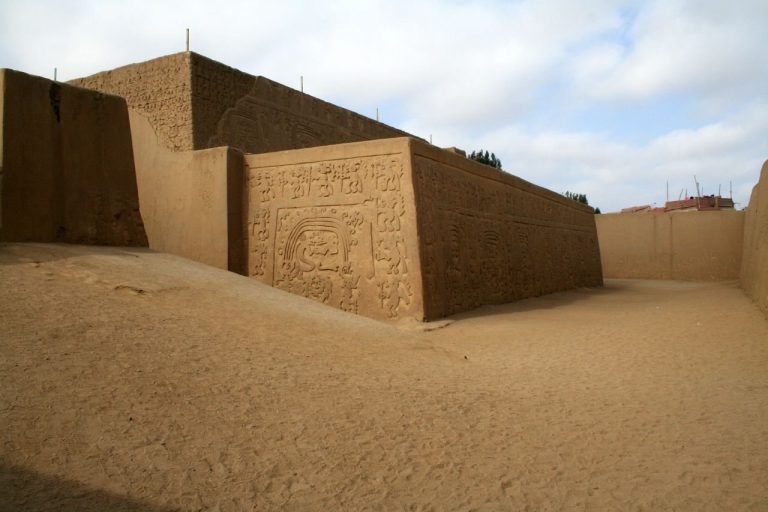
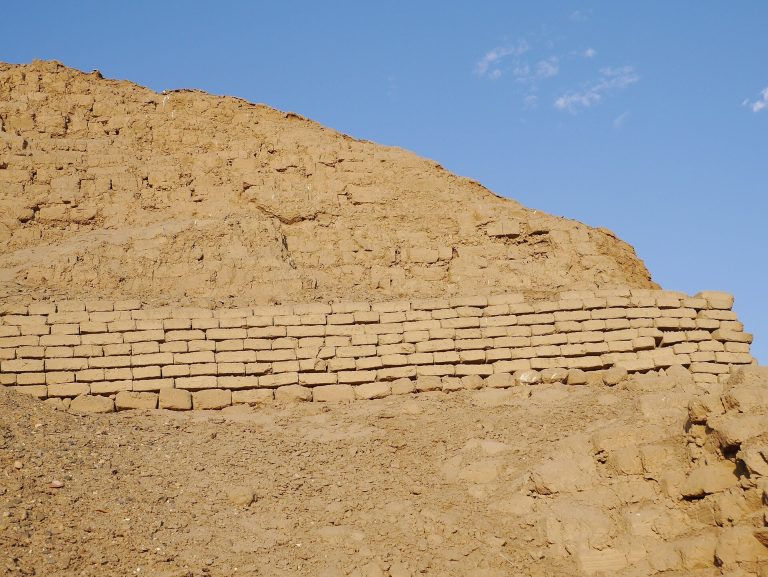
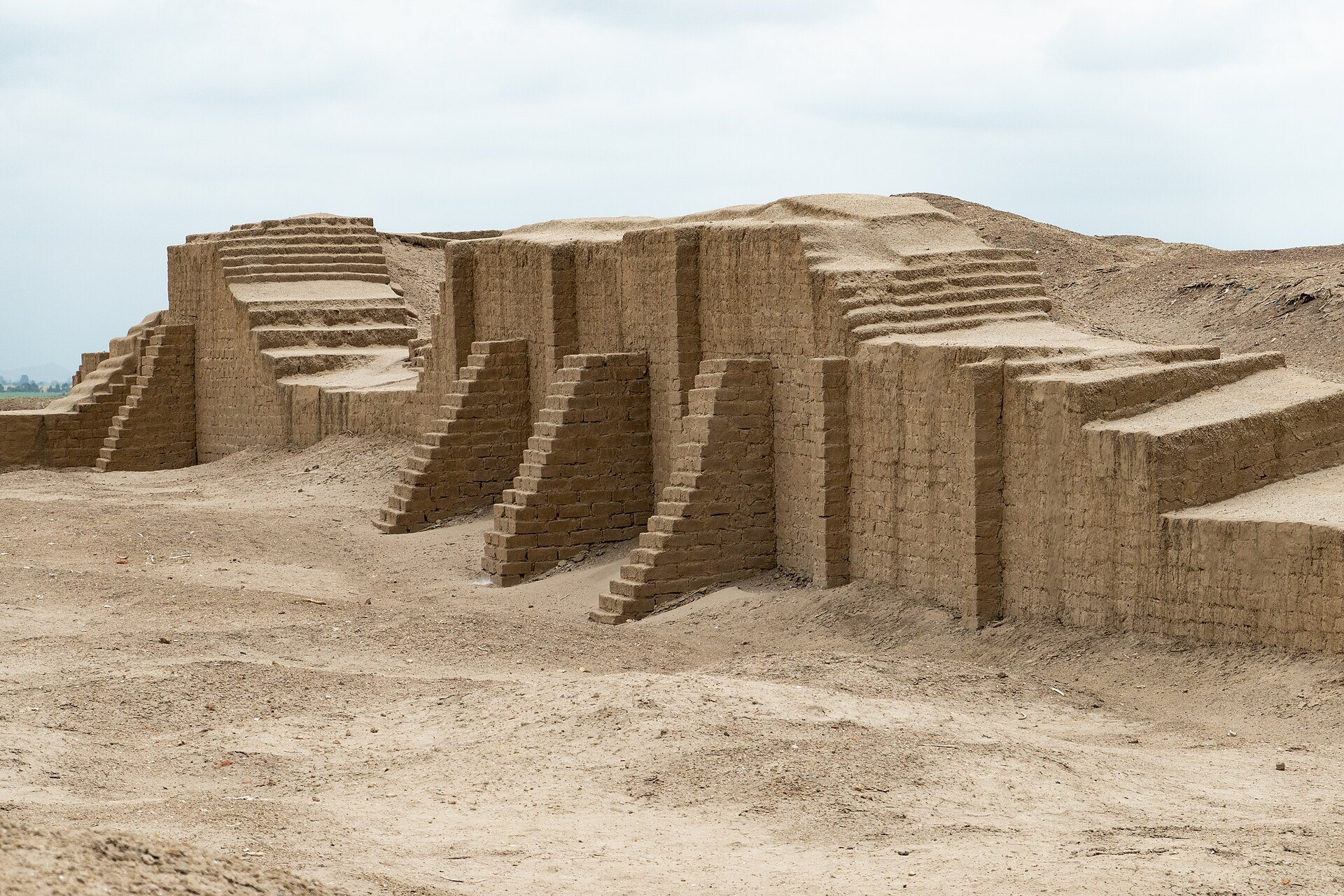
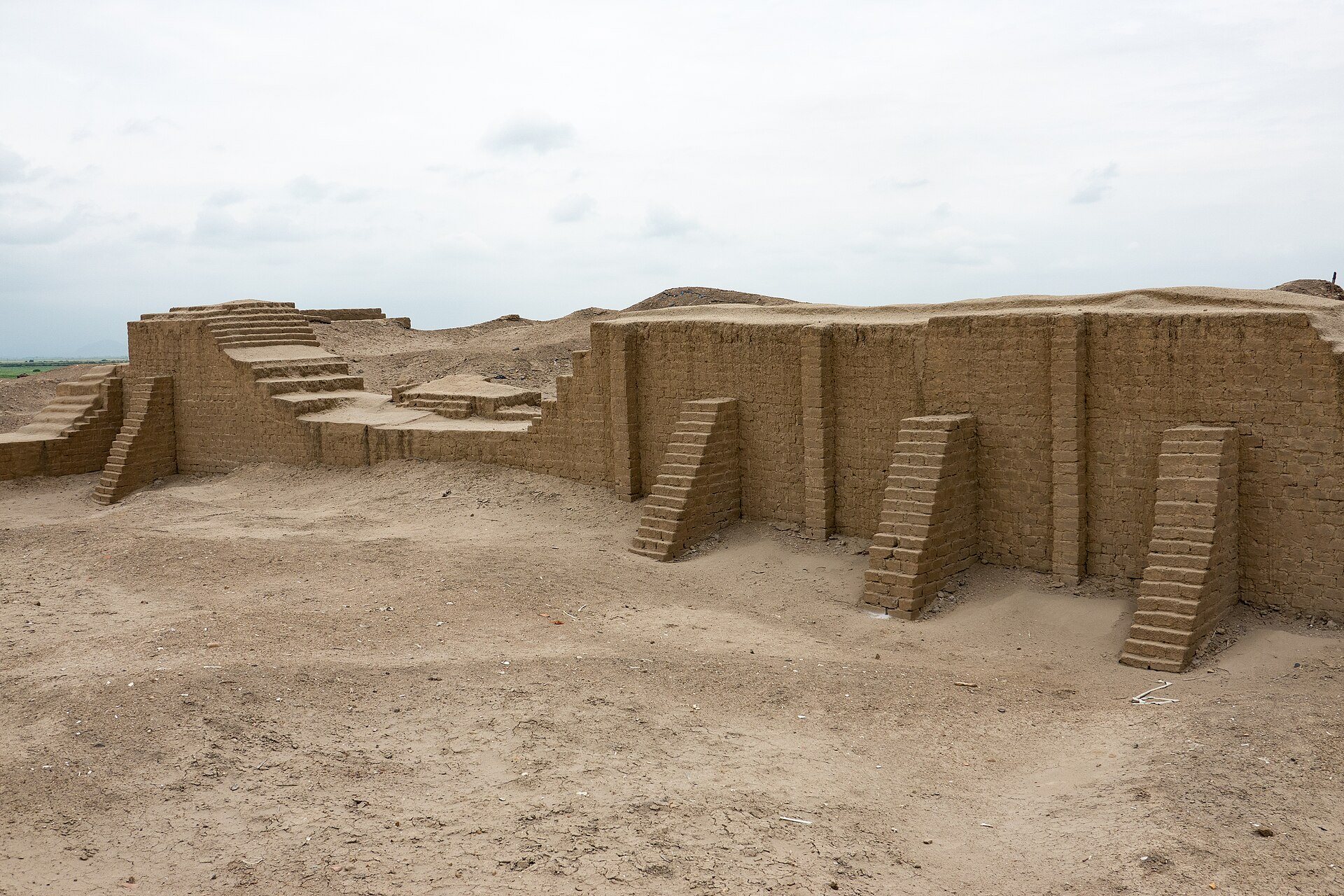
Huaca Cao Viejo is a stepped, truncated pyramid built from adobe, a material made primarily from sun-dried earth. It reached about 30 metres in height and had a roughly square base measuring approximately 120 metres on each side. A long ramp led to the summit. In front of the pyramid, a walled ceremonial plaza extended beside a long annex or platform. The building may have been used for sacrifice.
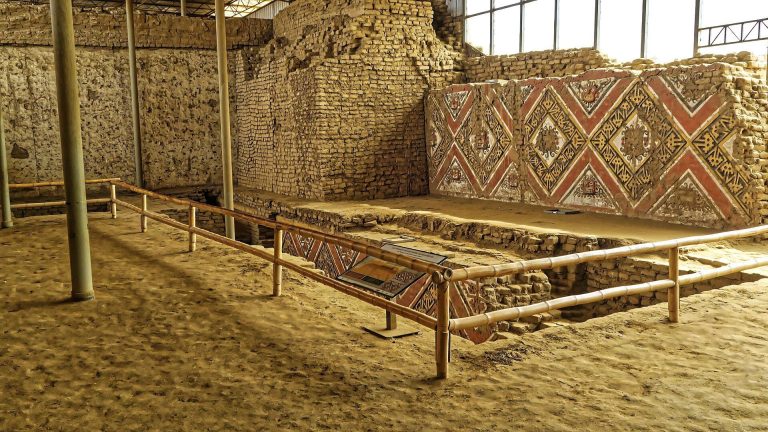
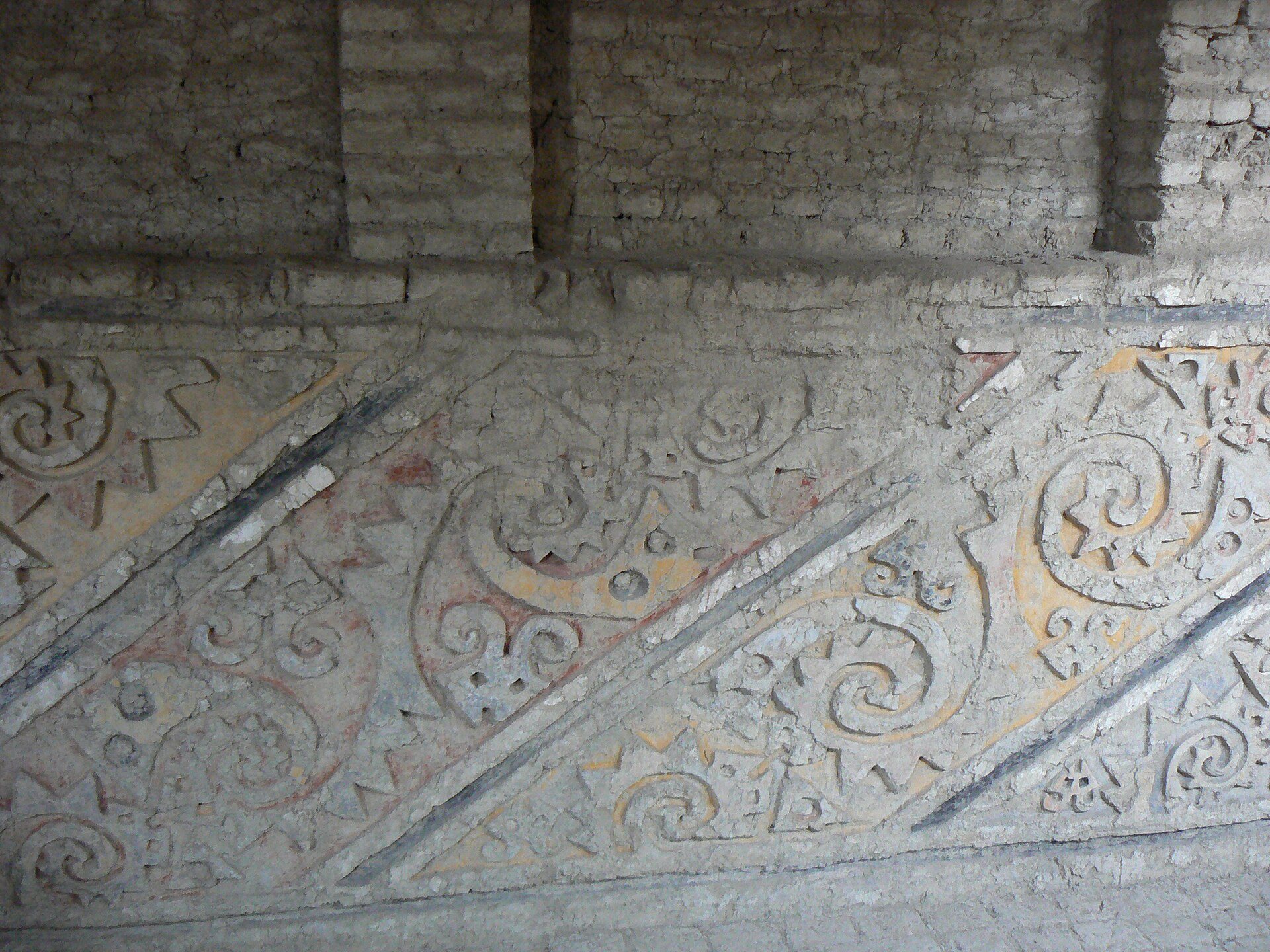
Several walls retain polychrome high-relief murals with Moche imagery. The scenes include bound captives being led by ropes around their necks toward a decapitating figure, the supernatural being Ai Apaec, and linked figures known as the Dancers. Comparable motifs occur on Moche ceramics.
A tomb on one of the platforms held the mummified Señora de Cao. Her body was covered with 18 necklaces made from gold, silver, lapis lazuli, quartz, and turquoise, as well as 30 gold and silver nose ornaments, diadems, and crowns of gilded copper. Wooden scepters covered with copper accompanied her as ceremonial symbols of power and hegemony. Loose metal plates covered a natural-cotton shroud, while tattoos of snakes and spiders remained visible on the body. These designs have been interpreted as symbols of earthly fertility and may also have been associated with divination.
Huaca Cortada
Huaca Cortada, also called Huaca Partida or Huaca El Brujo, is a Moche truncated pyramid contemporary with Huaca Cao Viejo. It is smaller, measuring approximately 103 metres in length, 98 metres in width, and 22 metres in height, and covering about 10,000 square metres. The monument stands roughly 500 metres northwest of Cao Viejo.
A deep trench cuts through the centre of Huaca Cortada’s southern façade. Approximately 45 metres long and 5 metres wide, it nearly divides the monument in two. The trench may have been made by huaqueros, illicit excavators seeking valuable objects, and archaeologists have used it to examine the pyramid’s construction sequence.
Decorative friezes on the walls feature fish painted in yellow, red, white, gray, and black. Their artistic technique is similar to that used at Huaca Cao Viejo, linking the two monuments within the Moche architectural ensemble.
Site museum
Cao Museum
The Cao Museum is a seven-room museum and archaeological facility within the complex. It includes an exhibition hall, projection auditorium, meeting room, laboratory, and rooms for computer and archaeological work. Its collections and displays include the mummy of the Señora de Cao, preserving material evidence from one of El Brujo’s most important Moche burials.